

Recap of VRARA Expert Panel at Ad Week New York: What do Agencies Need to Know about VR #AWNewYork
By Cortney Harding, Co-Chair of VRARA Advertising Committee

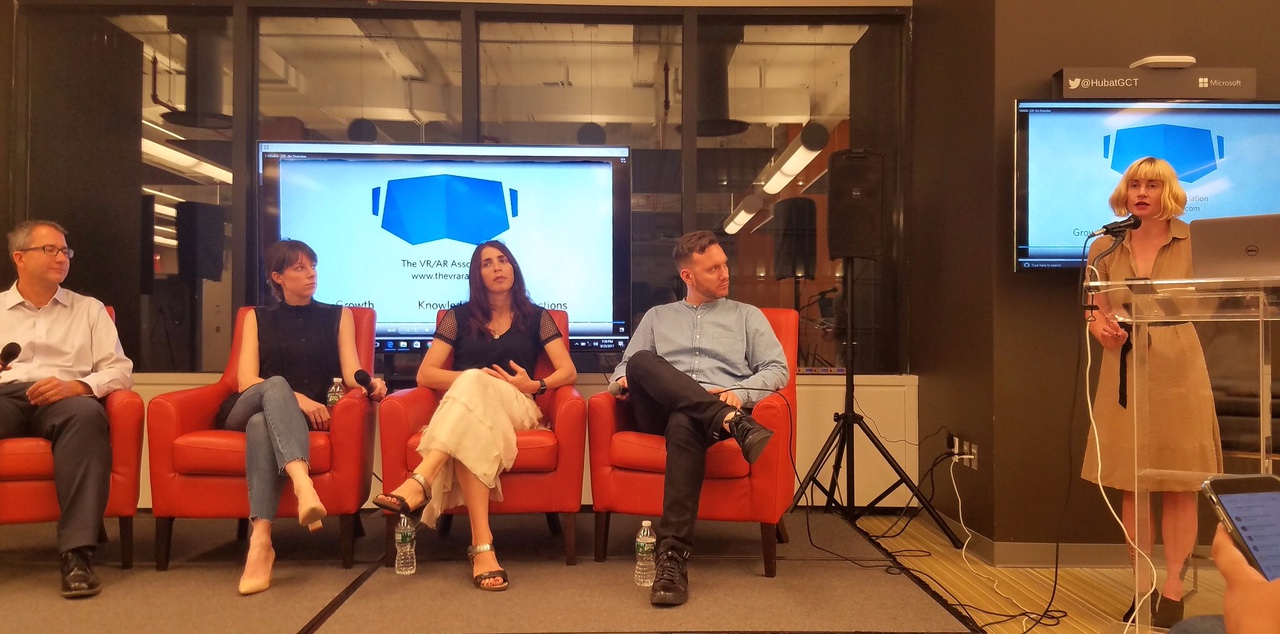
On September 25, the VR/AR Association NYC Chapter hosted a panel during Advertising Week New York of leading advertisers working in VR/AR to spark discussion about virtual and augmented reality and possible use cases in branded work. Moderated by Friends With Holograms founder Cortney Harding (Co-Chair of the VRARA Advertising Committee), the panel featured Rori Duboff of Accenture, Robert Lester of Glow, Doug Barr of Havas, and Christine Lane of McCann.
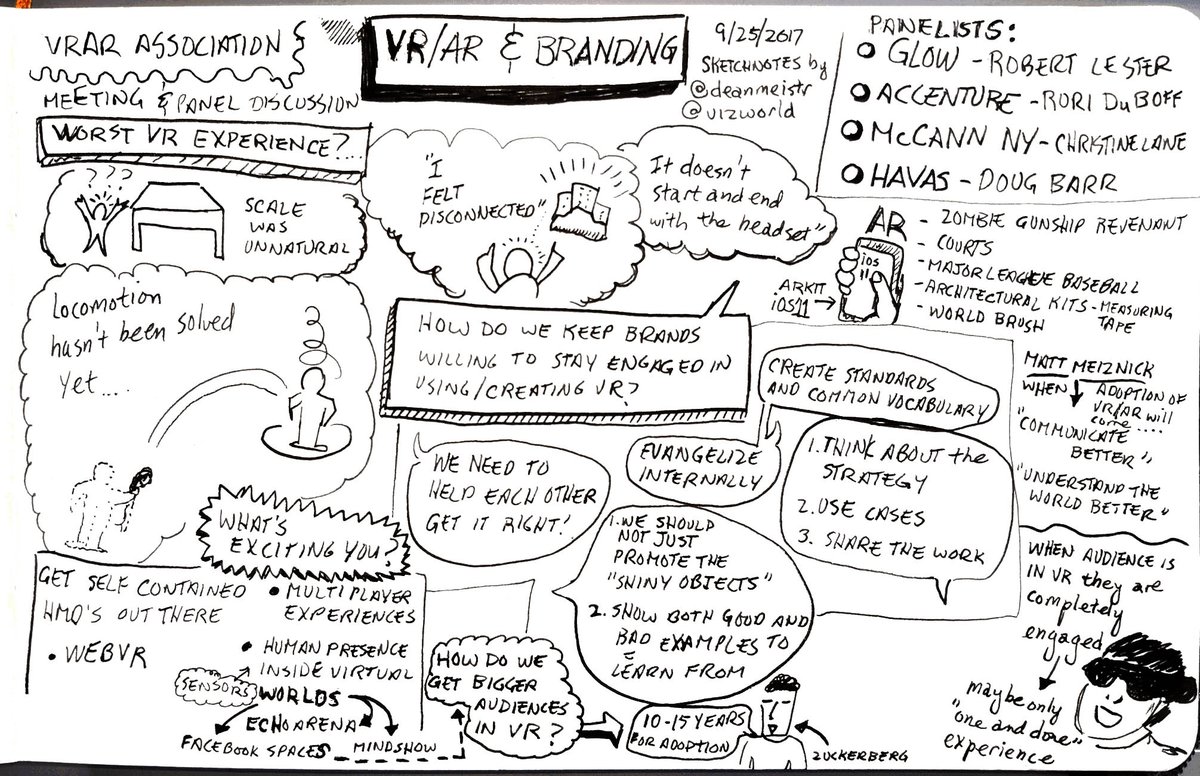
To kick the panel off, everyone was asked about the worst VR/AR experience they’d ever seen, and what lessons could be learned from the mistakes those creators made. Lester pointed to a narrative piece that missed the mark with scale, where the user constantly changed perspectives and sizes, while Lane pointed to a more common example of a nature piece that succumbed to subpar CG. DuBoff also referenced a piece that got scale wrong, and Barr pointed out common problems with locomotion, especially pieces set on roller coasters, which can sometimes make viewers sick.
While all of the problems present in these pieces are fairly easy to solve, they highlight another dilemma -- how to make sure agencies and brands don’t try one piece, have it fail, and decide that VR and AR are not worth exploring further. Barr referenced a situation where he helped a competitor fix a piece and while his client wasn’t happy about, he believes that a rising tide will lift all boats, and the more good work is on the market, the better. Lester pointed to the need for internal evangelists at agencies and brands, and DuBoff and Lane both said that advocates need to share both good and bad use cases in order for clients to learn and focus.
In terms of moving forward, all the panelists had specific new developments they were excited about, ranging standalone headsets that are rumored to be coming soon to multiplayer experiences to webVR and social VR. In terms of spreading the technology, Barr pointed out that VR has a faster adoption rate than several other well-known devices, while other cautioned patience and the need to use it in training applications to get it to users.
Augmented reality is still fairly new for the most part, as ARKit only recently launched, but all the panelists were bullish on how it would be adopted by brands. Use cases ranged from practical (tape measures, furniture placement) to informational (the MLB app that allows users to view more stats) to the ridiculous (an app that allows users to paint on the world).
The conversation then shifted to the metrics brands care about when evaluating VR and AR pieces, and the need to create stickier content that users will return to again and again. Panelists pointed out the heatmaps are a great way for brands to measure how long viewers looked at something and tweak campaigns to respond to that data. Finally, the panelists were generally behind giving away cheaper headsets as a gateway to VR, even though the quality might not be ideal.
The event was the first in what will hopefully be a series of conversations presented by the VRARA and Friends With Holograms to inform brands about the possibilities and best practices for VR and AR.
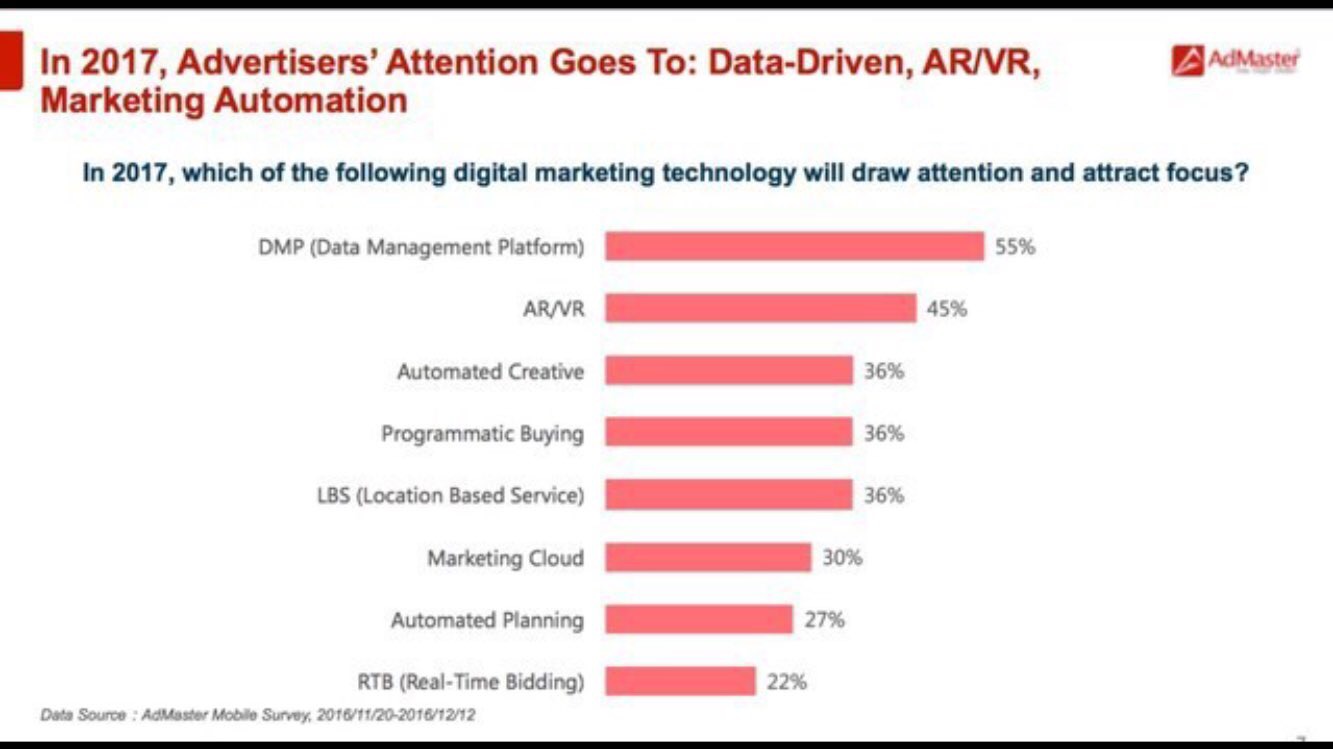
Advertisers considered VR/AR as their number second focus in 2017 for digital marketing technologies:
We invite all to join the discussion as part of our Advertising Committee, join here.
ARCore Will Reach 3.6 Billion Phones by 2020
For a deeper dive on VR/AR trends & data, subscribe to ARtillry Insights.

Just like Apple’s June ARkit launch, Google’s recent ARCore unveiling has bred lots of interest its addressable market. And just like with ARkit, ARtillry has applied best practices in market sizing and forecasting to pinpoint that figure.
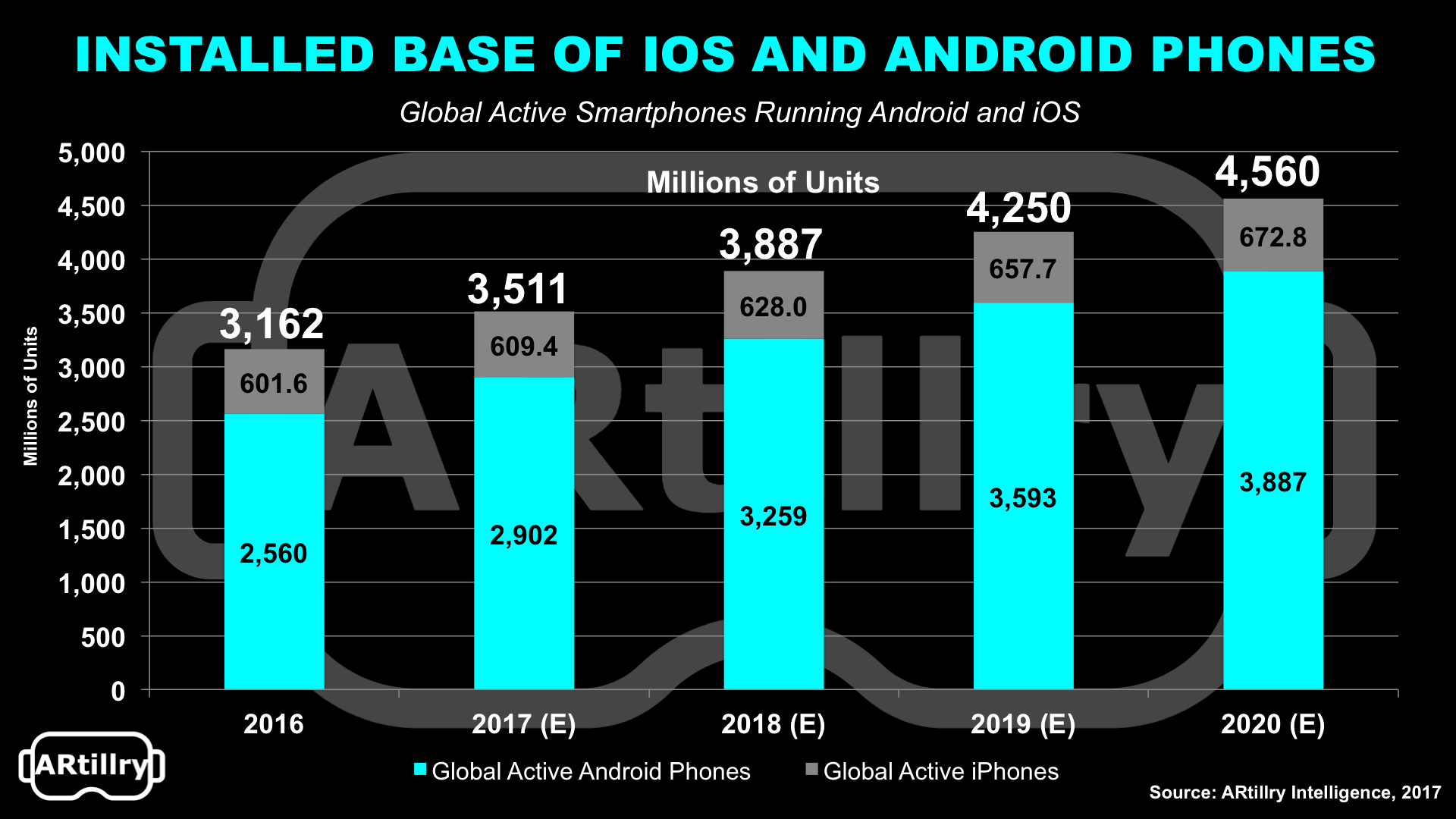
The verdict: There are 26.5 million ARCore-compatible phones today, growing to 71.5 million by the end of 2017. Based on the size of the Android universe, this will quickly accelerate over the next few years, reaching 3.6 billion units (92 percent Android coverage) by 2020.
How did they arrive on these figures? The starting point is ARCore’s current compatibility, limited to Google Pixel and Samsung Galaxy S8, running Android 7.0 (Nougat) or greater. Looking at cumulative sales figures for both devices, we’re at roughly 26.5 million total units in market.
But that’s the easy part. The hard part is projecting forward. Based largely on the size of the overall Android installed base — 2.9 billion global devices today, growing to 3.8 billion by 2020 — number crunching ensued. One key forecast input is upgrade cycles in the Android Universe.
About 16 percent of Android devices usually run OS versions released in the prior year, while 32 percent run versions older than one year, 29 percent older than two years, 15 percent older than three years, and 8 percent older than four years (hence ARCore’s lack of full coverage in 2020).
There was also a major hint from Google: The company noted in ARCore’ introduction that it’s working towards a goal of 100 million compatible phones — including Huawei, Asus and LG — when the platform launches. It didn’t provide a date but we’re predicting Q1 2018.
Stepping back, one takeaway is that ARkit has a slight advantage in being first to market with a head start in developers’ invested time. But the lifespan of AR will eventually diminish Apple’s three-month head start. Greater developer attraction will ultimately come from platform reach.
Apple also has a near-term lead in the installed base of ARkit-compatible iPhones (380M), but one hardware replacement cycle (2.5 years) will give most smartphones AR-compatible optics and processing. And the Android universe exceeds iOS, by more than two billion units.
Other points of differentiation come down each platform’s approach for delivering AR. Apple’s DNA is an app based framework, while Google’s web-based DNA will be reflected in its use of Web AR. The latter could have less friction (in addition to more scale), as we’ve examined.
There is of course a lot more to these competitive dynamics and addressable market sizes, and they'll be included in ARtillry Insights' latest report, available tomorrow. It will take a deeper dive on ARCore and ARkit, and the strategic implications for everyone. Subscribe here.
For a deeper dive on AR & VR insights, subscribe to ARtillry Insights. See ARtillry's market-sizing and forecasting credentials here.
Virtual Reality and its Impact on the Field of Criminal Justice
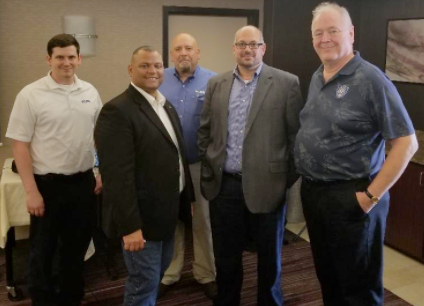
VRARA Criminal Justice Committee Seminar Pictured Left to Right: Eric Dustin of FARO, Rory Wells, Esq. of Ocean County Prosecutor’s Office, Ed Williams of FARO, Eduardo Neeter of FactualVR, Greg Schofield of Toronto Police Service
Jersey City, New Jersey – Multiple law enforcement agencies, academics, start-ups, non-profits and corporations from the United States and Canada met today in Jersey City for a first of its kind seminar and discussion on the impact of Virtual Reality and Augmented Reality on the Criminal Justice System.
The Virtual Reality/Augmented Reality Association’s (VRARA) Criminal Justice Committee held its first event today on current and future applications of virtual reality technology, where an individual or group of individuals are immersed in a 3D experience using headsets or glasses.
The meeting covered demonstrations of the latest technology, including laser scanners and VR applications from event co-sponsors FARO Technologies and FactualVR whose developing technology allows to accurately replicate and communicate the facts around crime scenes to aid in investigations, preservation and future testimony in court.
Co-Chairs of the committee, Assistant Prosecutor Rory Wells and Eduardo Neeter, Principal of FactualVR both addressed the attendees with valuable input. The topics ranged from training and investigations, to the use of VR at trial and the use of VR for rehabilitation/reentry after serving time in prison.
“It’s not a matter of “if” but “when” as the technology continues to develop and become mainstream, people will eventually demand that VR be used in every courtroom” stated Co-Chair Eduardo Neeter.
For information on the committee or future events, please email us at: info@thevrara.com.
VRARA SF Chapter Event: The Art and Science of Lightfields (video)
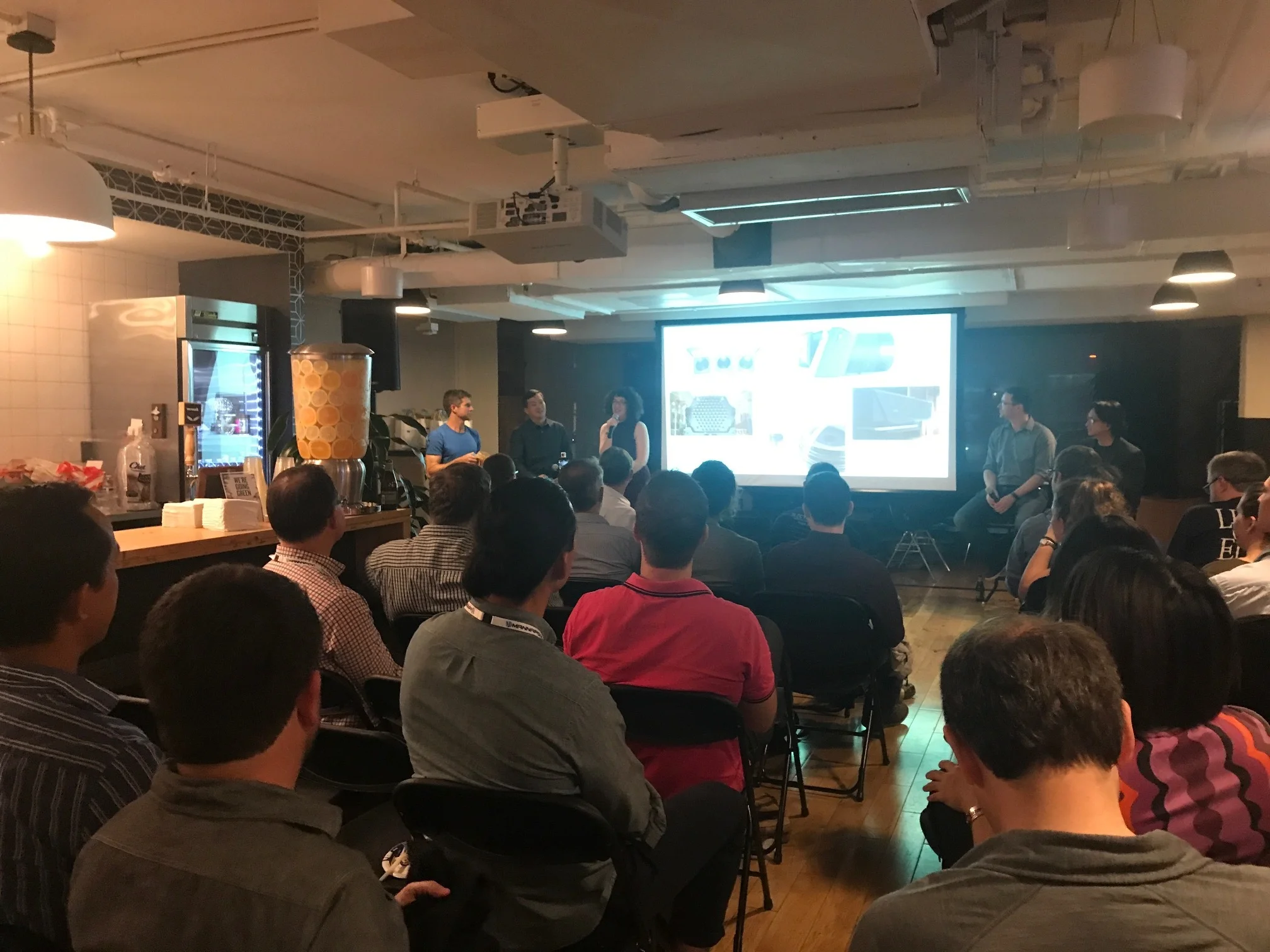
What are lightfields and why are they important? This is a question that VRARA SF got to tackle last week by interviewing Lytro at our Fall chapter event (video below).
The practice of lightfields is split between capture (cameras and lens arrays) and display (Holographic panels and VR headsets). Lytro is the industry leader in capture, with a range consumer to professional/cinematic cameras. It's latest work is Hallelujia produced with Within.
In fact, our discussion with Lytro came one week before Hallelujia's public release. You can see that here, making this week's Friday video a double feature. The full Hallelujia production involves 6DOF positional tracking, but this more portable version offers 3DOF head tracking.
As for our discussion with Lytro, the company's insights on lightfield capture have been formed over a long tenure in the field. Starting with refocusing cameras, it evolved into cinematic rigs, and on to today's flagship Immerge camera, which was used in the Hallelujia production.
One thing evident from the discussion is the degree that lightfield capture blends optical and digital technologies, making the field quite advanced. Some of the challenges on the digital side will recede as Moore's Law improves processing and compression of lightfield data.
But at the same time, Moore's Law doesn't govern optical technologies. Notice how camera lenses haven't changed much while other consumer tech like smartphones and flat screen TVs have streamlined. Optical equipment is generally the size it needs to be to do its job.
So while the digital barriers of lightfield capture will get smaller with Moore's law, some of the camera rigs and lens arrays required to capture lightfields will remain large (not a bad thing). For example, the degree of parallax you can achieve from a lens array is a function of its diameter.
Lightfields also aren't a silver bullet for AR & VR. Polygon approaches (graphics) are prevalent today in volumetric VR, and will continue to be advantageous for interactivity (games, etc.). But lightfields will excel for playback of photorealistic or cinematic content. They can work together.
"We absolutely see them coexisting," said Lytro Senior Architect Colvin Pitts. "It's a little bit tricky to manipulate lightfield data in real time, but combining the two is absolutely on the table."
See the full interview below with Pitts and Lytro Director of Engineering for VR, Alex Song. And stay tuned for more VRARA SF Chapter events in the coming months.

VRARA VR AR Panels during Advertising Week New York - RSVP Now!
RSVP now as tickets are limited!

Narrative in VR: How to Create Compelling Stories with Virtual Reality
Panelists from Verizon, Immersive Storytelling, Caitlin Burns, 30 Ninjas. Moderated by Chris Pfaff.
RSVP here
What Do Agencies Need to Know About Virtual Reality
Panelists from Accenture Interactive, McCann New York, GLOW Digital Agency, Havas Health. Moderated by Cortney Harding.
RSVP here
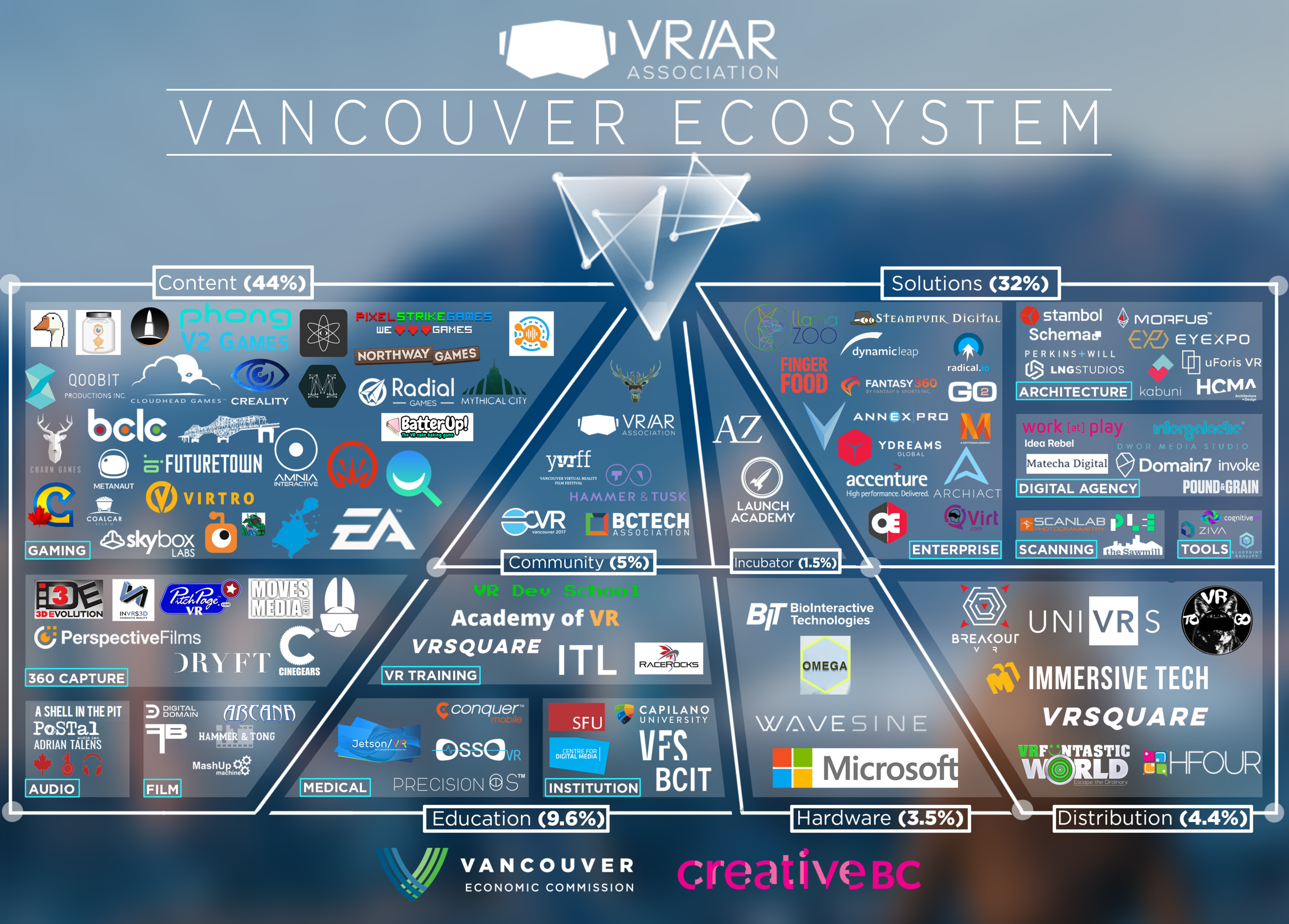
VR/AR Association Releases Vancouver Ecosystem Infographic: 130+ VR/AR Companies and Growing

130+ Companies and Growing!
(Thursday Sept 21, 2017) - Vancouver is a city in the heart of the Pacific Northwest, renowned around the world for its majestic mountains, pristine waters and stunning beaches. Recently, Vancouver’s also been making a name for itself for another reason. The city has become a global hub for VR/AR/MR and is home to 130+ innovative companies. in the space. These companies are solving problems, creating immersive storytelling experiences, educating and building the next wave of computing.
A 40-plus-year legacy in film & television production. More than 30 years of cutting-edge VFX & animation. World-class games & mobile entertainment cluster over two decades in the making, a strong tech scene and one of the top startup cities in the world.
Watch our VRARA SF Event in 360
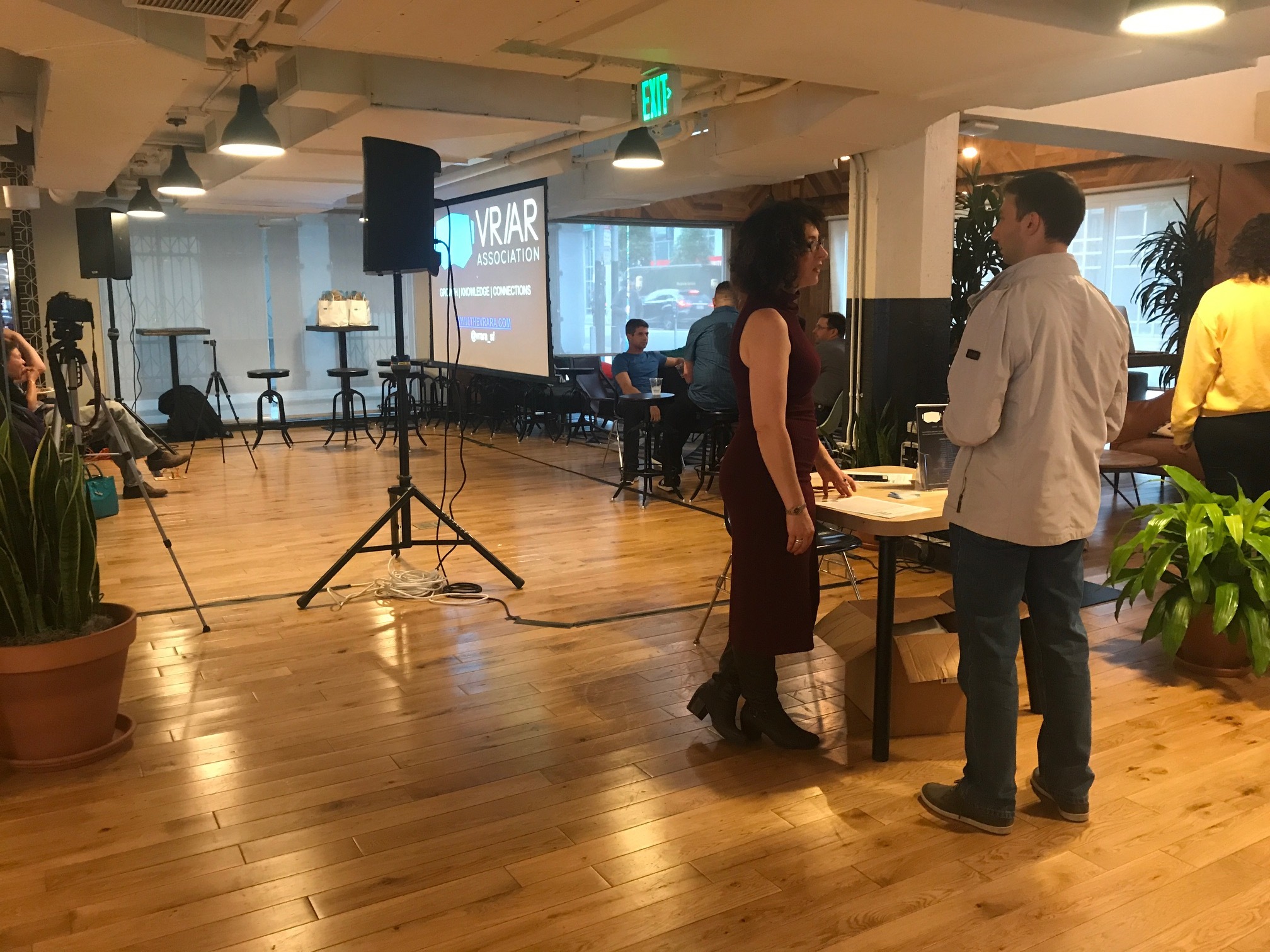
Last week, VRARA SF held a quarterly chapter event focused on lightfields. What are lightfields and why are they important to immersive media like AR & VR? These were the questions we tackled during the event.
For more detail, you can watch the entire video below. And to show that we're walking the walk with VR, we've captured the event in 360. Watch it embedded below or view in cardboard mode (stereoscopic, head tracking, etc.) in a compatible headset.
We'll have more coverage soon, including individual session video (traditional 2D) with soundboard audio. Until then, special thanks to all of our sponsors and speakers.
Bay Area: Join us in December at VRX 2017
Contact us for a discount code. Super early bird ends Friday

In VRARA's continued partnerships throughout the event world, the latest is VRX 2017. Taking place 12/7 & 12/8 in San Francisco it features heavy-hitter speakers from HTC to Audi.
With a theme grounded in VR's business growth and cultural immersion, it promises lots of concrete learnings, not to mention networking with industry influencers.
VRARA SF is proud to be a media partner, meaning we'll not only be there but members can receive a 15% discount code to attend. Contact us if interested. We hope to see you there.
More from the event organizers:
Now in its 3rd year, VRX has established itself as the world’s premier gathering of senior-level virtual reality business leaders. Previous speakers include a global who's-who of those pioneering the way in VR, with CEO’s and senior decision makers making waves in gaming, film, enterprise, broadcasting, healthcare, education and more. Expect more of the same this year, with more to be announced.


How Will Advanced Display Technology Drive VR/AR Adoption
By Chris Chinnock, Insight Media chris@insightmedia.info

That is one of the key questions that will be addressed at the Streaming Media for Field of Light Displays (SMFoLD) workshop to be held on Oct. 3 followed by Display Summit on Oct. 4-5. Both will be held in Sterling, Virginia and will feature leading technologists discussing the state and future of immersive displays and the infrastructure needed to deliver these compelling images.
NOTE: VRAR Association members get a 20% discount on Display Summit registration. Email info@thevrara.com for your promo code. Display Summit registration includes access to SMFoLD workshop as well.
At Display Summit, we will be looking at component technology, headset designs and application requirements for AR and VR. Most of the focus will be on non-consumer applications and trying to understand how advancements in consumer-facing products and technology will enable other professional and commercial applications.
For example, one of the promising new display technologies for VR/AR applications is microLEDs. For this application, most are focusing on a monolith approach where a wafer of blue GaN LEDs is bonded to a CMOS active-matrix backplane to drive individual emitters. These LED arrays are high density with small (3-10 micron) emitters. The challenge is that only blue light is created with this process, so some sort of color conversion technology is needed to get to full color. Phosphor conversion technology won’t work as these particles are 100x to 1000X bigger than the emitter and no good green phosphor exists today. So how do you solve this problem?
At Display Summit, VeraLase will describe their approach to color conversion called Chromover that combines photoluminescent quantum wells with a novel resonator to enable bright, efficient full color microLED microdisplays.
Another approach will be described by Nanosys. They are developing quantum dot materials that absorb blue light and reemit in the green or red. His talk will discuss the requirements for quantum dot color converters for microLED displays and the current development status of quantum dots for this application.
Market analysts from Yole will also be there to provide an overview of technology trends with microLEDs along with insight into their adoption in a number of applications including AR/VR.
Most agree that current image quality needs to be improved significantly in AR/VR headset designs. Factors that impact the design include resolution per eye, field of view, latency, frame rate, color gamut, motion and other artifacts, etc. While creation of high quality headsets is mostly possible, the size, weight, power, ergonomics and cost would not be suitable for most applications.
To address these trade-off challenges, VR/AR industry guru Karl Guttag will focus on wide field of view and high angular resolution headset design. He will provide an analysis of this design space and the trade-offs we have to make today, and what new technologies should allow in the near future.
One of the key components of AR/VR systems is the waveguide optic. This device typically features a holographically-defined input optic to capture the image from a microdisplay and allow it to propagate inside the waveguide. To extract the image and present it to the user, more holographically-defined optics are used. Achieving full color and wide field of view can be a challenge, so how can this be addressed?
Luminit will provide a nice overview of the design principles of these holographic optical elements (HOEs) and provide some insight into to how their company manufactures them and their performance characteristics.
Digilens will likewise describe their approach to full color wide FOV waveguide design and profile their current use in Head-Up Displays and future use in AR/VR headsets.
For those who actually design and build AR/VR headsets, the ability to characterize performance is always a challenge. Few standardized methods for device characterization exist and few metrology companies support this emerging area. Fortunately, Radiant Vision Systems is focusing on this area and will provide some insight into the tools they have developed to characterize optical performance of dense, high resolution microdisplays.
We are also seeing a huge desire to use AR and VR technology in many commercial, military and professional applications where training is required. The use of AR and VR is being explored vigorously in many industries, so adapting the tools and technology from consumer-facing products can be a cost effective way to move forward.
But the needs and challenges of these non-consumer applications are different. For example, enterprises need to be able to train personnel locally or remotely in a VR or AR environment. EON Reality has stepped up to this need by developing their EON Enterprise Virtual trainer.
This solution provides a unique 3D virtual training collaborative environment that allows a Trainer to train ‘students’ either locally or remotely. The Trainer starts a ‘Lesson’ that consists of a 3D virtual model within a 3D virtual environment, the Student via a Head Mounted Display (HMD) is immersed in this virtual environment and receives either direct instructions via VOIP from the Trainer or instructions/prompts from within the 3D environment or a combination of both.
But hardware is not the full solution of course. Careful choice of display content is very important to provide tangible operational value to wearers of these systems. Synergy and compatibility with other platform displays is another very important design factor. Rockwell Collins will discuss these issues in the context of AR displays for training.
Another challenge is the fast pace of innovation in the AR/VR market. Many non-consumer applications need solutions that will last for years and relying on consumer products means products, parts and support may not be available over this time period. On the other hand, developers want to be able to take advantage of recent upgrades in technology. So how do you solve this dilemma?
One way is via standards efforts such as OpenXR with middleware platforms providing solutions today. Sensics CEO Yuval Boger will describe the problem of future-proofing training systems, review existing solutions for this problem and describe ongoing efforts. He will conclude by describing effective strategies to keep training systems current.
Finally, Rockwell Collins will describe their Integrated Digital Vision System (IDVS). It is an advanced combat helmet mounted display system for warfighters that combines real-time mission data with multispectral vision sensors into one view for enhanced situational awareness.
The IDVS sensors include two low light level Visible/Near-InfraRed (VisNIR) sensors for binocular night vision, as well as a single Long-Wave InfraRed (LWIR) sensor for thermal imagery. On-board processing fuses the sensor video with incoming data from various sources (such as a command center, other warfighters or UAS) for low (less than 5ms) latency augmented vision, day or night.
The first prototypes utilized two high resolution OLED micro-displays with see-though free-form prisms for near-eye display. The next generation IDVS will incorporate high definition waveguide displays for better see-through quality and higher brightness.

The SMFoLD workshop is designed to provide an overview of the light field ecosystem from content creation/generation through distribution to advanced 3D displays. These displays can and will be large theater-sized, desktop monitor scale, or mobile phone and AR/VR headset types. The workshop will also focus on the formatting, signaling and encoding of light field data for efficient distribution over networks.
Such a streaming standard could be useful for the distribution of all kinds of large data sets. This can include VR/entertainment files, medical data (CT, MRI), CAD data, geophysical and photogrammetry information, point cloud data, SAR data and much more. The data sources are out there, but the advanced visualization systems and delivery mechanisms need work. This workshop is designed to advance this discussion.
More information on Display Summit and Stream Media for Field of Light Displays can be found at:
http://www.displaysummit.com/2017_display_summit/
http://www.smfold.org/2017-smfold-workshop/
Contact: Chris Chinnock, Insight Media, 203-831-8464, chris@insightmedia.info
World’s First Mixed Reality Arcade Opens in Stamford, CT
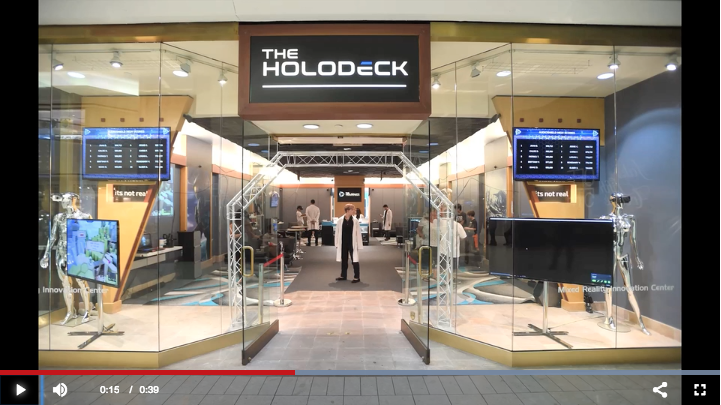
Featuring Microsoft’s Hololens devices, The Holodeck is the first of its kind, bringing true Holographic and Virtual Gaming to the general public. Located in the Stamford Town Center, it will have not only Hololens Holographic Games, but HTC Vive and good ‘ol fashion Xbox Stations as well. “There is something for everyone from the casual to the hardcore Xbox gamer here at The Holodeck”, says Todd Fuchs, Founder and Chief Innovator.
“While most Entertainment Venues are focused on VR and PC Gaming, we wanted to focus on technologies that provided a virtual experience blended with the real world in order to provide a truly and physically social atmosphere where gamers weren’t isolated in their own worlds. The Hololens was the natural choice, as we believe the future of arcades, who’s very nature is location-based gaming with others, must be Mixed and not just Virtual reality.”
Why not just Arcade? The Holodeck feels that the term Arcade is a bit outdated. So instead it calls itself an Innovation Center, and for good reason; not only can the general public come and experience MR, VR and Xbox Gaming, but independent game developers can rent time in one of the several on-site “DevPods”. Here they can use The Holodeck’s equipment to test out and develop their ideas on real hardware devices that they may not otherwise be able to afford. The Holodeck also offers on-site, full-time developers of its own, providing access to live help for any DevPod Guests.
“We are extremely excited to be living in an age where Guests can play virtual games based in the real world, collaboratively or against each other while sharing the same physical space and enjoying all the perks that arcades of yesterday provided to us growing up. We believe that not only is now the perfect time, but we want to be on the forefront of helping others realize this same future, by providing access to the tools and hardware necessary. And for Guests that just want to be part of a unique lounge-like setting and play some VR or Xbox, we’ve got that too.”
The Holodeck has several options for the experiences ranging from paying by the half hour, up to a monthly Membership full of perks and Member-only Events. They have certainly tried to think of everyone and provide a world-class upscale environment to match their mission. You won’t find any folding chairs, junk food or dirty rugs here. Even the Staff are dressed in nice black attire covered by futuristic white lab coats. “We want every Guest to feel as though they are a VIP, a king or queen. We take pride in offering cutting-edge gaming paired with an unmatched level of service, in a clean, up-scale environment dedicated to true gamers.”
The Holodeck opened in July 2017 at The Stamford Town Center directly next to the GameStop, 100 Greylock Pl Stamford, CT 06901
For more information contact media@theholodeck.com
Media Coverage:
Click to read: "Arcade Owner Making His Dream A (Virtual) Reality"

“With so much great success in a few short months, we are spawning a second, flagship, location at the Palisades Center in West Nyack, NY! It’s opening Oct 9th”

Today at Apple - How Augmented Reality Will Come to Life
This week, Apple showcased its vision for the future. The Event was not so much about a technology or features like AR, but more about what Apple is doing to inspire & improve our daily lives and for communities and society in a profound way.
Augmented Reality is used in Apple's new campus and potentially in future Apple Retail Stores to inspire & engage
Beginning with showing stunning views from its new campus headquarters that was designed to inspire, Tim Cook did mention "Augmented Reality" is used in its visitor center (see video).
Here's the Augmented Reality app used at Apple campus. Imagine Apple Retail using AR in stores! 😉 #ios11 #ARkit pic.twitter.com/AR2aM478Z5
— VR/AR Association (@thevrara) September 12, 2017
Angela Ahrendts, SVP of Retail continued by describing Apple retail stores as town-squares, and said retail is Apple’s largest product. Angela summed up her talk by highlighting several Apple global projects underway, clearly demarking an era of Apple integrating itself further into our daily lives on a global scale.
“Imagine AR used in Apple Retail stores and town-squares, similar to how it’s used in its “spaceship” campus to inspire and engage visitors.”
New paradigm shift in user experience
In the same spirit, Tim Cook unveiled Apple Watch as the number one watch in the world. And now I want to buy one! Not only did the video Tim shared made me want to shed a tear, it poignantly brought to life how the Watch affected the lives of its users and in some cases-saved their lives. With Apple Watch series 3, I can now make and receive calls without my phone! And my life will be simpler because now I can stream 40M songs while using the airpods while doing my everyday.
“This new behavior — of not needing my iPhone to make calls or listen to music — is a paradigm shift in user experience that Apple is playing very carefully, potentially resulting in future products like smartglasses ”
Apple said the new iPhones were designed for Augmented Reality
Apple explains how the new iPhones are made for Augmented Reality pic.twitter.com/rrDliJBbJ9
— VR/AR Association (@thevrara) September 12, 2017
With high hopes, iPhoneX is ushering in the next generation of connected devices with its front and back all glass design on the diagonal super retina display. More features include: OLED, Face ID to unlock your phone, an A11 Bionic neural engine, animoji’s controlled by your face, camera’s with dual optical image stabilization, and a true depth camera system. This adds up to make AR experiences more fluid and experiential; redefining perception and reality.
Finally, Apple delivered a few AR examples via Major League Baseball’s At Bat app, Sky Guide star map app and The Machines multiplayer game. At Bat, overlay’s player stats over a live view of the game. Similarly, Sky Guide overlays a star map when users point at the night sky. And The Machines, superimposes a virtual landscape on a real environment.
The first multiplayer Augmented Reality game on iPhone 🙌🙌#games #gaming pic.twitter.com/7cPJwUXEAO
— VR/AR Association (@thevrara) September 13, 2017
Apple iPhone facial recognition Augmented Reality #emojis #Amojis are already hot 🔥 pic.twitter.com/wdHKNwlpRH
— VR/AR Association (@thevrara) September 13, 2017
Ultimately, Apple is denoting a paradigm shift in how we think about and use its products. It sees itself as a community builder and platform for human ingenuity. It is also creating a not so secret network of organization based around shared connectivity among its devices and people’s daily life (cue the heart monitor of AppleWatch, home life of AppleTV, easy ApplePay and of course, the always intuitive iPhoneX).
Perhaps the standout performance of this years Apple Event wasn’t any one product or technology, but the idea that every person deserves an opportunity at something better, something more, something Apple. It is yet to be seen how AR infuses itself into our daily lives and how Apple let's it grow organically.
Video Preview: VRARA SF Lightfield Event (9/13)
What are lightfields and why are they important? We'll answer that question next week at VRARA SF's event on lightfields and volumetric VR. In short, lightfields capture a wide range of light in a given space so it can be recreated in a visually realistic way for VR and AR.
To get ready for the topic, VRARA SF's Mike Boland interviewed event speaker and all-around lightfield thought leader Ryan Damm (video below). Among other things, Damm expressed how attention to lightfields has increased with the excitement around VR and AR.
Not only that, but the "field" itself has expanded and evolved. The latest opportunity follows the market's overall shift towards mobile AR (i.e. ARkit and ARCore). We discuss this and many other aspects of lightfields to tee up deeper discussions next week.
See the full interview below and find out more about next week's event here. As a bonus for reading this post, save 50% on registration with the code MBHALF. And as always, VRARA members get in free.
Uncovering Consumers' VR Behavior & Attitudes (New Report)

Who’s using virtual reality (VR) today? What are their motivations? What are the VR use cases and content categories that resonate most? And for those uninterested in VR, what are their reasons?
A lot can be learned about VR’s market opportunity by answering questions like these, and uncovering sentiments of the consumer public. And in VR’s early days, such data is scarce yet critical to positioning strategies.
So ARtillry set out for answers. Working closely with Thrive Analytics, ARtillry authored questions to be fielded through its established survey engine. The result is the first wave of Thrive’s Virtual Reality Monitor™ (VRM).
Tapping a considerable sample of almost 2000 adults, the data returned telling consumer behavior patterns, useful in ongoing VR strategy refinement. That includes content, hardware and other components.
See the key takeaways below and preview the report here. To access the full report, subscribe to ARtillry Insights.
Top findings include:
- VR headset owners showed high satisfaction compared to other categories of consumer tech products. However many non-owners (38%) reported disinterest in VR ownership.
- VR's immersive experience presents a double-edged sword: It produces highly visceral and satisfactory user responses... but you have to see it to believe it
- This creates a challenge to scale distribution, given inherent adoption barriers like price and technological invasiveness. Education, retail installations, VR arcades and mobile VR will be the 'gateway drugs' to reduce that friction and cultivate tomorrow's VR owners.
- Among the things that VR users desire, more and better content top the list.
- This validates that content is king in VR, just like other mediums.
- Content is currently a gap in VR’s value chain, challenged by a classic "chicken & egg" dilemma, given low overall headset penetration.
- VR affinity correlates to youth and natural technology interest among digital natives.
- Willingness to spend $400+ on VR equipment shows a reverse correlation to age, with one exception: Ages 25-34 are more willing than ages 18-24, likely due to spending power.
- $400 is a significant price point, validated by Oculus’ recent Rift pricing adjustment.
- We’ll see more price competition: emerging sectors often trade margins for market share.
- Native thinking is a VR success factor: building specifically for the form factor.
- Just like with smartphones, VR apps and games that utilize unique aspects (i.e volumetric movement) will outperform those that shoehorn legacy 2D media into a VR experience.
Availability
The report is available to preview, and full access can be granted to ARtillry Insights subscribers. In partnership with the VR/AR Association, ARtillry Insights delivers a bundled research package to equip subscribers in AR and VR sectors -- and those entering from other sectors -- to make informed business decisions. Learn more or subscribe here.
The VR/AR Association Announces Equipment Rentals for HTC, Hololens, Oculus, Gear VR and More
Inquire about rentals/leasing here

Rental leases include the following:
Samsung Gear VR with Samsung smartphone
Oculus Rift with PC or Laptop
HTC Vive with PC or Laptop
Microsoft Hololens
360 Cameras also can be leased:
Orah 4i
Insta 360
GoPro Omni
Nokia Ozo
PCs include:
- Desktop - Asus Gaming PC, Intel Quad Core i7-6700 3.4GHz, 16GB, NVIDIA GeForce GTX 1080 8GB DDR5X (1 HDMI, 1 DVI, 3DP), Wi-Fi, Win 10
- Laptop - MSI GT73VR Titan Gaming Laptop, Intel Quad Core i7-6820HK 2.7GHz, 16GB, 128GB SSD, 1TB HDD, NVIDIA GeForce GTX 1080 8GB DDR5X, 17.3" 1080p 120Hz IPS Display, Win 10
Monitors include: 22"/24"/27" sizes
VR Gear:
- Samsung Gear VR, Samsung Galaxy, Headphones
- Oculus Rift Headset, Xbox One Controller, Oculus Remote, Touch Hand Controllers
- HTC Vive, (2) Hand Controllers, (2) Wireless Infrared Lighthouse Cameras, (2) Tripods
AR/MR Gear:
- Dev - Microsoft HoloLens Development Edition, Clicker, Win 10, Case
- Commercial - Microsoft HoloLens Commercial Edition, Clicker, Win 10, Case
Inquire about rentals/leasing here
Job: Professor for Augmented Reality/Virtual Reality School of Communication American University
Tenure-Track Assistant or Associate Professor for Augmented Reality/Virtual Reality
School of Communication American University

The School of Communication (SOC) at American University invites applications for a full-time, tenure-track position in the field of Augmented Reality/Virtual Reality at the rank of Assistant or Associate Professor beginning August 1, 2018. Rank is dependent on experience. Applicants should have a terminal degree in an appropriate field.
Candidates should be effective teachers and must be strongly committed to excellence in scholarly research and/or high-impact contributions to the field of communication, whether related to professional practice, creative endeavor, or academic discipline. We welcome applications from candidates engaged in high-quality scholarship/professionalism in areas focusing on Augmented Reality/Virtual Reality. Candidates also should have expertise in one or more of the following areas as well: emerging media, digital media, immersive storytelling, simulation, interactive documentary/journalism, or 360 film. This is a joint search with the Journalism and Film & Media Arts divisions in SOC. The successful candidate will be appointed in the division that best suits her/his creative, professional, and scholarly work. The successful candidate will be expected to teach across divisions and to develop and implement courses of interest to all SOC students, regardless of major. In addition to scholarship and teaching, responsibilities include participation in Division, School and University activities.
The position offers the successful candidate the opportunity to work with world-class faculty in film, journalism, and media arts as well as SOC’s Center for Media and Social Impact, the Investigative Reporting Workshop, the Center for Environmental Filmmaking and the nationally ranked Game Lab. Faculty have opportunities to work with professionals in federal agencies, museum, and national journalism organizations.
Salary and benefits are competitive. Review of applications will begin Sept. 1, 2017. Please submit applications via: http://apply.interfolio.com/42908. Include a letter of application, curriculum vitae, three letters of recommendation, recent teaching evaluations (when possible), and copies of recent published papers or working papers. Please contact Aisha Green, Faculty Coordinator, 202-885-2133, or aisha@american.edu if you have questions.
American University is a private institution within easy reach of the many centers of government, business, research, and the arts located within the nation's capital. For more information about American University, visit www.american.edu. The School of Communication offers both undergraduate and graduate degree programs in Film & Media Arts, Communication Studies, Journalism, and Public Communication. The Journalism and Public Communication programs are accredited by ACEJMC. Learn more about the School of Communication at www.american.edu/soc/ and about Journalism at www.amencan.edu/soc/journalism/index.cfm
American University is an equal opportunity, affirmative action institution that operates in compliance with applicable laws and regulations. The university does not discriminate on the basis of race, color, national origin, religion, sex (including pregnancy), age, sexual orientation, disability, marital status, personal appearance, gender identity and expression, family responsibilities, political affiliation, source of income, veteran status, an individual's genetic information or any other bases under federal or local laws (collectively "Protected Bases") in its programs and activities. American University is a tobacco- and smoke-free campus.

Google ARCore. 2 Billion Android Phones. 2 Phones to Begin With
In "response" to Apple’s ARKit, Google just launched ARCore. The main functionality includes motion tracking, environmental understanding, and light estimation. ARCore determines the position and orientation of the phone as it moves, which enables virtual objects to be accurately placed. Likewise, ARCore is able to distinguish horizontal surfaces using feature points in its motion tracking.
And for a wow factor, ARCore can detect the amount of ambient light in an environment to enable developers to- in effect, match virtual objects to their surroundings.
Google is launching ARCore on the Pixel and Galaxy S8 to begin with, in hopes of reaching a 100M Android devices by its public launch. Although Google started off AR focusing on Tango, it never really took off. Only two Android phones, the Lenovo Phab 2 Pro, and the Zenfone AR managed to employ Tango, which needs specialized hardware components in the smartphone or tablet. With the goal of reaching more users, Google is seemingly playing catch-up to Apple with a "software" based approach that can be deployed on existing devices in the market.
Meanwhile, Apple is happily ready to showcase a bunch of new AR apps for it’s iOS11 and new iPhone8 release in September. Brands such as The Food Network, Ikea, AMC TV met in Cupertino this week to demo their AR apps; many hope it will be a fun new way to engage customers and users alike. All in all, this adds up to some exciting opportunities for the entire ecosystem as Apple, Google among others are finally making AR mainstream.
Get involved in our Industry Committees and set best practices, guidelines, and standards for the industry.
Bay Area: Come Talk About Lightfields and Volumetric VR (9/13)
Register here. VRARA members, choose the member option at checkout.

For the VR/AR Association's next San Francisco chapter event, we'll dive into lightfields. Join us on September 13 for an evening of networking, food and illuminating discussion.
We'll examine the future outlook, as well as work being done today for volumetric photo capture in interior spaces like real estate.
What's a lightfield, you ask?
Several technologies are required for VR's holy grail: the fabled holodeck. We already have graphical VR experiences that let us move throughout volumentric spaces, such as video games. And we have photorealistic media that lets us look around a 360 plane from a fixed position (a.k.a. head tracking).
But what about the best of both worlds?
We're talking volumetric spaces in which you can move around, but are also photorealistic. In addition to things like positional tracking and lots of processing horsepower, the heart of this vision is lightfields. They define how photons hit our eyes and render what we see.
Because it's a challenge to capture photorealistic imagery from every possible angle in a given space -- as our eyes do in real reality -- the art of lightfields in VR involves extrapolating many vantage points, once a fixed point is captured. And that requires clever algorithms, processing, and whole lot of data.
Join us on September 13 to learn more about this key lynchpin in VR's future
Please note that this is the rescheduled occurrence of our June event of the same name. Registrants for June's event will be admitted free. Please respond to this email for a comp code. VRARA members also get in free, as always (choose "member" option at checkout).
Speakers

Alex Song, Director of Engineering, VR, Lytro

Colvin Pitts, Senior Architect, Lytro

Eric Trabold, Chief Business Officer, Avegant

Ryan Damm, Lightfield Thought Leader, Co-Founder, Visby

Emily Olman, SF Chapter Co-President, VRARA; Founder, Hopscotch Interactive

Mike Boland, SF Chapter Co-President, VRARA; Chief Analyst, ARtillry.
Learn more about the VR/AR Association, San Francisco Chapter here.
Listen to our VR Arcades Location-Based Committee Webcast
The VR Arcade (Venue Location Entertainment Industry Committee) gave a live talk with Q&A on the topic, listen here. This live event was attended by executives from IMAX, Verizon, among others. This was a panel discussion on the impact of Virtual Reality on Location Based Entertainment. Topics of discussion touched on best practices, monetization models, content creation, roadblocks, licensing and emerging trends for VR entertainment venues. Participants included members of the VRARA Committee. Moderated by Chris Pfaff Tech Media.

Listen here