
SF Chapter Event, May 3: UX in VR with Oculus and Unity
Register here. Members contact us for comp.

The next VRARA SF Chapter event is set, and it's coming up fast (May 3). For this event, we'll zero in on the increasingly important area of UX and design in VR.
To do that, we've called upon some heavy hitters. We have the industry's leading headset provider and game engine. That's right, it's a one-two punch of Oculus and Unity.
We're also proud to say that we're partnering with the good folks at ARVR Munch'nLearn to produce the event. And our friends at San Francisco State University will host us.
The event description is below and you can register here. VRARA members can contact us for a comp code, and we're available for any other questions, such as sponsorship.
We hope to see you there.
EVENT DESCRIPTION
We will hear from a panel of legendary speakers representing perspectives across the whole VR ecosystem.
- Brian Sharp manager of the Oculus Medium team at Oculus
- Dylan Urquidi UX engineer on the Editor VR project at Unity Labs (which allows you to use the Unity engine in VR)
- Rafael Brown - prolific game designer and founder/creative direcator at Digital Myths Studio
Brian Sharp: Product & Engineering Manager at Oculus

Brian formed and presently runs the team that built Oculus Medium, a sculpting application for virtual reality for the Oculus Rift headset and Touch controllers. As Product Manager he owns and guides the vision for the project, as Engineering Manager he directs the project's technical execution, and as an engineer he personally implemented substantial portions of the product.
Dylan Urquidi: Senior UX Engineer at Unity

Dylan is senior Engineer @ Unity Labs, developing Unity3D's EditorVR. In this role, Dylan works across art/tech-art/UI/UX/animation. Dylan has many years of experience developing 3D applications including:
- “Dream” – Oculus VR Store
- Unannounced Vive/Oculus VR titles / experiences / art installations
- http://madewith.unity.com/profiles/du3d
- www.du3d.org
- Dream (VR) - Oculus Gear VR Store - Engineering, Tech-Art, 2D/3D Art
- 8-Bit Armies - Tech-Art
- Zombie Chopper - Lead engineer & Tech-Artist (mobile port) - iOS / Android
- Super ICEE Maker 3D - Lead Engineer - iOS
- Circus Food Maker - Lead Engineer - iOS
Rafael Brown: Cofounder & Creative Director at Digital Myths Studio

Rafael has 20 years in the videogame industry across 30+ projects. He is studio head/co-founder in immersive entertainment XR (VR, AR, MR & FP). He has worked as a game designer, producer, project lead & creative director. Rafael is a common speaker at many top industry events. He has worked on many titles in the past under John Carmack at Id Software and other companies including
- Mafia 3 [PS4/XB1/PC]
- Trailer Pop [iOS/Android]
- Rage [360/PS3/PC/Steam]
- Quake 4 [PC/Steam]
- Doom 3 BFG Ed [PC/360/PS3]
- Doom Classic [iOS]
- Wolfenstein 3D Classic [iOS]
- Rage: Mobile HD/SD [iOS]
- Quake Live [PC]
- Need for Speed: Undercover [360/PS3/PC/PS2/Wii]
- Mass Effect 1 [360]
- Tony Hawk's Project 8 [360/PS2/GCN/XBX/PC]
- True Crime: New York City [PS2/GCN/XBX/PC]
- The Hobbit [PS2/GCN/XBX/PC]
- Thief 2 [PC]
- Thief Gold [PC]
- Dark Vengeance [PC/Mac]
He has done creative direction, game design and project leadership for a range of studios with development experience in VR, 1st, 3rd, vehicles across action, combat, adventure, stealth, platforming, RPG, racing, combat, open world, and multiplayer gameplay types in studios large and small.
Südwestdeutsche Medienholding Executive Meeting Sonthofen - Germany
By Michael Rava, VRARA Swiss Chapter President
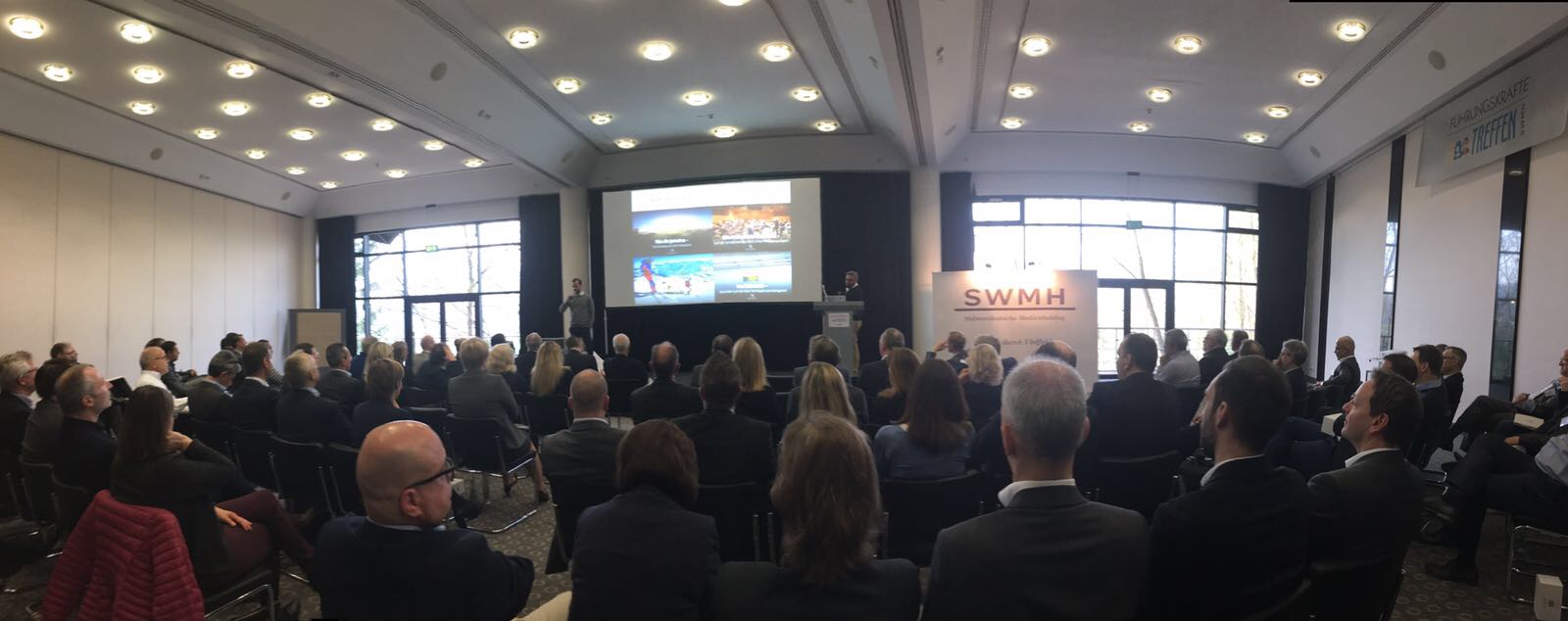
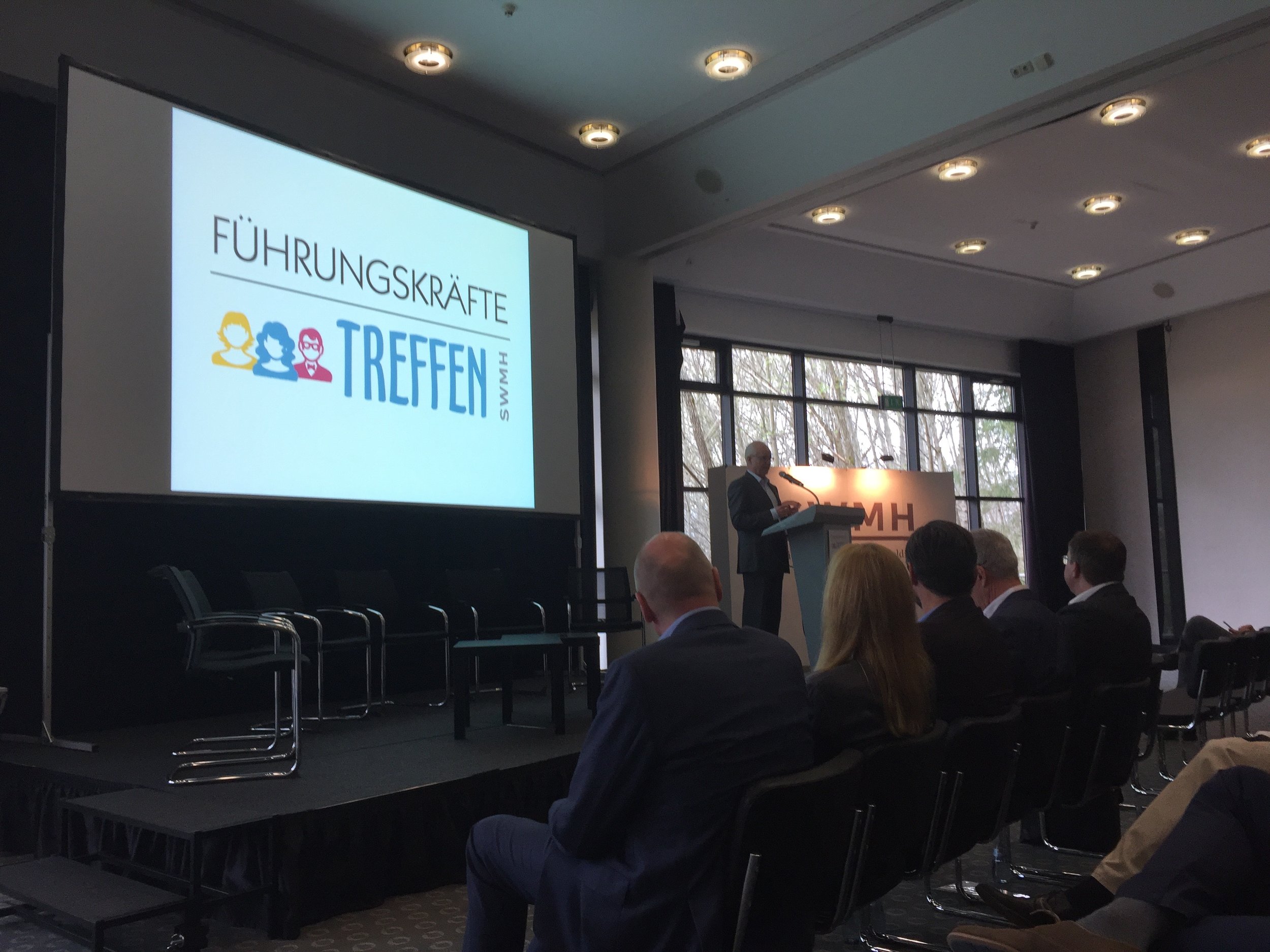
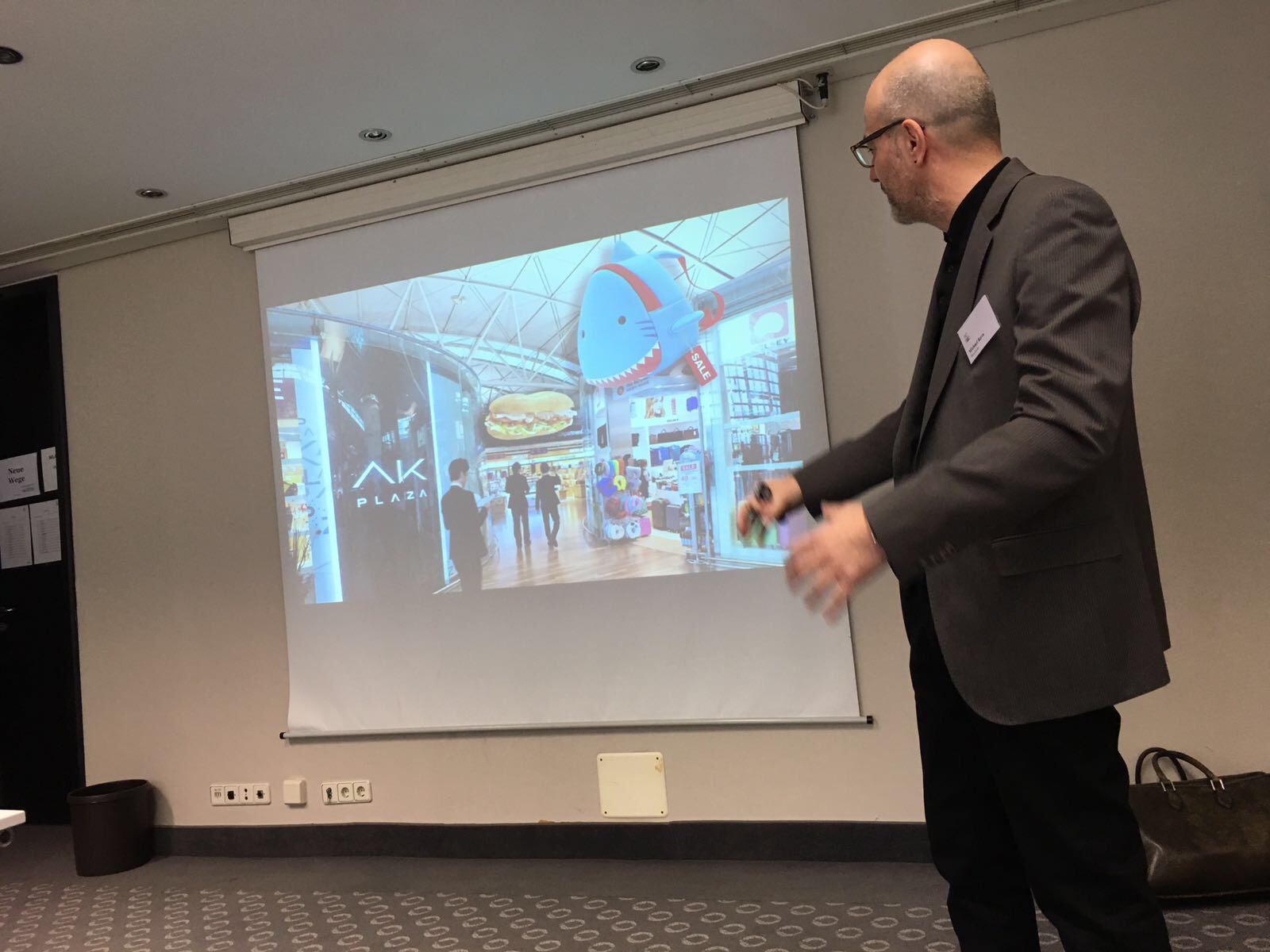
At the 2017 executive meeting in Sonthofen, Michael Rava of VRARA Swiss Chapter had the opportunity to present. Michael is also the CMO of WION, which is part of the Swiss Professional Media (Basel, Switzerland) and of the Südwestdeutsche Medienholding (SWMH - Munich, Germany). The holding unites several dozens companies in the field of publishing, radio stations, marketing companies and tech enterprises.
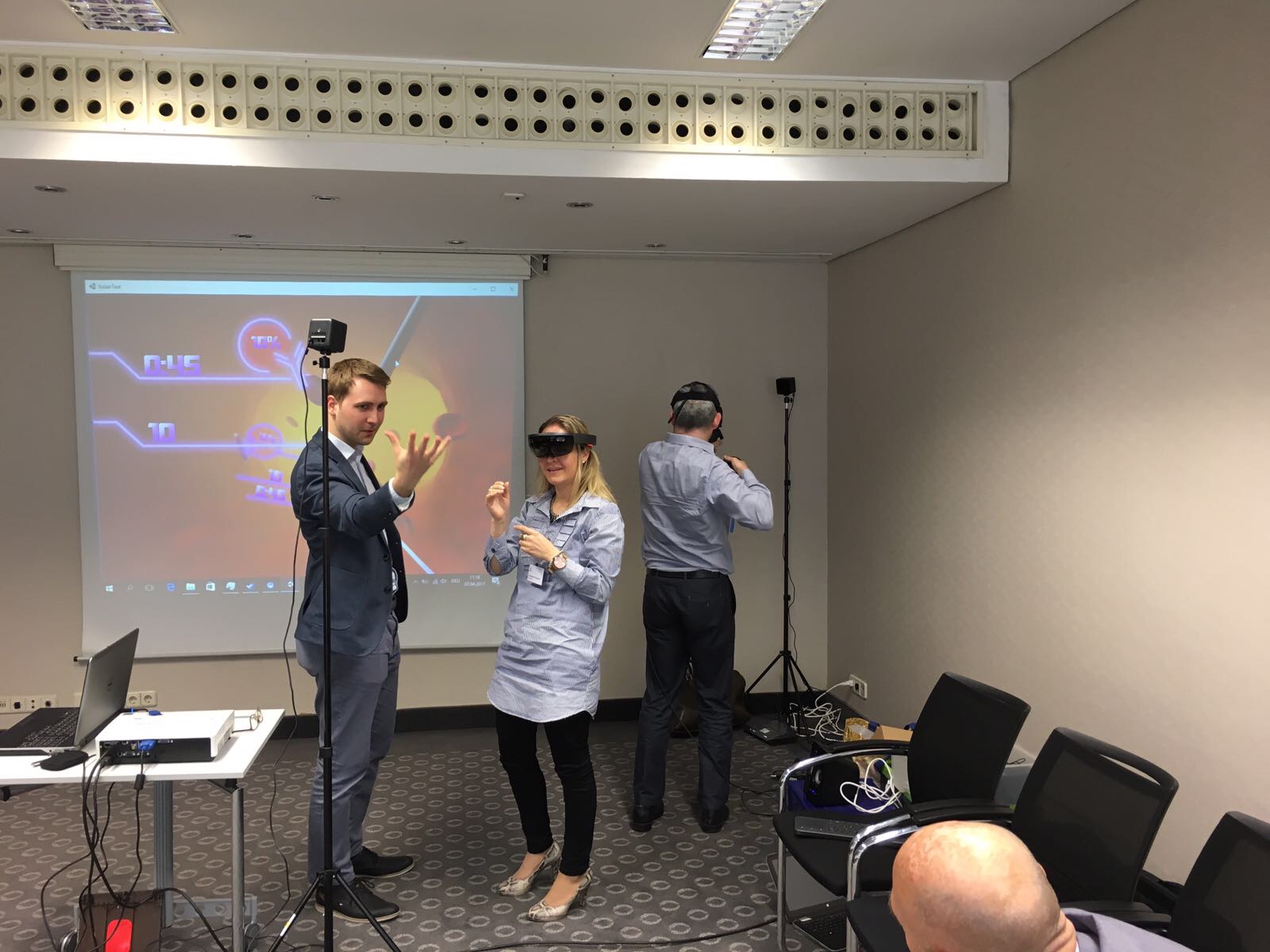
Michael had the opportunity to speak in two break out sessions about VR/AR/MR to a broad audience. Everyone was invited to go for a test drive with the HTC Vive and the HoloLens.
Besides the keynote and demoing there was time for socializing and connecting with other decision makers in the holding. The upcoming weeks and months several follow-up meetings will take place.
WION as a market dominator and Michael as a key-influencer will push VR/AR technology forward in Switzerland and Germany.
Whether you are a fresh new start-up, established small business or a large corporation, we would be happy to get in touch and see what we can achieve together! We all look forward to celebrate joint successes with you! Email Michael Rava at mr@thevrara.com
Everything VR & AR Podcast: Retinad VR
In the virtual and augmented world, content is king. We expect to be wowed by a variety of experiences that engage multiple senses one by one or at the same time.
Alexander Haque of Retinad VR talks about how his company can help make sure your VR & AR creations give users that "WOW!" moment by analyzing how users experience your content. Do they focus on what you want them to based on visual and audio cues or are they distracted by something else that has caught their eyes?
We discuss how Retinad VR can help with this and much more.
Listen here
LAUNCH Legends: Journey to the Past To Inspire Future Healthy Food Choices
The subject(s) of this coverage are paid sponsors or members of VRARA. For more about sponsorship and membership, contact us
by Davar Ardalan
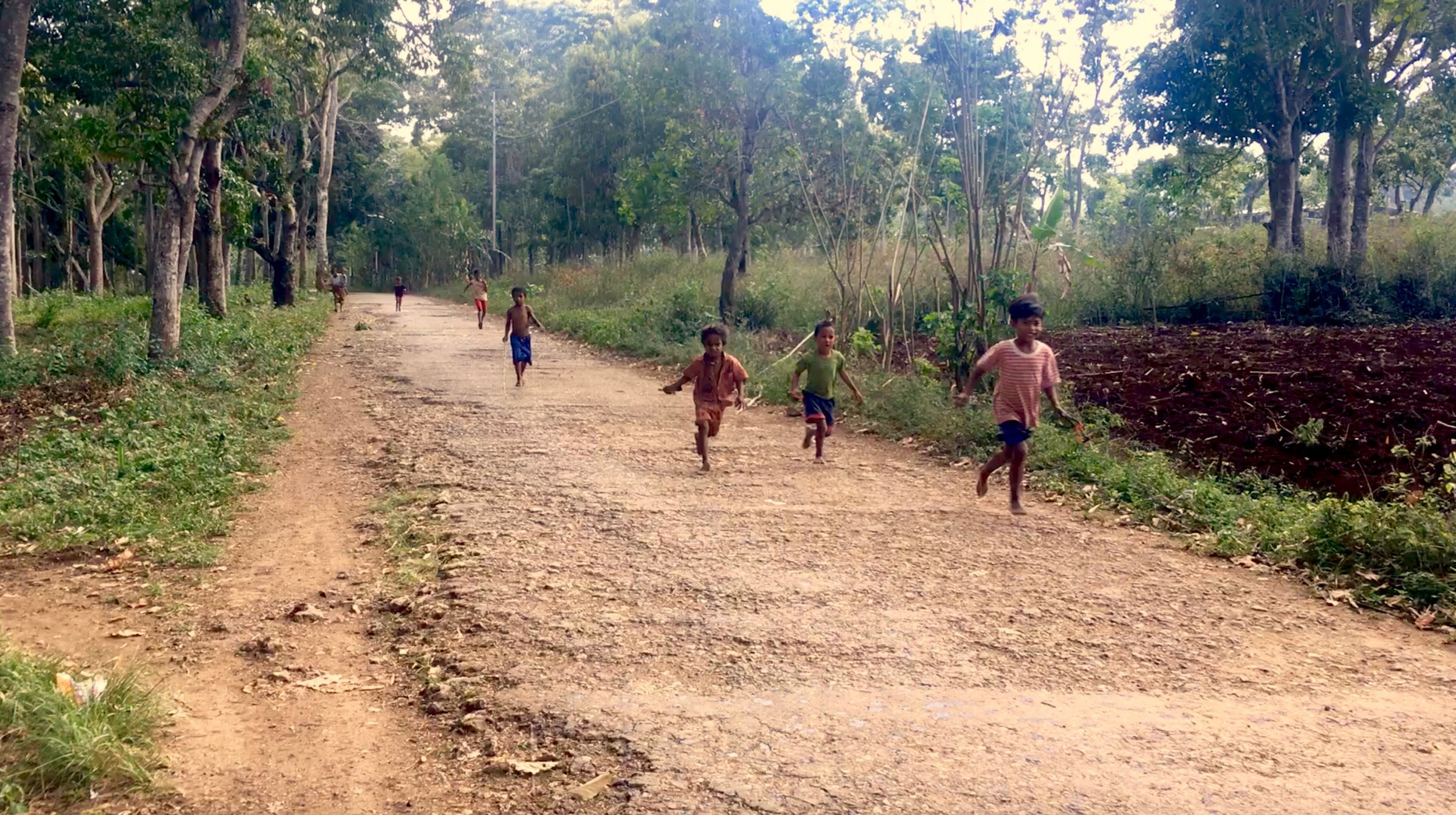
Every sense is awakened as you travel through Timor-Leste: vast farmlands, deep turquoise waters, and steep rugged peaks that bear the clutch of history in this young Southeast Asian nation. Timor-Leste became a sovereign state just fourteen years ago but it’s striking natural beauty contrasts sharply against its staggering rates of poverty and acute malnutrition as indicated by high prevalence of childhood stunting and wasting.
In his recent book, The Seventh Sense, author Joshua Cooper Ramos notes that ancient roots offer the energies we need to understand modernity in this era of connected crisis. What a gift to a storyteller embarking on a journey to the future of food, to begin with learnings and inspirations from history. Paying respect to traditional way of eating and the power within the land in Timor-Leste where so much nature is still untamed helps me understand why the world craves to be healthier and more productive.
My nature, our nature — by design works as a system. When you tear the system apart and stop nourishing it you upset its equilibrium. So in our era of "connected crisis,” as Ramos says, what are some of the unexpected innovations we can create to construct narratives that are inclusive and impactful?
We at SecondMuse through our global innovation platform LAUNCH, are embarking on an exciting journey together with the Australian Department of Foreign Affairs and Trade’s innovationXchange and communication technologist Ben Kreimer. Our goal is to team up with Pacific nations, Papua New Guinea and Timor-Leste to support the exploration of new ways to inspire pride in traditional local ingredients and thereby support positive impact in nutrition.
All around the world, agencies for sustainable development are becoming attuned to the value of immersive storytelling technologies - like 360° video, virtual reality, augmented reality and gamification - to both galvanize a bigger, stronger network of change makers and derive greater impact from their partners social impact campaigns. But we understand that even if we apply VR/AR tools to healthy eating social engagement campaigns -- we need to tap into the past in order to make an impact in the future.
As storytellers, digital technologists and development agencies we are asking this question: Can we use emerging communication tools in this disruptive age directed by ancient wisdom to inspire positive change in the lives of many around the world who are in the process of being connected for the first time ever?
Virtual reality and game projects, for example, could help inspire a “day-in-the-life” journey focused on the key health and food challenges facing the community. An augmented reality-enhanced card game with local legends as the protagonists might help promote an image of good nutrition from traditional foods and thereby reduce the consumption of nutritious poor imported food with high sugar, fat or salt.
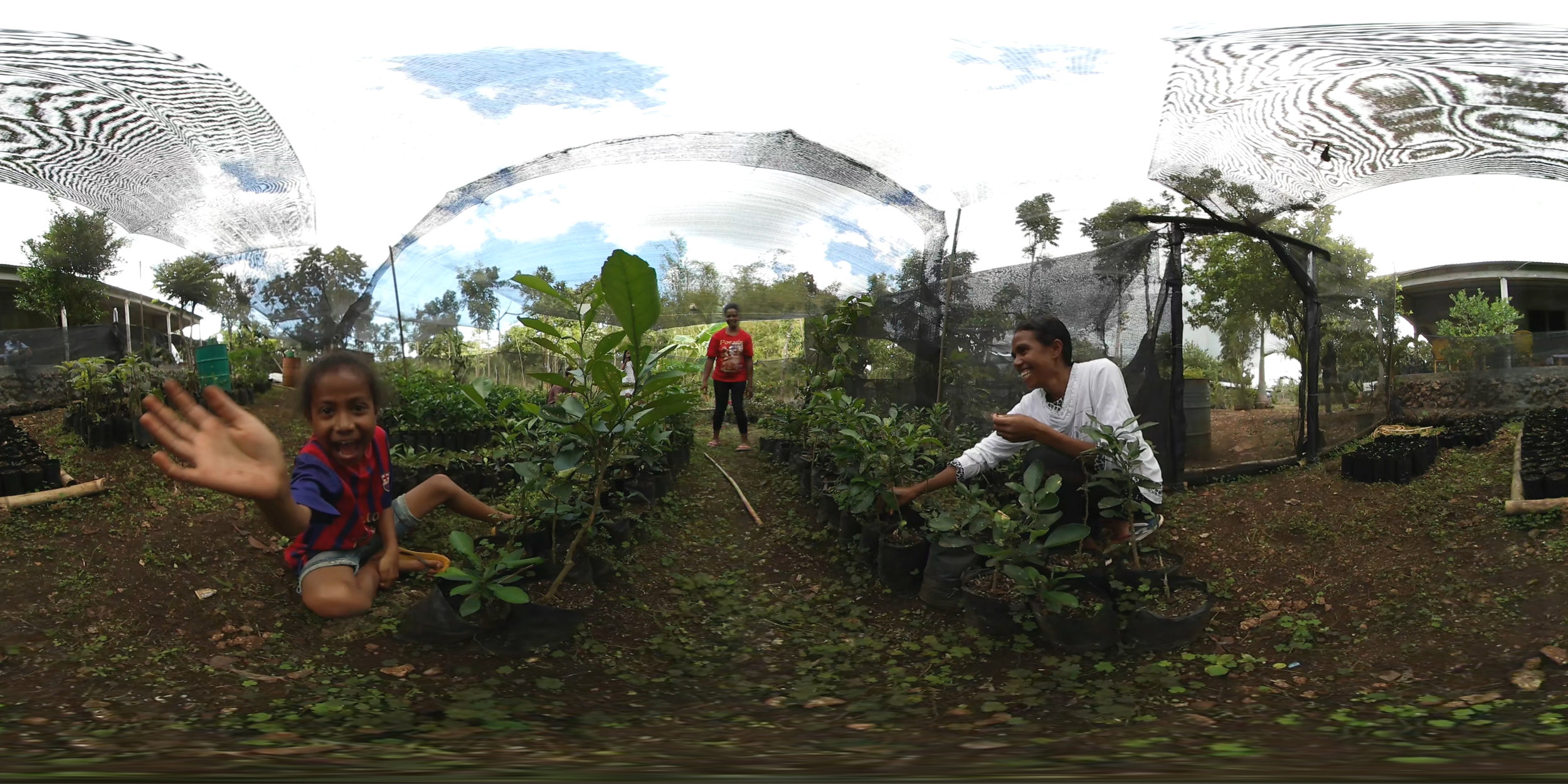
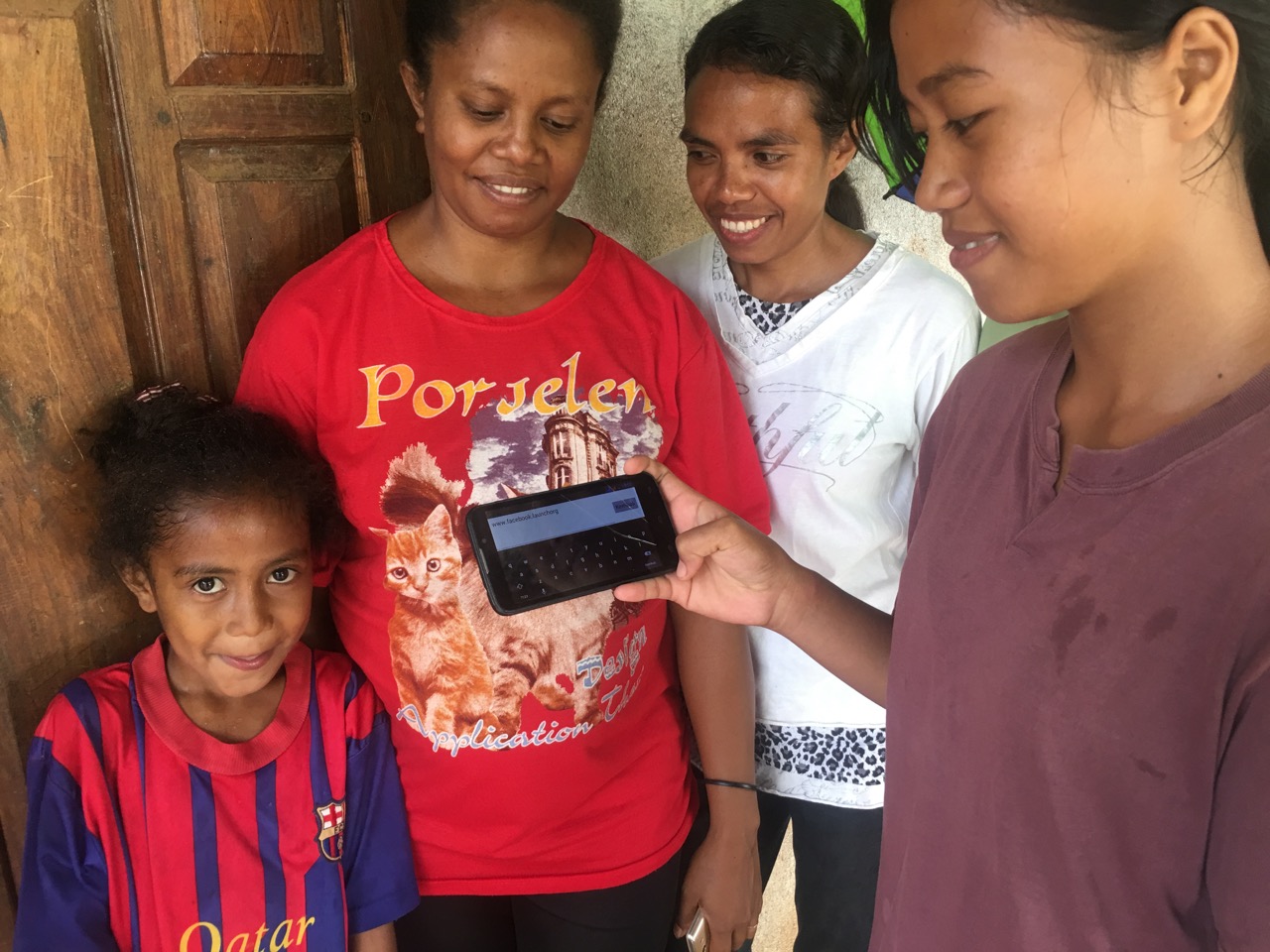
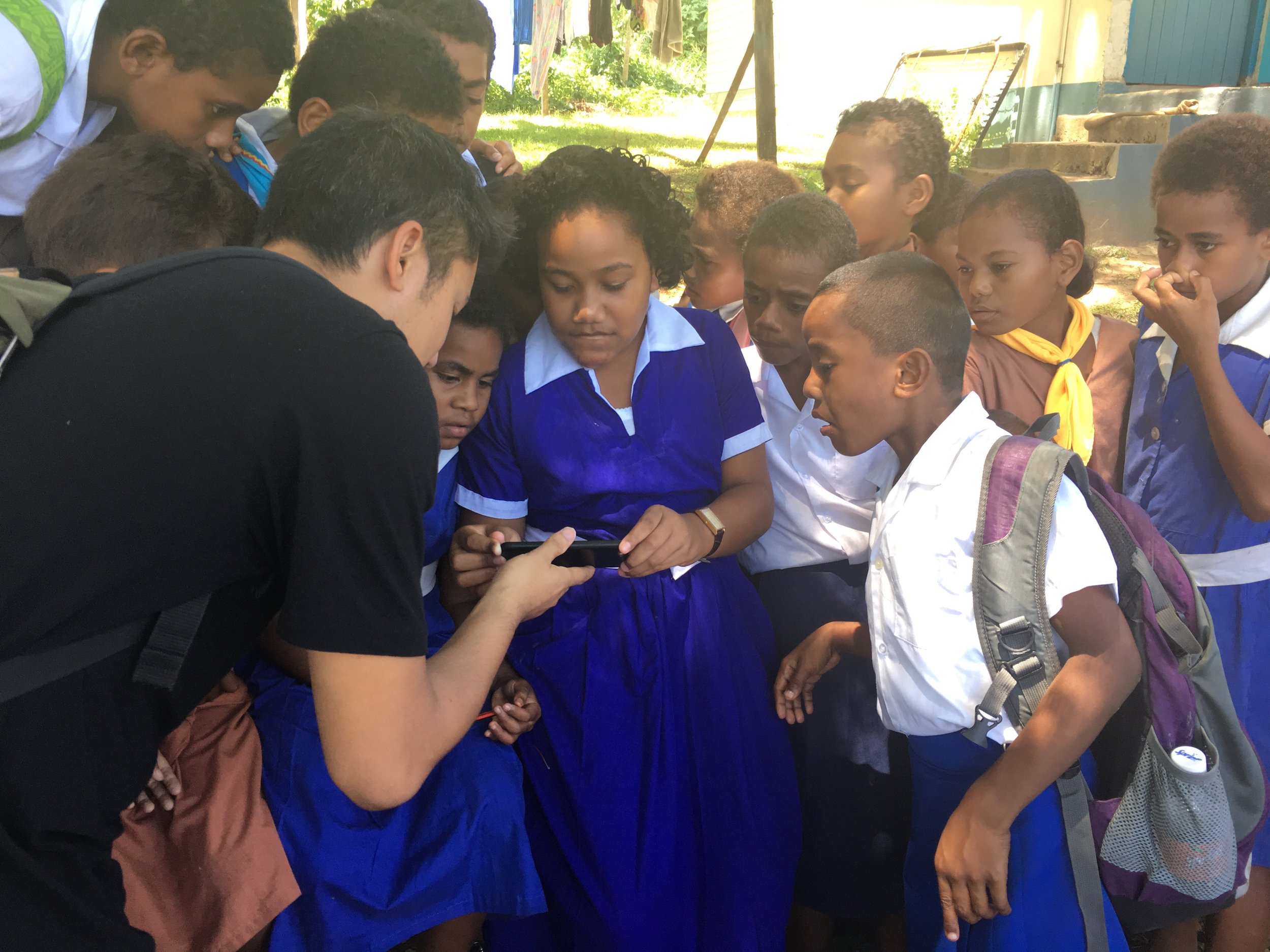
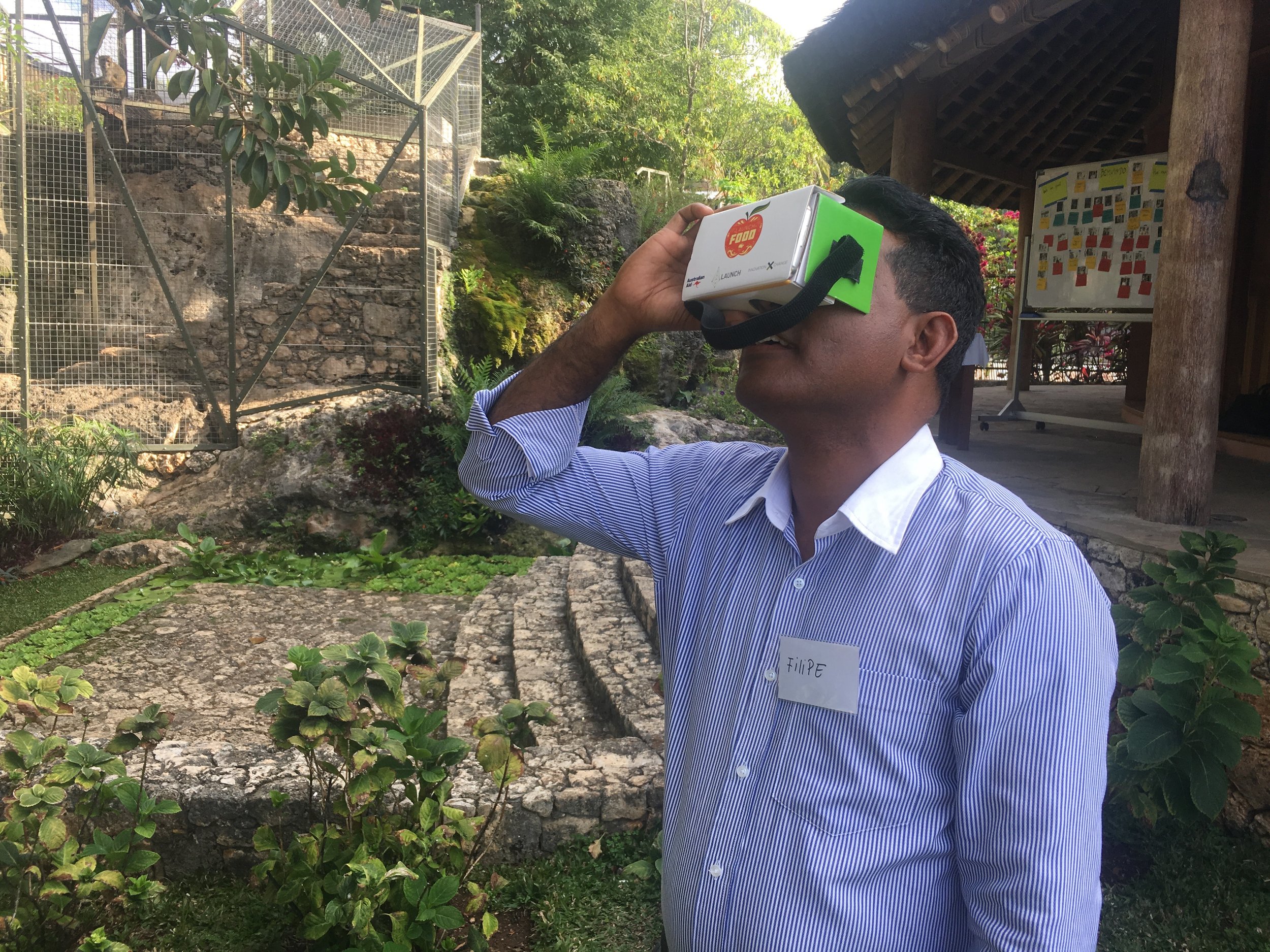
In October 2016, together with the Australian Department of Foreign Affairs and Trade’s innovationXchange (DFAT iXc) Ben Kreimer and I traveled to Timor-Leste as part of a LAUNCH innovation capacity building project for food innovators based in the Pacific region. We documented the work of food innovators in the cities of Dili and Baucau using new 360° video/virtual reality (VR) storytelling. We also trained local Timorese on how to use these new immersive storytelling tools, and loaned them a couple of our toolkits.
With the immersive toolkit we left with them, Catalpa International has been documenting the Hamutuk project, (an initiative aiming to reduce stunted growth in Timorese children under age two and supported by DFAT iXc and others). In our soon to be released, Eating with the Seasons 360°/VR video, we included a scene captured by Catalpa during one of their nutrition training workshops. In addition to contributing content, Catalpa's Gabriela Leite-Soares did the narration for our 360°/VR video. DFAT iXc and Catalpa have also been actively producing their own content, with viewers including Prime Minister Rui Maria de Araújo of Timor-Leste.
Furthermore, our first team of LAUNCH producers, including Tash Tan of Australia’s S1T2, are beginning ground-level ethnographic research, content development, and technology access iteration to help grow a local movement around healthy eating in the Pacific rim where malnutrition is at crisis levels.
At a recent LAUNCH Legends roundtable in the Bay Area, Tan recounted his investigative journey to Fiji, where he learned about the history and culture behind Fijian storytelling traditions. Tash shared his experiences with leading experts in immersive storytelling and food and nutrition, from sharing legends and folklore around the kava bowl to reading the pages of treasured books.
“Just as stories are shared through time,” Tan says, “the traditional recipes and culture of healthy and organic eating are passed down through each generation in the most magical of ways. My fear is that this culture is now under threat because the traditions of the people are being replaced with new-found values in foods that are highly-processed and rich in salt or sugar.”
The focus of the roundtable was to engage guests’ collective insights and knowledge, get feedback, and explore opportunities for collaborative partnerships that could benefit the goal at hand— to make an impact on nutritional outcomes within targeted sites in the Pacific using immersive storytelling and emerging technologies.
“The roundtable participants came from a diverse range of backgrounds, from nutrition to virtual reality and journalism, which created a fertile environment for creative problem solving around the nutrition challenges we’re looking to tackle with our toolkit of emerging technologies,” said Ben Kreimer, technical advisor for LAUNCH Legends.
The aim of our prototypes: to impact health and nutrition outcomes within targeted sites in the Pacific through experiments using new storytelling tools and to grow understanding of malnutrition more broadly as a development problem, particularly acute in the Indo-Pacific.
We will be working on delivery systems that will make such content accessible to people who don’t have high speed internet access, or own the necessary mobile device or computer. By fostering content creation and the development of delivery platforms that cater to non-western audiences, we hope to help democratize access to 360°/VR/AR technologies while helping create crowdsourced movements in the service of development and social good.
We have eight prototype proposals from VR/AR Producers on ways to bring immersive storytelling technologies to the Indo-Pacific. Let us know if you’d like to partner on this learning journey with us.
Davar Ardalan is Director of Storytelling & Engagement at SecondMuse where she leads storytelling around sustainability and social impact issues, citizen science, health and nutrition, ocean conservation, and materials innovation. Ardalan directs the LAUNCH Legends VR/AR project and sits on the Advisory Board of the VR/AR Association of Sydney, Australia. As a veteran journalist and former social media strategist at NPR News, Ardalan’s real-time campaigns garnered millions of impressions on Twitter and Facebook. She has been recognized with a Gracie Award from the American Women in Radio and Television, two NABJ Awards, and a shout-out in the popular comic strip Zippy.
About LAUNCH:
Established in 2009, LAUNCH is an innovation-centered platform founded on the belief that today’s problems are too big to be solved by any one organization working alone. To date, LAUNCH has accelerated 100 innovations disrupting pathways for sustainable change. LAUNCH Legends is a program supported by the Australian Aid program’s innovationXchange.

Can Virtual Reality Play a Role in the Area of Criminal Justice?
By Rory Wells
The arrival of new technology will always also bring new opportunities for nefarious behavior. I am certain it was not long after the invention of the mass produced automobile, where we had our first vehicular homicide. Similarly at some point after the invention of the telephone we were introduced to phone scams. This behavior continues to persist because there are always people who succumb to these cons. Some of us may have received a call (or even an email) from a far away “lawyer” or “banker” requesting a small fee or perhaps your social security number and a great inheritance will be sent your way. Some of these crimes seem obvious now in hindsight; however the problem with new technology is that it is “new”. We can’t always predict how some may use it to harm, steal or even kill another human being.
Like many of you reading this blog post I am very excited about the development of virtual reality/augmented reality and the incredible promise it holds. Whether it be, gaming, shopping, recreation, education or communication, it is exciting to have a front row seat and watch this technology develop.

Although courts have a resistance to new technology, or anything new for that matter, there are clearly opportunities for VR/AR to impact the criminal justice system. We now have 360 degree video which could easily put a jury into the crime scene in a much more interactive way than merely looking at photos or regular video. But I wonder what if we had a virtual experience supported by the latest brain research could assist a violent criminal break old habits and patterns by developing new neural connections. This experience might help a violent offender change or control their behavior thereby assisting in rehabilitation and overall safety of others.
Or perhaps a virtual reality program where one who is up for parole, voluntarily submits to a series of scenarios enabling us to see his or her choices played out. Let’s say the individual is at his first job after release and we have a scenario where his new boss yells at him for breaking a dish, or he is walking down the street and various crimes of opportunity are presented in subtle ways. These developments may lead us to a more definitive conclusion on whether to release an inmate on parole.
Of course the technology can be used for the training of police officers as well. This would include everything from community policing scenarios to hostage negotiations.
With the development of new technologies there are always ethical questions that should be asked. What are we doing, why are we doing it and should we be doing it at all? Regarding these developing technologies and their applications to human behavior we should not ask; what is available and how can this help us? We should ask what do we need and how can we create it?
Rory Wells is a member of VRARA NYC Chapter and Co-Chair of the newly formed Criminal Justice Committee. He is an Assistant Prosecutor with the Ocean County Prosecutor’s Office in Ocean County New Jersey.
Recap of VRARA Houston Chapter Event
By Jon Banks, President of the Houston Chapter of VRARA.

Houston, we have lift off in the VR/AR/MR industry! Say what? Virtual reality, augmented reality, and mixed reality are a thing of the future and in Houston we are ready to make the future our reality today. The Houston chapter of VRAR Association held their first meeting in March 2017.
We had about 50 people in attendance. Everyone had the opportunity to partake in a few VR/AR/MR realities, from walking the plank to traveling on Mars and other experiences, we started the evening off with mingling and fun hands-on exposure.
Our meeting included a panel discussion with 5 professionals in various industries that can see how VR would be beneficial to their business, from medical, educational, and social impacts, we got to discuss important pros and cons, ethical concerns, and more with the experts in their fields.
Houston chapter will hold quartely meetings for members and public alike. Learn about virtual reality, experience virtual reality, let VR be a part of you and come join us!
If you want to stay updated on industry trends, major news and gadgets alike, join our newsletter today.
To contact the Jon Banks, President of the Houston Chapter of VRARA, click here
VR AR Association and Insta360 throw Tech Party of the Year

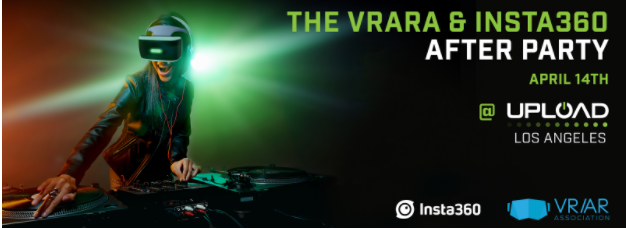
Los Angeles, Calif., March 30, 2017 - The Los Angeles VR/AR scene is just beginning to make a name for itself, and the VR/AR Association (VRARA), in partnership with leading 360-degree camera maker Insta360, is planning a party that will help put it on the map. To follow up one of the biggest tech events in Los Angeles, VRLA Expo, the VR/AR Association Los Angeles chapter led by Josephine Munis and the Atlanta chapter led by The Virtual Reality Girl, Laura Hall, are throwing an afterparty fit for the occasion, on Friday, April 14th, at Upload LA in Marina Del Rey.
With the venue graciously provided by Upload at their new LA location in Marina Del Rey, this party will bring together the leading voices in VR/AR and the tech industry while offering a fun and exciting environment for attendees to let loose and enjoy.
So far included in the guest list are representatives from CBS Digital, Live Nation, Microsoft's VR team, Sony Pictures VR, Google VR, CAA, Ultrahaptics, California Science Center, Cognitive VR, The Third Floor Inc., The Rogue Initiative, Within, Wevr, USC, Blind Squirrel Games, Jaunt VR and more. Guests will have the chance to demo awesome experiences, check out Insta360’s brand-new professional 360 camera, enjoy incredible food and beverages on VRARA and have a lot of fun! The VR/ARA has lined up a VR DJ to set the mood and will be handing out Swag Bags that will not disappoint.
The event is co-hosted by Insta360, the maker of the world’s most versatile 360-degree cameras, with a goal to empower creators to start capturing virtual reality content and sharing it with the world. Insta360 will demo its plug-and-play 360 cameras for iPhone and Android, as well as the brand-new Insta360 Pro, an 8K camera for pro filmmakers. President of the VRARA Los Angeles chapter, Josephine Munis, explains, “with the help of our co-host, Insta360, VRARA Los Angeles chapter is fulling embracing the nature of VR and AR technologies by making this as immersive as an event as possible.” ADVR, who specializes in immersive virtual reality marketing and advertising, is sponsoring the event. Demos include experiences and games from Insta360, Studio Disrupt, Candy Lab, and others.
Again, the event will take place on April 14th, at Upload LA in Marina Del Rey, and will be hosted from 7pm-10p. Tickets can be purchased on Eventbrite and VRARA members attend free.
Press and Media members are invited to attend with the only stipulation being that they be willing to jump on the VR/AR bandwagon and celebrate this monumental event taking place in the Los Angeles tech industry.
The VRARA is a global organization, with over 35 chapters, whose mission is to accelerate the smart growth of the VR/AR industry on a global scale. The Los Angeles chapter has the specific goal of merging the unique creative and cultural landscape of Los Angeles with the exciting opportunities and development of immersive VR/AR experiences and technologies.
Please contact Amanda Dearman (PR & Communications Director, VRARA LA) at amanda@thevrara.com with any questions and for information about press passes and additional ticket discounts.
Thank you to our Sponsors!


The New Samsung Galaxy AR VR SmartPhone with Bixby Vision
This week Samsung unveiled two new products that will further real word applications and use of both VR and AR. First, the much discussed Samsung Galaxy S8 and S8 Plus; will enable Bixby Vision. Although Samsung has decided to keep the explanation super simple and just says, the user can point to an object and scan. What is behind the scenes of this tech achievement is what people should be talking about. So far, the functionality of Bixby Vision is limited to product search, location id, translating text, object recognition, and QR codes. However, in the near future, we should expect a fully integrated AR type product to render over the real world objects it identifies.

“With Bixby Vision, you can focus on an object through your viewfinder and tap the Vision icon to identify landmarks or translate foreign languages. Bixby lives inside your Camera, Gallery and Internet to give you a deeper understanding of what you’re looking at. Just tap the Vision icon in your viewfinder and Bixby will serve up contextual icons: translation, QR code detection, landmark recognition and shopping. Translate foreign languages just by pointing your camera at text. Bixby vision on the Samsung Galaxy S8 Shopping Take a picture of an item to find out where to buy it.”
The second product Samsung announced is Samsung Gear 360 4k! Now, this is big because the content makers and the ecosystem have been waiting for an affordable, easy to use, fully integrated 4k 360 camera for all the fun possibilities it will allow. Users will now be able to shoot in 4k, do live streaming to Facebook and YouTube in 2k and hold the camera in their hand with the newly formed handle. The cost is what sells it, most likely starting in the upper $300 range along with the Gear 360 product line. I am optimistic Samsung appears to be moving opportunities forward in the brave new world of AR/VR.
“A whole new VR experience with completely intuitive responses on the in-hand controller, and a Gear 360 that shoots in 4k and fits in your pocket.”
Engaging VR/AR Pioneers on the Future of Food
VRARA SF participated in the LAUNCH Food forum in Marin Ca this week, organized by VRARA Sydney member Davar Ardalan. It focused on the role of immersive storytelling to achieve the organization's goals. The following piece was written by Ardalan, originally appearing in Huffington Post.
Update 4/05: Commentary has been added from VRARA SF Chapter Co-President Emily Olman.

Engaging VR/AR Pioneers on the Future of Food
by Davar Ardalan
We’re reporting this week from the LAUNCH Food Forum in San Francisco. We’re here meeting our food innovators from around the world who are committed to helping create a healthier world through innovation. From Fiji to San Francisco, innovator Tash Tan of S1T2 has travelled around the world to do on the ground research for the LAUNCH Legends project on the possibilities of using immersive storytelling technologies with the goal of restoring pride in traditional eating in the Pacific. This has included an explorative trip that saw Tash travel with LAUNCH innovator Chef Robert Oliver and Legends Project Manager Allan Soutaris, across the north coast of the island of Viti Levu to areas most afflicted by a devastating cyclone, then down to the capital Suva before visiting a surrounding island, Beqa.
“Just as stories are shared through time,” Tash says, “the traditional recipes and culture of healthy and organic eating are passed down through each generation in the most magical of ways. My fear is that this culture is now under threat because the traditions of the people are being replaced with new-found values in foods that are highly-processed and rich in salt or sugar.”
At a LAUNCH Legends roundtable this week in the Bay Area, Tash recounted his investigative journey to Fiji, where he learned about the history and culture behind Fijian storytelling traditions. Tash shared his experiences with leading experts in immersive storytelling and food and nutrition, from sharing legends and folklore around the kava bowl to reading the pages of treasured books.
The focus of the roundtable was to engage guests’ collective insights and knowledge, get feedback, and explore opportunities for collaborative partnerships that could benefit the goal at hand— to make an impact on nutritional outcomes within targeted sites in the Pacific using immersive storytelling and emerging technologies.
“The roundtable participants came from a diverse range of backgrounds, from nutrition to virtual reality and journalism, which created a fertile environment for creative problem solving around the nutrition challenges we’re looking to tackle with our toolkit of emerging technologies,” said Ben Kreimer, technical advisor for LAUNCH Legends.

LAUNCH Legends roundtable included VR pioneers in the Bay Area, DFAT’s innovationXchange, co-President of the VR/AR Association in San Francisco, and experts in food systems and movement building as well as LAUNCH and SecondMuse team members.
“What surprised me was to learn that the challenges in the food system are similar to the challenges within the storytelling space,” says Stuart Gill, partner at SecondMuse and LAUNCH. “One of the VR producers today reminded us that the food business and emerging technologies are primarily focused on entertainment as opposed to meeting our basic human needs, like eating and telling compelling human stories,” Gill added.
Through a curated presentation and discussion format, we posed questions about the creative challenge ahead to effectively source learnings from the participants as they apply to this challenge.
“We learned something powerful today from our engagement with Tash Tan, and that is that the story always comes first and the technology second,” says Jeff Hamaoui, Executive Director of LAUNCH.
Additional Commentary by VRARA SF Chapter Co-president Emily Olman:
The LAUNCH Legends Roundtable in Sausalito brought together leading VR pioneers including Barry Pousman and Daniel Burwen of JauntVR. Participants were informed of progress on the project from one of the LAUNCH Legends Finalist Tash Tan, and further explored how VR/AR can be implemented for the most lasting, behavior-changing impact within the target population.
The global strength of the VR/AR Association was evident, as Davar Ardalan (D.C. Chapter Member and Sydney Chapter Advisory Board Member), Emily Olman (SF Chapter Co-President), and Tash Tan (Sydney Chapter Member) were all in attendance. The VRARA SF Chapter hopes to collaborate with Ardalan and Tan later this year for a follow-up event.

Learn more about the VR/AR Association, San Francisco Chapter here.

Vancouver's Chapter of the VR/AR Association Makes VR/AR/MR accessible
Article originally posted by The Georgia Straight, can be found here and written by Kate Wilson, March 9th, 2017.

Imagine a world where you can hold up a cellphone in front of a restaurant, and instantly see Yelp reviews, flip through a digital menu, and have the option to book a table. Then consider driving a car with a smart windshield, which displays digital graphics on top of the driver’s real-life view. And then try to wrap your mind around a world where screens have become completely obsolete—because individuals can conjure computer displays through contact lenses or glasses.
According to Dan Burgar, president of the Vancouver chapter of the VR/AR Association, that day is almost upon us. Working to develop awareness of virtual reality (VR)—the technology where users wear an immersive headset to experience three-dimensional environments—and augmented reality (AR)—the practice of superimposing computer-generated images onto a user’s view of the real world—Burgar finds it difficult to think of an industry where the hardware would not generate a huge leap forward.
“I think the thing that will blow people’s minds the most is the practical applications,” he tells the Straight, reached by phone at the Mobile World Conference in Barcelona. “The gaming stuff is really fun, and the entertainment side is really interesting, but what I get most excited about is how widespread it’s going to become in everyday life, whether it’s in professions like healthcare, where people can operate without having a human body in front of them, or just walking around on the street.
“It’s already beginning to be used in areas like building development, where it gives architects the tools to manipulate their creations in three-dimensions,” he continues. “Real estate is using it to allow customers to visualize unbuilt spaces, and to view properties without actually having to visit them. And it’s becoming important in education, where it’s possible to train individuals in areas like oil and gas extraction by just putting on the headset. That allows you to get as close as possible to a real-life experience before entering a dangerous situation.”
Vancouver is fast becoming a hub for VR and AR—a fact that hasn’t gone unnoticed by the B.C. government. Not only has the province invested $100 million in venture capital for British Columbian tech companies, it’s recently started offering a tax credit specifically for virtual and augmented reality. It’s that forward-thinking approach, Burgar says, that inspired him to create a VR/AR Association chapter in the city.
“If I had to sum it up, I’d say that the VR/AR Association is a community of the best minds making use of virtual reality and augmented reality,” he comments. “So far there are 28 branches, including places as far-flung as New Zealand, Russia, and the UAE. The goal is to connect businesses and organizations with the developers and service providers working with the technology. We want to band together with companies to figure out what the best practices are, and how we can connect together to move the industry along.
“Our Vancouver chapter has about 30 members,” he continues, “but there are more than 50 companies here that are dabbling in virtual reality or working on augmented reality development, and that number increases every day. We are continually connecting local businesses with Vancouver developers, and figuring out how to use this technology creatively.”
As well as pointing out its versatility in a business to business setting, Burgar is keen to bring VR and AR to the local public. Recently organizing an event at Canuck Place—a hospice that offers palliative care services for sick children in B.C.—the VR/AR Association staff spent a day introducing the kids to the headsets.
“Community engagement is really important to our organization,” Burgar says. “We live in such a great city, and any way that we can give back is big for us. It feels great to be able put a smile on the kids’ faces by putting them in VR goggles and getting them out of the hospital with games, or transporting them to different virtual locations, and letting them immerse themselves in fantastic worlds. We want to continue cultivating and helping out Vancouverites in any way possible, and we have some initiatives we’re working on that will bring this technology to the community.
“Our next big VR and AR event is called CVR,” he continues, “which is the Pacific Northwest’s leading virtual, augmented, and mixed reality expo. We’re expecting between 8000 and 10,000 people. The Friday will be an industry day, and people like NASA, CNN, and the government of Canada will be there to discuss where VR and AR fit in their industry. Then we open it up to the public for the weekend, where anyone can come and try it out. We think it’s important that this technology is accessible to everyone—because this is the future.”
CVR is at the Vancouver Convention Centre from May 5 to May 7. More information about the VR/AR Association can be found here, and the official page for the Vancouver chapter can be located here.
SF: Come Experience the Intersection of VR and Art
For discounted passes, contact us

What does the intersection of VR and art look like? Come find out at Upload's Art + VR event this Friday night. VRARA SF has partnered for discounted attendance for members.
Art & VR brings the bay area tech and art communities together at Upload SF. Designers, artists and techies converge to explore this new medium to the creative industries.
There will be original artwork for sale alongside live VR demos, not to mention that this is the first black tie event in the event's series. Find out more and register here.
Thought Leaders: Where Are We in VR/AR's Life Cycle?
This post was authored by Kristie Cu, business strategist and VR/AR lead at VRARA SF member Orange Silicon Valley. It originally appeared on Medium. More info on VRARA SF and its members can be found here.

Where AR and VR Stand in 2017 After a Dizzying Wave of Hype
By Kristie Cu
Virtual reality headsets are not hard to find in 2017. Just take a look at the next big conference you attend; you’ll likely find some type of Oculus or Vive demo. Visiting a newsstand? You’ll likely be able to find a free Cardboard in a magazine, covered with someone’s promotional branding. Visiting a sports stadium? You’ll probably find VR demos there as well.
You’ve probably tried one or more of these VR or augmented reality demos. Why? Because we saw how much smartphones changed the world, and the future of tech seems even more promising. But now you’ve tried it — were you blown away? Do you immediately want to buy a high-end headset? Desktop hardware? More games? Controllers?
Using technology as a shiny promotional tool can work when it’s nascent; everyone wants a taste. But, when someone gets a mediocre-at-best first taste, it can be hard to convince that user to return. VR and AR can be used as gimmicks, but they can also be so much more. That’s why VR/AR still needs a successful and robust market introduction to fully deliver on the platforms’ promise.
While we haven’t seen shockingly wide-spread adoption, there is still reason to be optimistic — about AR, VR, and the evolution of both industries as we see new applications unfold.
Here are some positive highlights: Early statistics show strong potential for VR/AR market size. The few numbers that we have point to a growing, promising industry — to date, approximately 5 million Samsung Gear VR’s, 915K Playstation VR units, 420K HTC Vive headesets, and 350K Oculus Riftshave been sold. Meanwhile, a reported $2.3 billion in venture capital has been deployed into AR/VR. We also know global smartphone is at all-time highs, which could be viewed as additional addressable market, a whopping 2 billion+ people who could be using mobile VR — which will of course depend upon successful mobile hardware and software.

Sources: Samsung, Sony, SuperData Research
What’s to come has constantly been the story of the slower, but larger market of AR within the enterprise. A topic perhaps less visible to consumers, but extremely powerful and potentially enabled by some of the VR technologies that exist today. Beyond the fact that the forecasted addressable market is large, few AR headsets are available, and early signs point to a need to attract more developers and wait. Larger corporations are just getting started, with many focusing on illustrating ROI through proof of concepts.
Corporations, VCs and angels alike are investing in the opportunity to see new means of productivity and entertainment to come of both AR and VR. A surge in the number of VR/AR focused funds indicates high interest and enthusiasm in the market, including funds like Virtual Reality Venture Capital Alliance (VRVCA), Presence Capital, The Venture Reality Fund, Colopl and corporate groups like HTC, Comcast Ventures, Qualcomm Ventures, Intel Capital, and Google Ventures.
So far, some early investments results have been mixed, but some positive signals have emerged in early 2017. Corporations continue to indicate strong interest in the AR/VR markets, and I have compiled a timeline of the most noteworthy moves this quarter.
While market signals are still waiting to mature, corporations continue to push forward. Samsung will push forward with a $150 million fund that will in part target young VR startups. HTC announced its own new push in the mobile VR arena, and its Vive headsets will feature prominently in IMAX’s new VR theater in Los Angeles. HTC appears to be confronting challenges shared by Facebook’s Oculus division, rolling out new financing plans to make its Vives accessible to a wider audience. That move echoed the Mar. 1 Oculus announcement that its headset prices would be cut from $499 to $399.
What’s clear is that the value from this emerging technology is indeed promising, but that the precise value is still being determined — puzzle pieces are constantly in flux: from the hardware itself, to business models and pricing, to content and strategic partnerships. Thus, as all players seek to establish themselves as first-market-movers, their decisions should be fueled not only by short-term value, but also by long-term customer value as well.
Kristie Cu is a business strategist focused on corporate strategy, virtual reality, augmented reality, deal sourcing, and partnerships at Orange Silicon Valley.

Boris Pokrić, Founder and CTO of ARVRtech, on why ARVRtech joined VRARA
ARVRtech is delighted to announce that it has become the newest member of the global VR/AR Association, the leading industry organization that gathers stakeholders working in the field of Virtual and Augmented Reality.
Both the VR/AR Association and ARVRtech are devoted to implementing Virtual Reality and Augmented Reality across various industries and setting new standards in using these advanced technologies. As a VR/AR Association member, ARVRtech will participate in the Association's initiatives, such as providing industry expertise and further connecting with partner VR and AR organizations so as to accelerate the smart growth of VR and AR in the global market.
In addition, ARVRtech has extensive know-how in developing products as well as customized AR and VR solutions across verticals such as retail, education, tourism, manufacturing, healthcare and looks forward to working with determined and ambitious world-wide players in AR/VR domain.
Boris Pokrić, Founder and CTO of ARVRtech stated, “As we become part of VR/AR Association, we are going to contribute to the community of VR and AR creators, developers and analysts. Right now we are setting foundations to base our future products not only on Virtual, Augmented and Mixed Reality, but also on Artificial Intelligence (AI) and Machine Learning (ML) components. Everything we do we will structure from the client perspective, bearing in mind their aims, budget, duration, target groups, as well as available data channels.
ARVRtech is excited to be part of VR/AR Association because we will participate heavily in raising up awareness about this upcoming technology and helping out other stakeholders who create value in the world of VR and AR.’’
For more information please visit arvrtech.eu
###
About ARVRtech: ARVRtech is a company passionate about Augmented and Virtual Reality on a mission to continuously develop smart and innovative technological solutions across different verticals: marketing, retail, education, tourism, art, entertainment. Here at ARVRtech we strive to make the best possible products on foundations of the latest Augmented and Virtual Reality Technologies.
Our products range from scientific and commercial projects for international companies and governments, to fun and interactive games and presentations for some of the world's most renowned brands and marketing agencies. As the technology we use develops and improves, so do we, therefore we are always introducing new and interactive solutions for our clients. We have assembled an outstanding team and continue to create, enhance and implement our solutions for our loyal customers and end-users.
Come See Us at SVVR Next Week
For discounted passes, contact us

SVVR is one of the VR industry's biggest trade shows, and its flagship spring event is coming up next week (March 29-31) in San Jose. This comes at a time when VR excitement is cresting.
VRARA SF has aligned with SVVR as a media partner That means discounts for members among other things. Contact us for discount codes or to let us know you'll be there.
We'll be in full force: covering the show, taking the pulse of the industry and meeting with top leaders. Speakers include include Tony Parisi, Michael Yang and lots more you can see here.

Learn more about the VR/AR Association, San Francisco Chapter here.
Plotting VR's Learning Curve: A Conversation With Strata

In VR and AR's early days, we're learning a lot about consumers' appetite and understanding. One phenomenon we've observed -- especially with VR -- is that newbies grasp it right away, then quickly ideate other areas where it could apply.
In other words, after receiving a VR demo -- say a gaming or productivity app -- they'll intuitively begin to verbalize other prospective VR applications that could apply to their lives or work. They'll talk about how they see everyone from doctors to designers using it.
The phenomenon played out at this week's Chief Learning Officer week, where we witnessed VRARA member Strata give demos to long lines of people from the corporate training/learning segment. The hot topic of the day became VR's place in everything from management to industrial training.
"I've been working in tech for many years, and have never seen a new technology that people understand so quickly when you give them a demo," Strata CEO John Wright told me. "And their minds will immediately go to other VR applications that make sense."
One reason for this cognitive leap is VR's visual intensity. It strikes users to such an immersive degree that they understand it on deeply visceral levels. It's also interesting to watch new users intuitively pick up controls/inputs without instruction (sometimes a function of age).
But there's also a downside to the phenomenon: because it's so deeply visceral, it can't be explained in words. So the masses won't truly grasp VR until they try it in person. That raises a barrier in these early cost-burdened days of VR, when relatively few people have access.
This is supportive of two things that will bring VR to the masses sooner: mobile VR and location-based VR (e.g. VR arcades). The latter will need to come before wide-scale HMD home ownership... just as the arcades of the 70s and 80s preceded home gaming console ubiquity.
But the biggest lesson is that VR's adoption and market penetration will start slow, but then hit a tipping point and suddenly accelerate quickly. That will happen when a critical mass of consumers get that initial "wow" experience, then naturally imagine other apps they want.
But all of the above mostly applies at the consumer level. The adoption cycle will happen faster in the enterprise, as we've argued. Like consumers, corporate buyers will need to try VR to get it, but ultimately they'll have a greater impetus to invest given potential cost savings.
That brings us back to Strata. It's beginning to target large companies that have decentralized teams that need specific training. Doing that in a virtual environment is cheaper than dispatching human capital to far-flung locations; and it's more effective than training videos.
One of Wright's demos is an immersive guide to fixing a Ford truck tire, which could be used by dealerships as a design reference. Similar processes could be applied to everything from Jiffy Lube to Supercuts, where quality control and common protocols need to be enforced.
This makes the corporate franchise sector an opportune area for VR. We're not there yet but the first step is awareness. Once the tipping points comes -- as we saw with enterprise app development in the smartphone era -- the corporate spending will flow quickly.

Learn more about the VR/AR Association, San Francisco Chapter here.

NYC Media Lab becomes a member of the global VR/AR Association
NYC Media Lab is pleased to announce that it has become the newest member of the global VR/AR Association (VRARA), the largest directory of over 3,500 organizations involved in virtual, augmented, and mixed reality.
Both the VR/AR Association and NYC Media Lab are dedicated to fostering growth in the virtual reality and augmented reality industries. As a member, NYC Media Lab will participate in the Association's initiatives by which NYC Media Lab will be connected with VR AR organizations to accelerate the market.
"We are excited NYC Media Lab has joined our global association. NYC Media Lab is the epicenter of all VR AR in NYC and we look forward to accelerating the market together with smart growth in NYC and globally," Kris Kolo, Global Executive Director, VR/AR Association.
Learn more about NYC Media Lab here nycmedialab.org

VR/AR = Superpowers: Join Us at AWE
For discounted passes, contact us

In the VR/AR conference calendar, the red-letter day that I look forward to most is AWE. That stems from an affinity for AR, and the opportunity to see all its biggest players under one roof.
This year's show will be May 31 - June 2 in Santa Clara. It will feature 200+ speakers, 200+ exhibitors 5,000+ attendees -- everything from C-level to developers and creative agencies.
VRARA SF will be there, so let us know if you want to meet. We're also an official media partner, meaning deeply discounted passes (45%) for VRARA members. Shout if interested.
Learn more about the VR/AR Association, San Francisco Chapter here.

Content is King at SXSW
The big story for VR/AR/MR at SXSW was not the usual industry write-off, as a ‘fad’ or whether platform providers can make affordable tech. By far what got people excited was Nat Geo Further Base Camp event series. The week-long interactive line-up gets people into experiences and into the world of National Geographic. What made this series special was the live and sharable nature of the action itself.
The second runner up for most liked showing, was Felix and Paul’s feature film Miyubi. This 40-minute film captured both the story and audience with seamless execution; making the story cleverly play out using a robot toy as the VR element of choice to allow the audience to view the life of a boy set in 1982 suburbia.
On the ‘solutions’ side of things, reinvent (Rehabilitation Environment using the Integration of Neuromuscular-based Virtual Enhancements for Neural Training) presented a tangible healthcare therapy. USC’s NPNL researchers program is designed to help aid in the recovery of brain injury. The main idea is that the tech picks up neurofeedback utilizing sensors and a headmounted VR display without actual physical movement from the patient. This type of Neuroplasticity and Neurorehabilitation Therapy aims to provide more engagement for the patient visually and thus help rebuild ‘broken’ neuropathways faster. All in all, the common theme for SXSW was content. People want more content and content applications to enhance and elevate interactive possibilities in their everyday lives.
Below are some highlights:
People keep getting amazed with @natgeo's #sxsw #basecamp + awesome #AR executions #spectacles pic.twitter.com/oa18Wnjvjw
— VR/AR Association (@thevrara) March 11, 2017
#AR examples @sxsw #SXSW Imagine seeing this via your #smartglasses #Spectacles #Apple #Google #Samsung pic.twitter.com/zwWq9ZuqN9
— VR/AR Association (@thevrara) March 13, 2017
In the spirit of Content is King, join our Industry Committees to work on best practices, guidelines, and standards for VR AR.