
Best Practices for VR & AR in Education (White Paper)
Our Education Committee has published this best practices white paper. To access the white paper, enter your email here:

Authors:
Carlos J. Ochoa, ONE Digital Consulting
Contributors:
Alan Smithson, MetaVRse
Chad Lewis, Tampa Preparatory School
Dave Room, BALANCE Edutainment
Dave Ternent, HumanEyes
Julie Smithson, MetaVRse
Kris Kolo, VRARA
Mike McCready, Lethbridge College
Mfon Akpan, National Louis University
Steve Bambury, JESS Dubai
Table of Contents
Preface
Opportunity
Introduction
Introduction to the VR/AR Association (VRARA)
The VRARA Education Committee
CHAPTER 1 Future Work Skills, Reimagining Digital Education
CHAPTER 2 VR/AR Educational Ecosystem
2.1 Disruptive Innovation in Education
2.2 VR & AR Definitions
2.4 VR/AR Educational Platforms for Beginners
CHAPTER 3 VR/AR in Education
3.1 Innovation in Education
3.2 Barriers to entry
3.3 Benefits and Values of VR/AR in Education
Chapter 4 VR/AR Educational Content
4.1 Types of VR Content
4.2 Instructional Design and Storytelling in VR Digital Content
4.3 Video 360º as VR Digital Education Content
CHAPTER 5 VR/AR Educational Resources
CHAPTER 6 Case Studies VR/AR in Education
Case Study 1 Learning Resource Centers in MOE Schools (United Arab Emirates).
Case Study 2 How teacher´s use VR to enhance students’ Learning Experience. Stow-Munroe Falls School District (Stow OH).
Case Study 3 Coding in VR. Toronto (Canada). Julie Smithson partner MetaVRse.
Case Study 4 Incorporating VR in the Accounting Classroom. National Louis University (Chicago)
Case Study 5 JESS Dubai. Steve Bambury, Head of Digital Learning and Innovation across JESS Dubai.
Case Study 6 Rutgers Preparatory School in Somerset, New Jersey, United States.
Case Study 7 Implementing a VR creation lab in high school. Chad Lewis (Tampa Preparatory School).
Case Study 8 The Future of Education. Lethbridge College (Alberta, Canada). Mike McCready.
Case Study 9 Alan Smithson (CEO/Co-founder of MetaVRse) in Rumii
Case Study 10 Pacha’s Pajamas. Dave Room (CEO, BALANCE Edutainment)
Case Study 11 Schools of the Future. Miramadrid School. (Spain) Carlos J. Ochoa (CEO ONE Digital Consulting)
CHAPTER 7 Conclusions
Thank you to ONE Digital Consulting and HumanEyes Technologies Ltd., the maker of Vuze cameras, for sponsoring this White Paper. For more information about the sponsors, visit: www.onedigitalconsulting.com and www.humaneyes.com
If you would like to sponsor a future version of this report, email info@thevrara.com

AR Smartglasses in the Works by LusoVU in Portugal
Come meet LusoVU at our upcoming VR/AR Global Summit Europe.
More info and sign up here
Get ready for the VR/AR Global Summit in Europe in 2019 that will highlight top leaders and innovators including Augmented Reality smartglassss #vrarags @esa @thalesgroup @Airbus #lusospace #vrara #tech #innovation #europe pic.twitter.com/8I7zZl6DMt
— VR/AR Association VRARA (@thevrara) November 21, 2018
LusoVU’s mission is improve life by connecting people beyond the human senses and to be the catalyzer of the new human interaction paradigm.
LusoVU develops AR solutions, using a unique and innovative technology. LusoVU continues its work on natural human interfaces; haptic interface (in a very simplistic way, hands movements) or eyetracking (eyes movements). These technologies will allow for a whole new way for humans to interact with the virtual world.
LusoVU is developing AR smartglasses, uniquely elegant with a huge field of view. The smartglasses characteristics include:
Lightness The hI-DO concept will reduce drastically the overall mass of any head mounted display that will use this technology.
Comfort With reduced mass comes physical comfort. The larger field of view will also bring eye comfort. The fact that this solution can be embedded into corrective lenses will also bring added comfort to users of prescription glasses. And comfort is a key characteristic for ubiquity.
Elegance With very thin lenses, head mounted displays using the hI-DO technology will be as elegant as a normal pair of glasses or sunglasses.
Usefulness The hI-DO will allow AR to become omnipresent in our lives. Head mounted displays, opposed to mobile phones or tablets, are wearable hands-free devices. As such they will unleash all the Augmented Reality potential which in turn will originate a series of new applications and uses for this new breed of eyewear.
New interactions LusoVU continues its work on natural human interfaces. Be it haptic interface (in a very simplistic way, hands movements) or eyetracking (eyes movements) these technologies will allow for a whole new way for humans to interact with the virtual world.
Large field of view While using any head mounted display, the sensation of immersion on a virtual or virtually increased world is directly related to the device’s field of view. The major breakthrough coming out of the hI-DO technology is certainly the very large field of view. While initially set to be 70 by 50 degrees, theoretically it can as big as one wants.
LusoVU is a Portuguese startup, founded in 2013 as a spin-off of LusoSpace, a company specialized in satellites components, which operates since 2002. It has prominent clients such as the European Space Agency.
More about LusoSpace
LusoSpace is a private space company composed by multidisciplinary highly qualified engineers on physics, electronics, optics and mechanics. LusoSpace’s vision is to lead the space sector in Portugal. Furthermore, LusoSpace aim to develop terrestrial applications which result from the space experience and its success.
Since its first year of activity, LusoSpace has been in the front line of technological innovation. Being the first Portuguese company to fly critical space hardware, we are proud to be a national reference for the society. Our skills were demonstrated by establishing a high tech company in the space sector, without strong initial investments or corporate support.
Main customers are ESA - European Space Agency, EADS-Astrium and Thales Alenia Space. ESA is the major european entity driving for new developments in the space sector. EADS - Astrium and Thales Alenia Space are the main european satellites manufacturers driving the space sector as a commercial activity.
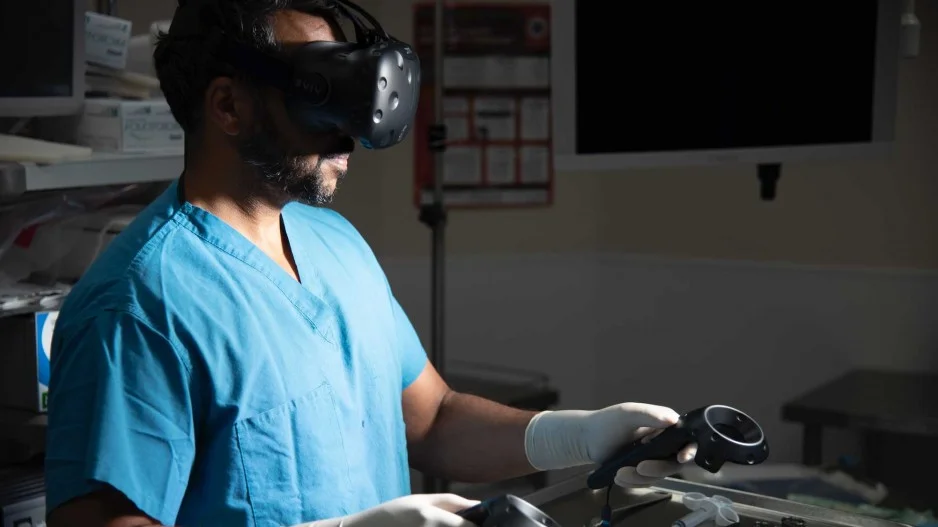
Member Precision OS Announces Series A Funding of $2.3 Million to Advance Surgical Training Platform

Original Article from BIV, written by Tyler Orton
Precision OS announced November 15 the Series A funding round was led by AO Invest. Other undisclosed investors also participated.
“Precision OS technology is working to create a virtual language able to add depth of understanding that simply cannot be achieved using current simulation tools,” Precision OS co-founder and CEO Dr. Danny Goel, an orthopedic surgeon by trade, said in a statement.
“Adopting VR as a way of improving decision-making is directly relevant for patients and value-based care.”

Precision OS produces what it calls “the most immersive and realistic form of deliberate surgical practice.”
It’s now in the midst of developing a tool allowing surgeons to introduce images of specific patient’s anatomy to the software before conducting a procedure.
Funding is also being used to bolster distribution partnerships and create additional content for trainees.
The company, which was founded in 2017, is among the 200-plus firms developing VR applications that have sprung up in Metro Vancouver over the past three years.
Switzerland-based AO Invest is the venture capital arm of the AO Foundation, a network of more than 19,000 surgeons and scientists in orthopedics and trauma.
Best Practices for Advertising + Marketing (White Paper)
To access this White Paper, enter your email here:

Our Advertising Committee has published these best practices white paper for Advertising & Marketing.
Co-Authors:
Deborah Worrell, EscapeVR
Sophia Moshasha, Brightline Interactive, VP VRARA DC Chapter
Contributors:
Alban Denoyel, Sketchfab
Jamison Tilsner, Sketchfab
Reekita Shah Alias Gala
Roy Rodenhaeuser, Oath (Verizon)
Tyler Gates, Brightline Interactive, President VRARA DC Chapter
Kris Kolo, VRARA
Table of Contents
This white paper is broken into the following parts so you can skip to what is of interest to you:
1 Introduction
Definitions: Virtual Reality, Augmented Reality, Extended Reality
How to Experience Virtual Reality: The VR Spectrum
How to Experience Augmented Reality: The AR Ecosystem
2 Should Virtual Reality and Augmented Reality be Part of Your Marketing and Media Strategy?
VR/AR in Marketing and Advertising
How VR and AR Expand the Opportunity for Brands
Five Easy Ways to Incorporate Virtual Reality
Five Easy Ways to Incorporate Augmented Reality
How Can the Consumer Experience be Measured?
How Brands Should Evaluate VR and AR Opportunities
3 Summary
4 Case Studies
VR: “Insights from Another Reality”, Oath
VR: Toyota Teen Drive 365 Virtual Reality Experience
VR: Cub Cadet- Signature VR Experience
VR: “JEWLR”, Sketchfab
AR: Snapchat AR Ad Campaigns
AR: Yahoo Mail App AR solution (Advertising)
AR: Porsche Augmented Reality (Marketing)
AR: Nike Facebook Messenger AR Campaign
360° Video: Public Service and Advocacy— “The Silent Killer”
360° Video: KFC “Add Hope” Campaign

Thank you to VRARE-VR/AR Experiences for sponsoring this paper. Please see www.ardoneforyou.com www.armasterclass.com If you would like to sponsor a future version of this White Paper, email info@thevrara.com
San Francisco: Join us on 12/18
VRARA members can attend free. Register here.

It's been an unreal year for AR & VR in the Bay Area and beyond!
Let's celebrate this victory with one last ecosystem event before the new year. We will be welcoming members of the VRARA Association as well as anyone interested in networking with the local AR and VR community of the Bay Area. Join us on December 18 to celebrate a night at the Unreal Garden, an immersive mixed reality experience where art comes to life all around you. Learn more details about the Unreal Garden here.
Doors open at 6:00p with food and drinks served. Discount Garden tickets available for attendees.
Speakers to be announced
All attendees will also receive a report from ARtillry Intelligence ($499 value)
Event sponsorship is available, inquire with us at sfmarketing@thevrara.com
VRARA members can attend free. Register here.
VR/AR Education Sector Report Featuring over 10 Companies and Listing 100+
To access this report, enter your email here:

Table of Contents
Foreword
ABC Business Academy
Global Mindset
Lethbridge College
LuminaVR
MetaVRse
ONE Digital Consulting (ONE-VR)
Pixvana
RealCast
Schell Games
Sentireal Ltd
The Pulse
XR Pioneer, Ltd.
Other Education Companies (100+ Companies, Schools, etc)
Foreword
I’m often asked if I truly believe virtual reality can benefit education. I don’t blame people for being somewhat sceptical as VR is so different from traditional forms of media and different can often be intimidating. In fact, VR offers a pretty seismic shift in the way that we access and interact with digital content, so much so that it becomes something you can’t truly understand until you’ve tried it for yourself. As the early-adopters and innovators of the education industry have begun to dabble with this fledgling technology, the consensus has been pretty consistent - this is going to be huge.
The benefits to learning that VR can offer are immense. It has the potential to engage students in an emotive, visceral way as they are engulfed within the learning content. It can foster empathy, allow students topractice skills in a safe, simulated environment or even let them break the rules of physics to harness the impossible. Perhaps most importantly, it has the potential to break down both geographical and financial barriers for schools, allowing them to bring the whole world into their classroom like never before.
Immersive technologies like VR are not just the future of education, they are the future of all digital media interaction and this future is coming faster than many people realise. We have a responsibility to ensure that our students are future-ready and for many of them, platforms like VR will be the standard way that they work, collaborate and communicate. We owe it to them to ensure that they are well-prepared for this exciting future. To that end, it gives me great pleasure to welcome you to this report from the VR/AR Association which spotlights some of the best, education-focused companies working in the immersive technologies field right now.
— Steven Bambury, Top VR Education Influencer
Motive.io Announces New VR/AR Training Solutions
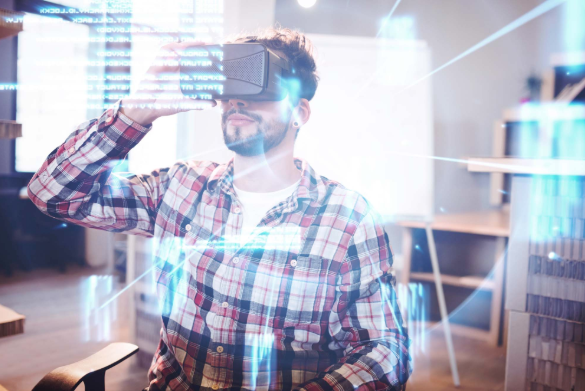
Motive.io has announced the launch of two new AR and VR products for the enterprise space: the Motive.io Scenario-based Training Platform and Performance AR. Both offer a scalable way for companies to train employees in virtual and augmented reality without requiring them to write a single line of code.
Motive.io Scenario-based Training Platform - the company’s flagship enterprise product - is a versatile teaching tool. Using Motive.io’s patented authoring software, businesses are able to create their own scenarios in either AR or VR. Individuals can participate in solo learning, or use the platform’s multi-user feature for team-based or collaborative instruction.
Unlike other training products, the scenario-based training platform operates on a variety of device types, from high-end headsets like Microsoft HoloLens or HTC Vive to common handhelds like smartphones and tablets. This variety makes the platform a first-class teaching tool for any business.
“Scenario-based training is one of the most effective ways of learning, because people learn by doing,” says Ryan Chapman, CEO of Motive.io. “Our scenario-based training platform allows companies to make unique simulations that are tailored to their business, with scenarios that adapt based on trainee interactions. Organizations can create intricate situations that meet each individual’s needs, instead of relying on an instructor to guide each employee individually. With Motive.io companies can create and scale training solutions at a much faster pace.”
Motive.io is also launching Performance AR, a customizable performance support product. AR performance support is an emerging technology that has already seen significant measurable benefits in manufacturing, maintenance and repair, field support, inspection, and training. Many employees waste valuable hours leafing through hefty instruction manuals in order to fix product breakages or learn basic company processes. Performance AR provides a step-by-step, interactive guide to manufacturing and teaching organizational procedures.
Using Performance AR, workers can scan a real-world product or location to open the interactive guide. On-screen graphics are then overlaid onto their physical equivalent, giving animated directions on how to create or mend an object, or navigate a factory floor. The software runs on all major headsets as well as mobile and tablet devices, allowing employees to use its features immediately.
According to a Harvard Business Report study performance support tools have already been shown to increase productivity by 30 to 50 percent. Despite that, there are no other off-the-shelf products like Motive.io’s Scenario-based Training Platform or Performance AR that allow businesses to create their own training content. Motive.io’s patented authoring system allows non-technical individuals to create rich experiences without writing any code. Its drag-and-drop interface means that companies can bypass hiring an expensive development team to create an interactive training program.
“We’re excited to be expanding Motive.io’s reach into the enterprise and industrial space,” Chapman says. “We’re seeing a real need for software tools that give corporate training teams the power to create detailed and immersive AR and VR experiences. Our software integrates with a company’s existing learning management system using xAPI, and collects data on training progress, which makes it really easy to use. It feels great to be helping make workplaces safer and more productive.”
About Motive.io:
Motive.io empowers businesses everywhere to take advantage of augmented and virtual reality. AR and VR are revolutionizing the way we interact with the people and machines in our workplaces. Until now, cost and technological barriers have kept the majority of businesses from realizing the significant benefits of AR/VR adoption. Motive.io’s suite of software products and patented authoring platform give companies unprecedented freedom to create their own AR and VR content internally without having to rely on a team of developers. For more information visit http://www.motive.io
CTC PolyFormVR is a Smart Floor for Location-Based VR Experiences in Military & Entertainment
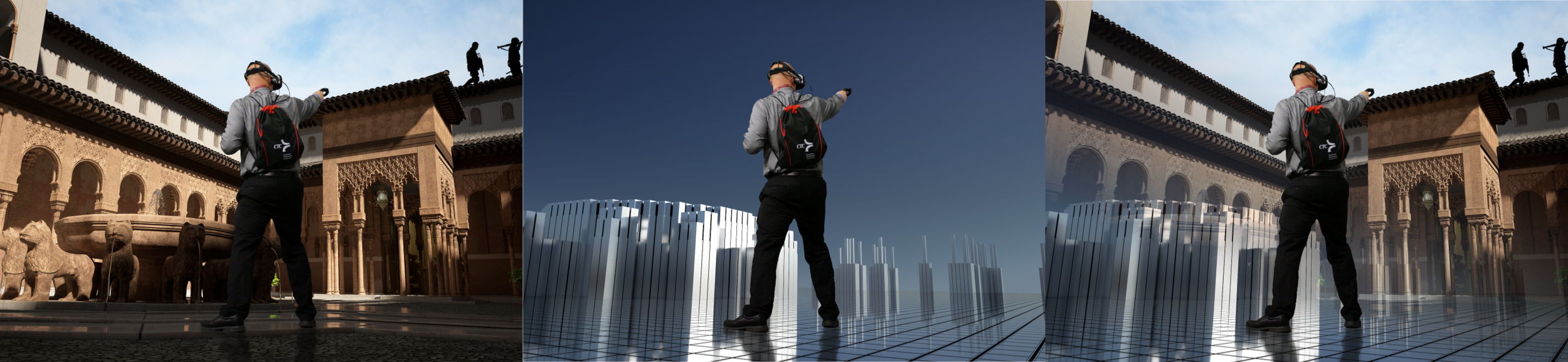
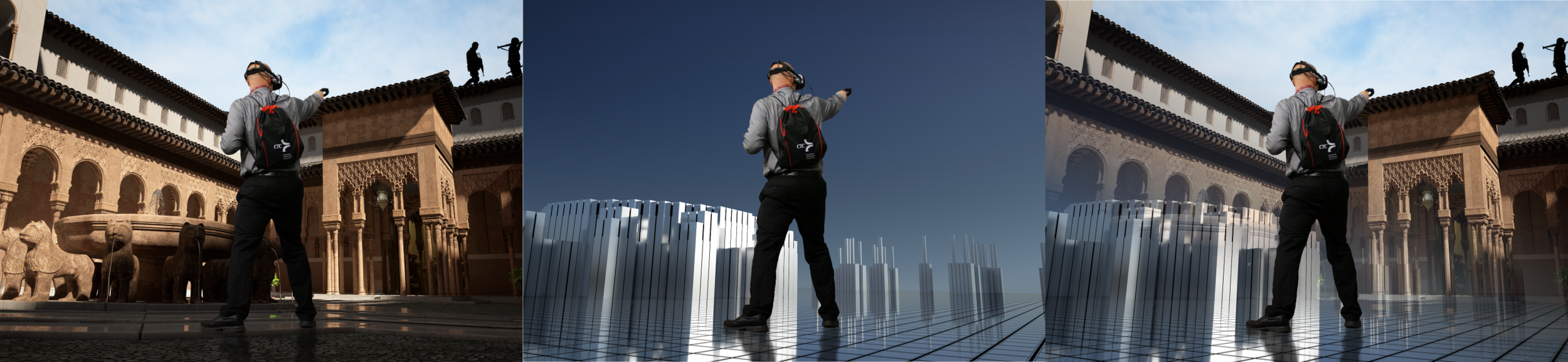
Concurrent Technologies Corporation (CTC) is developing PolyFormVR, a patent-pending modular smart floor designed to support location-based VR experiences with automated construction of physical infrastructure such as walls, windows, doors, stairs, and large props. The system operates using a simple 3-step process to create the physical infrastructure for locations–from measure to extrude to play–in as little as less than a minute.
First, the heights of objects in a target virtual world are measured. Then, the height measurements guide automatic extrusion of the target virtual world into the real world using a grid of moving vertical columns. Finally, users put on the VR equipment of their choice to experience the target virtual world with correlated visuotactile support provided by the columns. PolyFormVR is being developed as middleware in support of operators within the location-based VR military training and entertainment markets.
PolyFormVR is designed to alleviate pain points associated with custom infrastructure design, fabrication, placement, test, teardown, and storage and to accommodate rapid rotation of VR content and its supporting virtual-physical correlated infrastructure. While designed for custom infrastructure automation, PolyFormVR is ideal for algorithmically generated automation in which modular virtual worlds are randomly assembled and then extruded into the real-world, creating unlimited replay value. The smart floor size is modular and customizable and is sufficient for supporting tons of weight in users and in the placement of existing operator props.
The idea for PolyFormVR arose from a brainstorming exercise to imagine next-gen virtual physical correlated training and simulation capabilities for NASA and US military dismounted soldier training and soon expanded to include entertainment venues. When we looked at the location-based VR industry we found great visuals and responsive tracking. What was missing was the ability to stand up and tear down virtual-physical correlated infrastructure in a manner as agile, timely, and responsive as the selecting and loading VR scenes themselves. The inspiration for its design came from the idea that a synthetic physical environment could be generated on demand, as portrayed in the video game Portal and in the Star Trek series. With PolyFormVR, CTC is making the virtual REAL.
We want feedback from location-based VR operators to help us improve the design of PolyFormVR. Please click the following link to participate in a short market survey.
https://www.surveymonkey.com/r/polyformvr
CTC Website here
XR Revenues on Pace to $56 Billion in 2022 (New Report)
This post is adapted from ARtillry's latest Intelligence Briefing, XR Global Revenue Forecast, Fall Edition. To receive the report and access the full XR intelligence library, subscribe here (VRARA members receive a discount).

There’s been volatile interest and investment in AR & VR over the past 24 months. But how big are these sectors, and how big will they get? ARtillry Intelligence has quantified the revenue opportunity in several AR & VR product areas. The result is our latest XR revenue forecast.
At a high level, we project Global AR & VR product revenues to grow from U.S. $3.8 billion in 2017 to U.S. $56.4 billion in 2022, a 71 percent compound annual growth rate. This includes AR, VR and the enterprise and consumer segments of each (full list of inclusions is below)
The largest share of revenue in 2017 was held by VR (driven by consumer markets) which will shift over time as AR (driven by enterprise markets) gains momentum and revenue dominance through 2022. This shift is notable as AR comprises 29% of revenues in 2017 and 80% in 2022.
In VR, consumer revenue eclipses enterprise by 3-1 in 2022. Standalone VR like Oculus Go will accelerate consumer adoption. VR’s form factor is also aligned more with gaming and entertainment as opposed to job functions where sensory isolation isn't possible (e.g. industrial).
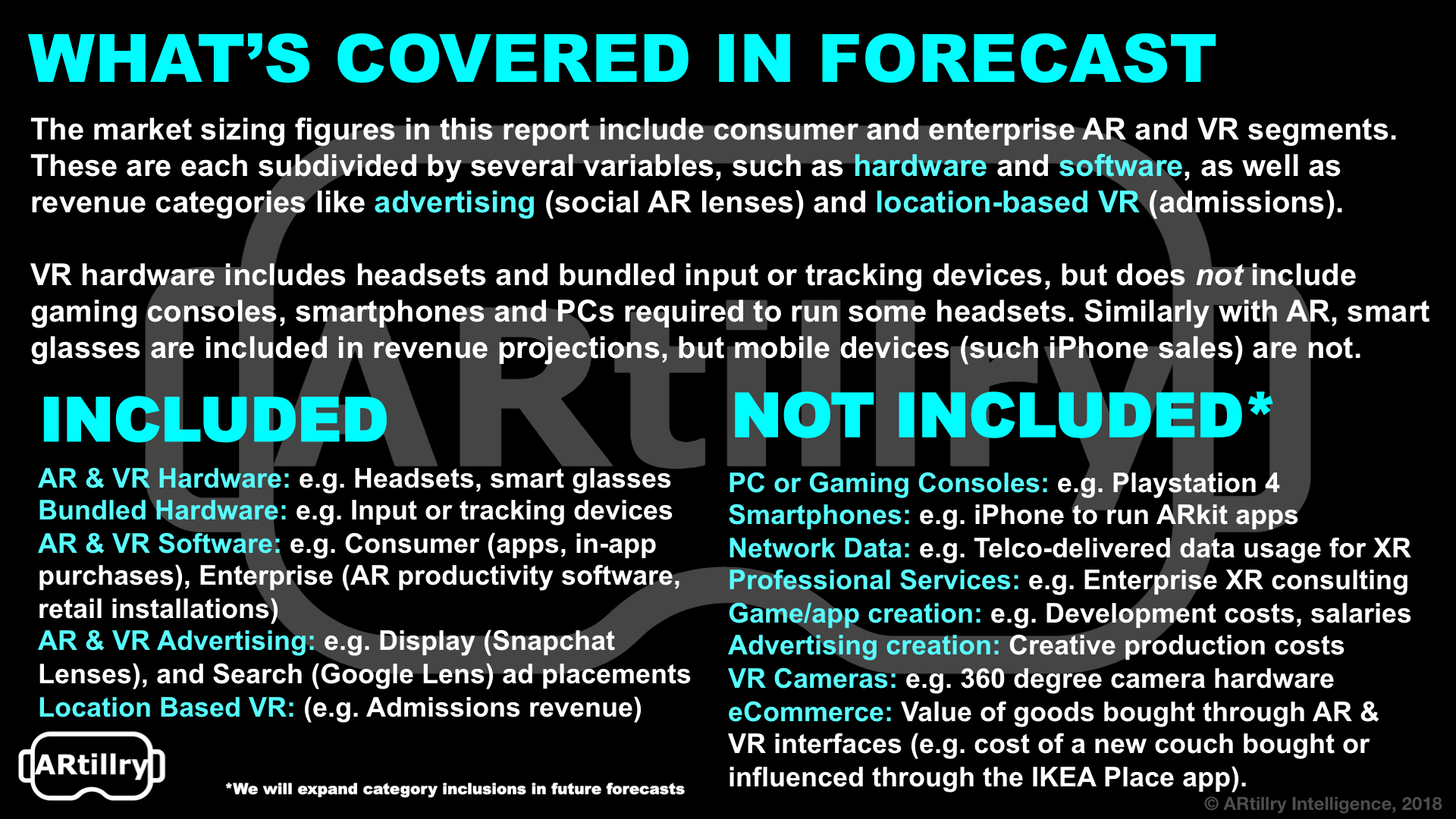
Within AR, the opposite is true: enterprise revenue outweighs consumer revenue by as much as 2-1 over the next five years. Head-worn AR’s form factor is well-aligned with enterprise productivity and demonstrable ROI in manufacturing, assembly and medical procedures.
But despite those advantages, there’s still enterprise resistance and risk aversion. We believe momentum will build up to a tipping point in 2020, after which we’ll see accelerated adoption. So it will build slow then happen fast, just like we saw with enterprise smartphone adoption.
Head-worn AR will find a home with consumers, however, its specs and stylistic realities inhibit several consumer use cases in the near term. Apple’s potential 2021-2022 introduction of smart glasses will shift AR’s momentum and revenue share towards consumer spending.
By 2022, enterprise AR’s revenue dominance over consumer AR will decelerate as smart glasses begin to penetrate consumer markets. Until then, mobile will dominate consumer AR, with most revenue derived from software as opposed to hardware (smartphone sales aren't counted).
Mobile AR software models will continue to follow the path set in the smartphone app economy. There, the prevailing model for higher ARPU is in-app purchases. It’s been proven for both yield optimization and consumer acclimation. That's especially true in an emerging/unproven area.
In fact, in-app purchases (IAP) is a model that’s already proving to resonate with consumers. At these early stages of mobile AR, many aren’t yet ready to commit upfront dollars for apps. This can be seen in our recent survey data where IAP shows early consumer comfort levels.
Moreover, in-app purchases have been validated within AR, considering it’s Pokemon Go’s primary revenue source. We’ll see that extend to other IP that builds on its architecture and game mechanics, including Harry Potter, Wizards Unite and apps built on Niantic's Real World Platform.
But those are just a few revenue drivers. We go deep on the dynamics and drivers across the XR spectrum including advertising and other revenue categories. For more, see ARtillry's latest Intelligence Briefing 2018 XR Global Revenue Forecast, Fall Edition.
Subscribe to receive the report and access the full XR intelligence library. VRARA members receive a discount on subscription.

RSVP for our upcoming Webinar: The ROI for VR/AR in the Enterprise
RSVP here (click on the Upcoming tab)
If you would like to Sponsor this event, email info@thevrara.com

Hear from the best minds in VR/AR including Accenture, SuperData Nielsen, Atheer, Itseez 3D from our Enterprise Industry Committee on the latest use cases, best practices, and ROI in theenterprise. Corporate leaders are tasked with reimagining the experiences they want for their customers in the face of a changing technological landscape. Learn why every enterprise needs aVR/AR strategy now, not later. RSVP here

VR and AR - How is the Sector Evolving and What is the Future
For a copy of the Survey, email info@thevrara.com
The XR Industry Survey 2018, based on a survey of 595 AR/VR professionals, reveals some interesting trends for the industry, some of them expected, others more surprising.
The patterns of investment and development in the different sectors which AR/VR are applicable – or potentially applicable – to, show the increasing applicability of this technology beyond the games and entertainment fields that saw its birth in the nineties. 38% of respondents for example believe VR growth in the enterprise sector has been ‘strong’ or ‘very strong’ for example, with an equivalent figure of 43% for AR.
At the same time however, some industries’ slowness to recognise the potential of AR/VR suggests that many still assume it has no serious role outside the games console.
The first point to take home is that the consumer sector (entertainment) and the enterprise sector (product design, training, product design and so forth) have experienced similar amounts of growth but the majority consensus is that this growth has been weaker than hoped in the consumer category. Enterprise seems to have experienced marginally more growth than consumer; this may be because entertainment applications still depend on the purchase and use of head-sets which remain relatively expensive and unwieldy. Doubtless, this will change as the technology is refined and the time when VR images are beamed directly on to the retina is surely not far off; the basic technology having been around for over twenty years.
Alongside unwieldy technology, price also remains an issue, with 60% of respondents considering the price of head-mounted displays (HMDs) to be impeding increased adoption of VR/AR, compared to 34% who cited size and design of HMDs.
Alongside these challenges the survey also suggests some companies have pulled out of VR game development for the moment and mobile AR apps have yet to really take off, largely due to the costs considerations mentioned above.
The flipside of this is that there seems to be the greatest scope for growth in the enterprise sector because corporations are more able to invest in the expensive hardware than individuals. Education is the enterprise sector prioritizing AR/VR the most and the most competitive one, despite the fact that it traditionally has much less spending power than industry – of respondents who reported that they are already using XR technologies, 23% were in the education sector.
Architecture/engineering/construction come a close second at 18%. Healthcare is quite low down on the list despite the obvious AR/VR potential in diagnosis and therapy, with just 7% of those using this technology being in the healthcare sector.
These mixed messages give rise to the question, what are the main barriers to the wholesale embrace of AR/VR predicted in the nineties?
While headset design and price account for part of the problem, potential adopters are also deterred by the lack of proof of ROI (with half of respondents citing this as an issue) and the challenge of integrating the technology with existing systems and processes (32% raising concerns).
The survey also reveals an industry expectation that AR will blossom in the mainstream before VR does, in part because of the availability of open content development platforms like ARCore and ARKit which have no VR counterparts.
Nevertheless, many industries see the benefit in the long term coming from combining both AR and VR and VR’s superior ability to create a fully immersive environment currently gives it the edge in training and educational applications.
Most survey respondents felt that AR/VR had had a somewhat or very positive effect on their business with VR just ahead in their estimation (83% compared to AR’s 69%), probably because the underlying technology is more mature.
The results of the latest survey are illuminating but also contradictory in places and it is difficult to extrapolate from it exactly what form future trends will take. One thing is clear however. Many potential customers – both industry and consumer – still remain to be convinced of the benefits of AR/VR or are just apathetic. To generate further momentum in this nascent industry, suppliers will have to invest more in product development and marketing to win them over. On the plus side however, this should pay dividends down the line for early adopters, especially if intellectual property can be developed to create significant barriers to entry for late comers. Most end users who trial the technology quickly see the benefit and invest in it. There are a lot of potential customers out there to be won over.
Simon Portman BA, Dip Law (Bio)
Managing Associate

Offices: Cambridge (UK)
Languages spoken: English
Email: sportman@marks-clerk.com
Telephone (Office): +44 1223 345520

The Portugal Ecosystem Revealed at the VRARA WebSummit Executive Event
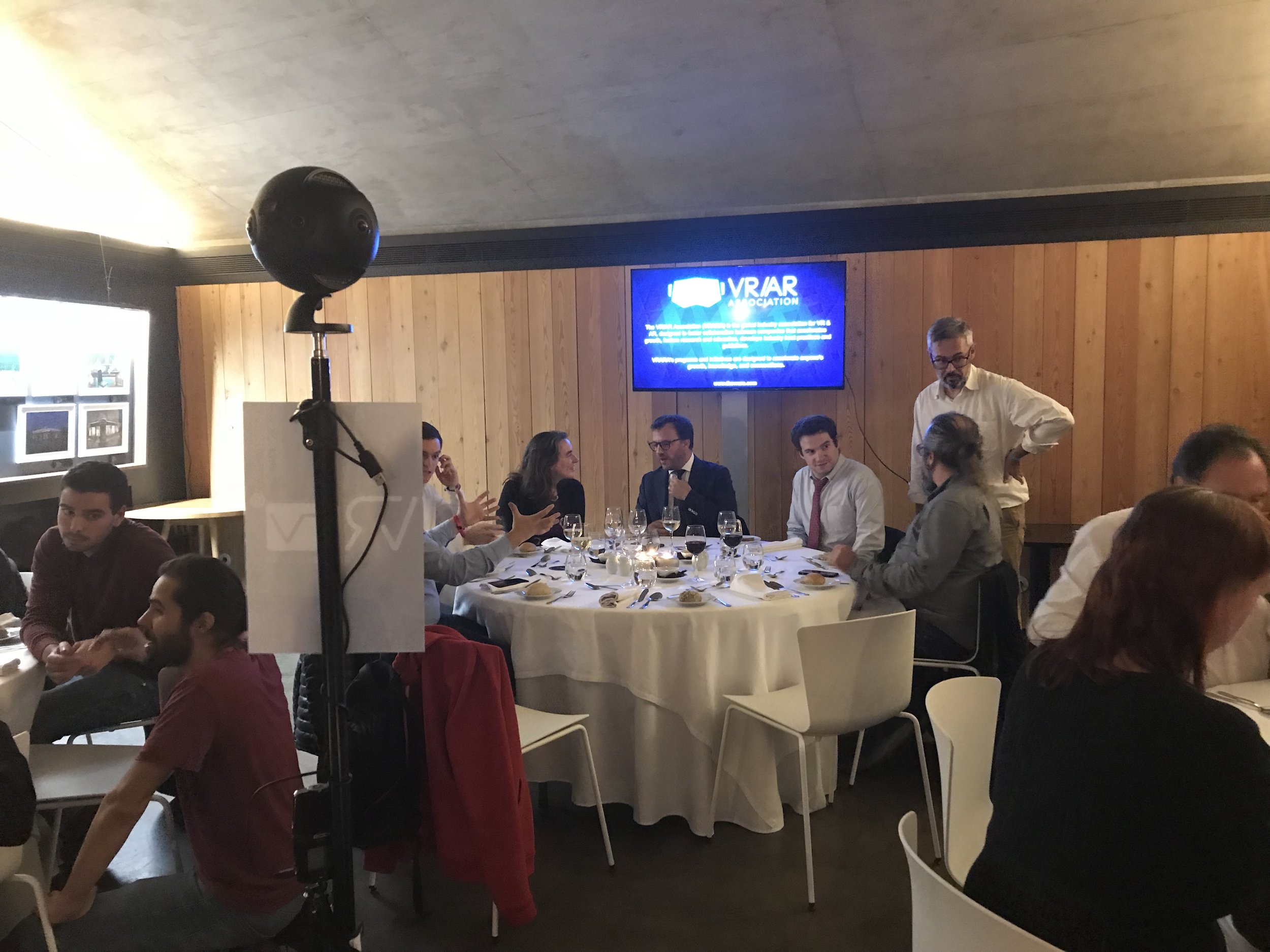
The Web Summit attracted 70,000 attendees and VRARA Lisbon Chapter hosted an executive dinner where it was announced that 50+ companies, agencies, brands in Portugal now work in VR/AR. We are publishing an Ecosystem Report soon to showcase this. Email luis@thevrara.com for the report!


Global Services and Design Leader Stantec Joins the VR/AR Association


We’re very excited to have Stantec join the VR/AR Association as our newest Corporate member.
Albert Liu (Membership Manager) of VRARA Vancouver caught up with Aubrey Tucker, an innovative Technology Developer at Stantec to discuss VR/AR in engineering and what they’re up to.
Can you tell me more about Stantec and your role?
Stantec is a 22,000 person organization with over 400 offices around the world. We predominantly focus on engineering but we also work with all forms of design and large scale work. For example, we’re involved with skyscrapers and large transportation projects such as railways. My team is interested in emerging tech and they’re looking into business cases for adopting it. We want to improve computation design, visualization and the way people deliver work.
How long has Stantec been involved in VR/AR?
Stantec first became involved with VR/AR in 2015 through a R&D program called the Greenlight fund which supported creative and innovative ideas from our employees. There are a lot of us throughout the company that have adopted VR/AR for a broad range of use cases. Some of us were early adopters of the Hololens and create our own content for it. I was first introduced to VR/AR in 2010 with Vizard and World Viz through the Oculus SDK 1 and other older platforms.
Some of our designers use Enscape which is an AR plug-in that sits in their software design tool and provides real time rendering with typical artistry work such as BIM (Building Information Modelling). They’re focused primarily on using Enscape to design rather than creating raw content. They also use Twinmotion which is a simplified version of the Unreal Game Engine to produce architectural visualizations and VR environments.

What made you decide to join the VRARA?
We decided to join the VRARA to network, get access to events and see what everyone in the industry is up to. We want to be a more active member in the worldwide VR/AR community. My selfish interest for joining the VRARA is to provide all the different offices around the world with a way to engage with other technology creators that are local to them. We want people from these offices to attend events, meet new people, learn and experiment with emerging immersive technology.
What are some things that we can expect from Stantec in the future?
We were shortlisted for an award for our immersive design experience for the Royal Columbian Hospital (RCH) and the Fraser Health Authority. We used VR to help the staff experience the interior rooms of the hospital. The nursing team noticed the types of storage that had been specified were too small in some areas and too big in others. They told us that they wouldn’t have noticed this without using VR. Real time visualization was a game changer for the RCH because it allowed for many more considerations within the interior and exterior spaces.
Stantec is also interested in moving into simulation and looking at how long it takes people to get to places. We’re seeing a lot of startups focused on these issues. It’ll also be interesting to look at collaborations where we can work together with others in a VR environment.
Recently, we worked with Archiact, another member of the VRARA to incubate ideas with them. Scenarion launched an extension for SketchUp called Rendezvue which makes it easy to review and edit 3D models in VR. We’ll also be working with them for another project on space planning. We’re always looking for other companies to work on projects with!
How do you see VR/AR making an impact in the building design/architecture space?
Design and aesthetics are the obvious ones but VR/AR is making an impact in many different ways. There are different mediums that can explored such as true immersive walk throughs and the potential for world building in VR. Another interesting challenge is the question of interfaces and how to set up complex interfaces in a VR environment.
In AR there’s a huge opportunity in construction by bringing in health safety applications to reduce and prevent danger onsite. There is also the use of Reality Capture which passively captures 3D models in construction. We can review these models and send instructions to workers to improve work efficiency.
Daqri and Microsoft are also breaking into these spaces with their AR headsets. Construction is an old school industry and there’s a lot of room for disruption but we’re still not quite there yet.

How do you see the future of VR/AR integrating into designing buildings and communities in the next 3-5 years?
It’s hard to predict what will happen in the future but I believe there will be a lot of progress made in construction. It depends on how advanced the hardware becomes because once it’s built, the software and other technologies will be easy. We know what we want in construction because if that works all of the other use cases will fall in line. At the end of the day hardware is the linchpin that will dictate the future of VR/AR in construction and engineering.
Closing comments
My team and I at Stantec are very excited to be members of the VRARA. We’re looking forward to building new relationships, pushing the technology further and meeting everyone.
See Aubrey’s talk from one of VRARA Vancouver’s events earlier this year
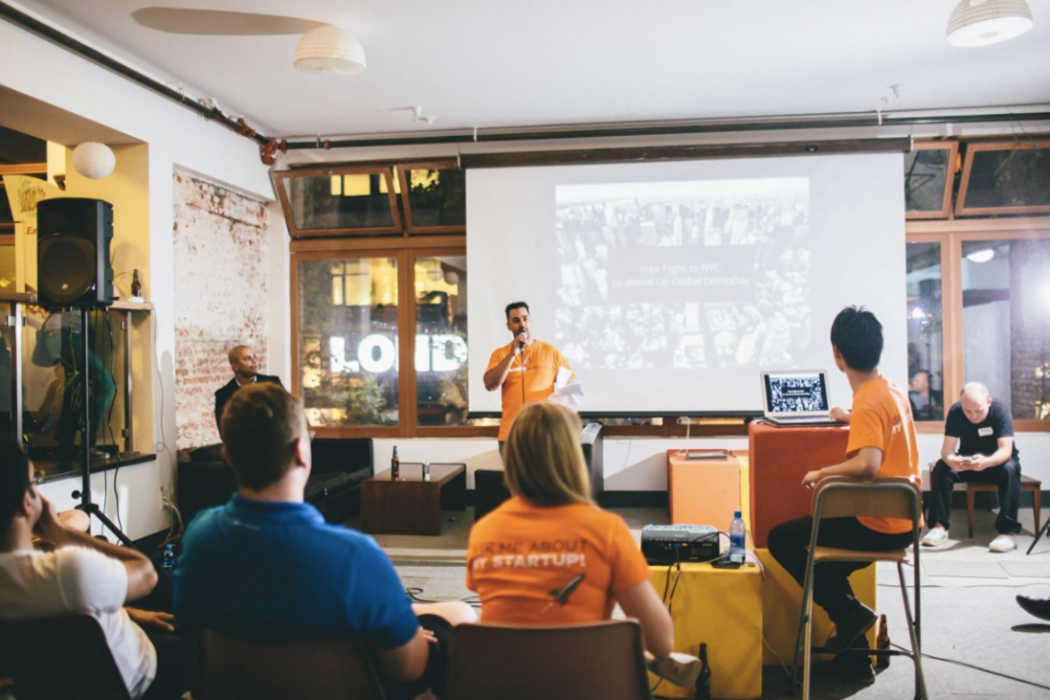
Launch Academy Announces NEW VR/AR Hub in Vancouver

Source: BetaKit
Vancouver technology incubator Launch Academy has announced a new facility for virtual reality (VR) and immersive technology companies.
Partnering up with VR/AR Association Vancouver, Launch Academy will create a local VR/AR Hub to support the city’s burgeoning industry. Offering training and education programs, VR and AR equipment rental, mentorship, events, and workshops, the 12,000 square foot facility will provide necessary tools for entrepreneurs to get their startup off the ground.
“The reason why Launch Academy is successful is because we believe in community first,” said Ray Walia, CEO of Launch Academy. Walia is also a co-founder of Victory Square, which launched a cannabis accelerator last week. “In a nascent industry like VR/AR, it is especially important to cultivate early-stage entrepreneurs, cross pollinate their networks with other existing emerging tech communities and provide them with the resources they need to tackle their audacious visions. VR/AR Association Vancouver and Launch Academy share the same passion to help these entrepreneurs succeed.”
Mentors of the new initiative include Silicon Valley-based investors from Super Ventures, The VR Fund, WXR Fund, Outpost Capital, and The GFR Fund. In addition, over 25 local mentors have expressed their support, including founders and experts from Microsoft, Blueprint Reality, Cognitive3D, Vancouver Economic Commission, YDreams, Archiact, Finger Food, LlamaZOO, LNG Studio and many more.
“We have all the right ingredients to make Vancouver number one,” said Dan Burgar, Vancouver Chapter President of the VR/AR Association. “We believe it’s extremely important to keep the momentum up and build the support infrastructure now for companies to accelerate their growth. Launch Academy has a proven track record of incubating over 600 companies and we’re thrilled to work with them on this.”
A limited number of spots are still open for companies interested in joining the VR/AR hub at Launch Academy. To learn more, visit http://launchacademy.ca/launchpad or email Dan Burgar or Alex Chuang.
Interview with Oliver Noteware and Alice Formwalt of Street Smarts VR
Listen here

We are joined by Oliver Noteware Co-Founder & CEO and Alice Formwalt, Co-founder & CPO Street Smarts VR, which provides immersive virtual reality simulations for reality-based training of law enforcement and public safety personnel.
Their mission is to improve policing outcomes and officer safety. Streeet Smarts VR recently won a $25,000 business grant from Bob Evans Farms (and a one-on-one mentoring session with Daymond John) to help further grow the company and provide more law enforcement offices with VR training in hopes to improve policing situations.
Listen here
BroomX the VR Projector, the VR/AR Showroom from Visyon, and the Zone of Hope LBVR venue for Climate Change (Videos)

Our VRARA Barcelona Chapter has a few new highlights to share, including:
BroomX - the MK Player360 can display interactive VR applications and 360° immersive media on a frameless screen: your room.
Visyon - an award winning Innovation Services Company providing immersive experiences through emerging technologies and creative services.
Zone of Hope - Launched in Jan of 2018. The Zone of Hope (TZOH) is an experience which enables visitors to experience the effects of climate change first-hand. The exhibition uses Immersive Extreme technologies to ensure a truly captivating immersion by pairing the real space with the virtual space.
RSVP for our Executive Dinner in Lisbon Nov 7th
RSVP here

The VR/AR Association (VRARA) will be hosting an executive dinner event on Nov 7th in Lisbon, Portugal. The VR/AR community will gather for drinks &dinner at a VIP restaurant for our executive dinner event. Come and join industry thinkers, C-level executives, investors and startups to explore ways to collaborate and network.
Agenda:
18.30 - 19-30 - Welcome Drink
19.30 - Welcome messages
19.35 - VRARA overview
19.50 - VRARA Global Summit Europe
20.05 - Paulo de Carvalho presents
20.20 - Final announcement
Confirmed presence of:
- VR AR thought-leaders from Portugal, Europe, and from around the world, including: Amazon (tbc), NextReality, Darwin & Warhol,Collide, BBRetail.eu, Moorestephens.com, Glymt.com
- Press including: VRTV, Dinheiro Vivo (the largest Portuguese business portal)
- Kris Kolo, VRARA, Global Executive Director
- Anne-Marie Enns, VRARA, Executive Producer of the VR/AR Global Summit
- Also representatives from 20+ companies: Empresa, Glymt, Darwin & warhol, Moore Stephens, BB Retail Gema Adlooker, The Digit Group, NextReality, Collide, VRARA Global, VRARA Lisbon Chapter, Omega LightKT RetailingCafé Cultura Retail Hub Oasislab RSVM, Stone, SAPO Dinheiro Vivo
You can see an example of our previous executive dinner event during MWC Barcelona here
If interested in sponsoring this special event, email info@thevrara.com
Watch our Webinar recording on Location-Based VR
Watch it here
To have a look through all the slides, answered and follow-up questions from the webinar please have a look at our Google Slides presentation.

The Location-Based Entertainment Committee hosted another stellar cast of panelists. The ensemble of experts with more than 20 years combined experience running location-based entertainment included Daisy Berns (Exit Reality), Will Stackable (SpringboardVR), Ryan Burningham (Virtual Athletic League), and Sebastian Kreutz (Holocafé).
News reports of experiential location-based virtual reality (LBVR) in shopping arcades, theme parks and movie theaters are taking the world by storm. Companies including FoxNext, Zero Latency and Disney's ILMxLab with Star Wars are demonstrating that LBVR is a viable business for investment, which is clearly enticing mainstream consumers to satisfy their VR curiosity. This is demonstrated by the high levels of growth, with consumer spend expected to reach $809M by 2022.
Our go-to moderator Charlie Fink tackled the difficult issues that venues and virtual reality are facing to see profitable margins in these businesses. The deep dive explored everything from operations and marketing to pricing and throughput. Other hot topics the group examined is infrastructure and real estate. Watch this recording if you are interested in tapping the projected consumer spend of $809M in the next couple years.
Watch it here