
AVATOUR Launches Commercially: Remote Presence is Now a Reality
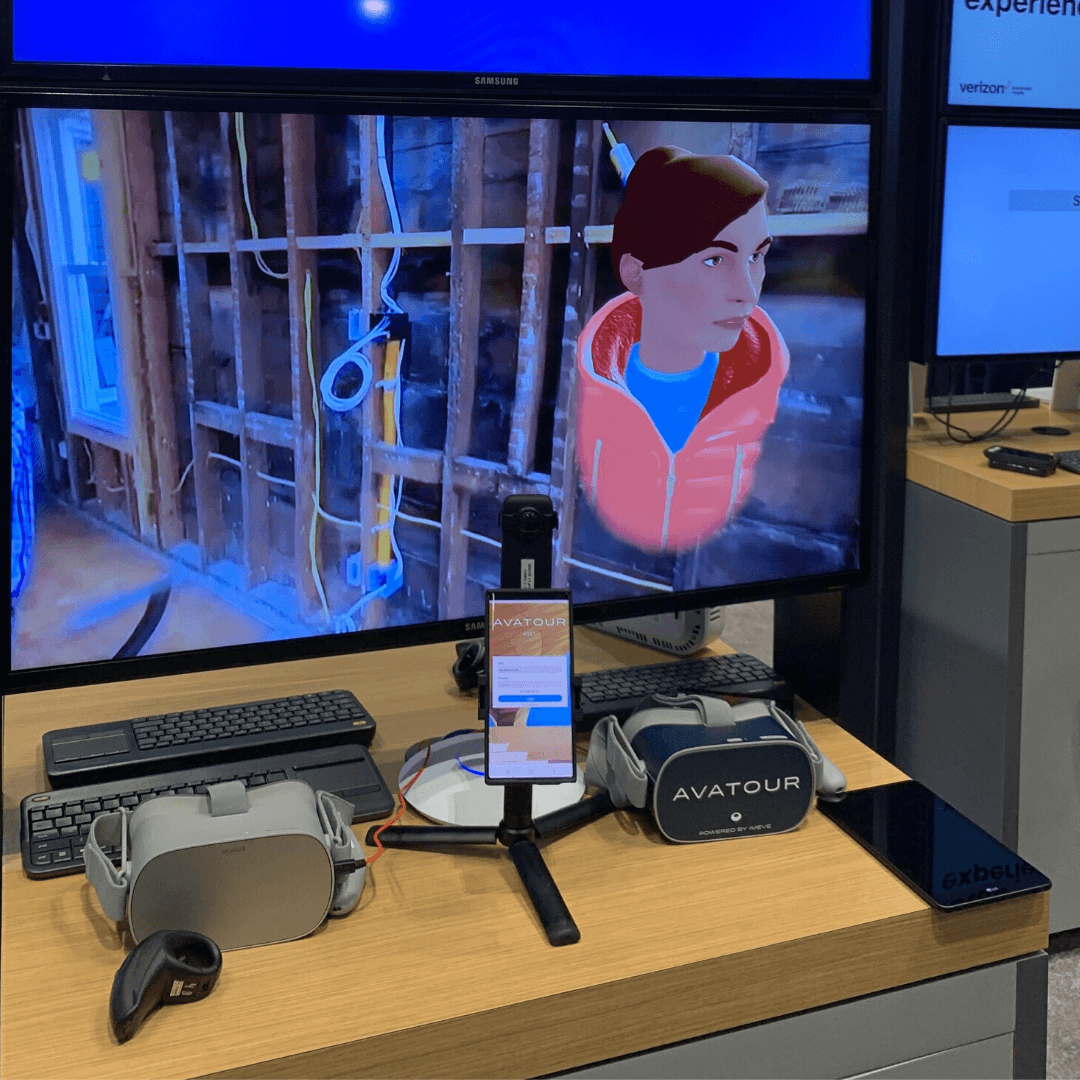
AVATOUR Remote Presence lets you visit a real place in real time, providing a new substitute for travel -- especially useful in these challenging times. AVATOUR has been in development for two years, and in beta since Fall 2019; today marks the first commercial release of the platform. Avatour use cases include remote inspections, sales, recruiting and training - just to name a few. Any industry that needs to share a place or property can reduce or eliminate travel by getting onsite fast with AVATOUR.
“As more companies and countries limit or halt travel, businesses worldwide are being forced to find remote working solutions. Videoconferencing platforms like Zoom and Skype can replace a conference room, but until now, there was no substitute for location-dependent meetings like facility walkthroughs, site inspections, and site-specific training,” said Imeve CEO Devon Copley. “Using AVATOUR to visit a location alongside someone thousands of miles away feels more like an in-person visit than a videoconference.”
The AVATOUR platform is now generally available to qualified companies in the United States, EU, UK, Australia, New Zealand, Japan, and China. They are currently offering a FREE 360 Camera & Starter Kit for the hardware/software package starting at US$1190 (€1090, £990, ¥150,000, CNY8,800) for 60 days of service. Interested company representatives can visit http://avatour.co/get-started to apply.
Contact
Name: Jenna Clark
Email Address: jenna@imeve.com
Website URL: http://avatour.co

How Aggreko is reinventing global workforce training with AR
By David Nedohin, co-founder and Chief Customer Officer at Scope AR
We are all facing unprecedented challenges in our lives and at work due to the impact of Covid-19. With much of the world being asked to shelter in place, we’re all looking for ways to reinvent how we get the work done to serve our customers, our companies, and all the people who work for them. It’s becoming clear that we will all be increasingly reliant on the tools and technology that keeps businesses connected to its customers and stakeholders. Now more than ever, we’re all in this together, and communication is vital.
As we find new ways to stay connected, I am very optimistic enterprises will find ways to speed innovation and rethink business-as-usual. At Scope AR, we’re committed to helping our customers leverage AR where possible as a tool for keeping essential operations moving forward. Over the past six weeks, we’ve seen that take on many forms such as virtual workforce training, remote expert assistance being used to guide factory equipment repairs and maintenance procedures, as well as the use of intuitive AR work instructions to help manufacturers stick to production timelines as best as possible.
We will continue to spotlight successful AR deployments and share lessons learned and best practices so that other enterprises have real-world examples of how augmented reality can be used to solve complex business challenges. I recently had a great discussion with Walter Davis at Aggreko. Walter was kind enough to share three takeaways from an AR remote employee training project now underway.
Aggreko brings power, energy storage, heating & cooling to sites around the world. Their generators help power emergency services, hospitals, and other major events. Aggreko’s products ensure that manufacturers and construction sites can keep production on track and maintain efficiency. They also work with the utility industry to ensure power keeps flowing to their customers.
With more than 200 locations of its own worldwide, Aggreko can deploy its equipment to any part of the globe. In their over 50 years in business, they’ve powered everything from massive hurricane recovery sites to global mega-events like the 2012 Olympics in London and FIFA World Cup events.
As the Head of Talent and Learning Technology at Aggreko, Walter is always looking for new ways to build expertise across the company’s workforce deploying Aggreko products — wherever and whenever their customers need them. Given the current limitations to travel, the need for delivering digital training knowledge has gone from a “nice to have” to ‘mission critical’ from an operational standpoint. He’s been a champion at the company for the use of AR to train employees on its 1600 CFM diesel compressor – a massive piece of equipment that weighs 12 tons and is 20 feet long.
Aggreko built an AR training program using the Scope AR WorkLink platform to create a virtual, full-sized model of the compressor. “They can do a full walk-around,” Walter said, noting the experience is an “immersive training on a life-sized, full-scale model of our product.” Employees can get familiar with controls, key features, and components.
The AR experience also shows how to turn on or decommission the equipment, as well as how to conduct essential maintenance procedures like changing out fuel and oil filters. To deliver the AR experience, they’re using devices their workforce already carries – like smart phones and tablets – so no additional hardware investment is needed. This means training is now available wherever their workers are. As an added bonus, physical equipment doesn’t have to be taken away from a job site, which is a huge cost savings for Aggreko.
Here are three takeaways Walter said he learned from this initial AR deployment that might resonate with other businesses considering AR as a reliable and scalable way to train and share expert knowledge amongst their workforce:
1. AR reinvents and optimizes an essential process. To train its workers on the 1600 compressor, Aggreko used to fly them to training centers all over the globe to get face-to-face and hands-on training with the equipment. This model is costly and inefficient. AR can bring distance learning to the workforce, not the other way around.
2. AR helps unlock tangible ROI. To train in-person, Aggreko has to ship its massive compressors to training centers. In addition to considerable shipping costs, they can’t use that equipment out on a customer site. Walter estimates that they would be saving $500K if AR was used in place of physical products for all current technical programs.
3. Companies can help speed innovation across their business. Walter notes that while the plan was always to scale from the 1600 compressor experience to create training experiences for other pieces of Aggreko equipment, the challenges brought on by the Covid-19 pandemic have definitely accelerated this process. As the company has currently banned all non business-critical in person training and business travel, they are quickly building processes and creating content to distribute worldwide so that employees can continue to receive the training and knowledge they need to deliver an optimal experience to their customers.
Uncertain times like these spur innovation in using new technologies and how we do our work to keep things moving forward. Just as Aggreko is transforming its workforce training, we undoubtedly will see other businesses figuring out new ways to leverage technology to help navigate these volatile times. Learn more about Aggreko and the work they’re doing to power business across the globe.
CONTACT
Brittany Edwards
brittany@carvecom.com
210-382-2165

Sama Makes VR Lessons Free Extending a Helping Hand to General Chemistry Students and Instructors Affected by the Covid-19 Crisis
March 16, 2020 San Francisco, CA
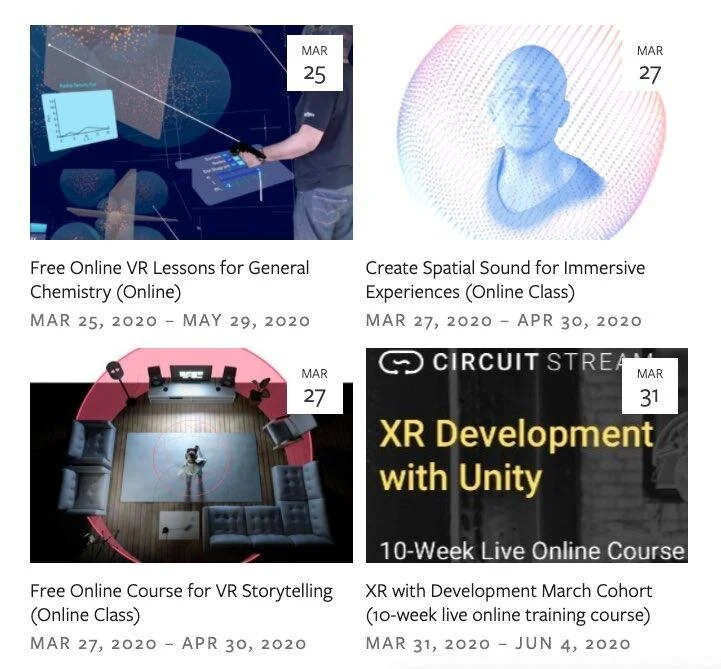
In an effort to help reduce the impact of college closures and the shift to online classes for community college and university students, Sama Learning announced today that its VR-based General Chemistry course will be made available for free through May 2020. The Chemistry Course includes the following lessons: Periodic Trends, Balancing Chemical Equations, Atomic Orbital Theory, VSEPR and Hybridization. Sama’s General Chemistry lessons were designed to be used alongside existing classwork and can provide valuable educational support for student learning otherwise limited by the Covid-19 crisis.
“Sama is a company working to improve access to effective education and this is our way of providing some assistance during this worldwide crisis.“ said Barbara DeHart, CEO and Co-founder of Sama Learning. “We understand the importance of the interactive learning that takes place in classrooms, labs, and study groups. And although many are being eliminated now in an effort to reduce the spread of the virus, Sama’s interactive courses can help to fill that gap.”
Sama VR can be used in two ways to assist in online learning. Students who have access to a supported VR headset can download the course and use all lessons immediately. Instructors who have access to a headset, can record their lessons in VR and share them with students via their learning management system or social media channels. There is no registration or email required to access the lessons. Sama has also published complete video-based versions on their website that can be accessed on a mobile phone or a web browser.
Visit https://www.samalearning.net/free for information on how to download, install and use the Sama VR course and video versions of all Sama lessons.
Contact:
Website: http://www.samalearning.net/free
Name: Barbara DeHart
Email Address: barb@samalearning.net
Lessons from AR Revenue Leaders, Part II: Niantic
ARtillery Intelligence’s latest report, Lessons from AR Revenue Leaders, Part II: Niantic examines AR usage and revenue leaders, and the strategic implications for AR success. Subscribe for the full report. VRARA members get a discount.

The consumer AR sector still lingers in early stages. Among other things, this means the playbook is being written mid-flight. There’s a great deal of experimentation underway as companies test and iterate rapidly to discover winning formulas and business models.
This goes for consumer AR product strategies. Though a common sentiment in 2016’s hype cycle was that AR applies to everything, it’s become clear that it’s not a silver bullet. It will have native and natural applicability to some aspects of our lives and work… but not all.
Beyond macro-categories and use cases where AR should or shouldn’t be developed, there are more granular strategies around user experience (UX). What types of AR interactions resonate with consumers? And what best practices are being standardized for experience and interface design?
Equally important is the question of AR monetization and revenue models. Just as user experience is being refined, questions over what consumers will and won’t pay for are likewise being discovered. The same goes for brand spending behavior in cases of sponsored AR experiences or ads.
These lingering questions compel acute attention to quantifiable AR market successes and best practices. Not only does the sector’s early stages mean that these questions are prevalent… but also that their answers are scarce. That includes evidence of successful execution, as well as transferrable lessons.
With that backdrop, ARtillery Intelligence ventures to find, aggregate and draw meaning from finite AR successes in today’s environment. And by “success,” we mean large-scale consumer traction and revenue. When examining consumer AR engagement and revenue leaders, what product attributes and tactics are driving their performance?
This includes Snapchat. Its social lenses have the greatest consumer AR active usage, and it holds the leading share of AR ad revenue. Among other things, this is propelled by product-market fit, ease of use, distribution and fulfilling key goals for brand advertisers.
Also on the list is Pokémon Go. Though the tech press has moved on to other shiny things, 2019 marks its best revenue performance to date. This is attributed to innovation cycles that breed ongoing novelty and replayability, as well as its sparing use of AR as a game element.
Other consumer AR exemplars include Houzz and Instagram. Emerging AR players also show early signs of traction that’s worth examining, such as Tilt Five. Altogether, how do we triangulate best practices and extract tactics and takeaways for AR players today?
We’ll do just that in the coming pages, continuing from Part I in which we examined Snapchat. We now pick up the discussion with Niantic and its flagship, Pokémon Go. This draws from the rigor of market watching and analyst work. We’ll synthesize these findings, pursuant to the core mission of empowering you with a knowledge position.
Subscribe for the full report. VRARA members get a discount.

For Disney premiers - Frozen and Star Wars - Augmented Reality experiences were made for fans to interact!
For the launch of the films Star Wars Episode IX and Frozen 2, CamOnApp created immersive technology campaigns for Disney Scan, inviting fans to explore both universes and have fun with interactive content.
CamOnApp develops platforms that allow users to scan toys, books, stickers, packagings, graphic supports at events and various other products. One of them is Disney Scan, an application created for Disney, which allows users to view augmented reality experiences in more than 30 countries around the world.
Disney proposes using this digital channel to generate playful content that enhances engagement and direct interaction with its audience. With this goal in mind, they are actively incorporating augmented reality experiences into their 360˚ marketing strategy for content launches and movie premieres.
More info: http://www.camonapp.com/en/disney-scan-augmented-reality/
Contact:
Name: Florencia Moltini
Email Address: florencia@camonapp.com

Virtualware's "VR is NOW" Campaign Goes Live
DISCOVER HERE HOW COMPANIES, INSTITUTIONS AND GOVERNMENTS ARE ALREADY USING VR TECHNOLOGY TO SOLVE THE PROBLEMS THAT CONCERN US TODAY
More than 15 years ago, we started an amazing “immersive” adventure called Virtualware. It’s been a long journey, where we’ve seen and experienced the evolution and growth of the XR industry practically from zero to the immersive (R)evolution that it is today in the business world. After many years of testing, developing, and applying immersive technologies to the enterprise with great results, the last couple of years have been the most revealing for us.
In 2019 we attended the biggest events related to XR technologies around the world. From Europe to North America, we’ve had the opportunity to share our knowledge and expertise with companies, institutions, and governments from all over the world; we learned that most of them perceive immersive technologies as a great opportunity to increase competitiveness in the current economic environment, but they don’t know where to start.
There are multiple articles and studies that predict that XR technologies are the FUTURE for business. The FUTURE is exciting, but, what about the present? Today we know that Virtual Reality technology enables companies like yours to bring out the best in your workers, allows you to design your products better and faster, engage audiences like never before and more. Virtual Reality is Now!
This is why we have created the “VR is Now” campaign. A campaign that will show you how medium and large companies, institutions and governments are already using VR technology to solve the problems that concern us today. A campaign that will serve as a steppingstone for all those that are still undecided to take a step forward and get to the next level.
Who will solve the problems that concern us today? You will. With us. Together.
VR Is Now! Unlock the power of VR Today!
CONTACT:
Name: David Moreno
Email Address: dmoreno@virtualwareco.com
Website www.virtualwareco.com
VR IS NOW: http://vrisnow.com
Virtual Reality Platforms for Online Virtual Events in Education
See the latest in Virtual and Augmented Reality at our upcoming VR/AR Global Summit ONLINE Conference!
More info here
Join our Education Committee here
Today, due to the coronavirus pandemic, a large part of the world population is confined at their homes and millions of children around the world have closed schools. A situation that forces all education community, to search for efficient and possible alternatives, in order to keep up the pace of the educational year and keep the attention of students in their educational activity.
These days there are many alternatives offering quickly and running like miraculous solutions capable of solving even the unimaginable.
But the truth is that between 17/22 of February, thanks to the initiative of Educators In VR, a group of teachers, students and volunteers from all over the world, with the sponsorship, among others of the VR/AR Association and the #Education Committee. During these days, we were able to bring together more than 150 speakers, almost 100 volunteers and several thousand attendees to the largest Virtual World Event on Education ever imagined. A six days non-stop Summit, with speakers from all continents, in a marathon week in perfect coordination. An exceptional work and developed with great professionalism and enthusiasm by a group of authentic pioneers, among whom we can give thanks for meeting and having lived that fantastic experience in first person.
2020 Educators in VR International Summit brings together educators, learners, researchers, and experts in VR, AR, and XR to share their passion for integrating immersive technology in education.
We want to thank Daniel Dyboski-Bryant, alma-matter of the Summit and Lorelle VanFossen to make it happened: "More than 150 top speakers from all over the world during more than 100 sessions in 6 days". It was just an amazing experience as "Really Pioneers" and putting in common best practices, lessons learned and case studies in VR / AR in Education.
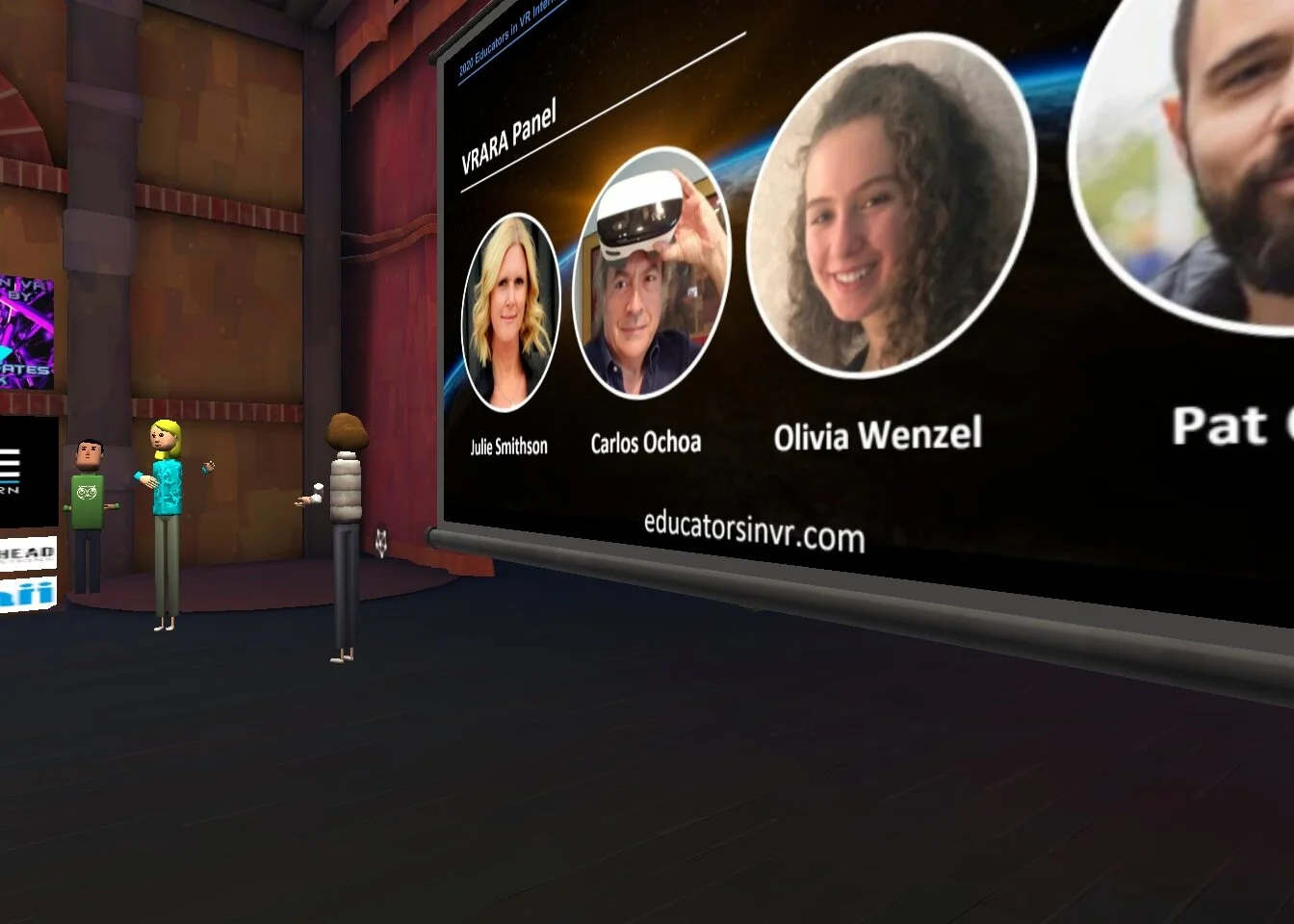
During this event, the VR/AR Association #Education Committee in collaboration with MetaVRse and ONE Digital Consulting organized the #VRARA Panel.
Julie Andersen Smithson, and Carlos J. Ochoa Fernandez ,leaded the conversation with the contribution of Olivia Wenzel and Pat Owens. During the presentation, we talked about our mission and activities to promote and develop a professional VR in Education Global Ecosystem, working with top professionals and top companies all around the world.
The VR/AR Association is an international organization designed to foster collaboration between innovative companies and people in the VR and AR ecosystem that accelerates growth, fosters research and education, helps develop industry standards, connects member organizations and promotes the services of member companies. There are over 70 VRARA chapters, with more than 30 Industry experts Committees around the world that meet regularly in person and online.
Carlos J. Ochoa Fernandez is the Chapter President of VR/AR Association, Madrid and Co-Chair of Education Committee.
Now you can see the complete session here, and get the immersive perception of what is Immersive Learning in VR Spaces:

Watch Viacom at our VR/AR Global Summit 2019
See the latest in Virtual and Augmented Reality at our upcoming VR/AR Global Summit ONLINE Conference!
More info here
Diego Medina, VP Advanced Advertising Products, and his team has helped VR AR spring to life in Nickelodeon (KCS, KCA, Henry Danger, Loud House) , MTV (VMA's Missy Elliot Vanguard), and most recently Comedy Central (Your Brain On Clusterfest). Diego also talks about the unique multiplicative quality VR/AR has of voicing IP and audiences through technology and how VR has a unique place in on the ground experiences for festival goers!
Lessons from AR Revenue Leaders, Part I: Snap
ARtillery Intelligence’s latest report, Lessons from AR Revenue Leaders, Part I: Snap examines AR usage and revenue leaders, and the strategic implications for AR success. Subscribe for the full report. VRARA members get a discount.
The consumer AR sector still lingers in early stages. Among other things, this means the playbook is being written mid-flight. There’s a great deal of experimentation underway as companies test and iterate rapidly to discover winning formulas and business models.
This goes for consumer AR product strategies. Though a common sentiment in 2016’s hype cycle was that AR applies to everything, it’s become clear that it’s not a silver bullet. It will have native and natural applicability to some aspects of our lives and work… but not all.
Beyond macro categories and use cases where AR should or shouldn’t be developed, there are more granular strategies around user experience (UX). What types of AR interactions resonate with consumers? And what best practices are being standardized for experience design and interface?
Equally important is the question of AR monetization and revenue models. Just as user experience is being refined, questions over what consumers will and won’t pay for are likewise being discovered. The same goes for brand spending behavior in cases of sponsored AR experiences or ads.
These lingering questions compel acute attention to quantifiable AR market successes and best practices. Not only does the sector’s early stages mean that these questions are prevalent… but also that their answers are scarce. That includes evidence of successful execution and transferrable lessons.
With that backdrop, ARtillery Intelligence ventures to find, aggregate and draw meaning from finite AR successes in today’s environment. And by “success,” we mean large-scale consumer traction and revenue. When examining consumer AR engagement and revenue leaders, what product attributes and tactics are driving their performance?
This includes Snapchat. Its social lenses have the greatest consumer AR active usage, and it holds the leading share of AR ad revenue. Among other things, this is propelled by product-market fit, ease of use, distribution and fulfilling key goals for brand advertisers.
Also on the list is Pokémon Go. Though the tech press has moved on to other shiny things, 2019 marks its best revenue performance to date. This is attributed to innovation cycles that breed ongoing novelty and replayability, as well as its sparing use of AR as a game element.
Other consumer AR exemplars include Houzz and Instagram. Emerging AR players also show early signs of traction that’s worth examining, such as Tilt Five. Altogether, how do we triangulate best practices and extract tactics and takeaways for AR players today?
We’ll do just that in the coming pages, starting with Snapchat. This draws from the rigor of market watching and analyst work – including daily editorial coverage of our sister publication, AR Insider. We’ll synthesize all of these things, pursuant to the core mission of empowering you with a knowledge position.
Subscribe for the full report. VRARA members get a discount.

The VR/AR Association publishes best practices for Aerospace with Scope AR, DiSTI, FutureVisual, Sam Trevino, Dr. Alethea Duhon, among others

This publication is part of an ongoing discussion on the wide-ranging applications ofVR/AR technologies in the broader Aerospace framework.
These case studies are intended to assist in understanding the challenges faced by these companies, the impact of adopting these technologies as solutions, and the recommended best practices for VR,AR applications in the aerospace industry.
We encourage continuous industry feedback to keep this a living document. As a committee, we intend to update this material as needed.
The Aerospace Committee of the VR/AR Association serves as a resource to promote the application of VR/AR technology as a solution to a number of traditional problems in aerospace. The committee enables the sharing of best practices and information on VR/AR related applications in the aerospace industry as well as curate industry relevant case studies. Furthermore, the committee shapes and recommends best practices for the scaling of VR/AR applications across aerospace.
Foreword
The bar for operational excellence has moved up. Virtual work-place training and augmented overlays serving as a medium to present teams and people with important information are commonplace. In aerospace, it’s a race among common players, new disruptors, and players in other verticals to lead the charge; who can use new tools to eliminate old problems. And how far can we, should we, go with this technology?
Analyze, develop, test, repeat. Get a developer with a vision, or a visionary with a developer, and the previous limit is 50,000feet below you. But you’re not alone at that altitude. We still have rules, and reliable processes, virtual and augmented reality support existing operations, not scrap them. What’s so special is the immediate and continuous impact these tools have to accelerate the learning/training process and lower fixed and variable costs. These tools empower employees to create content libraries of reusable training making visualizing data possible. Because of this, errors are caught earlier; defects are reduced.Tests are more thorough. Pilots and technicians are prepared for more extreme scenarios. Every aspect of developing and operating a manned or unmanned aircraft has some story of how they’ve improved using these tools.
Experience-based training. Soak on that. What is experienced-based training? It used to align with creating simulations that involved as real of a scenario as an under-funded training program could provide.Now, it’s using VR to practice starting an aircraft 50 times (in every temperature, night, day, backward, forward, at every airport) before you before you ever see a physical aircraft. It’s validating and practicing work instructions to connect a wing to an aircraft within the time manufacturing engineers estimated without needing hardware to train. It’s taking your client(who happens to be on the other side of the world) into a virtual world to visualize what your product fully integrated and operating well for them means. The contributors to this document speak this type of success based upon the tools they’re creating for us.People using their products, and products like theirs, know so much more, learn and innovate so much quicker, identify root causes earlier, increase product reliability, and position their organizations to support technological art that is Industry 4.0.
This isn’t a blip on the productivity radar that will level off as soon as the gimmick is over. This isn’t the 30-day app. This is some variant ofThe Matrix happening right before our eyes. Quite literally. Right now, experienced workers are adding augmented reality overlays to processes and procedures (visual cues to notes, cautions, and warnings, for example) and uploading these sessions to a learning management system ready to deploy the knowledge globally.TheIoT of manufacturing and production identifies when someone hasn’t performed a task recently offers proficiency training, publications, checklists, and SME support within their field of view the day before the task is likely to be completed. There is some information that we know, but still so much we don’t know. How far will this go?Where does the virtual line stop, and the physical line stay? What we do know is this technology is spreading quickly because it’s so effective. Teams are diving deep and using more tools to get to hyper performing organizations in every vertical. Thank you to the contributors within this document.They are a joy to watch, let alone work alongside.


Watch Stanford Children's Hospital at our VR/AR Global Summit 2019
Come see the latest in Virtual and Augmented Reality at our upcoming VR/AR Global Summit ONLINE!
More info here


Varjo Delivers Absolute Immersion in Mixed Reality with Industry-first Chroma Key & Marker Tracking
Using the company’s latest software for its XR-1 Developer Edition device, professionals can now mix and match real-world elements with virtual content with pixel-perfect accuracy
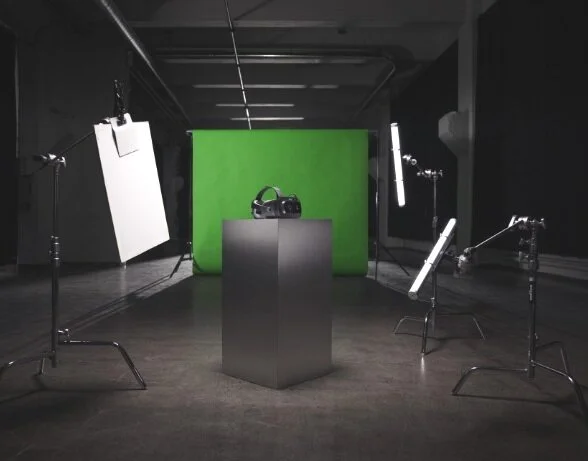
Helsinki, Finland – March 10, 2020 – Varjo™, the leader in industrial-grade VR/XR headsets, today introduced real-time chroma keying and marker tracking as early access features for its XR-1 Developer Edition headset. An industry-standard technique known as ‘green-screening’ and used in broadcasting and film, Varjo is the first company to deliver chroma keying in real-time for mixed reality devices. With marker tracking, professional users can instantly anchor any virtual objects to the real world using printable visual markers.
Together, these two features allow enterprise customers to seamlessly integrate virtual and real worlds, interact with photorealistic virtual content as they would in real life, and achieve pixel perfect accuracy and occlusion inside mixed reality. Demo videos showcasing the power of chroma keying and object tracking are available at varjo.com/chromakey.
“Since its commercial launch in December 2019, Varjo’s XR-1 Developer Edition has quickly become the most demanded mixed reality product for professional users, transforming the way companies train, design and conduct research in immersive environments,” said Urho Konttori, Chief Product Officer and co-founder of Varjo. “When our customers asked us to create a seamless solution for blending the real and virtual worlds, we immediately jumped to the challenge. We’re excited to introduce real-time chroma keying and object tracking to our customers just three months after the first deliveries of the XR-1, enabling absolute immersion inside mixed reality.”
Chroma keying is particularly beneficial for professional workflows where aligning virtual content accurately with the physical world is crucial. Users can now easily define parts of reality, identify them with color and replace them with virtual models or scenery without heavy development costs. With chroma key, virtual content also occludes perfectly with real-world objects or hands, allowing intuitive interactions. Using Varjo’s object tracking with visual markers, professionals can make virtual objects appear exactly where they want them in their surroundings. Example use cases include:
Conduct training and simulation: A pilot can sit in a replica of a plane or helicopter cockpit and be able to look outside and see oneself flying in an ultra-immersive visual scenery, while operating physical cockpit controllers for realistic training. Chroma keying also enables multi-user training scenarios.
Design the products of tomorrow: An automotive designer can sit in a car and replace parts of the interior with designs that are not yet built in reality with the click of a button. Designers can also collaborate in an immersive mixed reality space, interacting with virtual models and making changes to them in real-time, or virtually ‘dress’ 3D prints to look like material-finished products.
Run academic, clinical, and commercial research: Researchers can conduct studies inside life-like mixed reality, simultaneously combining virtual and real world elements into the research environment. The subjects can hold virtual products or instruments in their hands and interact with them.
“With chroma key, Varjo took an industry-standard technique and turned it into a useful new feature for dynamic mixed reality simulations,” said Bob Vaughn, Product Manager at FlightSafety International, a worldwide leader in aviation training. “We look forward to further exploring the feature applied to a variety of simulation opportunities. We highly value our collaborative relationship with Varjo, and are excited to continue to push the boundaries of mixed reality.”
Both chroma keying and marker tracking are available in early access to all users of the XR-1 Developer Edition headset. The XR-1 is the only device capable of streaming high-resolution video of the reality to the user without any observable latency, enabling tweaking of every single pixel that the user sees inside the headset in photorealistic fidelity.
Contact:
Name: Annaleena Kuronen
Email Address: annaleena@varjo.com
Spatial Computing: 2019 Lessons, 2020 Outlook
ARtillery Intelligence’s latest report, Spatial Computing: 2019 Lessons, 2020 Outlook examines 2019’s biggest lessons in spatial computing and the outlook for 2020. Subscribe for the full report. VRARA members get a discount.

They say that patience is a virtue. This applies to the current state of the spatial computing industry. After passing through the boom and bust cycle of 2016 and 2017, the last two years were more about measured optimism in the face of industry shakeout.
At the precipice of 2020, that leaves the question of where we are now? Optimism is still present but AR and VR players continue to be tested as high-flying prospects like ODG, Meta and Daqri dissolve. These events are resetting expectations on revenue outcomes.
But more than the ‘how much?” is a question of “when?” Market timing is quickly becoming a prominent factor to determine success of spatial computing players. This is a common factor in tech cycles historically. Spatial computing will be no different.
Speaking of history, spatial computing follows a pattern similar to the early 2000’s eCommerce bubble. Exuberance is followed by market correction, followed by the slow progression that eventually meets and exceeds early projections… but not until years later.
The good news is that this slow uphill progression has already started, and we believe the worst is behind us. Though the broader tech and media worlds have shrugged off AR and VR as fads that died in 2017, Industry subsectors are signaling growth by quietly gaining traction and revenue.
This includes AR-based advertising. ARtillery Intelligence projects it to grow from $453 million last year to $8.8 billion by 2023. This outlook follows the momentum of advertiser adoption, as well as the continued investment of tech leaders like Facebook and Snap.
There’s also a robust support industry germinating, including “building blocks” which are endemic to this period of any tech sector. Represented by tools such as Unity, Adobe Aero, and 8th Wall, AR-as-a-Service (ARaas) will be a major AR revenue category.
AR’s health also hinges on the outcome of Apple’s rumored AR glasses. Apple has a track record of mainstreaming emerging tech, and the AR industry is hoping for that halo effect. But based on signals we track, this will come a few years past the rumored 2020 launch.
Meanwhile, adjacent sectors will accelerate AR adoption and development. The broader wearables segment is growing rapidly, and will benefit AR by acclimating consumers to wearing tech on their bodies. 5G, self-driving cars and other areas will likewise feed into AR.
There are also lots of positive signals for market growth in VR. Facebook/Oculus continues to invest in hardware subsidies and loss-leader pricing to jumpstart a network effect. The result of this investment is high quality and consumer-friendly price points for Oculus Go and Quest.
What do all of these signals collectively tell us? And where do they point for 2020 outcomes? We’ll unpack the full list of market factors and 2019 lessons in this report, pursuant to illuminating likely paths for spatial computing in 2020. A robust ecosystem is (slowly) building.
Subscribe for the full report. VRARA members get a discount.
Do you manage a training organization or teach Unity as part of your degree program? This Wed, join our Webinar about the Unity Training Program and Academic Alliance

Topics of discussion will include the following: Unity and Market Opportunities for Unity Learning Partners, an overview of the UATP and UAA programs (and how to join), Unity workshops, courseware and certification offerings. During this webinar, you will gain introductions to Unity Learning Partner Services Distributors that can assist you or your organization in joining these programs: ThinkEDU (North America). ETC Brasil (Latin America) and KnowledgePoint Connect (EMEA, ANZ).

Cleanbox Technology effectively kills viruses at a 99.99+% rate
Cleanbox is also a member of VRARA. We provide a hygienic solution for VR headsets that destroys viruses. We are reaching out to each chapter, to make sure you are aware our solution exists.
Cleanbox is the only solution on the market today to effectively clean and sanitize VR/AR head gear. Our patented technology kills 99.99+% of viruses, bacteria, and other pathogens using UVC medical grade light and nano particle solutions in 60 seconds.
If you are concerned about transmitting eye infections and viruses between employees please consider our solution. Wipes are not effective. You would need to leave the wipe on the headset for three minutes to achieve 97% efficacy.
The UVC light is a much shorter bandwidth than UVA (sunlight) and UVB (tanning bed lights) and because of that it does not damage the plastics materials and does not penetrate any glass or acrylic at all. Our UVC manufacturer has run endurance tests on a wide range of plastics with their lights that have lasted for three years. No degradation of the materials (no brittleness, flaking, etc) has occurred. For a Cleanbox user to get three years of constant exposure on materials, it would actually take something more like 17 years or more of running cleaning cycles because typical use is one 60-second cycle out of every five minutes. Extrapolating that for eight hours a day, six days a week, and the math shows it would take a period of time that is far greater than the lifespan of the visor in question to get that kind of continuous exposure on the materials. So the end result is that no, the UVC does not effectively harm the plastics or materials. When headset manufacturers talk about "UV light is bad for the lenses", they mean sunlight (UVA). There is no headset manufacturer that says UVC light is bad for plastic.
More info: http://cleanboxtech.com
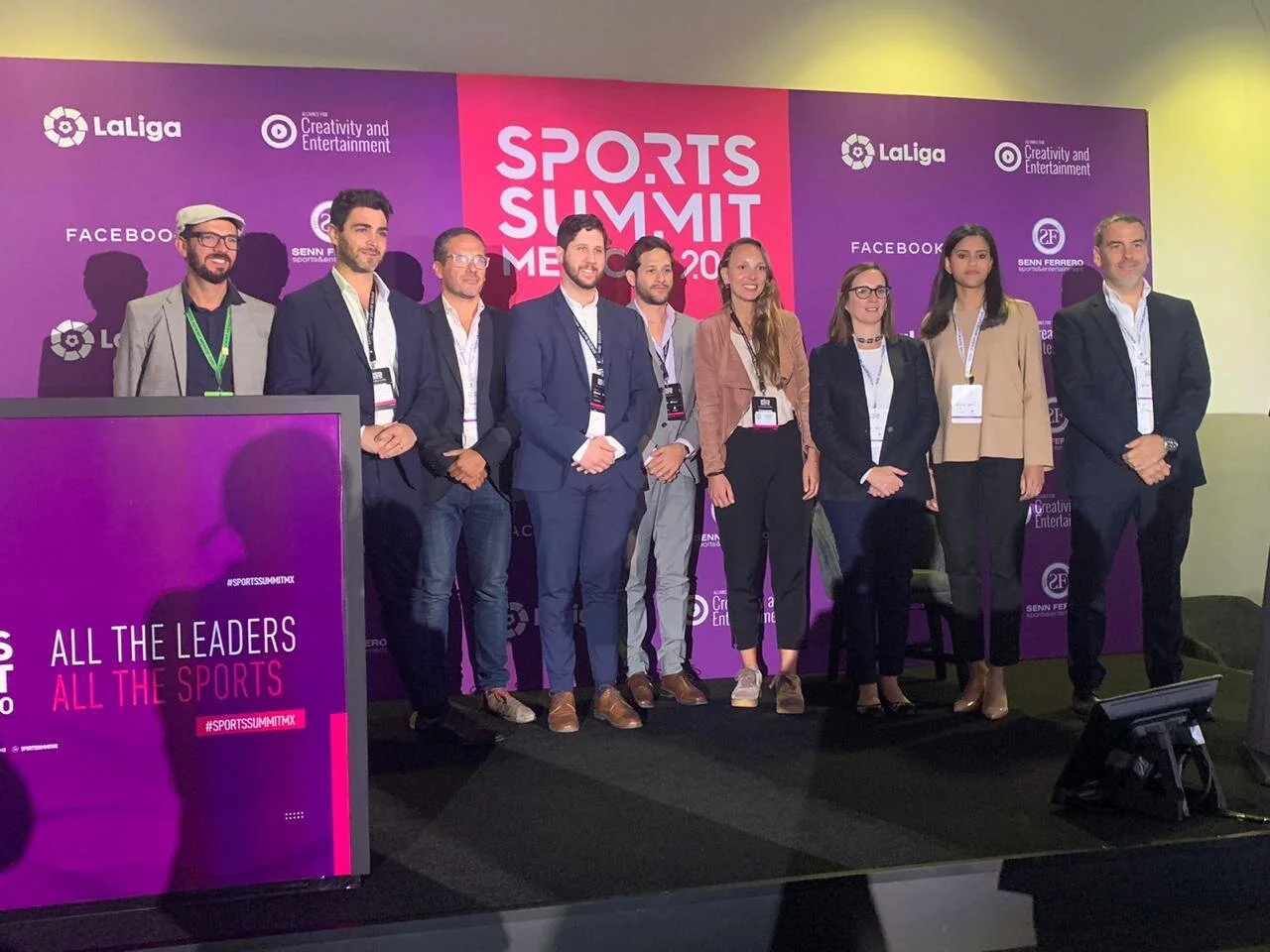
CamOnApp winner of Sports Summit Startup Competition powered by Microsoft!
The first edition of the Startup Competition, organized by the Sports Summit Mexico and the Global Sports Innovation Center (GSIC) powered by Microsoft took place in Mexico DC on February 26 and 27. The members of the jury named unanimously CamOnApp the winner of the competition.
The competition was launched at the end of January and it was aiming to create a meeting point before, during and after the Sports Summit for Latin American startups and SMEs that are developing innovative solutions applied to the sports industry. The finalists presented their solutions to the public, media and national and international sports entities during the event.
CamOnApp, an immersive technology company that provides customized solutions of Augmented, Virtual and Mixed Reality so that brands, agencies or advertisers can boost their campaigns, communication, and sales opportunities.
More info:
linkedin.com/feed/update/urn:li:activity:6638946102412402688
Contact:
Florencia Moltini
Email Address: florencia@camonapp.com
www.camonapp.com