
You can now RSVP for the Workshops at the VR/AR Global Summit
RSVP here
Free to VR/AR Global Summit ticket holders only. You will have to present your conference badge (full pass or Sat only pass). It's first come, first serve.

Blockchain Event at the VR/AR Global Summit
See the schedule and get tickets for the VR/AR Global Summit here

VR/AR Global Summit - Blockchain Event
Hosted By: Ron Segev, Segev LLP
- Mark "Rizzin: Hopkins aka Dr. Bitcoin
- Devon Zielinski - Veritoken
- Anne Ward - IBM Futurist
- Amy Peck - EndeavorVR
- David Daniels - YouAR
- Kalin Stoyanchev- Otoy/RNDR
- Gabriel Rene - VERSES
- Dave Gratton - IMBY Real Estate Corp
- and more to be announced soon....
Topics include:
- The Future of Blockchain Reality: Where Are We Headed?
- What Comes Next: Innovative New Uses of Blockchain in LBE
- The History of Blockchain and Crypto
- Blockchain is the New Black: The Convergence of Blockchain, XR, AI and Adjunct Technologies
See the schedule and get tickets for the VR/AR Global Summit here

VR Scout: The VR/AR Global Summit Puts Content First
Get tickets for the VR/AR Global Summit here

by Dan Burgar, Kate Wilson (source: VR Scout)
In 1996, Bill Gates first coined the phrase “content is king”. Today, his statement is truer than ever.
Every day last year, the average North American consumed over 10 hours of digital media. On-demand streaming and the internet have transformed how individuals interact with screens, with most spending more time in front of a monitor than any other activity – including sleeping. Constantly seeking the rush of engaging with new material, consumers aren’t gripped by their hardware – phones, TVs, or laptops – but are drawn in by unique, well-crafted content.
The same is true of the VR industry. The past 24 months have seen the rapid proliferation of headsets, with companies vying to create the sharpest, most realistic display. Now, the hardware cycle is drawing to a close. After the release of Magic Leap One earlier this month – the most anticipated launch in the sector – the industry’s best minds have shifted to content.
That trend has been keenly anticipated by the VR/AR Global Summit. One of the largest industry events in North America, the conference will spotlight how tech giants and startups are creating new ways to visualize and interact with virtual worlds. It’s a focus that conference speaker Andrew Melchior, an executive producer who has married the music of Björk and Massive Attack to VR, believes will help the industry go mainstream.
“Bibles sold printing presses,” he says. “Shared experiences such as the Coronation of Queen Elizabeth and the televised moon landings made people buy TVs. Real time mapping, fart apps, and music players sold iPhones. It goes on and on. Already a Battle Royale [has] happened in the past five years for buying first option broadcast rights for AR content across sport, music, comics, and films. I think this is a good thing, as the gigantic pockets of Apple, Google, Magic Leap, Huawei and such like will help fund the creative endeavours of a whole new content ecosystem.”
The VR/AR Global Summit is poised to bring together apps from different corners of the sector. Speakers from goliaths like Amazon, Ford, and IKEA will rub shoulders with Vancouver up-and-comers including Motive.io and LNG Studios, each showcasing programs that put hardware like HTC Vive or Microsoft HoloLens through their paces. Highlighting the content from these creators will, Summit speaker Charlie Fink believes, help usher in a world where head-worn displays are commonplace.
“Conferences like the VR/AR Global Summit proliferate on the cusp of disruption,” says the columnist and author. “Like internet conferences in the 90s, mobile conferences in the aughts, social media conferences earlier this decade, or XR conferences like this one today, everyone is desperate to understand what’s happening.
“Making hardware is incredibly hard, expensive, and time consuming,” continues Fink. “Magic Leap is tackling this as a humble start up with $2.3B. Peoples’ eyes are popping out, but these guys are going up against Apple and Microsoft, hoping to develop a third way. [But] Magic Leap, like all the devices that came before it, is dependent on the ecosystem of independent developers and entrepreneurs who build cities at the foot of the mountain, so to speak.
The increased recognition of content development has lead to some of the most inventive uses for VR and AR. In the past year alone, the technology has enabled individuals to remotely pilot submarines in virtual reality, monitor stress levels based on eye movement, and help athletes improve their game. While it might not yet boast a killer app like email, e-commerce, or social media, VR and AR are quietly transforming the way users interact with the analogue world.
For Christopher Lafayette, an advisor on VR and AR in Silicon Valley who will be talking about the need for diversity and inclusion in the industry at the Summit, the most interesting integrations are occurring in the medical and manufacturing sectors.

“Manufacturing environments are now seeing early entry employees operate machinery with augmented guidance at a very fast learning pace,” he says. “Products are being built and delivered quicker to consumers. This is a signature component of future city development. MedTech is significant, too, specifically in the VR vertical. Surgeons, psychologists, occupational therapists and nurses are given new immersive tools to deal with pain management, PTSD, experimental treatments, pre-surgical discovery, and surgery operations. It’s personally one of my favorite aspects of this industry.”
At this point in the technology’s life cycle, says Cathy Hackl, futurist at You Are Here Labs and partner at Mixed Reality Ventures, the VR/AR Global Summit is right to focus on content rather than hardware. Hosting discussions that will cover education, 5G technology, blockchain, esports, and location-based entertainment, the September 21-22 event will feature two full days of talks, panels, workshops, investor events, and pitchfests, all offering fresh examples of both commercial and enterprise creations. In Hackl’s view, the most exciting part of the sector is trying out new experiences.
“I speak all around the globe and I urge creators and devs to join our industry for a simple reason,” she says. “While the hardware is universal, there will always be a need for culturally relevant content in VR. This presents a great opportunity for creators, developers, journalists, and artists, across all cultures and nations.”
Get tickets for the VR/AR Global Summit here
VRARA Training Committee to Present Industry Research Results and Best Practices at the VR/AR Global Summit
Get tickets to the VR/AR Global Summit here
Co-Authors/Contributors: David Trainor (Sentireal), Matthew Wallace (VRSim), Sara Blackstock (VRSim)
The VRARA Training Committee have conducted a survey to capture the industrial landscape for one of the major use cases for Virtual, Augmented and Mixed Reality – namely training and development of employees. A total of 108 people responded to this survey and provided valuable insight into how VR, AR and MR (collectively XR) are becoming an integral part of industry-based training. A number of interesting trends have emerged from the survey responses. In this article we’ll explore these trends by considering the responses to the individual questions in turn.
Initially we were interested in seeing what training roles and activities were represented by the survey respondents:

The vast majority of the respondents already have some active role in the training process. Managers, Influencers and Decision Makers were well-represented and the training technology Developer community featured strongly too.
Next, we were interested in seeing what experience the respondents had in utilising XR within their training activities:

Over 90% of respondents indicated that they had already used XR in training or would consider doing so in the future. Of course the nature of the survey would naturally attract a high proportion of respondents with an existing interest in or enthusiasm for immersive training, but this is still a gratifying result nevertheless. The few respondents that said they would NOT use XR in training cited cost, lack of content, device availability and benefit/value/cost relationship as the reasons for not using the technology.
Next, we were interested in seeing what devices and software the respondents a) used b) had tried and c) use most regularly:


These three questions highlighted the relative popularity of the VR medium for training, compared with AR and MR. With VR-based training, mobile VR solutions and the Oculus Rift and HTC Vive headsets featured strongly. With AR-based training, newer mobile AR software frameworks from Apple (ARKit) and Google (ARCore) have started to gain a significant foothold. Dedicated AR glasses did not feature strongly in our survey results but Microsoft’s Hololens device proved a popular choice for MR-based training.
Next, we were interested in how often the respondents used VR or AR in terms of hours per week:

Here we can see that the significant majority of respondents (69.6%) spend 5 hours a week or less actively using VR, AR or MR. This may correlate with the concept of using these technologies for short “bite-sized” training experiences rather than prolonged training activities.
While usage rates will vary widely depending on circumstances and training budgets, the training market needs to increase adoption by demonstrating the effectiveness of VR, AR, or MR as training media. This not only includes incremental hardware improvements, but also a concerted effort on content improvements to deliver simulations worthy of a trainees immersion. Significantly, trainers will be given valuable insight through the use of big data across time and trainees.
Next, we were interested to what extent the respondents thought that certain attributes were strengths or weaknesses of VR and/or AR, when applied to training activities.
This series of questions revealed that respondents rated immersion, presence and simulation capability as key strengths of VR-based training and rated showing information in context and presenting expert information as key strengths of AR-based training. Interactivity and progress-tracking were highlighted as strengths of both VR and AR.
Next, we were interested in what activities the respondents felt would a) most benefit and b) least benefit from XR training:


Clearly the survey respondents feel that manual skills and mechanical/industrial operations will especially benefit from XR-based training, with the realistic simulation capability of VR and the interactive real-time guidance provided by AR/MR being particularly relevant. In certain skilled trades, XR has made significant inroads into the training communities, such as coatings application or welding. For example, some level of training with VR/AR is the defacto standard for welding training throughout the United States.
Although process-driven activities scored particularly highly on this question, some creative activities such as art and precision crafts also feature strongly, indicating that XR-based training does have a role in activities that are not necessarily driven by process and compliance. However other creative activities such as art and activities involving human relationships, such as organizational leadership and management, are indicated as weak areas for XR-based training.
Next, having identified some strong and weak applications for XR-based training, we were interested in the opinions on weaknesses of the media and technologies themselves:

Understanding where the perceived weaknesses or deficiencies lie in current forms of XR-based training is key to addressing those issues in future versions of the training technologies. Clearly the survey respondents feel that cost is still the major barrier to introducing or increasing the use of XR within training programs.
Reduction in headset costs and innovative business models around content access should help to address this. Availability of the technology has also been highlighted as an obvious weakness, suggesting that hardware providers should consider future manufacturing and distribution processes and software providers should consider subscription and distribution models beyond the “app store” format. In discussing barriers to entry and expansion, the potential relationship between barriers should be considered. For example, cost might not be considered prohibitive if greater libraries of content or potential for re-purposing training solutions existed.
Resistance to change is also highlighted as an issue, suggesting that the efforts of the VRARA Training Committee in evangelizing and promoting XR training are still well-placed! Finally, lack of relevant content was highlighted by the survey respondents. Considering the results, the concept of relevance should also be extended to consider the depth and proven validation of the efficacy of that content.
The overall set of results for this survey question echoes the earlier sentiments citing cost, content, availability, and overall value proposition as barriers to entry/expansion within XR-based training.
Finally, we were interested in what types of company/organization the respondents felt would use XR training most successfully:

Respondents have clearly prioritised some types of organization that have a longer and better-known association with immersive training and simulation, including the military, emergency response organizations and organizations dealing with safety-critical processes. Interestingly schools also featured heavily in the responses, indicating a crossover in the “enterprise training” and “education” sectors. It should be noted that the value proposition in these sectors is improved by factors outside of the immediate value proposition of VR, AR, or MR. Education budgets, worker compensation, rework cost and employee health costs serve as a constant driving force to explore innovations that can deliver in terms of safety and efficiency.
The VRARA Training Committee would like to thank everyone who took the time to respond to this survey. It’s produced a very interesting and insightful snapshot of the XR industry as it relates to enterprise training markets.
Launching at the VR/AR Global Summit: Shape Immersive + Occipital + Axiom Zen to bring Blockchain into the World of Mixed Reality

At this year’s VR/AR Global Summit in Vancouver (Sept 21–22), Shape Immersive is partnering up with Occipital, a leader in spatial computing, and Axiom Zen, the makers of the most successful blockchain game, to bring CryptoKitties into the mixed reality world. Players will be able to rescue these adorable digital cats from the notorious Kitty Kong.
“Working with a familiar IP like CryptoKitties adds a new layer of immersion to our mixed reality experience,” said Alex Chuang, Co-founder and CEO of Shape Immersive. “By digitizing the physical world, virtual characters can understand our physical environment and interact with it, which creates a sense of wonder and magic for the end users.”
“The line between the physical world and the digital world is increasingly blurred,” says Bryce Bladon, one of the founding team members of CryptoKitties. “With blockchain technology, digital assets like CryptoKitties are given life — but with augmented and virtual reality, they can come alive.”
This new multiplayer mixed reality experience is powered by Occipital’s depth sensor and its mixed reality framework, Bridge Engine. The depth sensor is used to scan the physical space, generating an accurate 3D model of the world that the AR devices can track on. This makes occlusion (hiding virtual objects behind physical objects), collision (colliding virtual objects with physical objects) and casting of virtual shadows on real-world objects possible.
“Understanding the environment is a foundational component of convincing mixed reality,” says Jeff Powers, Co-founder and CEO of Occipital “Having this knowledge equips storytellers and game-makers with a powerful tool for increasing believability and immersion.”
As the race for augmented reality technology heats up, VCs and tech giants are pouring billions of dollars into building the next computing platform. When AR devices become more ubiquitous, the demand for geospatial data will increase exponentially. Shape Immersive believes that blockchain technology can help make geospatial data universally accessible so that anyone can create scalable and persistent AR experiences.
Media Contact:
Alex Chuang
Co-founder & CEO, Shape Immersive
alex@shapeimmersive.com
About Shape Immersive
Shape Immersive is building a decentralized marketplace that will make geospatial data universally accessible so that anyone can create scalable and persistent Augmented Reality experiences. By using blockchain technology, Shape Immersive can create a trustless and open network that allows a distributed workforce to provide, validate and authenticate geospatial data.
About CryptoKitties
CryptoKitties is the world’s most successful blockchain game; since launching, tens of millions of US dollars in transactions have been conducted on the platform, with some of the game’s most popular cats selling for the equivalent of over US$100,000. Unlike cryptocurrencies, CryptoKitties are individually unique digital assets akin to digital art. CryptoKitties was created by Axiom Zen and spun out into a new company called Dapper Labs in February 2018, raising $12.85M from leading investors including Andreessen Horowitz, Union Square Ventures, and the founders of Dreamworks, Reddit, Coinbase, Zynga, and AngelList, among others. For additional context or access to key team members, please contact press@cryptokitties.co
About Occipital
Occipital is equal parts science lab and technology company, dedicated to building full stack computer vision hardware and applications.
Founded in 2008 and backed by leading investors like Foundry Group and TechStars, Occipital first rose to prominence with mobile applications like RedLaser and 360 Panorama. In 2013, Occipital expanded into hardware with the launch of Structure Sensor, the first 3D sensor for mobile devices.
Since then, Occipital has released additional hardware products including Bridge (a mobile MR headset), Structure Core (an embeddable depth sensor) and the Paracosm PX-80 (a large-scale 3D mapping system).
Occipital has also continued to release innovative spatial applications like Canvas and TapMeasure, both used for home mapping and measurement.

Speakers Announced for the VR/AR Global Summit 2018
The VR/AR Global Summit have revealed their list of speakers for the upcoming event which will see industry members from around the world talking about all things virtual reality (VR), augmented reality (AR) and mixed reality (MR). Taking place in Vancouver, Canada on September 21st and 22nd, 2018, the two day event will feature a range of talks, panels, workshops, investor events, pitchfest and demos which will explore the whole of the immersive industry.
Some of the speakers included Joanna Popper, a Hollywood and Silicon Valley media executive. She recently become HP’s Global Head of VR for Location Based Entertainment. Popper was also selected as “50 Women Can Change The World in Media and Entertainment, 101 Women Leading the VR Industry” and is on the Coalition for Women in XR Fund.
Frank Soqui, Vice President & General Manager in VR, Gaming and eSports at Intel Corporation Frank Soqui is shaping Intel’s client business in growth segments such as VR, gaming, and eSports. Next is Darren Bennett whoicke was involved with the initial prototype contributions for KINECT and provided creative direction for KINECT Adventures. Bennett is also lead edge development, from concept to ship, on Microsoft HoloLens. He has most recently shipped UX for the first MR operating system – Windows Holographic.

Other speakers including Timoni West, the director of XR Research at Unity, where she leads a cross-disciplinary team of artists and engineers that are exploring new interfaces for human-computer interaction. Kristi Hansen Onkka, the founder of healthiAR and uses technology, media and engagement to advance patient care, and Kyle Roche who is the General Manager of Amazon Sumerian and was also the founder of 2lemetry. There are plenty of other speakers attending the event as well and you can find the full list here.
More information on the VR/AR Global Summit can be found on the event website. Tickets for the event are also on sale now using promo code PR30 as well ranging from $599 (USD) for members to £899 (USD) for non-members.
VRFocus will be sure to keep you up to date on all the latest information and reveals as well so make sure to keep reading for all the latest ahead of the event.
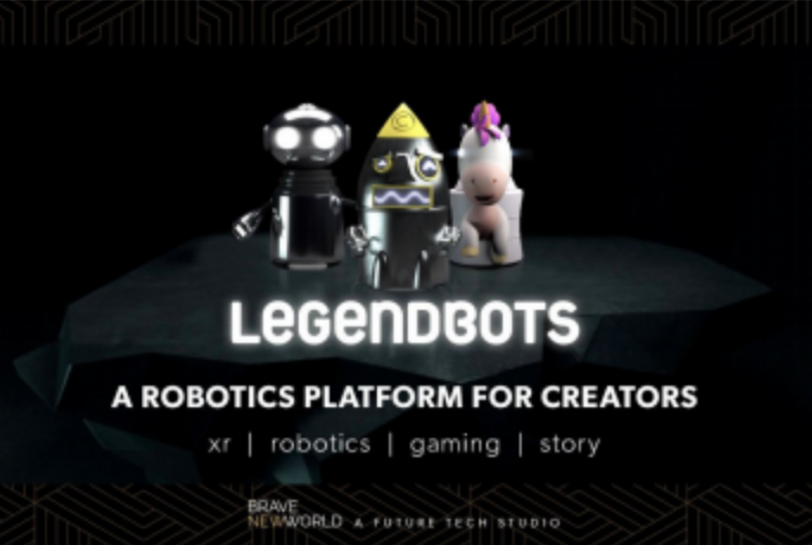
Say Hello to LegendBots
Imagine your favorite characters from TV and movies coming to life. Do you love Donkey from Shrek? Now he’s waking up your kids at 7:00 am every day. Would you like to compare parent stories with George Costanza? Festivus for the rest of us? Want your kids to take Spanish immersion? Dora is now at the breakfast table. The personalities that we have grown to love can live on with the robotics platform, LegendBots.
The team at Brave New World is currently developing this new robotics platform for the home consumer market. They began in early 2016.
Since then, they have achieved a lot and have outlined some big goals for themselves. They want to take the interaction between humans and robots to the next level. This platform combines a physical robot with mixed reality for an entirely new experience. The 12-inch robot can be re-programmed and fits a variety of removable shells – enabling developers to create a myriad of products on one platform. The robot will have computer vision and machine learning capabilities that allow it to see you, hear you, and speak back to you.
The essence of the platform is the LegendBot itself. Here are some key features:
- A Mixed Reality Game Experience – By combining Mixed Reality on mobile phones with the LegendBot you can play a truly unique game. Imagine a board game with a robot host that guides you through the gameplay. Then add an injection of Mixed Reality and the board game leaps off the table and into new dimensions.
- Removable Shell – the LegendBot can easily be repurposed by sliding off one outer shell and replacing it with another. One minute you have a talking teddy bear and the next you have R2D2. Each shell comes with a new app for your phone, creating a brand new experience every time.
- A Smarter Bot – There are many robotic toys available for the consumer home market. Most are pretty limited in their ability to interact with the consumer. Brave New World is creating a next-gen robot that will be able to see and hear users and respond back to them. Leading edge technologies like computer vision and machine learning were hugely expensive just a few years ago. These technologies are now more mature are readily available – the main challenge for the
Brave New World team is to seamlessly integrate these functions together.
Development of the platform is ongoing and there have been challenges along the way. The team is putting the final touches on a major milestone, the ability for the mobile app to “see” the robot’s exact position and seamlessly project mixed reality graphics on top of it, not easy with a moving object. The next phase will include upgrades to the bot’s computer vision, audio analysis, and speech capabilities.
With a new round of funding recently secured, the future is looking bright for LegendBots. Development of revenue avenues has begun. One initial product offering will be a board game titled The Chancellor of the Univers where you can play cooperatively or competitively to defeat a bumbling, evil genius robot that rules the universe. Marketing efforts around the Chancellor game have begun with the creation of a comic book that introduces the Chancellor to the world. See more about the comic at https://goo.gl/MU74CD and meet the Chancellor at http://hellomeatbag.com/. Brave New World plans to produce its own products and license the platform to existing brands as well.
For information and investment opportunities email contact@bravenew.world or visit www.legendbots.com
Intel, HTC Vive, Microsoft, Amazon, HP to Speak at the VR/AR Global Summit. Save 30% on Tickets now!

Unity Technologies, Google, Ford, Forbes, Bell Flight, The Pentagon and Holiday Inn, plus many more.
VANCOUVER, BRITISH COLUMBIA (PRWEB) AUGUST 29, 2018
The VR/AR Global Summit will welcome world-class speakers to their conference and expo in Vancouver, Canada on Sept 21-22, 2018. The Summit brings together world leaders to discuss the present and future of immersive technologies. The event will feature two full days of talks, panels, workshops, investor events, pitchfest and demos that cover the entire immersive industry, including both commercial and enterprise VR and AR.
Speakers at the conference include representation from Unity Technologies, Google, Ford, Forbes, Bell Flight, The Pentagon and Holiday Inn, plus many more. Topics to be discussed and explored at the event include education, 5G technology, robotics, blockchain, location based entertainment, esports, retail, uses of VR and AR in training, mixed reality and immersive tech in the music industry, AI and virtual humans, to name a few.
“We have carefully curated a show that focuses on the real conversations and unique collaborations that are driving this industry forward,” says Anne-Marie Enns, Executive Producer of the VR/AR Global Summit. “It’s important to us to delve deeper and look for unique and interesting voices working in, and with, VR and AR and their supporting industries.”
Presented by Shape Immersive and Victory Square Technologies, the VR/AR Global Summit is set to feature over 75 speakers from around the globe and more than 70 exhibitors, sponsors and workshops.
Other top reasons why you should attend the VR/AR Global Summit include:
Global audience - confirmed industry leaders from US, Canada, Europe, and Asia.
Dynamic speakers from Amazon, Intercontinental Hotels, The Pentagon, Microsoft, HP and more.
See the latest technologies from the likes of Autodesk, YDreams Global, Archiact, Toshiba, LlamaZoo, Blueprint Reality, ThirdEyeGen, InspireVR, Atheer, Quantum Capture and more.
Top ecosystem - Vancouver is now one of the largest VR/AR hubs in the world with over 200 companies; plus, the #1 Global VFX & Animation Cluster; #2 Best City for Asia Pacific Business; and #3 Largest Film & TV Production Centre, resulting in all the necessary components, talent, and resources for VR/AR that you’ll find in Vancouver.
Startup Pitchfest with $15K USD prize money and judges from The VR Fund, Women in XR (WXR) Fund, Google VR/AR Strategy, Gree Fund, Outpost Capital, Victory Square Technologies, SuperVentures and others.
Brand new venue - PARQ Vancouver is a new international entertainment destination, featuring a 72,000sq ft casino and Vancouver’s largest ballroom.
Tickets are on sale for the Summit.. Save 30% on limited discounted tickets by using promo code PR30 here.
The VR/AR Global Summit will take place from Sept 21-22, 2018 at the newly launched Parq Vancouver, a casino and entertainment complex in Vancouver Canada. The event will also feature creative hubs, demos, exhibits, breakouts and amazing VIP events. It will showcase the best, and most interesting projects, that the industry has to offer.
For press inquiries or for more information please visit the website at http://www.thevrara.com/vr-ar-global-summit
About VR/AR Association
The VR/AR Association (VRARA) is an international organization designed to foster collaboration between innovative companies and people in the VR and AR ecosystem that accelerates growth, fosters research and education, helps develop industry standards, connects member organizations and promotes the services of member companies.
Announcing the VRARA Seattle Chapter Advisory Board

On August 7th, the VRARA Seattle Chapter had an interactive conversation with several influencers in the Seattle immersive community -- roughly 50 people showed up on a Tuesday night for an panel and open dialog we called and Innovation Pub. This discussion focused on the Seattle immersive technology landscape, what we consider success, and what an organization like the VRARA can do add value in a city with an already strong VR and AR presence.
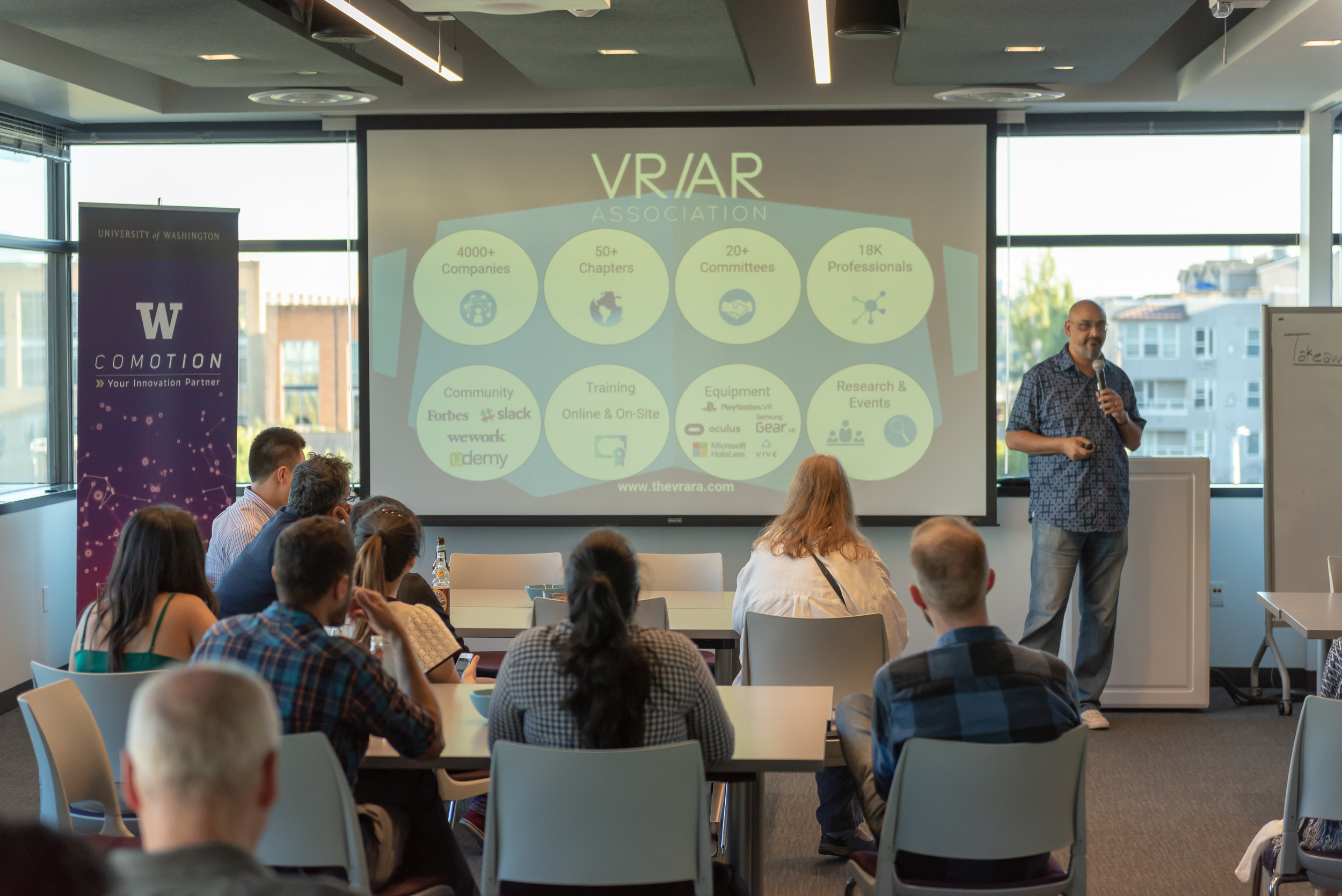
The discussion was moderated by the new Seattle Chapter President, Nirav Desai and had panelists including:
- Vinay Narayan, VP at HTC America in the Vive business unit;
- Elizabeth Scallon, Director of the University of Washington's CoMotion Labs and their VR/AR incubator;
- Trond Nilsen, Founder of the Seattle Immersive Technology Association and organizer of a series of VR Hackathon around the world.
The key takeaways included:
- A desire to document the strength of the immersive landscape in Seattle; the VRARA will build of the landscapes we have for other cities and document Seattle;
- There is a stong developer community; however, as the industry has pivoted from consumer to the enterprise, we could help with sector focused business literacy events for this community;
- There were requests for mentorship; we will look into developing such a program.

Also, Vinay, Elizabeth, and Trond all agreed to join the Seattle Chapter's Advisory Board where they will help for the above three goals and guiding the chapter to best serve the needs of its membership in Seattle and globally. We welcome them to the team and look forward to learning from their insights.
Finally, moving forward, the VRARA Seattle Chapter is supporting the following upcoming events:
- September 14-16: the next Seattle VR Hackathon (https://vrhackathon.web3d.org/seattle-2018-09/). On Saturday, the 15th, we will have our next Innovation Pub event to further refine and progress the goals above.
- September 21-22: The VR Global Summit -- The Seattle Chapter is working to ensure there is a strong Cascadia Corridor presence at this major event in the Pacific Northwest.
Introducing ARtillry INSIGHTS Premium: Gain an XR Edge
What's driving XR adoption? What are installed bases? Revenue outlook? Usage patterns? ARtillry INSIGHTS answers these questions with an intelligence vault filled with data, insights, multimedia and analyst access. It's all about gaining a knowledge-edge and saving time with a single launch point for XR intelligence.
VRARA Members receive a discount on intelligence subscription
FEATURES
- Original Research: Monthly reports and weekly data briefs examining XR data, opportunities and dynamics
- Curated Research: We hand pick industry data and reports.
- Curated Video: We watch, select and summarize video from XR events.
- Slide Library: Charts for your presentations and knowledge building.
- Slack Channel: We're here to answer your XR questions.
- Analyst Access: Deeper discussions, strategic queries and diligence

What are the top factors driving XR adoption? What are AR & VR installed bases? Revenue outlook? Consumer sentiments? Usage patterns? And what product strategies and business models have the most traction?
Answering these questions is the mission of ARtillry Intelligence. That's because history has taught us that with any transformative technology, the name of the game is detecting openings for business opportunity and gaps in the value chain. And that's all about having a knowledge position.
With that backdrop, we announce ARtillry INSIGHTS, a research and intelligence subscription offered in tandem with the VR/AR Association. Among other things, it includes access to our full intelligence vault, original Intelligence Briefings (monthly), data briefs (weekly), curated reports, slide bank, data concierge and analyst access.
Best of all, VR/AR Association members get an automatic discount to subscribe (pricing and details are here)

The main goal: to equip subscribers in AR and VR sectors — or those entering from other industries — to make informed business decisions. That includes XR startups, investors, enterprises vetting XR opportunities, and marketing or PR firms building narratives for clients.
For these positions and others, ARtillry INSIGHTS provides one jumping-off point for XR knowledge building. And we've built in optionality for various personas: hundreds of individual data slides for those who want to go deep, and a highly curated experience for those with less time.
That includes an organized taxonomy of formats (white papers, data briefs, slides, video) as well as XR topics (AR, VR, market sizing, product strategy, etc.) and sub-topics (gaming, enterprise, retail & commerce, media & advertising, etc.). And we're here to help you find the right content.
The full list of features, editorial calendar, pricing and questions/support form are here. We look forward to being your eyes and ears for XR opportunities that emerge in the coming months.
Bay Area: Join us at XD Immersive in October

Among the sub-topics and fields in the XR universe, user experience (UX) and design are critical. And the timing is right to examine product strategies, given XR's early phases of establishing best practices.
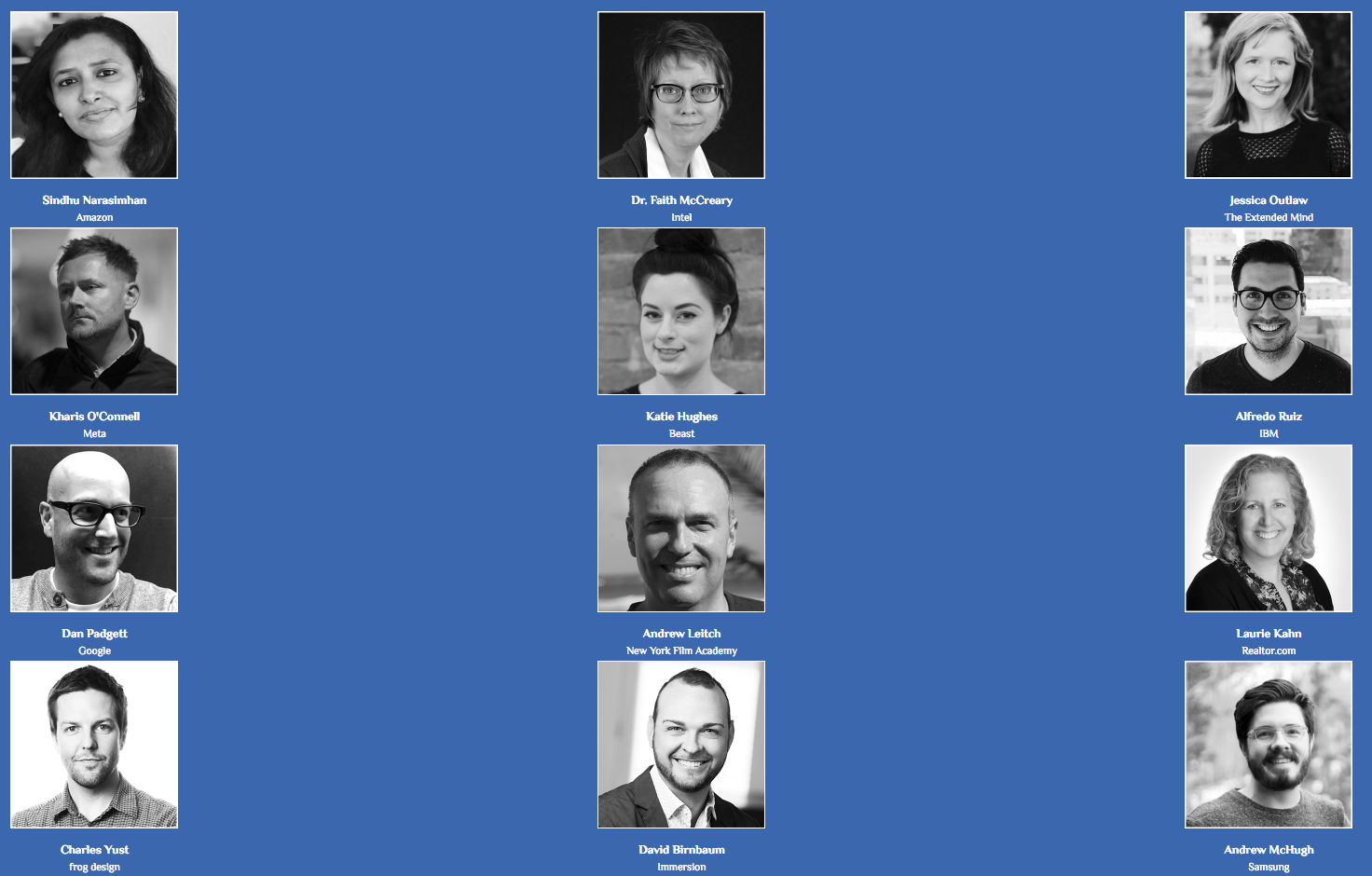
With that backdrop, the XD Immersive conference is coming to SF October 25-26, to focus on UX design, and management. It will zero in on a range of business cases in XR. To do that, it has assembled A-list speakers from Google, Samsung, Microsoft, IBM, frog design & Meta.
VRARA SF has partnered with XD Immersive, which means lots of things -- most of all a 35 percent discount for members (contact us to get code). Join us in October in San Francisco. More about the event, speaker list and other details can be seen here.
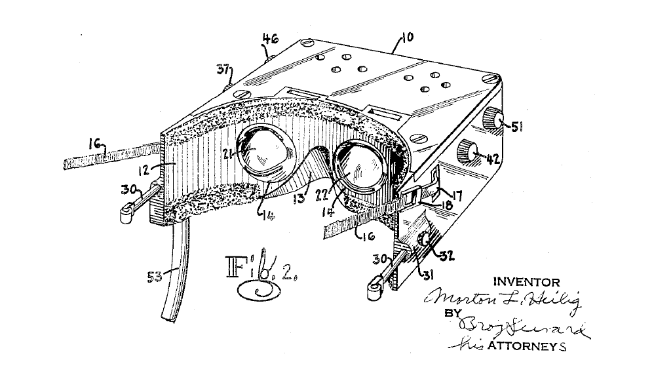
A World of Patents - Alice Through VR Glasses
Enter your email to get this white paper:

The VRARA are delighted to have partnered with Stephen Ferance of Gowling WLG Vancouver to produce this seminal whitepaper, offering all a more profound extrapolation of patenting, and its conduciveness to VR/AR technology specifically.
Ferance speaks to Alice from Alice v. CLS Bank, a decree issued by the Supreme Court that an abstract idea does not become eligible for a patent simply by being implemented on a generic computer. As you can guess, or may well have experienced yourselves, before Alice the generic law surrounding patents galvanised greedy patent buyers to attack startups and to skew R&D innovation before it had truly taken flight.
Since Alice’s implementation in 2014 by the Supreme Court, it has been pivotal in fighting back against so-called patent trolls. Now gone are the days that patent owners could lock down an IP without barely contributing to the development of the technology. R&D has flourished as a result and arguably so has software development and innovation.
Can VR/AR technology too be saved by Alice?
With the current climate, and with four years of Alice battling patent rogues, Stephen Ferance is largely positive about the future trajectory of patenting, especially relating to XR hardware. He comments that claims to such are ‘unlikely to be struck down as abstract ideas’ unlike some of the other case studies mention in the paper.
Secondly, he states that ‘even for software-implemented inventions, VR and AR technologies are conveniently amenable to a number of the exceptions to the “abstract idea” exclusion from patentability.’ This is due to the fact that many VR and AR developments will ‘improve the functionings and capabilities of a computer,' or ‘may even provide a new set of rules to improve animation.’
Thirdly, Ferance makes the astute observation of the link between venture capital and companies that have patented their IP, ‘if venture capital investors have literally hundreds of innovative companies to choose from, their screening processes will almost certainly eliminate those companies that have not taken adequate steps to patent and protect their intellectual property.’
The conclusion strikes a motivational chord for all business owners, technological innovators and creators in this space - ‘Against this backdrop, it must be borne in mind that the patent system is a first-to-file system, so patenting is indeed a race, just as much so as the race to the land claims office back in the days of yore. Those who sit on the sidelines to see how things shake out will find themselves left out and likely eclipsed by their competitors, while those who instead take decisive action to protect their innovations at the earliest opportunity stand to reap the rewards of an industry poised for exponential growth in the coming years.’
Written by Faye Maidment, Marketer and Communications Officer for VRARA Vancouver.
Oracles Game: Changing the Board Games Landscape with Its Tech-Infused Hybrid AR Board Game
Click here for the Games website and Kickstarter
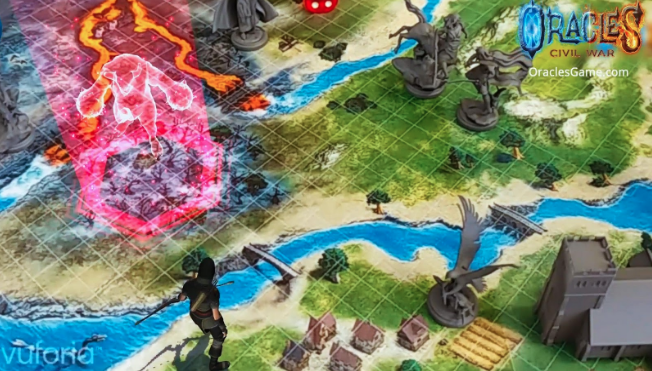
By striking the right cords of harmony between digital and conventional aspects, board games are coming up with winning combinations, to help create more compelling and immersive experiences for their players.
Believe it or not, board games have been around for nearly 5,000 years. They have changed greatly over time and the market currently comprises a wide variety of them. Types of game options range anywhere from traditional, strategic or those that are just for fun. No matter which kind you play, advanced technology is not something one thinks of when discussing or playing board games.
Exciting special effects, such as fog, were not possible to create or integrate in to traditional board games. However, through technological advancements and the introduction of AR and VR, or augmented reality and virtual reality, the inconceivable is now becoming the conceivable.
Major players in the digital and tech markets, such as, Google and Apple are taking notice of this emerging trend, and have now made tools like Google’s ARCore and Apple’s ARKit, accessible to developers.
But how can the introduction of augmented reality or virtual reality integrate into the progression of tabletop games?
In order to stay relevant in this ever changing world that focuses an absorbent amount of time on mobile devices, tangible board games will have to undergo some major modifications. The latest in AR technology incorporates both, the fundamentals of mobile gaming, with that of palpable board games. Merging AR technology with conventional board games, helping to enrich the gaming experience, is exactly what Oracles Game has accomplished.
Oracles Game is a Toronto tech company started in 2017, by entrepreneur and founder, Sean Toussi. Sean came up with the idea for a hybrid board game while playing with his friends at a board game café. He found enjoyment in the socially engaging experience that was created by human interactions, while taking place in a physical environment. With Toussi’s background in mobile applications development, however, he felt that something was missing, and that the limitations of tabletop games could be solved through the use of augmented reality. Thus, began the creation of Oracles Game.
Oracles is a hybrid strategy type board game, that accommodates two to ten players, and combines the cutting edge technology of augmented reality with tangible elements of the conventional tabletop games.
The augmented reality mobile application is compatible with both iOS and Android operating systems, while the physical board game functions no differently than any other traditional tabletop game.
Players are divided into two teams and given three different game mode options.
While playing in the first mode the leader chosen for each team will be known as The Oracles, and they will be the only ones with the ability to use the AR mobile application. This permits them to observe each of the special characters and their assigned elements, in order to best strategize and lead their teams victoriously.
The second mode will benefit all game players, not just the leaders, by allowing everyone to view the characters and features on a projected screen, through the use of AR. This will elevate game play and truly create an immersive playing experience.
The last selection of play removes the augmented reality component entirely, giving Oracles players total flexibility and convenience.
Sean, and his team of more than 30 members, have been diligently working around the clock to help bring Oracles to life. The games entirety, from creating each character’s expansion, to the games mechanics, all the way to the marketing of the brand, has been meticulously developed. The integration and progressive work has already begun on the distinct characters and elements, as has the AR advancement for the character cards that will be bringing each character to full animation.
Although, some of the problematic tasks have already been finished on this project, funds are still needed for the completion of their augmented reality component. So Sean, along with his amazing team, is taking Oracles Game to Kickstarter.
The board game community is already reeling with excitement and anticipation for the arrival of Oracles, as it is sure to elevate board games to a whole new level.
Apply now for the $15K VR/AR Global Summit Pitchfest 2018! Deadline is Sept 3
Deadline extended to Sept 3

Victory Square Technologies and Shape Immersive are teaming with the VR/AR Association to host its first ever Pitchfest at this year’s VR/AR Global Summit. On Friday, September 21st, eight startup finalists will present their innovative technology and/or products to an audience of accredited global VR/AR/MR investors dedicated to investing in game-changing entrepreneurs. After each finalist gives a 5-7 minute presentation presentation, one startup will be selected to receive a prize of $15,000 USD.
If you’re a startup ready to share your next great idea with the world, fill out this form to apply.
- Applications will be accepted from August 7th - August 27th, 2018.
- On September 10th, eight startups will be selected to present at VR/AR Global Summit’s Pitchfest.
- Finalists will get 5-7 minute presentation on stage to present their innovative technology and/or product on Friday, September 21st.
- One startup will be selected to receive a prize of $15,000 USD.
- This year’s judges include The VR Fund, Women in XR Fund, GFR Fund, Outpost Capital, Victory Square Technologies, Super Ventures, Entering VR, and others...
- All finalists will receive a complimentary conference pass to the VR/AR Global Summit
- Your startup can be located anywhere in the world
About VR/AR Global Summit
The VR/AR Global Summit, in Vancouver, Canada, will bring together the most intriguing and innovative leaders in VR/AR/MR. Hardware developers, content creators, big brands, manufacturers and designers will gather to learn, share and discuss advancements in the industry. Collaboration spaces, hands on workshops, real conversations, Keynotes, presentations, marketplace and events will bring everyone together to shape the future. See a full list of this year’s exhibitors and startup spaces here.
The Camera is the New Search Box: Advertising in AR (new report)
This post is adapted from ARtillry's latest Intelligence Briefing, The Camera is the New Search Box: Ads in AR. To receive the report and access the full XR intelligence library, subscribe here (VRARA members receive a discount).

One of the many areas projected to be transformed by immersive computing is advertising. The visually-immersive nature of technologies like AR and VR can offer advertisers new ways to spotlight products, and engage prospective customers in deeper ways than 2D media.
For example, advertisers can create AR campaigns that let consumers visually infuse products in the world around them, as captured through their smartphone camera. Brands like Nike, Home Depot and Michael Kors are already experimenting with – and learning from – such campaigns.
Beyond graphical AR overlays, advertisers will soon be able to participate in a related area: visual search. A close cousin of AR, this is represented by tools like Google Lens, which let users point their smartphone cameras at objects around them to contextualize (or purchase) those items.

Altogether, AR ad formats are beginning to map to existing 2D ad formats that advertisers have been using for years. For example, branded graphical AR overlays are analogous to display advertising, while visual search can carry similar dynamics and user intent as search advertising.
But the opportunity is to go much deeper than these legacy formats in both creative capacity and effectiveness. Indeed, brands that have experimented with AR-based promotion already see favorable engagement and conversion metrics, such as 11x increases in product purchases.
The opportunity is further fueled by vested interest of tech giants. Tech’s “four horsemen” – Google, Apple, Facebook and Amazon – are especially keen on AR. Those specifically built on ad revenue (Google and Facebook), will fight to ensure positioning in advertising’s next era.
Resulting competition will accelerate innovation, investment and market timing for AR advertising in general. Indeed, one point of confidence ARtillry Intelligence holds for AR’s overall revenue generation and opportunity is the level of motivation behind these tech giants to make it happen.

But it won’t be without challenges and question marks. Though all of the above stands to reason and quantitative analysis, one wild card is advertiser adoption. They’re a famously laggard constituency of the tech ecosystem, and survey data indicate their AR uncertainty.
There are also practical hurdles. Though mobile AR’s addressable market is 762 million smartphones, the actual market is a subset of that. Active AR users total around 158 million, and session lengths are small, due to factors like arm strain, which diminish ad inventory.
All of these variables converge to drive $2.6 billion in AR ad revenues by 2022. And like the progression of ad formats mentioned above, it will start with display ads before more technically advanced visual search. That requires computer vision, the AR Cloud and other building blocks.
But how will this materialize? What campaign tactics work? And what does it mean for developers, media companies and anyone vetting AR? We dive deep on these questions in the latest report, and will continue to analyze the findings here in the coming weeks.
Subscribe to receive the report and access the full XR intelligence library. VRARA members receive a discount on subscription.

Bay Area: Come Discuss ARkit & the AR Cloud (8/22)

Please join us Wednesday, August 22nd for the next VRARA SF Chapter Meet-up.
Taking place at WeWork Mid-Market in San Francisco, you'll get a chance to meet the new chapter leadership, followed by a fireside chat with Matt Miesnieks, CEO and Co-Founder of 6D.ai, investor, and influential technology writer.
The San Francisco VR/AR Association's membership has grown significantly over the last three years, and to keep up with that pace, we've recently added significantly to our chapter leadership team to include some of the brightest stars in the ecosystem. The first part of the evening will include a panel discussion with our growing team: Annisa Kau, Sony Green, Alia LeCam, and Jeff Meador about the goals for the VRARA SF Chapter's coming year, and we will also get a sneak-peak at community member's answers to the question, "What makes San Francisco the best city for XR?" from our soon-to-be-published VRARA SF Ecosystem Report.
We will then be joined by Matt Miesnieks for a fireside chat to reflect on this past year since ARKit and ARCore released, and talk about the influence of ARCloud on the evolving augmented reality landscape. We will also get a chance to talk with Matt about 6D.ai's approach to solving for the foundational technology to usher in the next age of spatial computing. The 6D.ai SDK (now in BETA), uses standard built-in smartphone cameras to build a real-time 3D semantic, crowd sourced map of the world, all in the background without a depth camera. This means that spatial computing apps that were only possible to build on expensive HMD's are now possible on ARCore and ARKit smartphones. We will get a chance to hear from Matt personally about how their AI neural-networks will help developer's applications understand the world in 3D.
See more information or register here.

LNG Studios to Exhibit at the VR/AR Global Summit
Register for the VR/AR Global Summit here
The VR/AR Global Summit is the premiere marketplace and conference for industry leaders in immersive technology content, knowledge, and creation.

LNG Studios is an architectural rendering and 3D visualization studio based in Vancouver, San Francisco + Toronto. The studio is are a creative visualization agency specializing in virtual reality, architecture and real estate.
Their clients include:

And, their Case Studies include an impressive array of VR used in architecture and real estate:


New Research Shows Heal-ium XR Changes Brain to Reduce Anxiety 2 published studies examine future of VRceuticals
“Heal-ium is the world’s first XR product powered by a brain-computer interface. It allows the user to control the virtual and augmented reality environments with their thoughts. See attached release about the recently released Frontiers in Psychology and Journal of Neuroregulation published studies. ”

Media Contact: hello@story-up.com tryhealium.com
Two new studies published in Frontiers in Psychology and the Journal of Neuroregulation show the therapeutic potential of virtual reality to change brain patterns and trigger a physiological reduction in anxiety. The full article published in Frontiers in Psychology section Human-Media Interaction, examined changes in specific brain frequencies associated with the stress response using Healium, a new VR and AR channel powered by the user’s emotions.
“Results demonstrated that both a quiet rest control condition and the VR meditation significantly reduced subjective reports of anxiety and increased Alpha power. However, the VR intervention uniquely resulted in shifting proportional power from higher Beta frequencies into lower Beta frequencies, and significantly reduced broadband Beta activity in the anterior cingulate cortex. These effects are consistent with a physiological reduction of anxiety.” - Frontiers in Psychology, Human Media Interaction July 2018, Neuromeditation Institute
According to its blog, Frontiers is the most-cited multidisciplinary Psychology Journal in the world. This study conducted by the Neuromeditation Institute examined the brain activity of patients with self-reported moderate anxiety before and after a brief mindfulness in nature experience produced by StoryUP XR.
The Journal of Neuroregulation also published an article on Healium’s ability to increase gamma asymmetry in a small group of firefighters. Gamma asymmetry is associated with feelings of positivity. You can read the full article here.
Healium, a product of StoryUP XR, is a channel that includes a variety of VR and augmented reality experiences as well as the world's first XR experiences powered by your brain. The user is able to see their own brainwave patterns control assets inside VR goggles or on their smartphones. They’re able to hatch butterflies from a chrysalis or float up a waterfall with their gamma asymmetry which is associated with feelings of positivity. Healium is currently being used worldwide in areas of stress.
The experiences are made with Unity, Unreal Engine, Apple’s AR kit, Android’s ARcore, and StoryUP’s patent-pending technology.
StoryUP started in 2014 as a way to help aging Veterans see their memorials. Healium kits are used in enterprise from healthcare to sailors in the US Navy. In addition to positivity, the stories
and affirmations about empathy, mindfulness, and motivation span five continents. Healium products support Honor Everywhere, a free VR program for terminally ill and aging Veterans who are no longer able to physically travel to see their memorials in Washington, DC.
For more information, please visit tryhealium.com or email hello@story-up.com.