
Call for Speakers: Avatars, AI and Chatbots (Webinar)
Speak at our next live webcast (date to be scheduled)
If interested in speaking or sponsoring this event, email info@thevrara.com
Avatars, AI and Chatbots: Learn how virtual humans, immersive technology, and AI chatbots are being used across multiple industries. Retail, hospitality, real estate, training, customer service, professional sports, health and wellness, and celebrities are now being driven by human realistic avatars and AI. Learn how Quantum Capture and other industry leaders are helping big brands increase the bottom line, drive sales, and enhance productivity. Virtual humans can convey trust, empathy, and evoke an emotional connection that increases guest satisfaction, increases learning and retention, and overall happiness.
Spakers include:
- Nathan Pettyjohn, CMO, Quantum Capture
- Others announced soon
Mobile AR Pioneer Reflects on his Immersive Journey and What's Next
Srinivas Krishna is a member of the VRARA Storytelling Committee and the Founder and CEO of the pioneering mobile AR studio AWE Company (2012) and the mobile AR platform Geogram (2017). He joins VRARA's Storyteller Davar Ardalan to talk about his foundational work in AR technologies, some of the most remarkable AR experiences of the past decade. His work as a digital media innovator has been applauded by Canada’s national newspaper, The Globe and Mail, as “utterly breathtaking… genius.”

Prior to his work in augmented reality, Srinivas produced and directed feature films that have premiered at Toronto, Sundance and Cannes, and have been distributed worldwide. He launched his career in 1991 with the international hit Masala, which was voted by the British Film Institute among the Top Ten South Asian Diaspora Films of the 20th Century and is a classic of world cinema.
1) You are a pioneer in VR & AR storytelling and came to this space as a filmmaker. For those who still haven’t experienced immersive media - what is intriguing about it and why should they try it?
Immersive media is quite different from the movies. I started experimenting in this space after making films for twenty years. In 2010, my studio was commissioned to produce 10 films on athletes competing in the Vancouver Winter Olympics. One of the requirements was to geo-locate clips of the athletes for playback on users' phones at various competition venues. This sounds relatively easy to do today. But, in 2010, two years after the introduction of the smartphone, it was a challenge.
This project got me thinking about the larger implications of distributing and delivering contextually-aware, narrative content for smartphone users. Around the same time, I saw my three year-old son walking around with my newly acquired iPad. He was playing with the pre-loaded game demo from Unreal. Watching him inspired a vision. What if you could inhabit these 3D worlds? What if we could marry them to the real world and walk around inside them and interact with their characters and events? It was an epiphany.
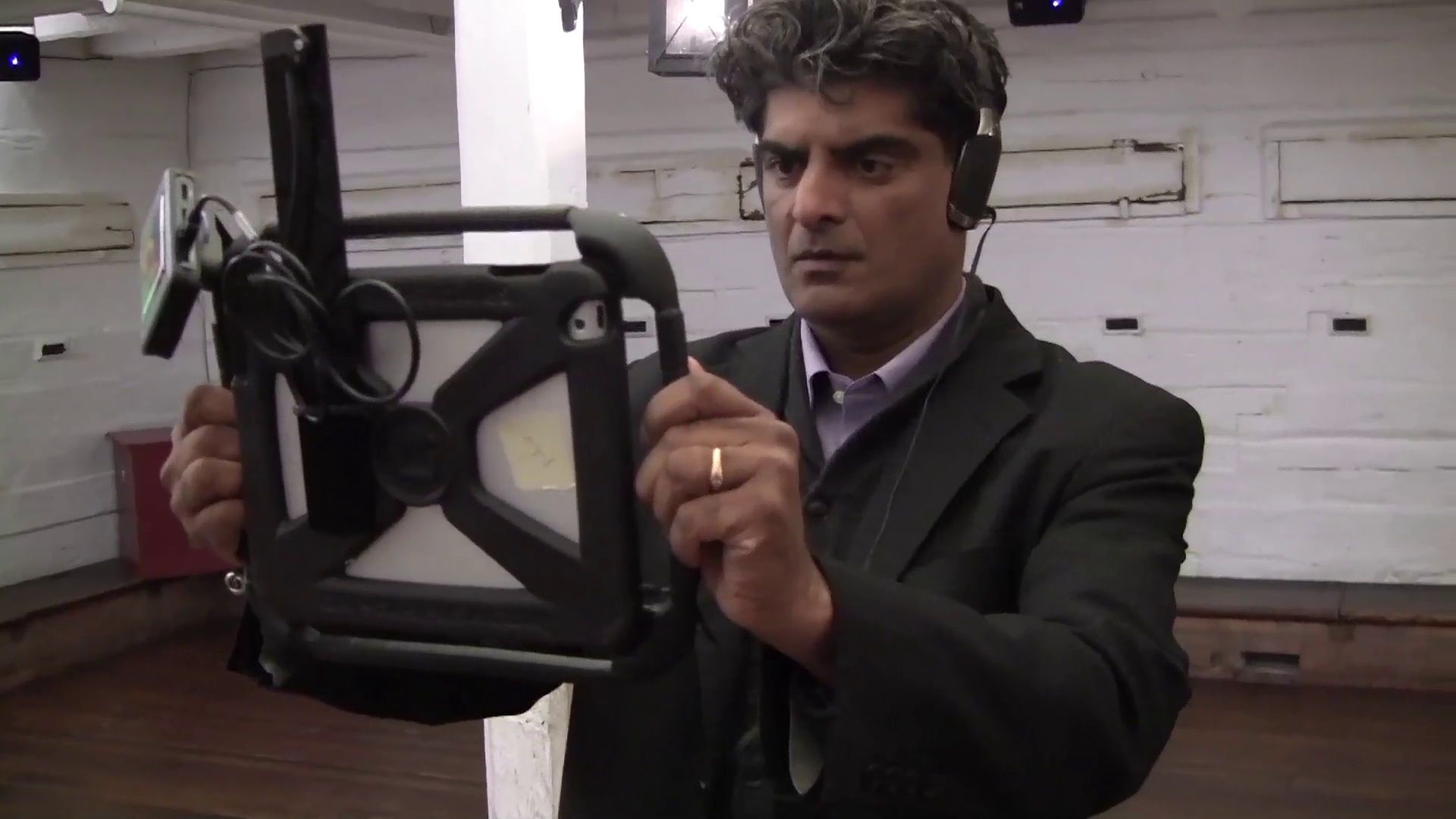
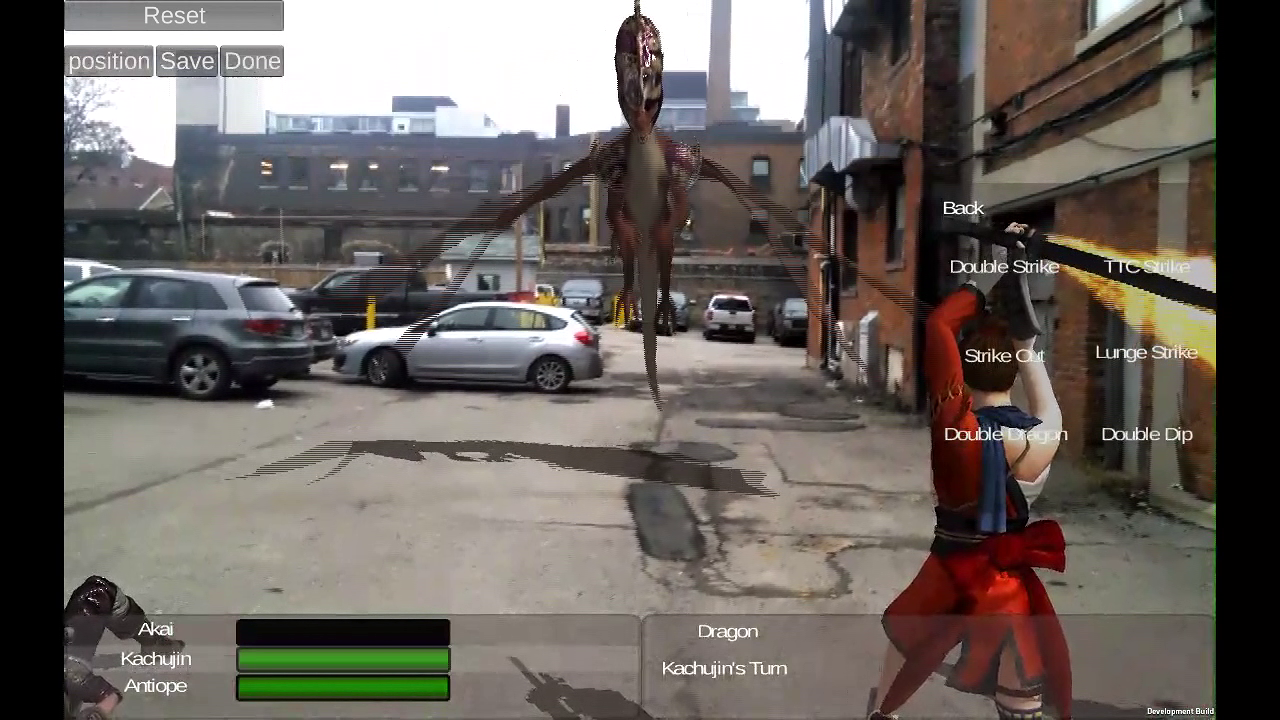
I spent a year looking for people who could build the tech to support this kind of experience. I finally found a team of scientists at Ryerson University's Multimedia Lab who didn't think I was crazy. We started a collaboration and, by 2012, I was developing and staging my first multi-user, room scale experience. It was a mixed reality historical drama for five untethered iPad users interacting with a cast of a dozen virtual humans, set in the oldest building in Toronto, a defensive bunker in old Fort York called the Blockhouse.
You can see highlights in this video:
The Blockhouse was the first time anyone had experienced anything like this -- an audience in a room individually and collectively interacting with virtual humans who know you're there, who talk to you, even take a run at you. We ran hundreds of users through the experience and did countless focus groups and user interviews. The whole project became, in a sense, a social experiment -- about human beings and how they relate to new technologies and experiences, why they might resist, and how to build trust, drive adoption and create pleasure. I learned so much
What I discovered was a fundamentally different medium. Immersive media - and let me be clear that I'm talking about unthered mobile experiences - is more like theatre than film. It places you in a location and runs in real time, much like a show on a stage. But it's also different from the theatre - because it puts you in the middle of the show and lets you interact with it. There can be sudden changes in scale, and changes in the location and time period of the world you are inhabiting, done digitally in a way that's not possible on a real stage.
Moreover, you, the audience, require a device to access the show; in a sense, you become the cameraman of your own experience, holding a magic window into this other world. So where you look and how you navigate this world, as you walk around inside it and respond to it, will determine the kind of experience you'll have. It is a spatialized experience, unlike the 2D onscreen interfaces we are accustomed to, so there's a learning curve to it. I have seen users do nothing more than look through their devices at their feet for an entire 15 minute experience, despite all the noise and action happening around them, while others dance around the room and have full on conversations with the virtual characters.
Therefore, as someone who creates immersive experiences, it's important to realise that you are not only staging the performance of the virtual characters and organizing the behavior of their virtual world, you are also choreographing the response, movements and gaze of the user in relation to them. That's the art of it.
Now imagine doing that for multiple users inhabiting the same show and interacting with the same virtual characters, all in a real world location, all at the same time. It can be mind-boggling to plan and execute. But, when it's done well, the experience can be absolutely mind-blowing, utterly unpredictable and just plain crazy fun.
2) What was the first project you monetized when you knew you could make a living doing this work?
After our demo at the Blockhouse, I got a slew of mobile AR VR projects in 2014 to 2017. These included a location-based AR adaptation of a mobile video game, an AR component to a web cartoon, a large scale visitor attraction for the Fort York National Historic site in downtown Toronto. My studio changed completely from doing film and TV to AR VR. We hired engineers and scientists. We developed new technologies and work flows. We produced experiences that were the first of their kind. We were inventing a new medium. And, incredibly, we made a living doing it. This was a hugely exciting time and it remains so to this day.
3) Tell us more about your pioneering mobile AR project at Fort York in Toronto and the patented tech you built in the process.
The prototype I built in collaboration with the scientists at the Blockhouse in 2012-13 was, as far as we knew, the first demonstration of multi-user, interactive, collaborative mobile mixed reality. We tracked the exact positions and poses of five iPad users as they moved around the shared space by using the devices' on board sensors and a slam algorithm. We communicated the users' location data to a server. Our mixed reality engine would render the virtual content in the users' video feeds, in real-time, according to each user's unique position and pose. We filed a patent application for our system and method in 2013 and were finally granted the patent by the USPTO in April 2018. Throughout these years, we've been building out our tech through our many projects.
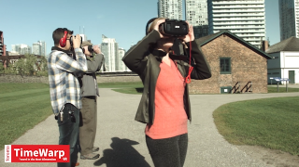
The most complicated and challenging of these projects was a visitor attraction at Fort York National Historic Site in Toronto. It required us to scale our prototype from 5 iPad users in a single room to a hundred thousand plus annual visitors at a nine acre Site; it meant tracking their location as they explored the grounds of the Fort and delivering, through smartphones, immersive recreations of historic events that took place right where they are standing.
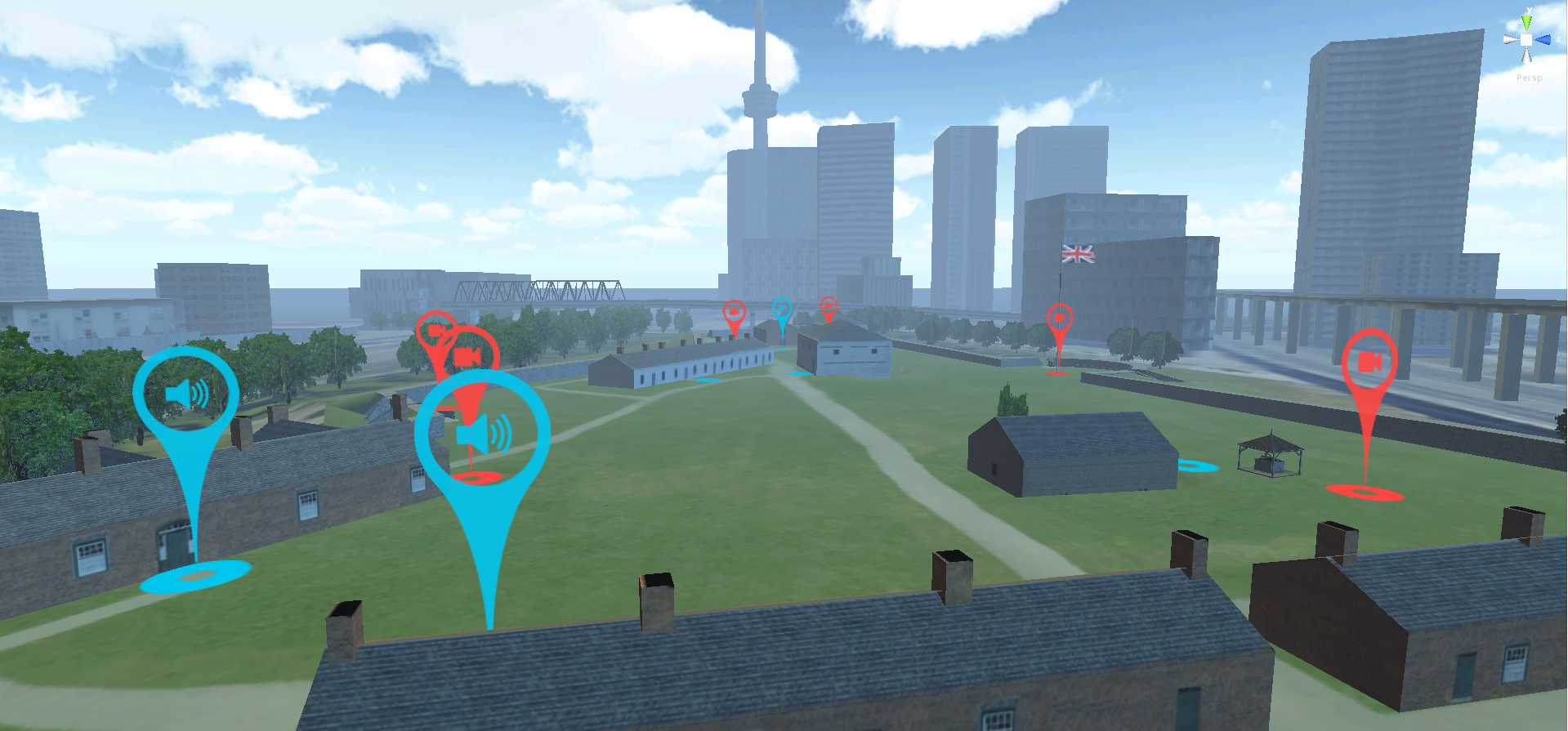
We started in 2014 by improving our tech stack so we could track a lot more users' positions and poses across the Site, and optimizing our slam algorithm so that we could deliver markerless AR on the consumer devices available back then. Because the client wanted historic recreations, we realised that conventional mixed reality wouldn't work; we'd end up placing virtual characters from the 18th century in a location surrounded by 20th century condo towers, and that would be jarring, comical, and weird. Instead, we built complete 360 degree worlds that would effectively take the visitor out of the present and immerse them convincingly in the past. In the end, we built eight of these worlds, from a depiction of the Site as it appeared before European settlement, to a battle scene from the War of 1813, to the construction of an elevated highway in the 1950's that's still there today.
Here's how we did it -- we scanned the entire Site and created a model that we used to situate, scale and sculpt these virtual worlds into the topography of the Site. We did low cost 3D scans of real people on iPads to create our characters, did motion capture using Sony Playstation cameras and a great software called iPiSoft, and built a rich binaural soundtrack to lead visitors through the two hour experience from start to finish.
Amazingly, by the spring of 2015, we were ready for user testing -- and that began a whole new social experiment in spatialized UI and a whole new set of lessons to learn. Suffice to say, by the Fall of 2015 we had achieved at Net Promoter Score of 9.3. The project was launched as the TimeWarp VR Experience at Fort York and we started getting our first paying customers. At the time, we were among the few companies, if not the only one, to have a consumer mobile AR experience of that scale, complete with our own tech stack and UI, in the market.
I think it's reasonable to say that the TimeWarp VR Experience at Fort York is a milestone in the early history of mobile AR, something that years later people will look at and say, "Here's the crazy shit they used to do before Google, Apple and Facebook made it all so easy!" I gave a rather entertaining fifteen minute talk about our roller coaster journey from prototype to paying customers at the AR in Action Summit at MIT in 2016. (You can watch it here: https://www.youtube.com/watch?v=e7kThp0mFhA). Now, two years later, we are building version 2, incorporating AR Kit and AR Core. And, yes, these tools do make it easier.
4) Are there regions of the world where consumers are more actively engaged in buying VR and AR experiences?
When it comes to consumer AR VR, I believe all roads lead to China. I read an article recently in VR Scout (https://vrscout.com/news/rise-consumer-ar-china/#) that quotes a survey indicating that 95% of Chinese consumers have used AR or VR technology in the past three months compared to only 24% of U.S. consumers. Another survey of 2,000 Chinese Internet users revealed that 78% actively seek out AR products. The reasons for such strong consumer adoption rates are quite obvious. China is a mobile first country with cheap data plans and a massive and growing online user base, most of them accessing the web on mobile. I believe for these reasons Africa, India, and much of South East Asia will follow.
5) Any advice for current VR and AR students on where the industry is headed 2-3 years from now?
With the incumbents -- Google, Apple Facebook and the rest -- having entered the space so aggressively, we can safely say that the era of the spatialized web has begun. Over the next 2 to 3 years, we'll start seeing early consumer adoption of smart glasses while, at the same time, we'll witness AR VR integrating with IOT and AI to make the physical world increasingly intelligent as it goes online. This has enormous implications.
For VR and AR students today, this means we are moving up the stack from core tech and middleware to user data, design and content layers. No longer is it really about the tech, it's about how we will use this tech to create value. What type of content and what kind of experiences will make life better? What kind of user interfaces will help us navigate and interact with an intelligent, spatialized web? How will the blockchain and decentralized data architecture enable greater individual liberty in terms of the stories and information we share in an online space that communicates intelligently with our physical world? This is where I would advise VR and AR students to look for opportunities.
At the same time, as an industry, it's important that we learn from the past and avoid making the same mistakes, those countless choices, big and small, that have led us from an open internet to monopolies and mass surveillence. But the world is about change, all over again, and we have a chance to make a real difference. That's what makes this moment so exciting.
AR Everywhere I The Spatial Era is Here!
VRARA Vancouver was delighted to invite its members to its most recent chapter event: AR Everywhere I The Spatial Era is Here. With in-depth panels discussing the future of AR and the AR cloud, a preliminary keynote from Marco de Miroz and with demos galore, the night was quite the extravaganza.
Here were some of the highlights:
A Deeper Dive into The AR ecosystem
Marco de Miroz from The Venture Reality Fund never fails to give us tasty exclusives. We all got a sneak preview of The VR Fund’s now newly-released AR ecosystem map:
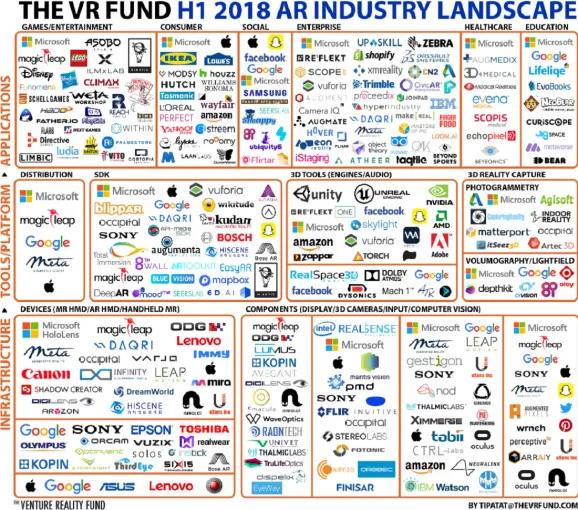
With AR experiencing a surge in adoption and with AR companies growing by 50% compared to 2017, the growth of the Augmented Reality industry has the potential to be exponential!
Extrapolation of the AR Cloud
Throughout the evening with Vancouver AR industry members such as Aaron Hilton from Steampunk Digital, Alex Chuang of Shape Immersive, Jordan Brighton from Virtro and Miles Marziani of Quest Upon, we were exposed to the nouveau industry topic of the AR cloud, and what this means for creating persistent AR experiences.
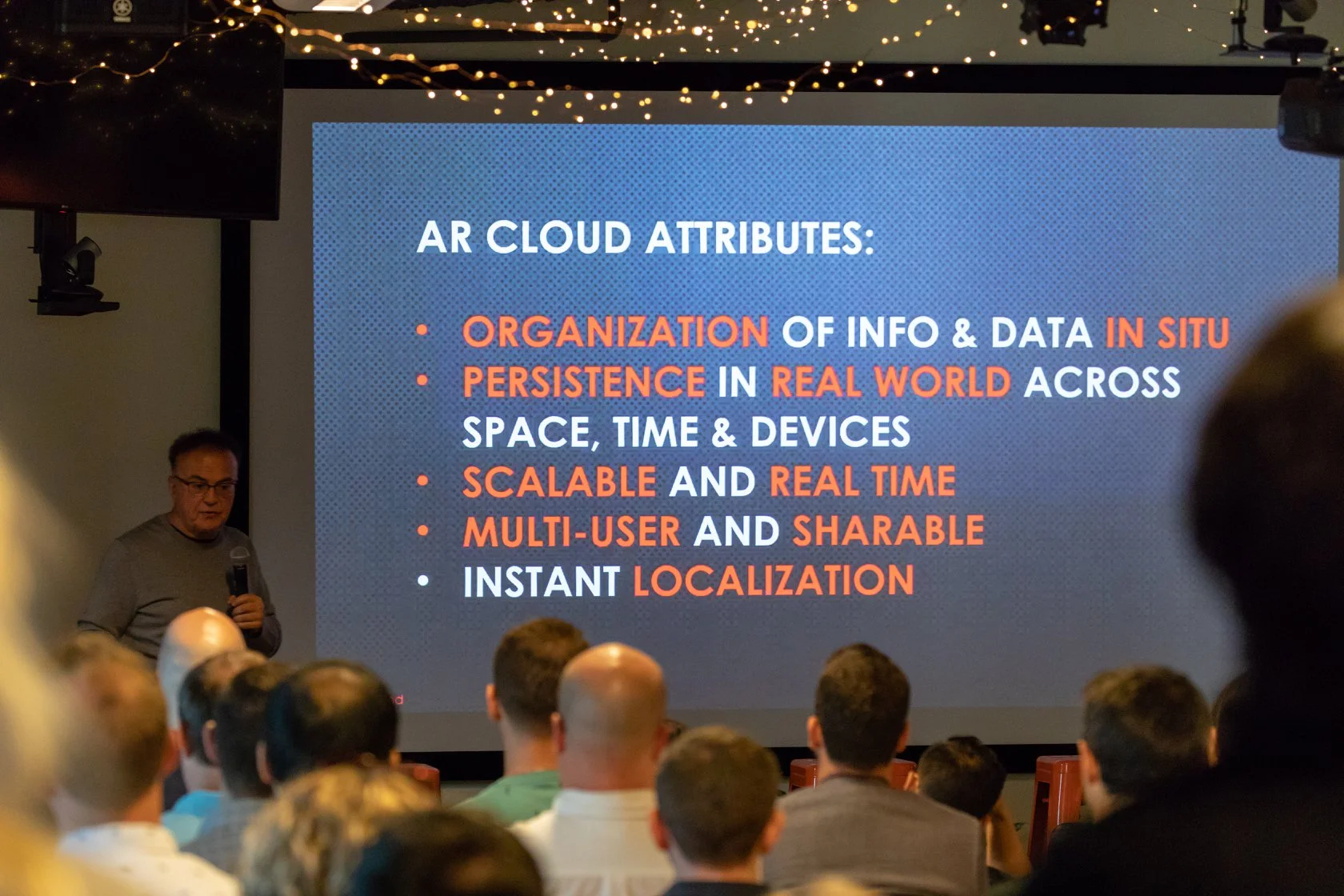
Marco de Miroz of The VR Fund
As defined by Alex Chuang of Shape Immersive, “By definition, the AR cloud is a machine readable 1:1 scale model of the world. Some call it the world's digital twin or a real-time spatial map of the world. Personally, I'd like to think of it as a parallel digital dimension that perfectly overlays on top of our real world.”
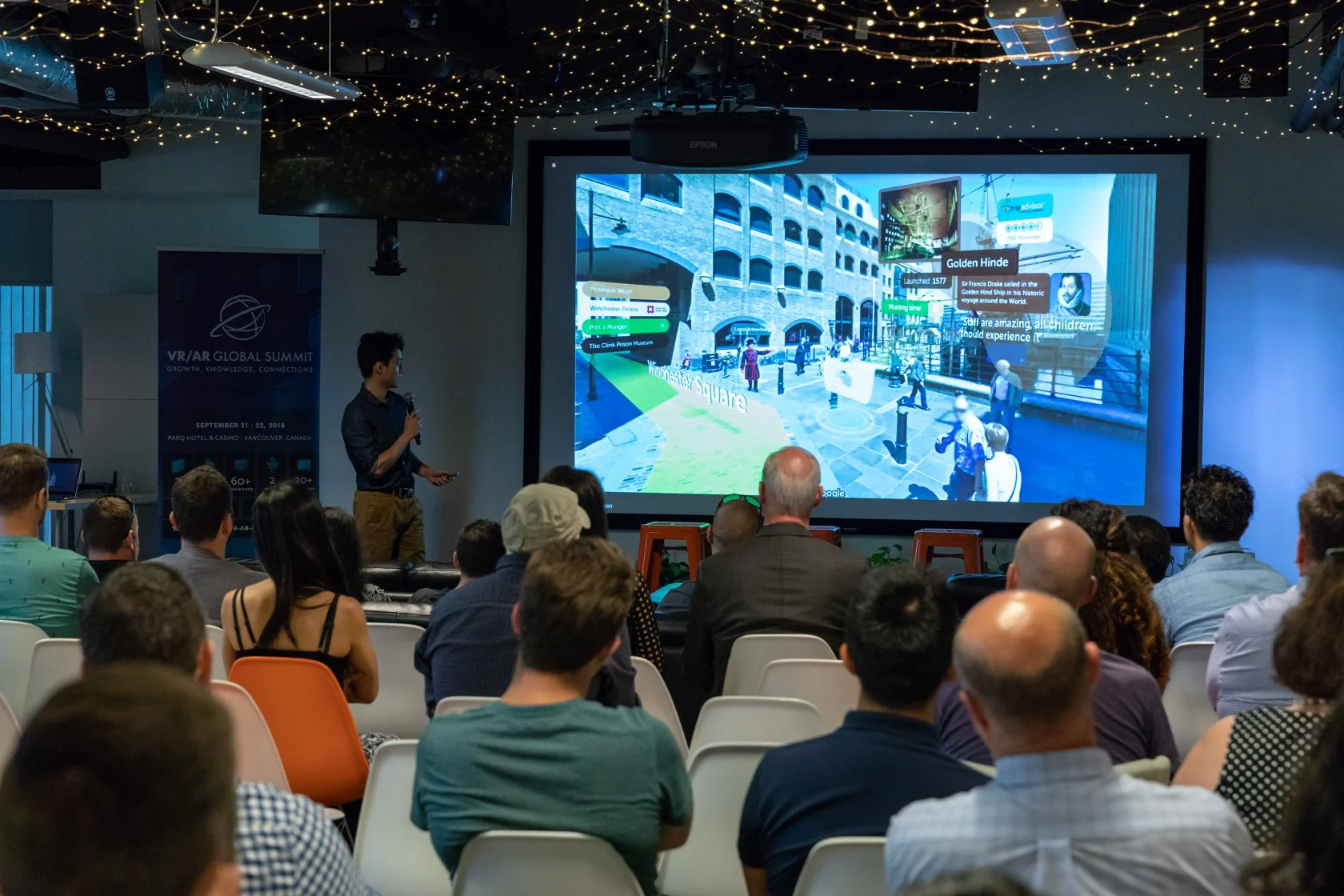
Alex Chuang of Shape Immersive
Significant points raised during the discussion panels included:
- The importance of image persistence in the progression of the AR industry
The need to create memorable and valuable AR experiences to increase user adoption
The increase in development of multiplayer modes to enhance augmented experiences
The predicted rise in geo-relevant content
The potential of the AR cloud to supersede Google in its ability to organize the world’s information
Watch a short clip of the evening's events below!
With such a rich XR ecosystem in Vancouver we’re delighted to be able to organise these meetups, which not only allow the community to come together in our unique partnership, but also enable the much needed sharing of new information, innovation and technological skill amongst members.
If you'd like to watch the full event talks including the keynote click here.
Join us for our next event and stay up-to-date by following us on Facebook and Twitter!
Live Webcast with Charlie Fink on Free Roam VR/AR with The VOID, VRstudios, Backlight, and Battleverse
RSVP here
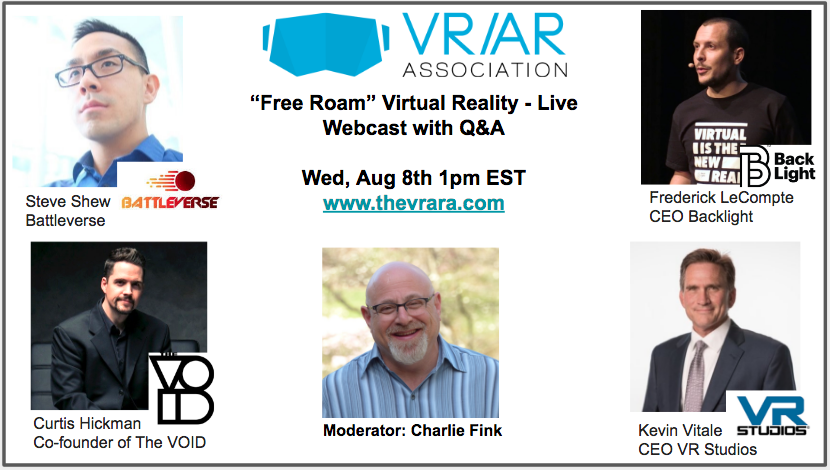
Please join us on August 8th for a conversation about Free Roam VR, and AR, with Curtis Hickman, co-founder of The VOID, Kevin Vitale, CEO of VRstudios, Frederick LeCompte, CEO of Backlight (Paris), and Steve Shew of Battleverse (Toronto).
Free Roam VR, which can only be experienced in dedicated locations, and never in the home, and is the only true VR, where users wear an HMD and backpack PC, occupy an avatar, have full agency and freedom of movement, and can see and interact with other avatars in an entirely digital world.
Join us as we talk to the two largest players in the nascent field, and two startups that aspire to take their place alongside of them as pioneers of what many are calling "the new movie business."

VR Takes Center Stage at the Wharf in D.C.

Last night, the VR/AR Association’s D.C. chapter hosted an event at La Vie in the Wharf. But its attendees were coasting along the Pyrenees Mountains and above the Great Pyramid of Gyza.
Rooftop Realities, co-hosted by Discovery and Brightline Interactive, invited guests to explore virtual reality through a collection of devices at the forefront of the consumer market.
An Oculus Go station put users in all sorts of virtual landscapes to look around and explore through a headset. A Google Earth VR app, aided by just two cameras, let me fly to anywhere in the world, turning left and right to check out the scenery. And a simple augmented reality setup showed me on screen popping a champagne bottle and spraying it – without having to pop the cork.
The room covered the spectrum of D.C.’s VR and AR adopters, from a freelance 360-degree videographer to Discovery’s Interactive Creative Director Cory Key.
Key landed Discovery in the VR scene with an Emmy-winning splash in 2013 with Skywire Live, where a 360-degree video showed the perspective of Nik Wallenda as he walked a tightrope across the Grand Canyon. He said Discovery has since garnered 190 million video views on similar content.
“VR had always been meant to be for Discovery, it just hadn’t been invented yet,” Key told the crowd. “It was almost like the industry was waiting for a big media company to jump into this.”
VRARA chapter president Tyler Gates, left, and Discovery creative director Cory Key, middle.
VR/AR Association D.C. Chapter President Tyler Gates, managing partner at Brightline, said the area is a “power center” for this type of tech for obvious reasons like military intelligence, but also for innovation beyond the scope of defense contracting. Event attendees showed that smaller D.C.-area companies are hopping on board too.
Daniel Zeballos is a principal at Illustrate My Design, or IMD. The company creates virtual renderings of building projects, allowing architects and designers to tour structures that don’t exist yet.
He said just a handful of companies are in the market, and hopes widespread adoption of VR will put more headsets in more architects’ offices.
Jon Fortuna went a different route with Ekstasis, a VR company that launched D.C.’s first virtual reality arcade, Augment Arcade. The venue is tucked into Flash Nightclub, and allows customers to try out games in between drinks or rent out for private use.
No matter the business model, virtual and augmented reality companies are looking at a market ripe for growth.
The Oculus Go device debuted this quarter. Pokemon Go maker Niantic is releasing a Harry Potter game this year, possibly leading mobile AR revenues past the $1 billion mark. As for the industry as a whole, global revenue for VR and AR will grow from $4.2 billion in 2017 to $61 billion in 2022, according to research firm Artillry.

VR/AR Healthcare Best Practices White Paper
To receive a copy of this white paper, enter your email here:

Virtual & Augmented Reality (VR/AR) are immersive technologies that provide new and powerful ways for people to generate, use and interact with digital information. These technologies take traditional media beyond conventional screens. Photographic images, video or computer-generated graphics (sometimes provided as a 360-degree view within your field of vision) are melded in a new interactive medium that can be used for business, entertainment, research, education, data visualization and other applications yet to be imagined.
Healthcare is one of the top 5 use cases for VR/AR. Practitioners and entrepreneurs in traditional medicine, medical education, and health and wellness verticals are exploring practical use cases for everything from surgical planning to 3D anatomy lessons to pain mitigation.
The nascent medical VR/AR industry is multi-faceted. Tech companies are looking for markets, physicians are looking for applications, and medical institutions are looking for innovative tools to differentiate themselves and provide better patient care. While there is still a perception out there that VR/AR is a consumer product for entertainment and gaming, the healthcare industry is waking up to the transformative power of these technologies for patients and providers alike.
This paper is intended to help you understand key challenges to designing and commercializing VR/AR solutions for the healthcare industry.
Table of Contents
1 Introduction
2 Blend Science and Technology Through Partnerships
3 Champion a Clinical Perspective
4 Validate Your Approach
5 Obtain Grants and Funding
6 Address Barriers in the Real World
7 Know Your Buyer
8 Summary
Deadline is July 30th

July 30 is sneaking up mighty fast. Why should you care? That’s the day prices go up on all passes to the VR/AR Global Summit, hosted by the VR/AR Association (VRARA) which takes place on September 21-22 in Vancouver, Canada. If you want to attend this premier world-class Conference & Expo for industry & brand leaders in immersive technology content, knowledge, and creation, save up to $180 in the process, then stop what you’re doing and go buy your passes today. Seriously, why wouldn’t you?
You simply don’t want to miss this event, and we’ll tell you why. The VR/AR Global Summit is a new iteration of the CVR show that ran for 2 years in Vancouver. The event last year was attended by over 750 professionals. The Summit is building on the momentum of CVR, plus VRARA is using its global reach to bring together brilliant and creative minds to Vancouver in September. We’re dedicating our time, resources and talent to making this event better than ever.
More than 1,000 leaders will descend on PARQ Vancouver (a brand new international entertainment destination, featuring a 72,000-square-foot casino, eight diverse restaurants and lounges, a 30,000-square-foot rooftop park, and Vancouver’s largest hotel ballroom) to see the latest technologies from the likes of Autodesk, Intel, HTC, Microsoft, Toshiba.
Vancouver is now one of the largest VR/AR hubs in the world with over 200 companies. Plus, Vancouver is the #1 Global VFX & Animation Cluster, #2 Best City for Asia Pacific Business, #3 Largest Film & TV Production Centre in North America, and a top video game development center, globally.
The event will feature dynamic keynotes, collaborative conversations, workshops, creative hubs, exhibits, breakouts and amazing VIP events. It will showcase the best, and most interesting projects, that the industry has to offer. Speakers at the conference include representation from Amazon, HTC, IBM, Intercontinental Hotels, The Pentagon, The Vatican, and more. You’ll find the full lineup of speakers here.
More than 65 companies will showcase a staggering array of VR/AR technology. All industries are welcome to exhibit, but you’ll find a special focus on these categories: Blockchain, Education, Enterprise, Healthtech, Retail or Training.
We also have the Startup Pitchfest with prize money of $15,000. The Pitchfest, sponsored by Shape Immersive and Victory Square Technologies, will feature judges from The VR Fund, Super entities, Women in XR Fund and more! Applications open this week for the Pitch fest and Start Up Booth Spaces are still available.
There’s so much more to do, see and experience at the Summit, including interactive workshops and Q&A Sessions, collaboration spaces, demos, meetings, unparalleled networking opportunities and, of course, the VIP After Party.
The VR/AR Global Summit takes place on September 21-22, and you have untilJuly 30 at 5 p.m. PST before our pass prices increase. Avoid buyers’ remorse and grab your tickets today.


New Online Classes for Healthcare, Audio, and Design Professionals
VRARA Members! Take these classes for free or at discounted rates. These classes are online, self-paced & ongoing, or instructor led.
RSVP and more info here


Get your Company Featured in our VR AR Ecosystem Reports


VRARA's 50+ Chapters are producing industry reports on the regional VR/AR ecosystems to promote companies and organizations involved with immersive technologies and media from NYC to Sydney, across the world. The reports will be promoted by VRARA and our partners reaching potentially a 1M audience.
Would you be interested to have your company featured in these report or sponsor the report? If yes, then let us know at info@thevrara.com
Each report will specifically highlight the following:
Size of the local ecosystem market
Number of relevant companies in the ecosystem
List of companies and company info (size: number of employees, revenue; vertical, customers)
Reasons why company is based in the local ecosystem
Needs and hopes from and for the ecosystem
If you have any questions or are interested in being featured or sponsor, please reply to this email or email info@thevrara.com

VR, AR Training Technologies New Gold Standard for Enterprise
Join our Training Committee here
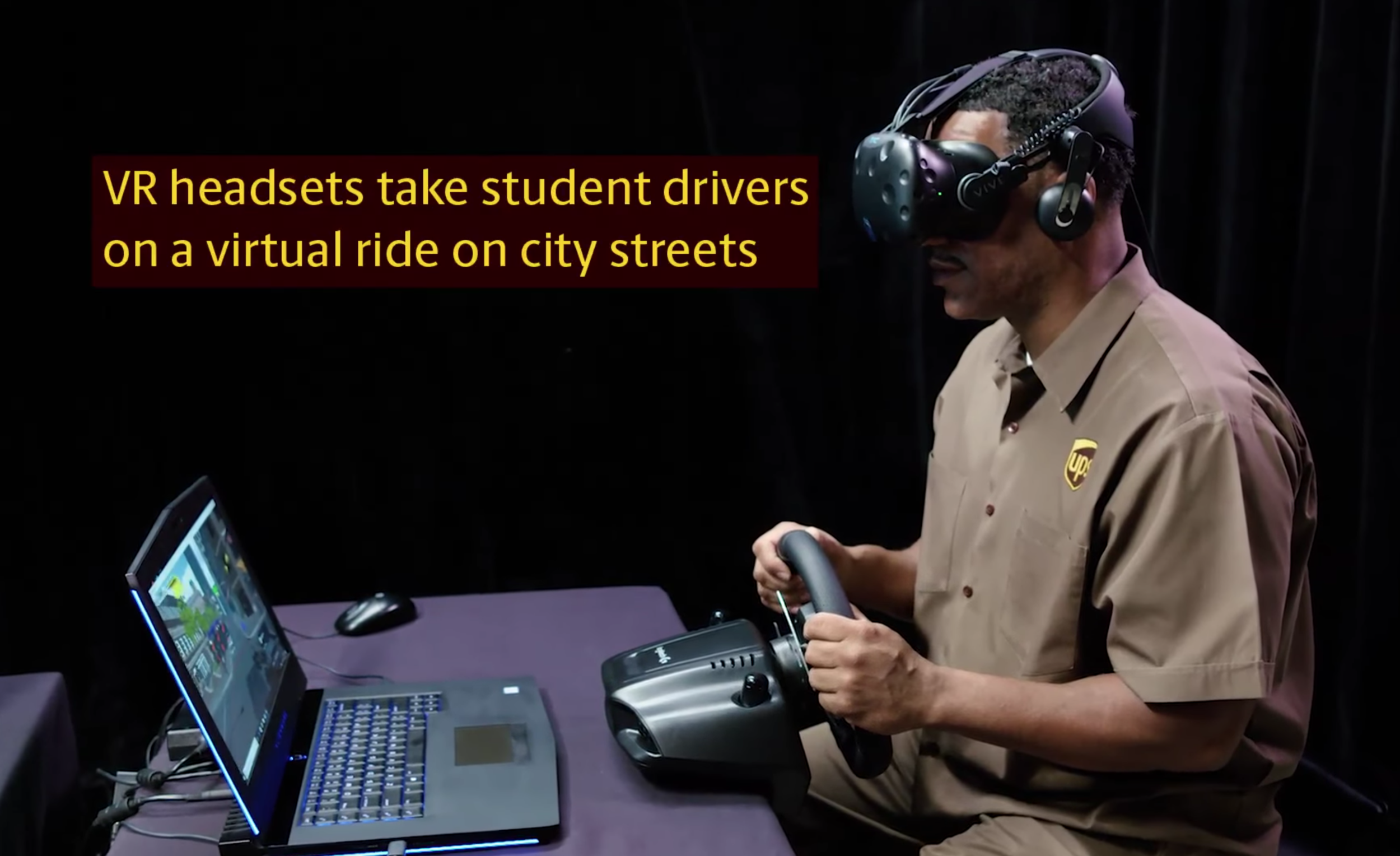
Jeff Meador is the Founder of Portico.ai and Co-Chair of the VRARA Training Committee. He joins VRARA's Storyteller Davar Ardalan to talk about the impact VR and AR are making on enterprise training. Meador says whether used as part of new or existing training programs, the inclusion of immersive technology is the new gold standard of training excellence. VR and AR give learners the opportunity to learn, try, experiment, and succeed on their own without the need for extensive setup, cost, or physical risk.
The VRARA Training Committee recently conducted an industry survey to get a sense of major use cases for VR, AR and MR. What industries are benefiting most today and what are some of the use cases?
The benefits we’re seeing are more use-case focused than industry focused, although the mechanical, medical, and safety/ security industries have all seen fantastic applications of this technology. Some of the strongest early successes we’re seeing from VR training come from two general use cases: observational training and mechanical training.
For observational training, VR is great for letting people assess a situation and environment and identify potential problems or hazards. This could include identifying safety concerns at a construction site or noticing areas of a restaurant that need attention before the doors open for the day.
Mechanical training, on the other hand, involves some sort of precision manual operation. This could be assembling a motor, performing knee surgery, or diagnosing problems with an electrical grid.
Credit: PixoVR
Credit: SkillReal
We’re starting to see the industry expand from here. Companies are starting to use immersive training for more leadership and management skills, sales training, and reinforcing corporate culture.
Credit: Portico
VR tends to prepare people to do a task. People learn how to operate equipment, assemble parts, and assess situations. They practice in VR so that when they encounter the situation on the job, they’re prepared.
AR tends to assist people in doing a task, so it’s more of a just-in-time training model. Companies are using AR to pull up schematics or instructions during part assembly, provide directions around a complicated warehouse, or to allow a remote instructor or expert to see what they’re seeing and provide guidance.
Have you seen any research from the employee vantage point? VR training might be more efficient in the long-run but is there a danger of employees missing out on company culture?
The way VR training is being used right now still gives employees a lot of opportunity to learn about company culture. The introduction of VR into a training program doesn’t eliminate some of the classroom-based training that happens, so great discussions about company culture, brand, and values are still happening in organizations with a strong VR training program.
VR can be instrumental in reinforcing certain aspects of corporate culture. For example, some companies have made 360 videos to give employees a better understanding of their customers and what makes their product special.
Some other research points that we’ve seen are very compelling. Employees are a lot more engaged with the learning when presented in VR and AR. They find the content to be very relevant to their skill development and are seeing a quicker transfer of skills. More importantly, retention rates skyrocket during interactive VR sessions, with some studies showing as much as a 400% improvement.
At Portico, we’ve been working with neural scientists on the way the adult brain learns. We have a white paper out that details a lot of the science behind how the brain responds to VR differently than traditional classroom or computer-based training.
Tell us more about your company Portico.ai and focus on VR for training.
We’re focused on developing tools for soft-skills and leadership training inside VR. Our cornerstone product is our TrueTalk AI, which is a cloud-based service that lets learners talk directly to digital avatars in Virtual Reality. We’re seeing a lot of use for this technology across the board. Role play is part of many trainings, ranging from customer service to leadership and management. This has always been an effective form of learning, but one that’s inconsistently applied. Not all learners get to participate, and the situations and feedback vary greatly from experience to experience. We’ve made it possible to deliver consistent role play scenarios with effective feedback on performance.
Credit: Portico
We’re developing some of these experiences in-house and also partnering with a variety of companies that are integrating our speech technology into their products and offerings.
How are you integrating artificial intelligence as part of your VR training experiences?
Artificial Intelligence is central to everything we do. We come at it from two main points. First, we have our AI that moves the conversation forward. So when the learner speaks, the digital avatar responds quickly and with relevant information. The avatars respond not only to what was said but how it was said. We’re diving into some of the nuance of language and how that can relate to business processes as well as organizational brands and values. Which leads me to the second layer of AI: our virtual trainer. During the conversation, a virtual trainer is constantly listening. If the virtual trainer recognizes an area where the learner deviates from process, best practices, or brand messaging, the virtual trainer can pause the scenario and offer immediate feedback on ways to improve the conversation.
Davar Ardalan is the founder and storyteller in chief of IVOW, an AI-powered storytelling agency and Stanford Affiliate. Ardalan co-chairs the Stories and Audiences Committee of the VR/AR Association, and has been recognized with a 2017 NASA Team Leadership award for Space Apps, a Gracie Award from the American Women in Radio and Television and a shout-out in the popular comic strip Zippy.
Join our Training Committee here

Support our Kickstarter campaign for Interventionville

Dear reader

Over the past year, I’ve had the opportunity to support some great events hosted by VRARA including the VR/AR in Healthcare Symposium, the Storytelling Symposium and the upcoming Healthcare Best Practices. Ever since I first experienced VR at a conference 15 months ago, I’ve been so excited for this medium and its future that I wanted to support these events so that we could all learn more from each other. I’ve applied some of this knowledge to begin a project of my own – it’s called Interventionville and I am ready to share it with you now!
Interventionville’s goal is to improve outcomes for patients with addiction and is primarily meant to be used by hospitals and clinics. As VRFocus eloquently put in their article on the project “Interventionville isn’t about directly treating a patient’s addiction, instead the application aims to introduce people with addiction to various forms of treatment inside an immersive VR environment.” That is the perfect summary of the concept.
In my research, I discovered that free resources called mutual help groups (think Alcoholics Anonymous and Refuge Recovery) are both effective at increasing long-term rates of abstinence and reducing healthcare expenditures. However, the way most hospitals and clinics refer patients to these groups is terribly ineffective. The patients cannot get the benefit of the groups if they never attend. Studies show once they attend their first group meeting, a large percentage continue to seek out the groups on their own with improved outcomes. The goal of Interventionville is to simulate the first meeting in a controlled environment (hospital or clinic) with the hope that after the introduction, the patients will seek out live or online sessions.

We're trying something that hasn't been done before, and I'm optimistic it will be effective given VR has proven useful in bringing about many other behavioral changes. However, I also work with this patient group daily so I know that realistically motivation and compliance can be a challenge. To keep such patients engaged, I’m trying to keep the visuals stunning, have a variety of simulations to choose from and incorporate some gamification.
If you’re curious what the outcome will be, please come support the project. Especially, any corporate support would be incredibly helpful. Feel free to email me directly with any questions or feedback about the project. Whether we hit the funding target or not, I’ll find a way to finish this project because it has the capacity to improve so many patients’ lives. It is said that “in addiction medicine with every person you treat, you improve the lives of another 20 people around them—their parents, their children, their siblings—even society as a whole.” If we can hit the target, it will significantly accelerate our progress, and therefore we'll be able to start helping patients sooner. So please visit our page, pledge any amount you can and share the link on your social media.

VR/AR Education: Take Classes at BCIT Vancouver
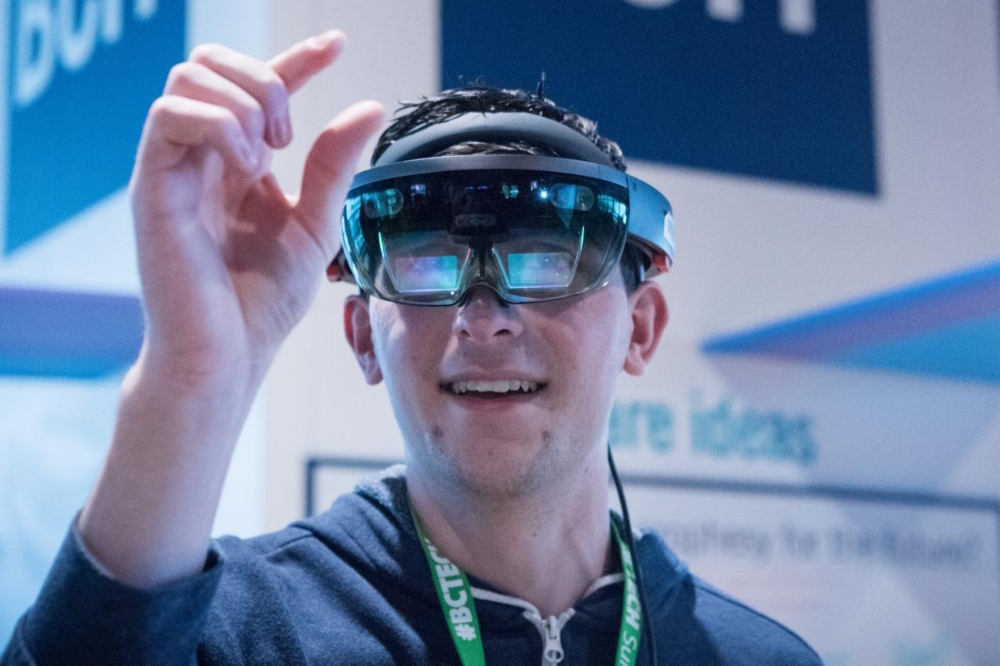
Image Source: BCIT
You’d be right in thinking that Augmented Reality and Virtual Reality education has been all the buzz recently - and with good reason.
The VR revolution has arrived and the aptly named ‘empathy machine’ is just at the tipping point of disrupting all industries. With Apple’s release of the ARKit 2 with iOS 12 and Zuckerburg’s standalone Oculus Go VR headset making headlines worldwide, it has never been a more perfect time to consider a career in emerging technology. (Not to mention, the global augmented reality market is expected to grow significantly to about 90 billion U.S. dollars by 2020 with 1 billion users!)
What does all this mean? Strap on a headset, reach for your controller and get ready to future-proof your career. When immersive technology comes knocking - you’ll be prepared.
Where can I learn? BCIT is one of Vancouver’s treasured educational institutions, with campuses in Downtown Vancouver and in Burnaby. In the fall of 2017, BCIT launched their Virtual Reality and Augmented Reality (VRAR) Statement of Completion comprising of four part-time courses offered by the BCIT School of Computing and Academic Studies. Check them out below!
COMP 1011 - UX/UI Fundamentals begins with a focus on user experience (UX) and introduces user interface (UI) design.
COMP 1910 - Introduction to 3D Simulations and VR/AR focuses on how to create 3D models with multiple tools to create a simple Unity AR/VR/MR demo.
COMP 2012 - Applied UX/UI for VR/AR transforms existing 2D/3D content and evolves interface concepts based on UCD for MR environments.
COMP 3919 - Applied VR/AR Project applies story-boarding, rapid prototyping and user testing for a VR/AR/MR Project.
With Vancouver globally respected as one of the top VR/AR hubs in the world, and with over 130+ local members in the VRARA’s Vancouver chapter alone, British Columbia is proving itself to be a (virtual) force to be reckoned with.
Apply to one of BCIT’s programs now to join the rapidly growing VR/AR community in Vancouver, and get the skills you need to make, design and reshape your own realities!
How Do Consumers Feel About VR? (New Survey Data)
This post is adapted from ARtillry’s latest Intelligence Briefing, VR Usage & Consumer Attitudes. It includes some of its data and takeaways, including original market sizing and forecasting. Subscribe to ARtillry Insights for the full report.

How do consumers feel about VR? Who’s using it? What devices and apps do they prefer? And what do they want to see next? Perhaps more important, what are non-users’ reasons for disinterest? And how can VR software developers and hardware players optimize product strategies accordingly?
These are key questions at VR’s early stages that we set out to answer. Working closely with Thrive Analytics, ARtillry Intelligence wrote questions to be presented to more than 1,900 U.S. adults in Thrive’s consumer survey engine. And we’ve analyzed the results in a narrative report.
This follows last year's first installment of the report. Wave II of the research now emboldens our understanding and brings new insights and trend data to light. There are also notable parallels in these results to our sister report on AR adoption published in April.
So what did we find out? At a high level, eleven percent of consumers surveyed have bought or used a VR headset, up from eight percent in 2017. More importantly, VR users indicate high levels of satisfaction: 65 percent of respondents report moderate or extreme satisfaction.
However, it’s not all good news: Non-VR users report relatively low likelihood of VR adoption – 31 percent, down from 41 percent in 2017 – and explicit lack of interest. This downward trend is concerning for VR but isn’t surprising given the dip in excitement we’ve anecdotally observed.
Moreover, the disparity between current-user satisfaction and non-user disinterest underscores a key challenge for VR: you have to “see it to believe it.” In order to reach high satisfaction levels, VR has to first be tried. This presents marketing and logistical challenges to push that first taste.
Put another way, VR’s highly visual and immersive format is a double-edged sword. It can create strong affinities and high engagement levels. But the visceral nature of its experience can’t be communicated to prospective users with traditional marketing such as ad copy or even video.
The same challenge was evident in our corresponding AR report, but mobile AR’s barriers to adoption are lower. This is nonetheless a common challenge for immersive technologies. It will take time, acclimation and price reductions before they reach more meaningful penetration.
Meanwhile, there are strategies to accelerate that process, and to market VR more effectively. We examine those strategies in the latest ARtillry Intelligence Briefing, through the lens of consumers’ explicit sentiments, actions and desires. There's a lot to unpack, as we'll do in the coming weeks.
Preview more of the report here and subscribe to ARtillry Insights to access the whole thing.


Autodesk to exhibit at the VR/AR Global Summit
RSVP for our VR/AR Global Summit here


Turn Autodesk's powerful, cloud-based software into the building blocks for your next tool or product.'
Connected Data; Cross-Platform Integration; Robust Infrastructure.
The cloud-based developer platform that powers the future of making things.
Data shouldn’t be locked in a silo. With Forge, everyone gets access to the data they need.

Call for Partners for XR Experiences at our VR/AR Global Summit (Deadline is July 11th)


The Summit's presenting sponsor has an exclusive opportunity to create a mixed reality experience for all 1000+ conference attendees. We are looking for partners who have access to licensed IP (movie/game/tv franchise) so we can bring virtual characters to life and into our physical world.
Deadline is July 11th.
As a partner you will receive:
- Brand recognition
- Booth space ( 20 x 20 shared space with us)
- Access to attendee information
- Dedicated e-mail promotion leading up to the event
- 2 conference passes
- Media exposure
- Stage time
You will be responsible for
- licensing the media IP
- content, narrative and storytelling
- 3D modeling, animation for the virtual characters
We will be responsible for
- capturing the LiDAR scans of the space
- technical development of the experience
- media and promotion
If you’re interested in creating the world’s first and most compelling multiplayer mixed reality experience, apply here and tell us your idea!
VRARA Sydney Chapter powers ahead VR/AR in Education
Join our Education Committee here

The VR AR Association Sydney Chapter powers ahead in building a huge community focused on VR AR XR in education. We presented a full house recently at the third event focused on VR AR XR in education training - the third event was on VR AR XR in Schools and followed the VR AR XR event in higher education. The fourth event in this series is on VR AR XR in stem planned for Aug 2018.
Many thanks to Erica Southgate Brett Heil Bronwyn Moreton Danielle Cavill Kingston Lee-Young Marc Charette Kim Lykissas carlos dominguez James MacDiarmid Rajesh Kumar Puya Abolfathi for some great sessions. Thanks also to Joachim Cohen for his active participation, Ric Holland for great photos, Gabrielle Weerasinghe for being a great host.
Join our Education Committee here
UAE well set for VR Revolution
While VR location-based entertainment is big, the technology is also getting traction in the business and the public sector

I’m under attack from hordes of zombies and I’m fighting to survive.
I shoot one after another but their numbers are increasing as they swarm towards me, growling and drooling as my field of vision fills with ominous green scratch marks. It’s only minutes before I wave my plastic gun in the air in surrender, and staff at Dubai’s Hub Zero gaming centre relieve me of my virtual reality (VR) headset and get me out of the game.
While my shrieking had drawn a group of concerned school children to the booth, the experience is one an increasing number of people want to enjoy.
“There is definitely growth and more interest in the market for VR and AR but still, it is the public sector driving it here as of now,” says Shujat Mirza, Dubai Chapter president of the global VR/AR Association, which supports VR and AR stakeholders in the region and has hosted forums at events at Dubai Technology Entrepreneur Centre and ioTX Dubai.
I’m told I’m not the first person to have made a show of themselves while experiencing one of the truly interactive virtual reality games at Hub Zero. VR immerses users in a 360-degree simulated reality environment and it’s surprisingly believable. The VR experience is even more intense at Ghostbusters-themed THE VOID, which recently moved to Hub Zero from The Beach, and incorporates sound, touch and smell into the experience.
Satisfaction
This sort of VR entertainment experience is often people’s introduction to this immersive technology, not least because the business world has not yet fully cottoned on to its benefits.
When VRstudios, the US firm that created the turnkey, fully interactive VR attractions at Hub Zero, first started, it found location-based entertainment (LBE) industries the most receptive sector.
“We found that many commercial enterprises will take time to evolve their operations to include immersive technologies and truly understand the impact VR can have on lowering cost, improving profit, shortening time to market, reducing change orders, and improving customer satisfaction and competitiveness,” says T Ron Davis, VRstudios’ chief marketing officer. “Meanwhile, the location-based entertainment world was beating on our door. LBEs understand the value and see it as a key element of bringing guests to locations to experience something they cannot get at home, in many cases something exclusive to the venue.”
It’s also an easy way to renew the experience of the customers, says Jean-Marc Bled, general manager, entertainment zone in leisure and entertainment operations at Meraas Holding, which runs Hub Zero: “Imagine if you have three or four different media then your customers can come three or four times, for a minimal cost because, of course, changing a media costs much less than changing a full ride or attraction.”
In the UAE, LBE is creating a buzz around VR but the technology is also getting traction in the business and the public sector, as reflected in the number of VR and augmented reality (AR) products (which lay digital images over the user's environment) showcased during February’s Innovation Month.
Experience
The market for VR and AR in the Middle East and Africa market is expected to increase from a value of $181.59 million in 2017 to $6 billion in 2020, according to international analysts International Data Corporation (IDC). While until now, consumer spending has accounted for most of that, IDC predicts that from this year, the consumer sector will give way to B2B segments including distribution and manufacturing.
“During Innovation Month, the Ministry of Climate Change and Environment used VR to educate the public on how our environment has changed and will change, through an immersive and interactive experience," says Mr Mirza. "The content of the VR experience displayed the past, present, and future of UAE.”
Meanwhile, Dubai Electricity and Water Authority (Dewa) has enlisted leading AR solution and hardware provider DAQRI to develop a "smart" helmet and glasses for its engineers, using AR software created by Dubai-based company Takeleap.
There are myriad business applications of VR, from car test drives to remote surgery, but Mr Mirza sees the most potential in the gaming, entertainment and real estate sectors in terms of growth, content and reach. He also sees promise in the education sector, retail and tourism.
Consumer brands are starting to get in on the act. Emirates and Etihad both have 360 VR products, and in 2016 hotel group Jumeirah introduced a VR app that allows guests to take an AR/VR tour of its properties using Google Cardboard goggles and their smartphones. More recently Ikea launched VR pop-up stores in Kuwait, Jordan and Morocco, to create an immersive shopping experience for customers who can’t visit bricks and mortar Ikea stores, and claims that has increased footfall by 19 per cent.
Adoption
Part of VR’s growth is down to the reduced cost of the hardware required, making it much more accessible to developers, down from tens of thousands of dollars to hundreds. VR equipment is also now more affordable for consumers, and consumer awareness has increased as a result. By attaching a VR headset like the Google Cardboard to their smartphone, anyone can create a VR or AR experience for as little as $15. Spending on AR/VR hardware elements is forecast by IDC to grow from $118m in 2016 to reach more than $3.2 billion in 2020.
It is consumer interest that is set to drive the industry, says Mr Mirza. “B2C will allow mass adoption and B2B will attract special projects, which will give the VR industry a boost and that necessary PR. Enterprise solutions will drive investments, and consumer-driven content will create acceptance and reach.”
Content is also crucial to driving the development of VR technology, he says. “In the hardware aspect, we already have global players that have launched products and are constantly upgrading, so we should just embrace and import from the already established big players but the key for market adoption is regional content. There are UAE-based VR filmmakers who are working on projects and have already created some amazing story-telling.”
Hassan Kiyany is one of these UAE content providers. He runs an agency that develops content for AR and VR, and most recently developed an immersive tour of UAE schools for the Ministry of Education.
“We've been working with some key government and private sectors helping them embrace VR in their marketing efforts and public awareness,” he says. “I believe VR/AR provides a new dimension on how we can engage, educate and entertain audiences.”
Cutting-edge
Government initiatives are helping to push the technology in the UAE, says Ashwin Venkatchari, research director for the Middle East, Africa and Turkey, for IDC. He gives the example of the Dubai Future Accelerator, a government programme in which cutting-edge technology companies from the West develop a product to address a specific challenge for a government entity, that they can then go on to launch in the business sector in the UAE.
It’s inevitable that Dubai adopts VR, says Mr Mirza, in order to fit with its smart vision. “I think VR and AR together will need to be embraced with a lot of attention here in UAE. If Dubai has to be the smartest city in the world VR, MR [mixed reality] and AI [artificial intelligence] must be at the core of it.”
He says the hype alone has inspired government entities into “talking and embracing VR as a technology which is going to improve human communication, create new career opportunities and attract investments”.
The challenge to developing VR in the UAE is getting big global players including HTC Vive, Apple or Google to take the market a bit more seriously, says Mr Mirza. He suggests they have an R&D presence in the region, to help groom local content talent to galvanise regional solutions which will encourage market adoption. The fact that US AR/VR company EON Reality, which offers products such as its Virtual Trainer, has opened a studio and training facility in collaboration with Higher College of Technology Dubai is a great step towards building a skilled workforce in the next years, he says.
The market also needs to evolve into a place where content or VR solutions for any sector can be made here by local players rather than copying what is being done in in the US or in the UK, says Mr Mirza. “Creative and imaginative minds who understand the applicability, usability and power of VR technology need to be given a platform to showcase their talent.” He says the annual GITEX Technology Week does this to an extent but the VR/AR industry needs a dedicated event.
Massive
He also suggests the region needs more support for local VR/AR start-ups which are creating regional content and coming up with good solutions for brands and corporations.
It’s something that Mr Kiyany has identified, which is why he recently kick started a hands-on storytelling MR lab to introduce young talent to the MR/VR/AR arena.
“We need more dedicated VR/AR labs, events and gatherings, to exchange the work and knowledge among everyone,” he says. “Companies would learn the best use of it. We lack access to the latest technology, hardware and software in general compared to the West. But at the same time we’ve got huge interest from everyone in the region to push for it.”
Mr Bled says once VR takes hold, progress could be rapid, especially in the games industry. “By 2020, I can see massive progress in this technology and streamlining as well. In the video game business it’s going to be massive,” he says. “Once really big players like XBox or Sony or Microsoft invest big money to do a proper VR game, it’s going to be a game changer.
Who Owns Augmented Realities?
Join our AR Cloud Industry Committee & Initiatives here
This article originally appeared in Venture Beat by Mike Boland, SF Chapter Lead & Chief Analyst of ARtillry Intelligence

Last year, a seldom-discussed event started to raise important questions about augmented reality’s geographic boundaries. A group of artists digitally “vandalized” Snapchat’s AR overlays of Jeff Koons’ sculptures throughout Central Park. It turns out that the AR revolution has revolutionaries.

To be clear, they didn’t hack Snap servers to vandalize the graphics within Snapchat’s UI. Rather, they re-created and altered a separate static image. The protest was nonetheless to illustrate a point that public spaces shouldn’t be an open canvas for private companies to affix AR graphics.
But the bigger question this raises is: Who owns augmented realities? Ultimately, AR graphics aren’t happening in public spaces but in app renderings of those spaces. So technically, it’s not an issue of public domain, because anyone uninterested in specific AR graphics can simply not use those apps.
A scarce resource
But the concept this all leads to is scarcity. As examined by Super Ventures partner Matt Miesnieks, scarcity could be a source of value in AR, just like it is in the real world. This is because the geography that defines some AR graphics’ physical-world placement renders them relatively finite.
This geographic positioning for AR will be done primarily to add value through location-based relevance, nearby commerce, or local pride/emotion. But the secondary effect of that localization will be the same physical limitations that apply to real estate. Grounding AR in physical world relevance also adds value that’s analogous to the location-based and temporal relevance of a live event. It’s boosted by aggregate interest in a specific time and place. And it’s bound by finite atoms rather than infinite bits.
Pokémon Go has already tapped into this concept, as has its forbear, Ingress. And consumer AR apps developed in the coming months will likely find similar value in geographic and temporal scarcity. After all, this principle is fitting to AR’s inherent melding of the digital and physical.
Most of all, this contrasts the digital real estate that’s flooded and devalued lots of content in the internet and smartphone eras. Without scarcity, banner ads for example have been commodified by expanding ad networks and fill rates, thus driving down CPM value (and effectiveness).
And there’s a lot on the line. We at ARtillry Intelligence project consumer AR revenues to grow to $18.7 billion by 2022. That will mostly consist of in-app revenue for mobile AR experiences, which is the primary way that Pokémon Go has raked in over $1.4 billion to date.

The AR Cloud
In fairness, it should be noted that AR’s scarcity has a limit. Physical world real estate can only be exhausted on a per-app level. So more AR apps means less scarcity. And within a given app, there can be “layers” and filters (such as social graphs) that further expand or restrict digital inventory. “For this to work we’ll need a system of filters, because otherwise everything will be talking to you at once,” said Metaverse author Charlie Fink recently. “What’s useful in AR is very specific things that augment the world, showed in a time and in a way that you want so that it’s contextual.”
This all leads to the latest big topic in the AR/VR universe: the AR Cloud. In short, it’s a 3D map of the world that sits in the background. It defines spatially-anchored and persistent graphics, which can be detected and shown by AR devices depending on what app you’re using.
Because 3D mapping data for the physical world is too extensive to store on device, the AR Cloud offloads that burden. It can dynamically feed AR devices with scene mapping and object recognition blueprints so they know what they’re looking at, then can overlay graphics in the right spots. This makes the AR cloud a sort of upgrade to Google’s mission statement to “organize the world’s information.” But instead of a search index delivered through typed queries, the AR cloud delivers information about an item on that item. All you need to do is point a camera at it (millennial-friendly).
And it’s not just a matter of consuming the AR cloud, but also creating it. That can happen through a sort of crowdsourced approach, where all of these outward facing cameras capture data to create a visual map. So it perpetually builds over time, sort of like Google’s web index but for the real world.
In fact, Google already could have a head start through its Street View cars. And there are other mini-AR clouds such as Pokemon Go. But a true AR app economy could require a more universal and open AR cloud that’s tapped and fed by billions of phones. This is what 6D.ai is building via API.

Nine-tenths of the law
This all gets back to the question of who owns AR graphics. Whether its a shared AR cloud or a proprietary one, there will likely be a centralized authority to define and enforce ownership. That could be a web-like entity (think: ICANN and DNS), but it will more likely be blockchain-based.
Without going too far down the buzzword rabbit hole, blockchain capability aligns well with the construction, maintenance and authentication needs of the AR Cloud. But until then, the system of establishing and enforcing AR graphics ownership could just be good old common law.
Case in point: A class-action suit was filed last year by property-owners across several states that were seeking damages from trespassing. The trespassers had one thing in common… they were playing Pokémon Go. But interestingly, the defendant in the suit was the game maker, Niantic. “The plaintiffs are actually alleging that the Niantic committed a form of ‘virtual trespassing,’ said Foley & Lardner Attorney Lucas Silva at January’s ARIA Conference. “The theory being that Niantic can control where these elements are placed and [they] have GPS coordinates.”
This may seem silly, but it’s important. At AR’s early stages of adoption and cultural assimilation, case law will set precedent. And for a sector that’s already a bit fragile in its infancy, legal impediments could stunt growth further. And that could impact the way the AR cloud operates. “The court had a chance to dismiss the case early on and did not, suggesting that maybe this claim does have a little more legs than some people would have thought,” said Silva. “I think this is a case that has potentially far-reaching implications for augmented reality.”
It will be particularly contentious wherever money is changing hands, such as AR advertising. Questions will face courts such as ownership of digital ad inventory when there are AR overlays on private property (or on other ads). There could be similar gray area in retail & commerce. “If you are in a Lowe’s store and you’re using a wayfinding app, what if the owner of that store, presumably Lowe’s, rents space from the owner of a strip mall?” Silva posed. “Does that strip mall owner potentially have to sign off on the placement of these virtual elements?”
Whether it’s shopping or vandalized art, legal governance of AR “ownership” will be a moving target over the coming years. Meanwhile, decisions could defer to legal precedents that rule physical property ownership. Possession could end up being nine-tenths of the law in AR too.
Disclosure: The author is an analyst for ARtillry Intelligence, an independent research firm whose data was cited in this article. He has no other financial stake in the companies mentioned in this post, nor received payment for its production. Disclosure and ethics policy can be seen here.
Mike Boland is Chief Analyst of ARtillry Intelligence, San Francisco lead for the VR/AR Association and former tech journalist.