

VRARA Education Committee & WebGuyz VR Education Platform
By Ross Cohen, WebGuyz.nyc, Co-Chair VRARA Education Committee

WebGuyz is an industry agnostic startup on a mission to innovate the way students learn in the education system. WebGuyz's revolutionary SaaS platforms makes up the structure of educational programs, unifying all students and teachers, online and offline. WebGuyz created an entire modern and idealistic approach for education using VR & AR technology from Microsoft HoloLens and Oculus Rift. The solution provides students with a higher caliber of technology and puts them in a VR setting that enables each student with a visual, hands on, educational portal; The environment is controlled by the school’s administrator, and is fully integrated with the school’s curriculum.
Currently the program is running in several schools across the five boroughs of NYC with prodigious success and most importantly impeccable results. Student involved in the futuristic curriculums reported having new born set of skills and eagerness to scale and sharpen. WebGuyz program involves high demand curriculums such as, 3D design, backend managing skills, front-end management, developing applications for IoT devices as well as launching them, and cyber security awareness.
Together, the VR/AR Association (via the VRARA Education Committee) and WebGuyz will expand to more schools, revolutionizing and strengthening the learning process of the education system. The collaboration of The VR/AR Association will bolster the variety of devices and custom programming utilized within the curriculums, additionally improve the program as a whole from the input of industry leading experts within the association. The future for all looks virtually bright, teachers of the school systems will receive more classroom engagement, student attention span increases, and be prepared for the competitive world awaiting them, and the school district reputations rise from happy parents, students, and teachers.
WebGuyz has worked with Microsoft, CISCO, Google Education, New York State Career & Technical Education Organization, NYC Department of Education, Jump Into the Light VR Lab, New York Institute of Technology, and Metaverse.
The modern day teenager has a lower attention span than a goldfish, teenager coming in at 8 seconds and goldfish coming in at 9 seconds. The average attention human span back in 2000 was a whopping 12 seconds, and research proves the impact of this decrease in classrooms all around the country. The students are not to blame, the surrounding environment is the issue, giant social media platforms with massive amounts of content easily accessible with the touch of a finger, and evolving technology that trends for a day before the new best thing is introduced.
Instead of stripping students from their technology (i.e., mobile phones), and trying to control their personal environment in the classroom, WebGuyz strategically innovated an entire modern and idealistic approach using VR & AR technology from Microsoft HoloLens and Oculus Rift. The solution was to provide students with a higher caliber of technology, and to put them in a controlled VR environment, contrary to controlling their personal environments. A VR setting, entering each student into a visual, hands on, educational portal, completely controlled environment by the school’s (or university’s) administration, and fully integrating the school’s curriculums.
Not only do the students enjoy their technology ‘fix’, their attention span will increase as the WebGuyz program embeds into the education system. That’s just the immediate effects, the SaaS learning platforms is the other arm of this operation, working parallel to the controlled virtual reality environment. The learning platform is designed not only to help increase attention span, it increases engagement between teacher and student (a teacher’s dream come true), encourages teamwork (getting them ready for the real world), teaches responsibility and sharpens essential skills of tomorrow and beyond. Providing each student with a head start in a highly competitive and busy career environment.
VRARA Criminal Justice Committee Visits a School in Queens, NY to talk VR

Assistant Ocean County Prosecutor Rory Wells, Co-Chair of the VR/AR Association’s Criminal Justice Committee, had the opportunity to speak with students at the Irwin Altman Middle School 172 in Floral Park, NY on Thursday June 15, 2017.
School Media Specialist and Librarian Margaret Borger invited Rory to speak with students researching new technology. The students were looking at how developing technology will continue to affect all areas of our life with one group choosing law and criminal justice as a focus.
Rory spoke on current topics in criminal justice and potential criminal applications for new technology such as virtual reality, augmented reality and the use of 360-degree cameras for investigations.
The student interaction was high with lots of questions and it was a great visit overall. “We are at the point where advanced technology is organic to this coming generation, what they are starting with today, we only dreamed about. The next three to five years will move at lightning speed”, says Assistant Prosecutor Rory Wells (Ocean County, NJ).
ALERT: Tonight's SF Chapter Event Postponed

Due to the logistics and road closures for tomorrow's Golden State Warriors Victory Parade (closures start at 6pm tonight) we are forced to postpone tonights SF chapter event.
After long discussions with the venue and Oakland PD, we regretfully arrived on this conclusion as the safest option. The venue is in downtown Oakland in the middle of the parade route.
Registered attendees will receive an email to this effect, automatic admission to the new date, and something extra. We will issue full refunds to anyone who can not make the new date.
That date will be devised ASAP, as we are able to line up speaker schedules and venue availability. More to come, and we apologize for the curveball. We are bummed to say the least.
In an ironic twist for the sake of comic relief: The Golden State Warriors have been a double edged sword for SF Chapter events: as a great past speaker, and now source of postponement.
But we'll roll with it. Here is more from our past events and stay tuned for more. Go Warriors.

VRARA Vancouver Member Spotlight: Miguel Testa of PanoRabbit
VRARA Vancouver Spotlight:
Miguel Testa, CEO of PanoRabbit

Interview with Laura Ryu, VRARA Vancouver Marketing Manager
What attracted you the most into the VR industry? I got hooked into the VR industry after an HTC Vive Game Jam hosted by CDM. At the time, neither the Vive nor the Oculus Rift have had consumer releases, so I’ve never really tried before then. Before starting on coding our team’s entry, we had the chance to try some room-scale demos by the sponsors. I was overcome by awe of how real it felt. But it was the moment I uploaded a test build I created with Unreal Engine 4 that I really came to love VR. I made a room whose walls are made from the stock UE4 materials with a single light in the centre. The moment I put on the headset is the single most transformative experience in my career. I was inside a world, simple as it maybe, that I created. I could walk through it, see it’s details, see how the light bounces from different angles. From then on, I decided that I wanted to build more worlds like that one.
What is your company all about? PanoRabbit is all about making VR and 360 panoramas simple. At the time, there were not a lot of tools to upload 360 content to share and view in Virtual Reality. Most of the time, you had to make a basic Unity scene to view 360 photos in VR. I found this to be a pain, since I was doing some work in the Real Estate space making VR walkthroughs. My co-founder, Kenny Wong, approached me and shared the idea of making a platform that simplifies the process of sharing panoramas to be viewed in VR.
What do you love the most about your company (product, service-wise, culture, etc)? I love our users. We have been laying low for the past little while because we’re thinking of reworking a lot of aspects of our product, but we have a couple of core users who still upload panoramas regularly.

What excites you the most about the VR/AR industry and how is your company going towards it? The VR/AR industry is always evolving and there’s always something new around the corner. One particular aspect of the industry that is getting a lot of steam lately is the new frameworks and tools coming out for mobile and web VR development. Among these are A-Frame, Viro VR, and React VR. These new tools will help us integrate new and exciting features into our product. We look forward bringing those into our new builds.
What is one thing that we can expect from PanoRabbit in the future? We’ve been experimenting and working on a major overhaul these past few months, so expect a big upgrade sometime in the future!
If you want to learn more about PanoRabbit, check them out:
https://www.facebook.com/panorabbit/
https://twitter.com/PanoRabbit
Key Challenges to Adoption of VR/AR for Healthcare
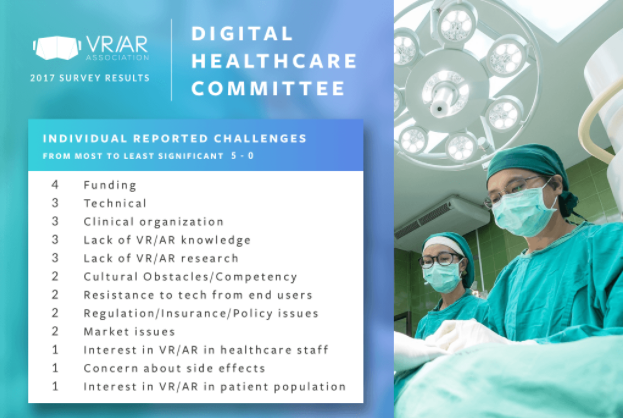
In April, the VRARA Digital Health Committee conducted an industry survey. Our goal was to understand the current state of the VR/AR healthcare market and identify challenges to adopting VR/AR healthcare solutions.
In one question, we compiled a list of common hurdles to innovation and adoption of VR/AR healthcare solutions and asked respondents to rank them based on how significant each was to them, on a scale of 0 - 5 (five being “very significant”, zero being “not at all significant.”)
Our sample was small but we think reasonable conclusions can be drawn. Below are the median rankings for each of 12 challenges, in order of significance. (Note: while this first round was illuminating, we’re planning subsequent surveys to do a deeper dive into some of these key issues in the near future.)
Monetary/Funding Issues
(Significant Challenge: 4 out of 5)
Many of the respondents are startups developing AR/VR content, eyewear, or end-to-end solutions. So it’s not surprising that money and funding for product development, research and other marketing costs are at the top of the list. VR/AR for healthcare is still in its infancy, in search of technology innovators and visionaries willing to demo, refine and evangelize widely marketable applications. Given the obvious benefits of various emerging VR/AR technologies including pain diminution, surgical planning and practice, 3D radiological imaging and medical education, we’re confident that it won’t be long before customers and investors start to invest in best-in-class solutions.
Committee members have noticed that hospitals are increasing budgets for clinical simulation centers to allow them to purchase VR/AR equipment. Third party companies that work with medical organizations are starting to budget for VR/AR solutions as well.
Technical limitations; Organizational Issues; Lack of Knowledge / Research (Moderately Significant Challenges: 3 out of 5)
Technical limitations
This is a broad category and responses reflect a multitude of use cases. For some, the size of VR systems limits their use in certain clinical settings. For others, mobile VR platforms can only provide so much immersion with a pocket size computer. Computer specifications and resolution of available devices can also be limiting factors for some medical centers. VRARA Digital Health committee members are working on near-term solutions to these challenges. This is another area that we feel confident will improve over time as Moore’s law and market competition lead to improvements in both size and power.
Clinical organizational issues
You’ve probably heard that healthcare is a hard industry to change, and not lacking in bureaucracy. Electronic medical records, for example, have been in use at major hospitals for almost two decades, yet there are many places that still use paper charts.
Committee members and respondents identified several aspects of modern clinical organizations that can impede adoption of VR/AR technologies in healthcare, such as: availability of and access to infrastructure (i.e. bluetooth connectivity); platform friction (compatibility of VR/AR software with other healthcare software, EMR issues, and privacy issues); and procurement procedures (vendor relations, lengthy and complex public tender processes, and arduous hospital board decision making processes.)
AR solutions are likely to be adopted more quickly due to decreased platform friction of widely-adopted smartphone technologies. But it’s our guess that clinical organizational issues are likely to be some of the hardest (and slowest) issues to resolve.
Lack of knowledge
About VR/AR and its uses for your end users/customers
This is an area of particular interest for the VRARA committee. Many of our contacts and colleagues have heard of VR/AR being used for gaming and entertainment, but are unaware of the medical use cases and the research behind them. Disseminating this knowledge is an important goal of the committee. We know many people say they “get it” as soon as they demo VR/AR for the first time because it’s very intuitive, but most patients and providers have never had a live VR/AR experience. Understanding immersion is best done through one’s own eyes.
Lack of enough research studies around VR/AR in healthcare
A quick search of research studies shows over 3536 publications with “virtual reality” or “augmented reality” or “mixed reality” in the title since 1991. However, depending on the clinical use case there may only be a handful of useful studies. AR/MR tech is so new that only a small fraction of published research (574) examines its use in healthcare. Several areas still need randomized control trials to show evidence for mainstream adoption of AR/VR/MR by healthcare providers.
Regulation, Resistance, & Market Forces
Somewhat significant: 2 out of 5
Regulation/Insurance/Policy issues
Regulatory, insurance and policy issues always pose major hurdles for those working in healthcare. We’re speculating that they’re not more significant for responders right now because many times, regulation comes after wide-scale adoption. It’s on everyone’s minds, but we may not see a significant amount of red tape until VR/AR is more widely used in healthcare.
Resistance to new technology with end user/customers
The baby boomers still make up the largest percent of population by generation. Thus, they make up a large portion of both healthcare providers and patients. Nevertheless, reluctance to try new tech doesn’t seem to be a major concern for most respondents. There could be several reasons why this is true: for one thing, the majority of companies that responded are not making products or content for a specific demographic so age isn’t relevant. Second, physicians are typically early adopters of both professional and consumer tech, and interest in this new technology is high.
Market Issues and Cultural Obstacles (cultural competency)
Several respondents cited geographic and cultural obstacles as they try to market products in multiple countries, and a few mentioned resistance from Pharma to tech-based therapeutics. While it wasn’t called out as a major challenge we think it’s still important to keep culture in mind, especially given the international make-up of both the medical and VR/AR innovation communities.
Lack of Interest, Concern About Side Effects
Minimal Challenge: 1 out of 5
Lack of interest in VR/AR amongst patients and healthcare staff is of little concern to providers for now. As Facebook, Google, Oculus, Samsung and Sony continue to aggressively market VR/AR experiences for consumers, more people will be exposed to it and interest will grow. That said, patient demand and pull-through will eventually have a powerful influence on administrative and clinical decision-makers.
Early VR studies (in the 2000’s) caused a minority of patients to report feeling nauseous when using immersive VR. Over time, improved graphics, frame rates and game design have fixed some of the problems that caused that particular side effect and it seems to be less of a problem today. Motion sickness may continue to be a problem for a shrinking percent of populations studied, but is not a significant issue for this group of respondents.
Recap of VRARA Chicago Event
By Gina Joseph
We knew Chicago was already on the road to becoming a legitimate tech hub when we started InContext back in 2009. But never has it been so obvious just how innovative the city has really gotten than learning about some amazing startups at the VR/AR Association Chicago chapter launch event that took place yesterday evening.
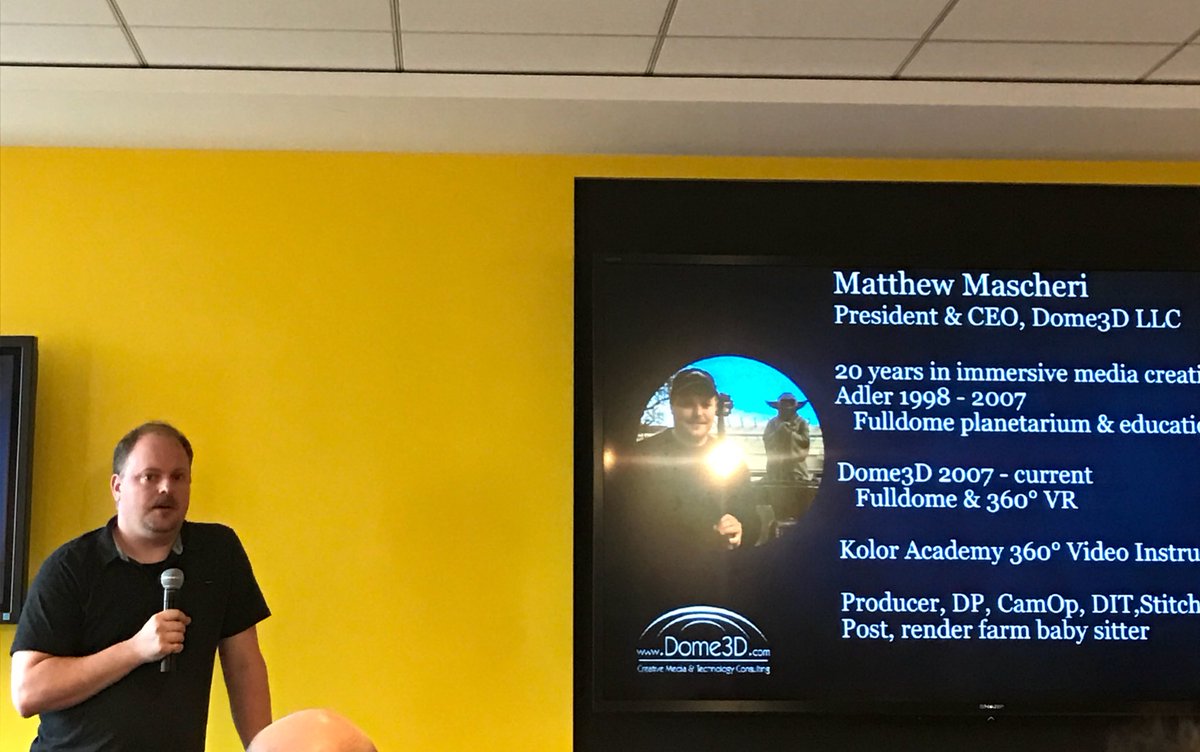
As we previously wrote, InContext CTO Tracey Wiedmeyer was asked to head the Chicago chapter of the VR/AR Association, and represent the immersive Midwest scene. Last night we kicked off the chapter at the Aon Center, with speakers and demos from VR/AR companies DOME3D, Relativity VR, Quriosity, and VIATechnik. Highlights included hearing about DOME3D’s 360 video work with Warren Buffett, and learning what goes into creating live 360 VR for Lollapalooza.
The discussion also got into the ethics involving VR and what it will mean for journalism, how it will affect online viewing, and, as Relativity VR’s Tim Woensdregt put it, how VR is “the great empathy machine.” We got to learn about how architectural firms are utilizing VR, and experience what it felt like to be on top of one of the parade busses after the Blackhawks won the 2015 Stanley Cup.
The kickoff of the VRARA Chicago chapter was just the start of what will be many events to come. InContext will host a VRARA event in Minneapolis in the near future, so stay tuned for that, Minnesotans! Future Midwest VRARA events will include panelists, more demos, and of course, food and drinks to keep you energized, so be sure to stay on top of what’s coming up. In the meantime, contact us here at InContext or on Twitter at @vrara_chicago for more information on how you can be involved in the VR/AR Association Chicago chapter. We hope to see you (virtually or IRL) very soon!
Cool simulations from @VIATechnik #VRARA #VR #AR pic.twitter.com/52P8t2nhCK
— VRARA Chicago (@vrara_chicago) June 9, 2017
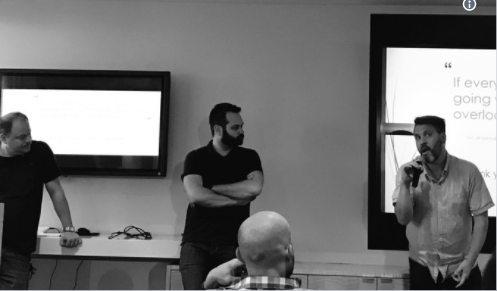

Torch Digital becomes a Member of the global VR/AR Association, NYC Chapter
New York - Torch Digital is pleased to announce that it has become the newest member of the global VR/AR Association.
Both the VR/AR Association and Torch Digital are dedicated to fostering growth in the virtual reality and augmented reality industries. As a member, Torch Digital will participate in the Association's initiatives by which Torch Digital will be connected with VR AR organizations to accelerate the market with smart growth.
In addition, Torch Digital is excited about partnering with other developers to create a bridge for their talent to our wide berth of contacts with advertising, Fortune 500 and major media companies hungry for engaging innovations in VR and AR.
“We are happy to have a VR veteran and pioneer such as Carlo Spicola, the Founder of Torch Digital,” says Kris Kolo, Global Executive Director of the VR/AR Association. He has pioneered VR as both an interface and content for some of the first Enhanced Music CDs for Skinny Puppy and the Wu-Tang Clan as early as the 90’s. He also created the first hit VR downloadable ‘app’ Hey Arnold! VR Room for Nickelodeon, which became Nick’s most downloaded digital toy in the USA and three additional markets. “We are excited to see what comes next and look forward to his(Carlo’s) growing involvement with the association,” says Kris Kolo.
“We are excited to participate in the AR/VR Association in New York and abroad” says Carlo Spicola. “We look forward to creating VR and AR content solutions that serve our core values of using VR/AR to educate, engage and entertain the general public.”
For more information please visit torchdigital.com
The Future Of Monetization Isn’t What It Used To Be

This is a post from VRARA SF member ADVR, authored by My Tran. It can be read in full here.
It’s (thankfully) not often that a famous football player is accused of a double homicide that leads the LAPD in a slow-speed chase on national television, inadvertently scoring the Ford Bronco the most memorable unpaid visibility of all time. A lot has changed since the 90’s, and, as our world becomes increasingly digital and interconnected, the way we consume media and retain information also continues to evolve. As it stands, we’ve adjusted to the inundation of digital marketing via mental tunnel vision and by employing applications to block ads for us. Anyone who has ever searched for a product online is familiar with what can be summed up as being stalked around the web; in my particular case, because I visited jewelry designer Pamela Love’s website some time this past month, Pamela Love product ads “follow” me to any site privy to my browsing history. Whatever annoyance I felt was negligible, until I was forced to look at ads for $450 jewelry alongside an article on the humanitarian crisis in Aleppo. Pamela Love’s marketing team isn’t to blame; it’s the fault of an algorithm that doesn’t discriminate product from content. However, experiencing that cognitive dissonance means I now have a negative association with Pamela Love’s products. These digital marketing methods are very much embedded in the online ad culture and will continue to be a means of distributing sponsored content. Still, I would argue that to further perpetuate these marketing habits will only exacerbate the public’s growing distaste towards sponsored brand presence and encourage the use ad blockers.

Where retargeting is an example of informed but non-contextual digital marketing, ads built around a story represent the other end of the marketing spectrum. Major labels commission reputable ad agencies that know how to frame their brand in a relevant narrative. But smaller companies that don’t have that luxury still know that a strong story — a reason why for the product — resonates. In 2014, toy startup Goldieblox produced an ad that won a four-million dollar Super Bowl spot. That Goldiblox ad then went viral, resulting in sales that have increased 7000% since. People voluntarily view and share ads that embed the product inside of a quality story, and the positive emotional footprint casts the brand in a favorable light, which encourages spending. When we look towards the future, the evolution of programmatic advertising in virtual reality (VR) and augmented reality (AR) calls for us to set a precedent for advertising practices that resist problematic 2D digital marketing methods. Designing an unskippable ad in VR and AR means matching an immersive platform with narratively immersive sponsored content.
Read the rest
Apple ARKit has me Seeing AppleVision

Like Spectacles, AppleVision will enable filters, lenses and actually do much more than PokémonGo.
Apple will be able to enable new novel AR solutions for real problems that are annoying AF in real life. Picture a bespoke life experience complete with virtual assistant.
From the moment you put on your AppleVision ‘specs,’ your daily calendar renders your schedule for the day and a side bar of pending action items are aggregated from emails; which can be easily parsed and collated simply by voice command or ear end taps. Apple has you covered.
Instead of a boring commute to the office, specs offer you entertainment pulled from your Apple ecosystem with integrated third party data for more news or work options.
I can now see my work emails on the main specs display and have the market news running on the sidebar (periphery); all without even opening my laptop or looking down at my phone.
Later in my day, leaving work I can ask specs to tell me which gym is less busy for my cardio machine and buy me dinner within 10 mins. of my estimated gym completion time; no more waiting in lines for the right workout machines or getting (h)angry after -cuz I can't wait for my food. My life is good.
Once at my apartment I can ask specs to show me new movie content and sync with my TV for an 8pm start time while I take the dog for his walk. Maybe I ask specs to route me (via fun green AR arrows and my dogs pic) to the least crowded dog park or a dog friendly bar for a pre-dinner aperitif. Now my life is even better.
Apple has a lot to offer. Just use your imagination. For now the ARKit otherwise called ‘world tracking’ actually only enables the iPhone or iPad’s camera coupled with their motion sensors to ‘pin’ objects to one point in space. Yet once you multiply this feature to a bunch of points in an environment, plus working in conjunction with finding flat surfaces, many functionalities can then be deployed.
Although it is still early, the clear win for AR and Apple is that now developers can create for the masses and scale with controlled costs. So even if Apple decides not to leverage and integrate its entire ecosystem, fun and exciting things are sure to come very soon.
Recap of VRARA Birmingham Chapter Event
By Kev Blair, VRARA Birmingham Chapter President

A great big thank you to those that made it to the VRARA Lunch event!
Currently the association has 36 chapters that reach across the world including London. Birmingham is now the latest addition to the chapters of the VRAR association. Kevin Blair from Atmos VR is the driving force behind the creation of a Birmingham chapter which saw its launch on Monday Evening.
The launch event featured several guest speakers in Steve Dann from the London Chapter, Immersive and multi-sensor storyteller Sarah Jones and Alan Dohalz from the Design and Media Technology Lab at Birmingham City University.
VRARA Training Program LA Class: Building Great VR/AR Products
RSVP here

DESCRIPTION
Reserve your spot at our next class of the VRARA Training Program, taught by VR/AR Product Lead and VRARA Mentor Sami Ramly.
Building Great VR/AR Products: the Art of Product Management for Emerging Technologies
About the Class:
This class dives deep into Product best practices for anyone looking to make VR or AR and hoping to get people actually using their products - after the demo novelty has worn off. Topics to be covered include Product-Market Fit, Product Strategy, Product Development, Design, Prototyping, Monetization, Customer Development, Growth, Analytics, and more. All examples will be focused on VR/AR but some parallels will be drawn with adjacent industries. There will also be valuable learnings and applications for startups and companies in emerging technologies in general.
The typical audience includes (but is not restricted to) professionals who identify as makers, creatives, builders, creators and anyone involved in the product development process (entrepreneurs, executives, engineers, designers, product managers, developers, producers, directors, etc). If you're a marketer, evangelist, sales wizard or promoter of a VR/AR product, you will find it useful to learn what makes competing products great, good or bad, why your product with high traction could suffer in retention, and why the VR/AR product cemetery is full of has-beens and could-haves.
About Sami Ramly
Sami is a VR/AR Mentor & Faculty at VRARA, a member of the select Product Leaders group at Product That Counts in Silicon Valley, as well as a Mentor at Stanford, UCLA, USC, SIGGRAPH, LIFE, LebNet and others. He has spoken about VR & AR at CES, Digital Hollywood, Plug & Play, Hero City, UC Berkeley, UCLA Anderson, Otis, and many VRARA events. Sami is currently the VR Product Management Lead at Wevr where he heads the Product efforts for Transport, the native network for VR creatives and their audience. He also sits on the Executive Board of Predictera and the Advisory Board of Rabbit Hole VR, Stanford's VR/AR maker community, featured in Business Insider as a place where “the next big thing in VR could come.”
VRARA Singapore Partners with XR Alliance & Samsung for VR for Healthcare
RSVP for the event here

The XR Alliance is a global alliance for tech professionals in VR/AR/XR. Its force is in alliance-building and VR/AR/XR for Good. @xrforce
"Collaborative learning in VR Healthcare"
Medical VR applications, such as augmented vision surgery, remote treatment and distance diagnosis, are becoming increasingly common worldwide. In Singapore, new techniques are being pioneered that go further to help provide non-invasive and completely safe outcomes without using established trial-practice-and-error approaches.
Infocomm Media Development Authority (IMDA) has teamed up with Side Effects Asia Pacific to work on VR technology systems for advanced healthcare and medical training.
The new systems will enable trainees to experience realistic 3D medical emergency scenarios, allowing digital feedback and overlay information to be integrated with existing medical images. In other words, trainees will be able to experience and practice fully immersive, on-the-spot decision-making scenarios during the resuscitation of critically ill or severely injured virtual patients.
In this upcoming session, TK Ng, CEO of Side Effects Asia Pacific, will share more about their insights and experiences developing cutting edge healthcare and medical VR simulations with the new Gear VR Controller as a key interaction device. He will also give strategic tips and advice on how to deliver and scale cutting-edge medical simulations to the entire healthcare and medical industry in the most cost-effective and practical way.
Surprise and Delight: Successful AR Monetization via Snapchat
For gen Z and at least half of Millennials, Snapchat is their social media channel of choice. And, they are very loyal to Snapchat. With that said, across the board today’s user/audience expects contextually relevant, visually engaging, ad content in order to connect with a brand or business.

So what does that mean and how is Snapchat killing it?
That means that ads need to have a simple and clear message with a call to action that penetrates. Snapchat ads let the creative do the talking while the user feels like they are being entertained by an experience unique for them but also to share with all their friends.

So why does this matter for VR/AR?
So far, Snapchat is the only social media channel to use AR in their ad monetization scheme; allowing brands or businesses to sponsor a lens or geofilter. Successful campaigns by default all have an interactive element via the lens/geofilter and personalization via the user generated content/pic. However, each AR element clearly adds value for both the brands and the user. It’s a perfect mashup of surprise and delight.
Show me the numbers
According to eMarketer, Snapchat will generate $935.46 million in ad revenue this year and capture 2% of the social network ad dollars.
So how does Snap measure success?
Snapchat measures performance a bit differently from the other guys as well. For example, ‘viewability, provides metrics for how much attention your ad has received,’ as stated on their site. Reach is pretty standard but ‘resonance’ gages thought and feeling about your ad. While ‘reaction’ tracks in-store lift in sales. Last but not least is ‘verification,’ which provides third party data to keep things transparent.
The takeaway
AR presents a fundamental shift in the future of doing business, period. The now approx 35-40% of users just on Snapchat alone will grow. The interactive ‘fun/play’ element of AR will soon evolve into ever more sophisticated functionalities that both provide a service and engage the user in a unique and positive way. Picture AR integrated into much more of our daily journey, from picking up your local coffee to getting on your next flight. Plus the Spectales; AR will make it into this form factor, i.e., glasses. Brands that want to survive will rid themselves of customer pain-points via AR solutions aimed for maximum customer satisfaction. Everybody else will either adapt or be rendered obsolete. The future is now (i.e., "adapt or die").
Recap of IOTX2017 VRARA Dubai
VRARA UAE Dubai Chapter partnered with IOTX2017 to showcase VR AR solutions at the event.



Get your Copy of this Market Report: Global AR and VR Analysis and Forecasts, 2016-2022
For a 40% discount, contact us
Download a Sample from this report here

This report will help you getting answers to following questions in this market:
- What are the prevailing components, and device types in AR and VR?
- What are the different application areas of AR and VR technologies?
- What are the different factors driving the market forward in the forecast period?
- What are the factors restraining the growth of global AR and VR market?
- Who are the major participants in the global AR and VR market?
- What kind of new strategies are being adopted by the existing market players to make a stronger mark in the industry?
- Which region will lead the global AR and VR market by the end of forecast period?

VR/AR Association Aims to Grow VR Licensing
By Mark Caplan, VRARA Content Licensing Committee Co-Chair (Original article here)
Mark Caplan of BD Labs, who also co-chairs a committee for the association, will moderate a panel discussion on digital entertainment at Licensing Expo.
As VR and AR technologies continue to offer licensors another avenue to build their brands and offer consumers a new way to experience the world, the VRAR Association has revealed that is well positioned to help the licensing community accelerate its growth within the sector.
The VRAR Association is an international organization that is designed to foster collaboration between companies and people in the VR and AR ecosystem. For the licensing community, the association will aim to assist content owners and other members of the sector in accelerating their growth, knowledge and connections in the VR, AR and mixed reality space.
The organization has also developed a number of committees to help in its endeavors, including one on content that is co-chaired by Mark Caplan of BD Labs.
Additionally, Caplan will moderate the panel discussion, “The Changing Landscape of Digital Entertainment,” at Licensing Expo on May 24 at 2:15 p.m. He will be joined by panelists Travis Rutherford of Evolution, John Sutyak of DDM, Javon Franklin of 71 Studios, Clint Waasted of Zynga and Arthur Madrid of PixOwl.
Additional details regarding the panel discussion can be found here.
Check out the May issue of License Global to learn more about recent trends in the VR sector.
VR/AR Will Be All About Storytelling: Join Us at Narrative Summit 3 (SF)
VRARA Members, contact us for discount code to attend.

One common thread in several technologies -- especially VR -- is transforming how stories are told. This is the evolution of narratives, and the subject of the Digital Narrative Alliance (DNA) Narrative Summit 3: Stories that Change.
Taking place June 20 in San Francisco it will feature a full day of sessions and networking on the evolution of storytelling. The VR/AR Association is an event partner and will join the discussion about how this evolution of storytelling is impacted by immersive technologies.
VRARA Members, contact us for a discount code to attend
More from the event organizers:
If you are a journalist, marketer, executive, policymaker, filmmaker, academic, or a citizen with a cause, you know the path to awareness and relevance has been transformed radically by digital media. Perhaps you’d like to understand how to invest in this white water world. The Digital Narrative Alliance team is working hard to create an event that will help you understand the new challenge of storytelling in accelerated times.
At the second Narrative Summit, we explored the distinction between narrative, which encompasses the values, assumptions, and aspirations the audience brings to their experience, and story, the account of events we typically think of when referring to stories and narratives. Understanding that distinction provides storytellers, leaders, marketers, and filmmakers to contrast the expected and unexpected to develop entertaining and surprising stories.
Narrative Summit 3: Stories That Change takes the next step in our exploration and lays the foundation for dynamic cross-media storytelling that can established shared expectations, develop feedback loops and audience participation in shaping a narrative, as well as open the door to public modeling of future products, services, policy, and decision-making. Here’s the key: the Gutenberg-era concept of a definitive version of a document or story has passed its expiry date and opened the way to non-linear stories with many different outcomes. We have experienced this as a decline in confidence in authority and institutions traditionally associated with authority, and it has stressed the media environment to its breaking point. With a new understanding of narrative, story, and feedback or remixing, creative leaders can redefine the relationship with the audience to co-design the future. It’s the essence of next-generation engagement within organizations, with customers, stakeholders, and citizens.
On the one hand, that new post-authoritative world has torn down the one-off presentation of a story, the organizational missions, and public debate, as we now widely acknowledge the presence of “spin” or inconsistent information has changed the nature of media. But on the other, stories can now be seen as steps on a path the author and audience take together, building a relationship through the interactions now possible between the creator and user of each tale. Seeing in terms of narrative, we can then understand how different interpretations of facts are modulated by life experience, previous communications – in the form of conversation, brand promises, political commitments, and so forth – and the context of the rapidly accelerating economy.
It’s time to start using stories to change our future. At Narrative Summit 3: Stories That Change, we’ll discuss how game design is similar to modern theater, the evolution of storytelling as a tool for social trust-building, cross-cultural storytelling, as well as the value of improvisational skills in management and society. Join acclaimed director Louie Psihoyos, whose films The Cove and Racing Extinction are environmental landmarks, as well as An Inconvenient Truth producer and Bourne Ultimatum screenwriter Scott Z. Burns, who will talk with former Obama economic development advisor and producer Barry Johnson about telling the stories of all peoples, especially minorities and other marginalized groups, in two upcoming films. Architect and author Ann Pendleton-Jullian will discuss Pragmatic Imagination, her new collaboration with Silicon Valley pioneer John Seely Brown. AKQA founder and Stanford DCI Fellow Tom Bedecarre will close the day with a speaker roundtable that is sure to rock your mind.
Seating is limited – register today to participate in this important day of speakers, discussion, and networking.