

Future Visual joins VR/AR Association! Clients include International Air Transport Association, and rLoop
Come meet Future Visual at the VR/AR Global Summit Nov 1-2
We are delighted to announce Future Visual has become the newest member of the global VR/AR Association. The team is really excited to participate and interact with all the other distinguished worldwide members, including the Aerospace Committee.
From its studio in Brighton, UK, Future Visual focuses on delivering a return on investment in the areas of collaboration, training and behaviour change using spatial computing. Their work in multi-user has led them to develop their collaboration platform VISIONxR which enables multi-user, multi-location, multi-device (VR, AR, desktop and mobile) teams to work together in the same immersive space.
Key sectors for Future Visual are aviation, manufacturing and engineering, - all sectors that require high risk, high-value training and/ or collaboration and visualisation involving complex models.
Current key clients include IATA (International Air Transport Association) and rLoop.
Have a look here to learn more about VISIONxR.
Future Visual will be attending the VR/AR Global Summit in Vancouver in November. Drop them a line if you would like to catch up over coffee: tim@futurevisual.com
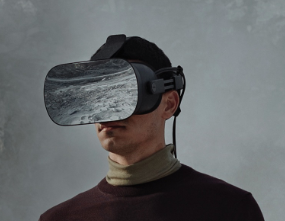
Varjo Accelerates Global Expansion with Opening of US Headquarters
Come meet Varjo at the VR/AR Global Summit Nov 1-2
Earlier this month Varjo announced the opening of its US headquarters, growth of their reseller program and launch of shipping to Japan. This news comes on the heels of what has already been a milestone year for the company having brought their VR-1 device to market, launched the developer edition of the XR-1 headset and announced several key software integrations to continue building their partner ecosystem.
Company exhibits strong momentum to better serve key markets with opening of first US office, growth of reseller network and launch of shipping to Japan
Varjo™, the technology leader in industrial-grade VR/XR headsets, today announced the opening of its US headquarters in the Washington D.C. area. The company, which is celebrating three years of business this month, has seen unprecedented momentum to date in the industrial virtual reality space having brought to market the industry’s only human-eye resolution headset (Varjo VR-1), launched a reseller program for local, on-the-ground customer support of its VR-1 device and announced several integrations with leading software partners in the design, training and simulation and research ecosystems.
As the company continues to grow, the United States represents an increasingly important target market for Varjo. Beyond establishing its US headquarters in Arlington, Virginia, located just outside of Washington D.C., Varjo also today announced the continued expansion of its recently launched reseller program. Two additional US resellers - GC Micro and FoxGuard Solutions - have joined the network and this expansion, coupled with the newly open US office, ensures Varjo is better able to actively reach and support customers and partners across North America, while also maintaining ideal communication with the home office in Helsinki, Finland.
“2019 has been an exciting year for us so far with the announcements of our first two products – the Varjo VR-1 and Varjo XR-1 Developer Edition – among other key milestones, and this is just the beginning,” said Timo Toikkanen, president and COO of Varjo. “As we continue to expand our global footprint, through new offices, additional reseller partners and entrance into new sales markets, we look forward to delivering the innovative solutions and local support our enterprise customers need to apply VR in new and compelling ways.”
Customers using the Varjo VR-1 include leading global enterprises such as Saab, Airbus, Siemens PLC and Audi. To make the world’s first human-eye resolution virtual reality headset accessible to even more users, Varjo recently started selling and shipping the VR-1 in Japan, which is a new market for the company. Learn more about Varjo and its cutting edge VR/XR technology at www.varjo.com.
About Varjo:
Varjo Technologies Oy is based in Helsinki and is creating the world’s best hardware and software for groundbreaking VR/AR/XR computing devices, merging the real and digital worlds seamlessly together in human-eye resolution.
All trademarks and registered trademarks previously cited are hereby recognized as the property of their respective owners.

Varjo VR-1 can help minimize human errors in the most safety-critical environment. The cost of VR is 1/10th of "physical costs"
Come meet Varjo at the VR/AR Global Summit Nov 1-2
With the help of virtual reality, design validations as well as operator training at nuclear power plants can now be done more effectively. The Loviisa plant in Finland is the first nuclear power plant in the world building a dedicated VR training room for control room operators. And the Varjo VR-1 is the only virtual reality device that is up to the challenge.
When it comes to industrial environments, the nuclear industry leads the way in improving safety. Enormous amounts of money are spent yearly on the design and validation of the human-machine interfaces, as well as procedure optimization. Nuclear power plant operators worldwide act according to strict manuals. Nothing is left to chance. The goal is to maximize safety and efficiency, and human-machine interfaces play an important role in it.
Joakim Bergroth is a human factor engineering expert with over 10 years of experience in the nuclear field. His responsibility as the product lead at Fortum eSite is to develop and take new technologies, such as virtual and augmented reality (VR & AR), into daily use at nuclear power plants and other safety-critical environments. Fortum is one of the largest power generation companies in the Nordics, and Fortum eSite is their internal venture which provides leading industrial-grade VR solutions to safety-critical environments and the process industry in general.
Bergroth is also involved in the implementation of the world’s first fully dynamic and interactive virtual reality control room in Loviisa, where the operators are now getting ready to take VR into training and daily use on site.
“Fortum eSite’s virtual validation solution is globally unique – nobody else has done integrated system validation for nuclear power plant control rooms up till now.”
Already now, 90% of Loviisa personnel have done training in VR environments.
“In safety-critical environments and process industries, human errors can lead to serious accidents and production losses. Millions of euros are used to build physical simulators where operators can practice different scenarios from small disturbances, such as pipe leakages, to severe accident trainings. The physical simulators are usually fully booked, which doesn’t leave much time for additional testing or evaluations,” Bergroth says.
Training in a traditional physical simulator is expensive, but building a physical simulator is even more expensive. A physical simulator means building an exact, functional replica of the real environment, such as the control room of a power plant. Recreating a virtual replica costs only a fraction compared to that, bringing about huge cost savings and the ability to implement changes quickly.
“The cost of a VR simulator is 1/10th of the cost of building a physical simulator. And with the Varjo VR-1, the visual fidelity of our virtual simulator is finally on a level that it should be.”
Read the full case from: varjo.com/blog/vr-can-help-minimize-human-errors-in-the-most-safety-critical-environments/
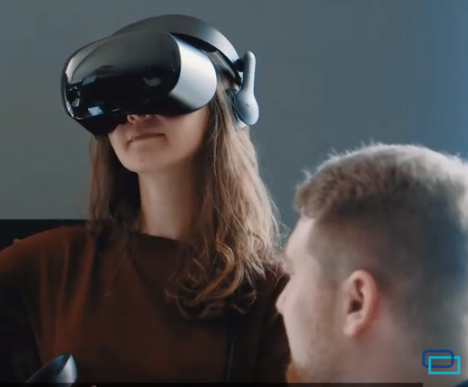
WordPress Lessons: Applicable for VR? What can we learn from WordPress to boost the VR content market
Come see the latest in VR/AR at our Global Summit Nov 1-2. See here
What can we learn from WordPress to boost the VR content market?
Content Management Systems today look nothing like they did several years ago. They have completely changed the world of websites, and because of them creating online content is no longer a magic power exclusive to developers. We are about to experience the same changes for more immersive technologies such as VR, AR, and MR. The ingredients are all there for the new market to surge, but it lacks structure: there are game engines like Unity and Unreal, dozens of platforms for VR/AR creation without programming skills like BrioVR, and platforms for quick and easy VR management like Varwin. What doesn’t exist (yet) is one clear approach that allows anyone to create VR/AR content. This is exactly what Content Management Systems have enabled with the growth of WordPress.
How can we apply the concept of CMS to VR/AR content creation?
There are some VR CMS tools on the market today. At this point, most of them allow managing 360 videos and using 3D objects. They give some flexibility, but not enough freedom to create complex scenarios and interactive stories. Most of the VR CMS or drag-n-drop tools today are just like landing page tools from years ago: they give a taste of how the future could look, allowing you to dip your toe into the innovation pool but preventing you from diving deeper. Unlike VR CMS tools, Reality Management Systems will allow creating projects with complex logics in both VR and AR, or whatever these will be called in a few years.
How can we repeat the CMS success story with RMS tools?
The main features of WordPress include plugin architecture and a template system. The closest tool to WordPress in the XR world is the Varwin platform. Just like in WordPress, it has an interface-like template system, where users can manage content without writing a single line of code - only instead of web themes Varwin houses VR scenes and objects. Plugin architecture in WordPress enables extended features and functionality for websites. Instead of this, Varwin has a plugin for Unity, which allows for adding new logics, interactivity, scenes, and objects that can be used in the future. This part usually requires some code as it creates the basis for non-coding users.
The power of community
“We believe great software should work with minimum set up, so you can focus on sharing your story, product, or services freely” — says the WordPress mission statement. This statement is more than applicable to the XR ecosystem. Once we have an engaged community and a good user interface for VR platforms, everything else will work automatically. Sharing stories in VR and AR just like you share your Instagram stories, creating VR business projects in minutes — this all is just around the corner. Reality Management Systems are already here to boost the XR market. Now is your chance to become part of this revolution.
More at varwin.com
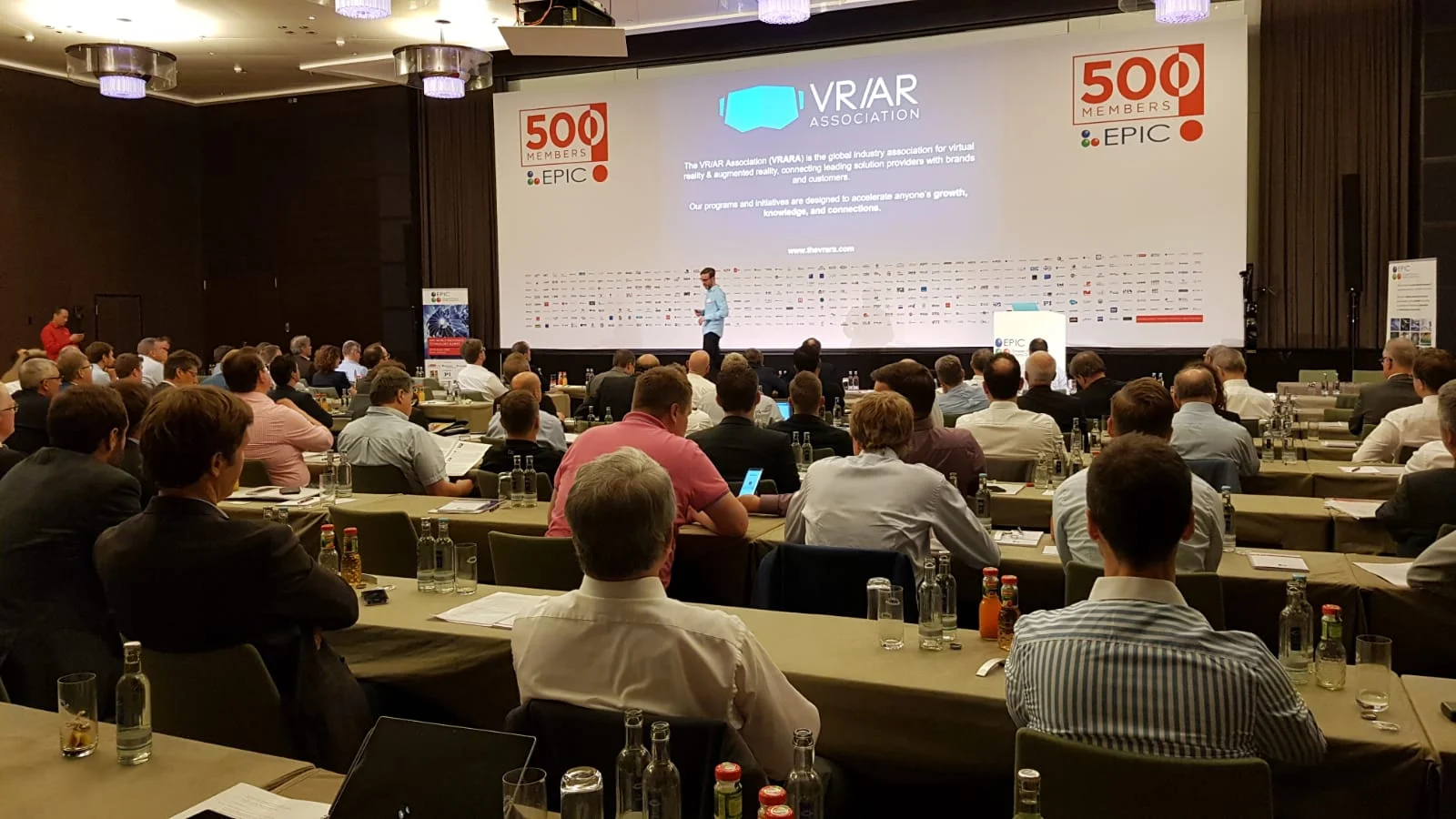
EPIC and VRARA Partner to Advance VR/AR Industry (Press Release)
28 August 2019, Berlin, Germany
Philip Wogart, Executive Director DACH, Co-Chair Location Based Entertainment Committee of the VR/AR Association (VRARA) and Carlos Lee, Director General of EPIC (European Photonics Industry Consortium) signed a Memorandum of Understanding on 28 August 2019. The signature took place at EPIC’s highest-level conference - EPIC World Photonics Technology Summit 2019
“There are so many facets of the photonics industry that have direct application to the advancement and adoption of Immersive Technologies, which is entirely our organisation’s goal and mission statement. To find the leading advocate in photonics with its trusted experts and leaders right here in Europe that connect their own industry across the entire value chain, it made perfect sense that our associations not only collaborate, but indeed connect members in business opportunities that accelerate both ecosystems…””
VRARA and EPIC are leading international organizations that are working tirelessly towards the development of virtual/augmented reality and photonics industries, respectively. They are mutually motivated in cooperative activities involving the technological and commercial advancement in the area of photonics as both organizations help to develop industry standards. The partnership will encourage direct contact and cooperation between its members, assist future cooperation including participation at events and promoting the VR and AR ecosystem, exchange of information and contacts, as well as advisory mandates with the aim to support the development of a more cohesive and sustainable industry.

“EPIC’s model of connecting the European photonics community worldwide is through collaboration and partnerships, and thereby integrating the industry and improving the workings of photonics ecosystems. The VR/AR community is developing very fast and with this partnership, we want to offer this community access to EPIC’s members leading to future collaborations between members. Partnerships like this bring industries together and it’s good that the photonics industry is getting integrated and more organized”
The signature of the MoU took place in conjunction with the EPIC World Photonics Technology Summit in Berlin, Germany, in the presence of 150+ CEOs/CTOs and decision makers from worldwide leading photonics companies. The signing is the culmination of 9 months collaboration starting already last year at the EPIC Meeting on AR/VR at SONY in Stuttgart and several online collaborative webinars. Then earlier this year Director General Carlos Lee gave the keynote at the Executive Dinner at Mobile World Congress hosted by the Barcelona Chapter of VRARA. The cooperation continues to grow onto the international stage with the VR/AR Association’s invite for EPIC to participate in their annual Global Summit in November in Vancouver.
VR/AR Association (VRARA) has over 50 chapters around the world and a community of over 4,200 companies, brands, schools, and 27,000 professionals interested in the fields of VR/AR technologies. This complements very well the interests of most of the 500 members of the European Photonics Industry Consortium (EPIC), that encompass the entire value chain from photonics fields such as lighting, photovoltaic, photonics integrated circuits, optical components, lasers, sensors, imaging, displays, optic fiber and all other photonics related technologies.
About VR/AR Association
The VR/AR Association (VRARA) is an international organization designed to facilitate collaboration between innovative companies and people in the VR and AR ecosystem that accelerates growth, fosters research and education, helps develop industry standards, connects member organizations and promotes the services of member companies. Over 4000 companies, brands, school and 27,000 professionals are registered with VRARA and 20 committees are working on best practices and guidelines for the industry.
About European Photonics Industry Consortium
EPIC is an industry association that promotes the sustainable development of organizations working in the field of photonics in Europe. Its members encompass the entire value chain from LED lighting, photovoltaic solar energy, photonics integrated circuits, optical components, lasers, sensors, imaging, displays, projectors, optic fiber and other photonics related technologies. EPIC fosters a vibrant photonics ecosystem by maintaining a strong network and acting as a catalyst and facilitator for technological and commercial advancement. EPIC currently represents close to 500 companies across 33 countries. www.epic-assoc.com

Augmented Reality Coming to a Cereal Bowl Near You thanks to Balti Virtual, Snapchat, Giant Foods, and the Washington Capitals
Come see the latest in VR/AR at our Global Summit Nov 1-2. See here
Balti Virtual, a full-service AR/VR studio located in Baltimore, Maryland, has teamed up with leading grocery chain Giant Foods and the Washington Capitals to create limited-edition, augmented reality cereal box that will hit store later this month.
Ovi O’s Slapshot presented by Giant, created by Balti Virtual using Snapchat's Lens Studio, allows customers to scan the box and access an interactive hockey game with the ability to shoot the cereal at moving targets. After time runs out, players can share their scores on social media to compete with friends or scan the box again to keep playing. Information on how to access the game in Snapchat will be released in conjunction with the cereal on Sept. 17.
See the full press release from Giant below.
Giant Food and Capitals Star Alex Ovechkin To Release Limited Edition Ovi O’s Cereal
Exclusively available at Giant Food, cereal box features Ovechkin’s trademark smile and supports the Children’s Cancer Foundation, Inc. (CCF)
Landover, Md. (September 4, 2019) – Giant Food, the leading greater Washington D.C. regional grocery chain and official grocery sponsor of the Washington Capitals, today announced a collaboration with Washington Capitals Captain Alex Ovechkin to release a limited-edition Ovi’ O’s cereal. The honey nut cereal will be available starting Sept. 17, Ovechkin’s birthday, while supplies last.
A portion of proceeds from the sale of Ovi O’s will benefit the Maryland-based Children’s Cancer Foundation, Inc. a non-profit that is committed to funding locally-based researchers, programs and facilities until every child is assured a healthy future.
“Giant Food has been a sponsor of the Washington Capitals for over three years, and like all fans, we have enjoyed the spirit and energy Alex brings to the game and our local community,” said Ira Kress, interim President of Giant Food. “Teaming together for such a fun and healthy product is a win-win for us all. We are proud to offer a delicious breakfast cereal that will also help fund the important work of the Children’s Cancer Foundation.”
The cereal box will be hard to miss for dedicated hockey fans, as Ovi O’s will feature Ovechkin’s toothless smile on the box and will sell for $2.69 for a 12.25 oz. box. In addition, the Capitals teamed up with Balti Virtual to bring the Ovi O’s box to life with an augmented reality game, Ovi O’s Slapshot presented by Giant, using Snapchat's Lens Studio. Customers who have purchased Ovi O’s can scan the box in Snapchat to access this interactive hockey game which gives fans the ability to control Ovechkin as he shoots the cereal at moving targets. After time runs out, players can share their score on social media to compete with friends or scan the box again to keep playing. Information on how to access the game in Snapchat will be released in conjunction with the cereal on Sept. 17.
The cereal is available across all 163 stores in Washington, D.C., Maryland, Virginia, and Delaware.
“I love cereal and it’s a huge honor to work with Giant to make Ovi O’s and help the Children’s Cancer Foundation support kids and families in the D.C. community,” said Alex Ovechkin.
The launch of Ovi O’s marks one of many community-related initiatives in which Ovechkin is involved. In addition to supporting organizations that grant wishes of sick children, Ovechkin also participates in Ovi’s Crazy 8s. Ovechkin created Ovi’s Crazy 8s in 2006, a program through which he purchases and donates eight Capitals season tickets to Most Valuable Kids and ASHA, allowing fans who normally wouldn’t have access to tickets the opportunity to attend games. He also has a longstanding relationship with the American Special Hockey Association, having hosted ASHA for skating and street hockey events for five consecutive seasons.
For more details about Giant Food, Ovi O’s cereal, and other ways to help support Children’s Cancer Foundation, Inc., visit giantfood.com or www.childrenscancerfoundation.org.
About Giant Food
Giant Food is headquartered in Landover, Md. and operates 163 supermarkets in Virginia, Maryland, Delaware, and the District of Columbia. Giant Food employs approximately 20,000 associates. Included within the 163 stores are 153 full-service pharmacies. For more information on Giant, visit www.giantfood.com.
About Balti Virtual
Balti Virtual is a full-service studio focused on building amazing Augmented Reality (AR) and Virtual Reality (VR) experiences for brands, agencies, and institutions. Over the past four years, the Baltimore-based company has worked with forward-thinking partners including Marvel, Hallmark, Under Armour and PayPal. Balti Virtual is a one-stop-shop that solves complex industry problems with expert knowledge of cutting-edge technology. From mobile native AR apps and WebXR to headset-based VR/AR, the BV team excels at creating compelling immersive experiences. Whether it’s marketing or entertainment, education, training or healthcare, Balti Virtual works with industries to create awe-inspiring and out-of-the-box campaigns. With roots dating back to the video game industry of the late 90s and a stellar track record of delivering cutting-edge experiences, Balti Virtual is uniquely positioned to help make virtually any AR/VR dream a reality. For more information, visit www.baltivirtual.com.

Shortage of Nurses? Immersive Healthcare Learning Experience through 3D Virtual Reality Simulator can Help
See the latest solutions at the VR/AR Global Summit Nov 1-2!
The United States and the Global Market in general are experiencing a shortage in nurses in the coming years. In addition, Universities and institutions look for accurate and more innovative ways to improve their standard of education offered to students. As the healthcare courses require real life practical sessions for assessment and skill evaluations, the conventional education methods are not quite adequate to meet the industrial standards and rising demands.
With the advent of disruptive technologies such as VR and AR, the possibilities of delivering digital course content for professional training are much higher, faster, cost effective and convenient over other training methods.
VR Simulator
Having long term expertise in interactive application development and innovations in emerging technologies, InApp created a 3D-based seamless virtual reality simulator that is used by the Healthcare universities and institutions to assess and evaluate student’s skills.
The VR simulator is a web based tool that allows the students to interact with various virtual patients, survey areas with health hazards and different real world scenarios where the students are required to be proactive. The universities can analyze the reports and assess the students based on their reaction time, proactive measures taken to ensure proper care to patients and various other factors that are difficult to be evaluated through a paper-based test.
The nursing students can access this simulator at the comfort of their homes which allows the university to evaluate the candidates on all aspects. The assignments/tasks are placed in various places throughout the virtual world, which needs to be identified by the students and submit reports on the same. For example, say, the students are tasked to examine a patient suffering from malaria. In order to survey the patient’s living area, they can virtually travel to their respective location using the simulator and observe the surroundings for any health hazards which could be a potential cause for the disease and which could even spread to other people living in the neighbourhood. The students are required to report back these observations and the probable cause analysis back at the faculty, which again is done virtually. All these tasks can be performed anywhere at the student’s convenience.
VR make things much simpler and effective for both the students and faculties. The university can easily customize different tasks for students and create more critical scenarios or create new patient case studies with complex diseases that could improve the competency of the students. Universities and institutions have benefited a lot by the use of VR simulator for providing specialized professional trainings and to examine the student’s skills. There is a tremendous scope for VR and AR technologies for developing digital content and applications for delivering immersive learning experience that can be applied to various industries that adds value in specialized and cost effective trainings.
More info, download the case study
Contact InApp Information Technologies www.inapp.com or email bijoy@inapp.com
VividQ named top 10 European "wow factor" companies at Deep Tech Summit 2019
Come see the latest at the VR/AR Global Summit Nov 1-2!
VividQ have brought holography findings into the real world. This deep tech makes for optimum AR/VR/MR experiences that are fully scalable. Due to the innovative work, VividQ have been named a top 10 "wow factor" company and invited pitch at October's Deep Tech Summit in London. Read more here http://bit.ly/2zlB4eq
More info: http://vivid-q.com
Kaon's New VR/AR Marketing Tool to Design Medical Lab of Future
Come see the latest at the VR/AR Global Summit Nov 1-2

Kaon Interactive, the leading provider of 3D marketing and sales applications for global B2B brands, has released a first-of-its-kind lab configuration tool that will redefine the way enterprise marketing and sales teams demonstrate how complex products can situate in a prospective customer’s lab using VR and AR.
The Lab Design Tool helps B2B sales teams visualize how their laboratory could be configured to support new workflows, optimize space, improve efficiency, lower operational costs, reduce sample loss and contamination, and more. In just minutes, this lab plan and design tool enables sales and marketing teams to configure entire customer laboratories, demonstrate future layout evolution, validate proper fit and flow, and immediately immerse users in their newly designed labs. After the laboratory is designed, it is immediately available to experience in engaging 3D. Then using an AR-compatible tablet, you literally can walk through your new lab or even jump inside with a Kaon VR station.
Kaon LDT empowers multiple constituents within the laboratory ecosystem to visualize complex instruments, equipment and workflows in a "virtual" layout, prior to purchasing equipment or committing to construction plans.
Designing a Lab of the Future
Expanding its digital transformation solutions for life science brands, the Kaon Laboratory Design Tool (LDT) is the newest addition to the portfolio of solutions built on the Kaon High Velocity Marketing Platform®. Users start configuring their lab either by free-drawing a layout themselves or selecting from pre-defined labs that meet their specific business needs. Once a floorplan has been selected or created, instruments and furnishings may be added from a library of objects, using a simple drag-and-drop action. These 2D floor plans instantly become 3D immersive and interactive experiences at the touch of a button.
The Kaon LDT is customizable to allow data-driven product and workflow suggestions for unique laboratory layouts, revealing differentiated value through calculated impact such as assay volume, energy and space requirements, and even staffing modifications. It also helps demonstrate future layout evolutions by supporting comparisons between existing and new workflows, validating proper fit and flow, optimizing space, improving efficiency, lowering operational costs, reducing sample loss contamination, and more.
Immediately Visualize and Experience Your Lab
In just minutes, the LDT enables laboratory managers, instrument sales and marketing teams, and lab scientists to configure entire laboratories and immediately immerse users in a newly designed lab. To achieve this, the Kaon LDT offers three powerful ways to visualize and experience a new, engaging, 3D, interactive laboratory layout: interactive 3D, untethered Virtual Reality (VR) and scalable Augmented Reality (AR) with real-time 3D object placement (instruments, consumables, chairs, workstations, windows, doors, pipette drying racks, sinks, etc.).
[Video] View the power of the Kaon Laboratory Design Tool (as demonstrated by a Kaon customer:
"Visual interactive applications are the next phase in digital transformation for B2B enterprises," said Gavin Finn, CEO & President of Kaon Interactive. "Technologies such as interactive 3D product and environment models, virtual reality, and augmented reality all offer enterprise teams, including marketing and sales, invaluable tools (beyond traditional digital marketing) to create uniquely memorable experiences. After successful global deployments by leading life science companies, Kaon's newly launched Laboratory Design Tool has delivered on this vision – offering companies the opportunity to share newly configured labs with other internal stakeholders, to gain consensus buy-in on floorplans, equipment purchases, workflow efficiencies and more."
Kaon Interactive's applications are created once and can be deployed everywhere. Available on devices running iOS, Android, MacOS, and Windows, Kaon Interactive's solutions are used by sales teams and marketers in over 40 countries.

8th Wall Unveils Release 12 for WebAR with endless Image Targets, a PlayCanvas integration, new launch controls and more!
Come see the latest in Augmented Reality at the VR/AR Global Summit Nov 1-2
Hold onto your keyboards, 8th Wall is rolling out some new features that are going to improve the way you build with WebAR.
Extended Image Target Support
Up to 1,000 Image Targets
If you’ve ever had a hankering for uploading outrageous amounts of image targets to a single WebAR project, now you can! With 8th Wall’s latest release you can upload trigger images to your heart’s content. Not only that, but your WebAR project can also scan for up to 10 of those images simultaneously.
That means that you can build one app with a thousand image targets all while within the same WebAR experience. Go wild.
8th Wall image targets have the ability to work in tandem with our SLAM engine, giving you the flexibility to design experiences that interact with image targets as well as the physical space around you.
Front-Facing Camera for Image Target Detection 🤳
You can also now use your front-facing camera to recognize image targets, allowing you to design a WebAR experience that triggers AR activations while in selfie mode.
PlayCanvas Integration
We’re pleased to announce that we now support an integration with the web-based game engine, PlayCanvas. Build a WebAR experience using the PlayCanvas Editor, add 8th Wall to your project, then publish to the mobile web. Get started with a sample project here.
New Self-Serve Launch Controls
If you have an Agency or Business account, you can now launch your own WebAR campaign without having to talk to us first! And, you can schedule the end date of that campaign directly in the Console. Here’s how it works:
Creating a New Commercial WebAR Project
From the Dashboard, click “Create a new project”
Name your web app, then select Commercial to purchase a Develop License
If you have a custom commercial use agreement with us, that will appear in your account (otherwise, a standard 8th Wall commercial use agreement will display.) Click “Accept” and proceed to checkout.
Launching Your Commercial WebAR Project
Within your web app in the Dashboard, click on “Promote to” next to Develop (if you’ve already purchased the Develop License.)
Promote the project to Launch.
Select your desired Launch License and proceed to checkout.
Scheduling Your Commercial WebAR Project
Within your web app in the Dashboard, under Campaign Duration, select either “Ongoing” or “Schedule an end date and time.” You can always edit the campaign end date if you’d like to extend it or end it sooner. When your campaign ends, it will automatically route to the Redirect URL you’ve provided.
Try It Now
These features and fixes will update automatically ✨ View a full list of Release 12 updates here.
VRSim Launches New Virtual Reality Tool For Faster, More Effective Commercial Painting
Unveiling SimSpray® 3.0, VRSim releases an improved edition of their innovative tool; bringing safer, and more intuitive training for the coatings industry
Come see the latest in VR and Training at the VR/AR Global Summit Nov 1-2
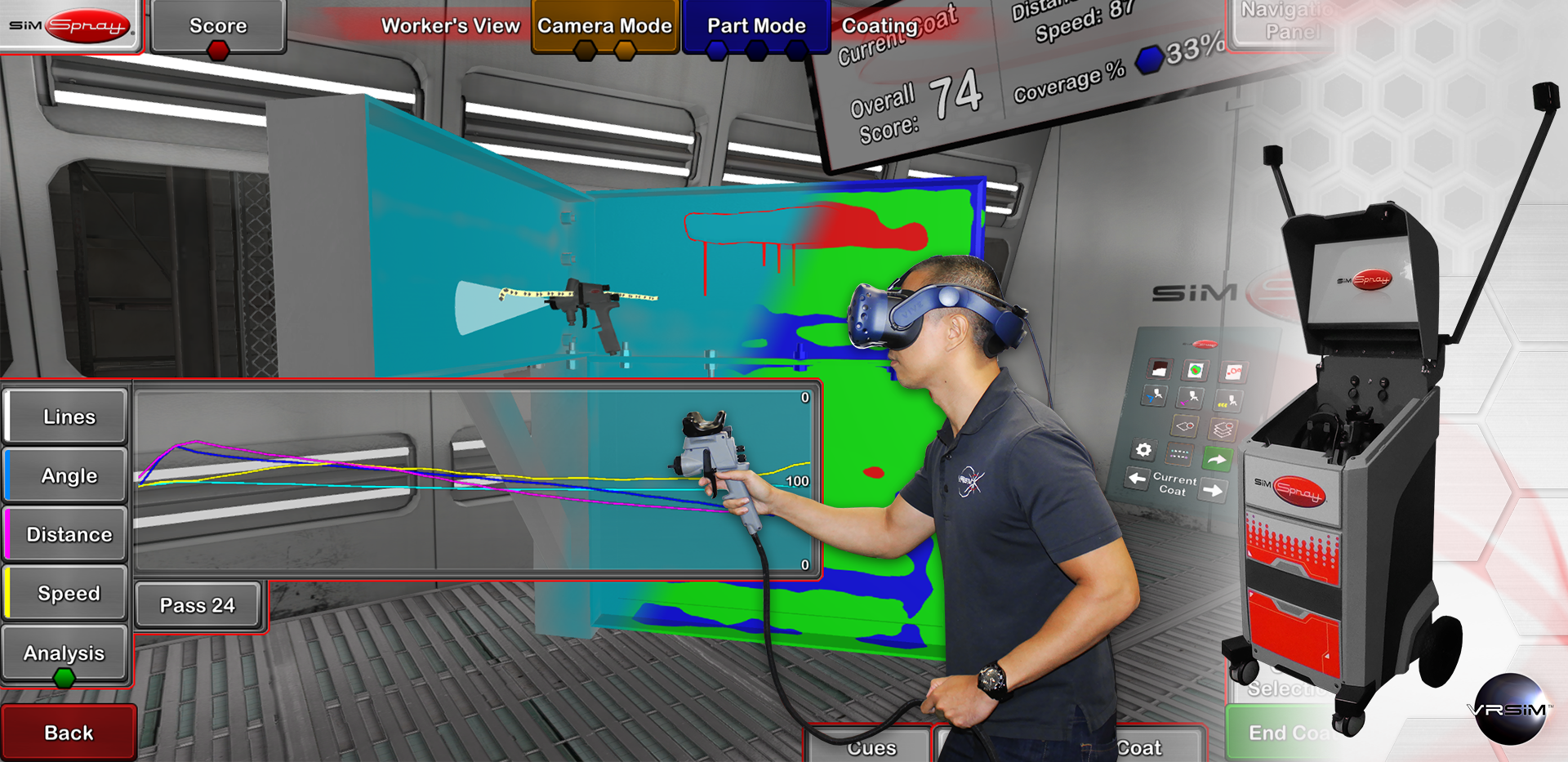
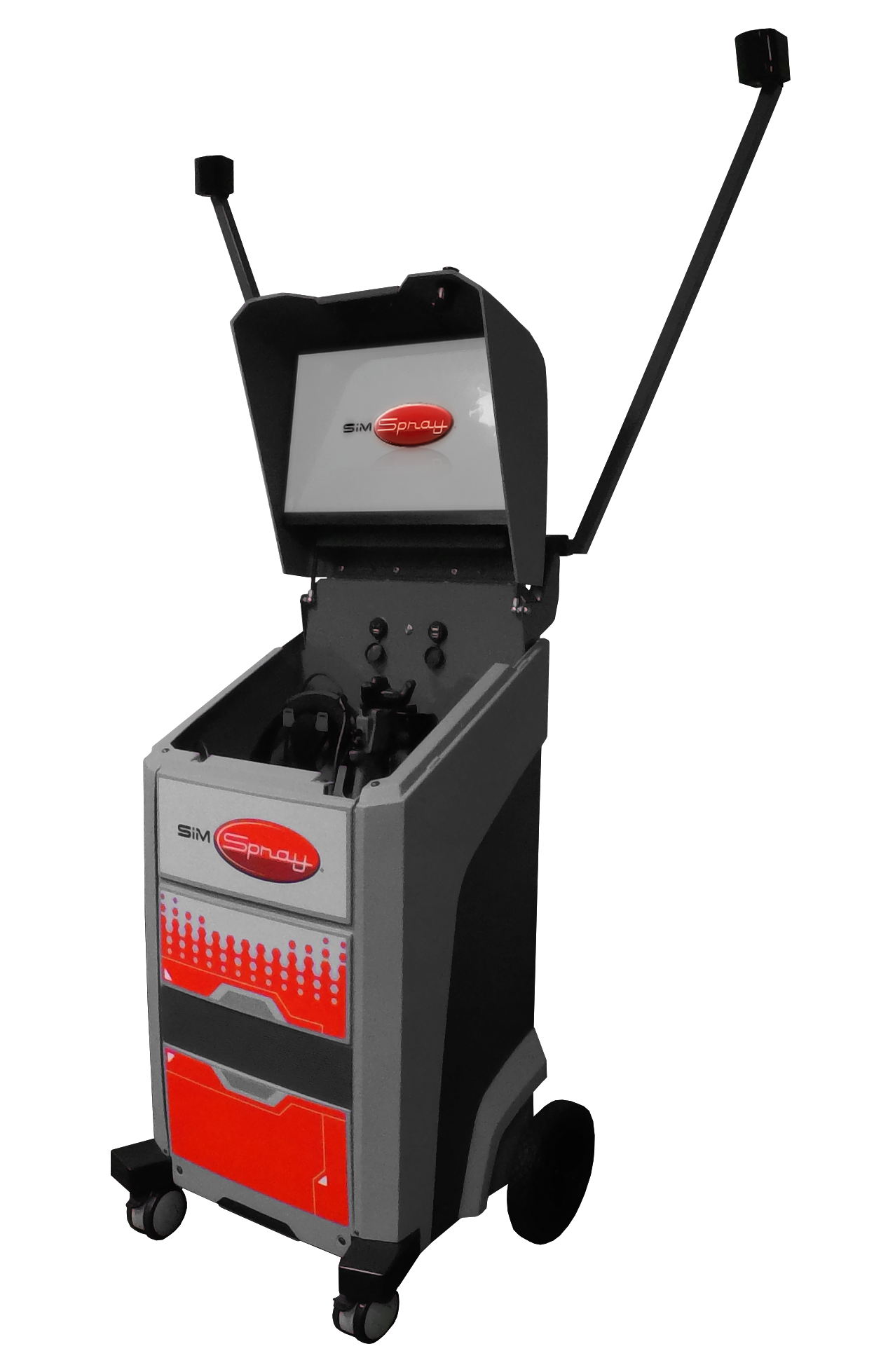
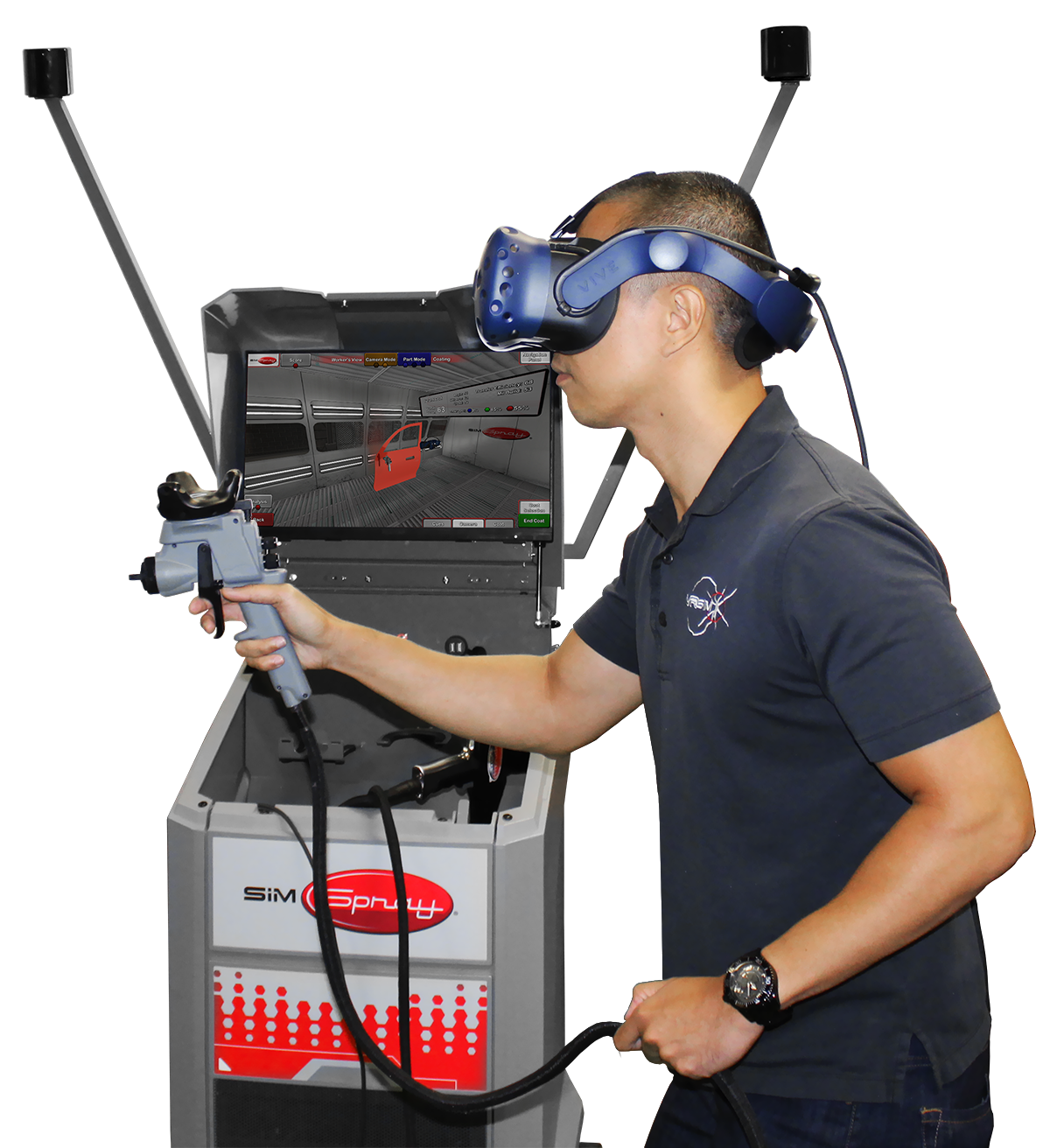
East Hartford, Conn., August 13, 2019 – VRSim, Inc., an innovator in commercial training, is pleased to announce SimSpray 3.0, the next generation of their renowned virtual reality paint training tool, which uses HTC’s VIVE Pro HMD and VIVE Trackers. SimSpray’s redesign offers a more intuitive and true-to-life user experience by featuring enhanced visuals, trainee feedback, and the ability to simulate larger work environments. The HTC VIVE Pro enhanced optics and visuals provides SimSpray with the most accurate visuals to provide a realistic and immersive experience. Based on years of research, customer feedback, and insight from industry experts, SimSpray delivers a training system that lowers costs and provides faster, safer, and more efficient training.
“SimSpray 3.0 is the next evolution in virtual skills training. Through immersive learning, instant feedback, and performance analytics, students are able to train in a more efficient manner that isn’t possible with real-life training,” said Matthew Wallace, CEO and President of VRSim. ”We’re thrilled to offer this solution to our customers and the industry as the most advanced training simulation we have made to date.”
As the leading training tool for the paint and coating industry, SimSpray uses virtual reality to create engaging and educational simulations. The VR experience improves the learning process with tools that boost training productivity and immediate feedback and analytics that aren’t available in typical training scenarios. SimSpray’s tools and feedback include easy to understand performance reports, live scoring, and kinesthetic cues. This cutting-edge tool provides trainers and trainees with the ability to practice, analyze key metrics, diagnose flaws, and improve their skills in a single training session. SimSpray acts as a force multiplier for training by distilling the training experience into concise, repeatable exercises with aggressive feedback, and intuitive performance insights.
“SimSpray is the most effective tool on the market, so we’re thrilled to implement the newest version, SimSpray 3.0. Our Directors of Training have used SimSpray to recruit and train the next generation of International Union of Painters and Allied Trades (IUPAT) apprentices since 2009,” says Anton Ruesing, Director of the International Finishing Trades Institute (IFTI).
Mike Komaromi, Director of Training for the Finishing Trades Institute of Southern New England looks forward to using SimSpray 3.0 in his Connecticut facilities. “SimSpray is a valuable tool that lets our trainees start learning on day one. The paint looks and feels real. The new design of the system make SimSpray a more capable and user-friendly tool for us.”
SimSpray 3.0 features:
The premium HTC VIVE Pro HMD with true-to-life precise tracking and a large training space to support the virtualization of larger parts and training spaces
Visual updates for paint finishes and defects for more realistic paint application and improved immersion
Re-designed user-experience with intuitive features and streamlined equipment setup
Weighted spray gun for added realism and kinesthetic training, featuring the same functional nozzle, trigger, and dials on previous spray gun versions
More user-control options, including in-sim controls to give trainees better access to project controls and analysis without removing the HMD
Customizable return-on-investment reports for clear, personalized time and cost savings
VR training provides safe, cost-effective training options for time-intensive, high-risk, or high-cost experiences. SimSpray’s ease-of-use and minimal setup requirements make it easy to capitalize on VRSim’s research, insights, and experience with innovative technology by offering rapid deployment, mobility, and accessibility. SimSpray is the most efficient virtual reality training tool designed for painters and coaters, offering numerous benefits for international education and industry organizations. First released in 2011, VRSim continues to improve SimSpray with additional processes, parts, training content, and software and hardware updates.
For more information about SimSpray products and training capabilities visit: https://www.simspray.net/
About VRSim:
VRSim is an architect of interactive training tools for skilled trades. VRSim reimagines industry tools for skilled trades training, including welding, spray painting, construction, manufacturing, and robotics. VRSim’s products are used in training and education programs for high schools and technical colleges, vocational training programs, workforce development initiatives, and global leaders, including The Boeing Company, American Honda Motor Company, Fiat Chrysler Automobiles, Caterpillar, Daimler, Saint Gobain, the International Union of Painters and Allied Trades (IUPAT), the U.S. Department of Defense, and the U.S. Navy. For more information, please visit https://vrsim.com/.
VRSim Contact:
Sara Blackstock
VRSim, Inc.
860-893-0080x226
Meet VRSim at the VR/AR Global Summit Nov 1-2!

Pico Interactive and LIVR bring the world’s first VR streaming service for theatre and the performing arts
Attend the VR/AR Global Summit Nov 1-2 to see the latest from Pico Interactive and other VR providers!
Wandsworth Council has teamed up with LIVR - the world’s first VR streaming service for theatre and the performing arts - and VR headset maker, Pico Interactive, to offer Nine Elms residents exclusive access to their very own on-site virtual theatre.
The first-of-its-kind pilot programme will see an eight-seater virtual reality theatre experience installed at the R.O.S.E. Community Centre on the Savona Estate in Battersea this autumn. The initiative will utilize the LIVR platform to make theatre more accessible; increasing local residents’ engagement with performing arts.
Using standalone Pico headsets, visitors to the centre will be able to get access to content from the LIVR library where they can experience great live performances on-demand in stunning 360° VR - completely free of charge.
The extensive content library will feature new works from emerging artists and critically acclaimed productions, performed in theatres, festivals and unique spaces across London and around the country. The fully immersive viewing experience will transport users into the front row to enjoy the performances as if they were sitting in the audience at the live shows.
“I’m thrilled that theatre shows are coming direct to local residents through this incredible virtual reality experience. As arts and culture grows in Nine Elms, it’s fantastic that we can bring performing arts into the heart of the community and I hope as many Nine Elms residents as possible sign up to put a headset on and watch a performance.”
“We’re really looking forward to starting regular VR viewing nights, which, alongside our new Community Theatre Tickets scheme in partnership with Battersea Arts Centre and Theatre 503, will offer residents plenty of affordable ways to enjoy live theatre this autumn.”
“The opportunity to participate in ventures like this and align ourselves with pioneers in the VR space is part of our DNA at Pico Interactive. We build hardware and offer an unparalleled level of service with the goal of helping our partners reach their visionary goals. This is an exciting time in Virtual Reality where people can be transported into unique worlds or experience live content as if they were there, that perhaps, they wouldn’t have an opportunity to do so otherwise.”
The experience was successfully trialed at the recent Nine Elms Happy Streets festival, and it will begin operating on a weekly basis from Wednesday, 25 September. It will be open to local residents of all ages and is part of Nine Elms' wider cultural strategy aimed at increasing the community's access to, and engagement with, the arts through an ongoing programme of events and initiatives.
For more info contact Logan Parr logan@pico-interactive.com
About Nine Elms
Nine Elms has always been a critical part of London’s landscape. Its past is one of commerce and industry, its future is of enterprise, art, culture and living. The Vauxhall Nine Elms and Battersea ‘opportunity area’ sits between Chelsea and Lambeth bridges, including Vauxhall & the Albert Embankment to the east and Battersea Power Station to the west.
The area is being regenerated by two London councils working together; Wandsworth and Lambeth. The development programme is extensive, including a two-station extension of the Northern Line, new parks and schools, and new access to the Thames River Path. Development partners are building homes, the new US Embassy, a brand New Covent Garden Market, business premises, shops and spaces for cultural exchange.
Over 25,000 jobs are being created across the opportunity area, which offers over 6.5m sq ft of commercial space and high-quality locations to accommodate new and existing businesses.
The vision is a long-term one; to transform one of the capital’s last remaining industrial districts into an amazing place for Londoners old and new to call home. Today’s reality is an exciting one; new spaces and places coming to life every day.
How Lockheed Martin is Modernizing Manufacturing with Scope AR resulting in 35-99% ROI
Participate in the VR/AR Global Summit Nov 1-2 in Vancouver to meet aerospace companies like Boeing and others.
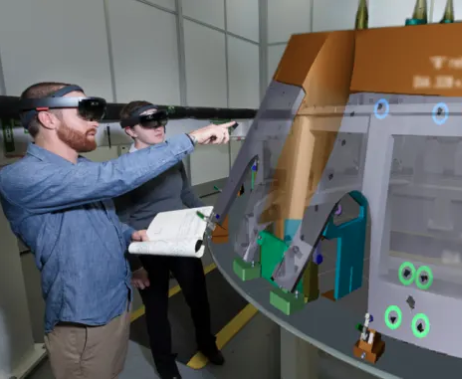
Lockheed Martin is an American global aerospace, defense, security and advanced technologies company. Using Scope AR’s WorkLink augmented reality platform, they are able to greatly improve efficiencies and save time on the shop floor for multi-billion dollar space programs. They have seen a 35-50% reduction in overall technician time, a 90-99% reduction in time to information, and 85% reduction in the overall time needed for training.
After its highly successful implementation of WorkLink to improve workforce training and spacecraft manufacturing procedures, Lockheed Martin is now deploying Scope AR into all four of their business units across a broad variety of use cases.
More info http://www.scopear.com

Solving retail footprint with Finger Food's AR solution and Microsoft Azure and Hololens. Case Study: outdoor retailer MEC
Meet Finger Food and Microsoft at the VR/AR Global Summit Nov 1-2 in Vancouver !
Finger Food Advanced Technology Group recently partnered with outdoor retailer MEC to solve an age old problem. How do you fit a full range of tents into a limited retail floorspace? The product is out this Summer.
Finger Food co-developed a solution that solves the problem of how to showcase the company’s vast range of tents without taking up valuable real estate. 50 assembled tents would easily take up the floor-space of a typical MEC store!
Using its proprietary Photogrammetry rig and Azure-powered data processing pipeline, Finger Food created an Augmented Reality app that works on mobile devices and is adapted for the Hololens.
An app that showcases highly realistic, life-size ‘virtual’ tent models that communicates key product information such as size, capacity, and aesthetics. This is all viewed through an augmented reality viewer or Hololens, allowing customers to quickly make tent buying decisions, without necessarily setting foot in the store.
More info https://www.fingerfoodatg.com/mec-retail-innovation
Meet Finger Food and Microsoft at the VR/AR Global Summit Nov 1-2 in Vancouver !
FounderTalk: Idea Behind Varwin for Virtual Reality is to enable easy creation of VR experiences
Come see Varwin at the VR/AR Global Summit Nov 1-2 in Vancouver !
Alex Dovzhikov, the founder of Varwin, shares the idea behind Varwin Reality Management System:
“I believe that the world changes when people gain control of the information they own, instead of relegating it to a programmer. One day creating VR experiences will become as easy as creating websites with WordPress, Tilda or Wix. And I am talking about difficult projects with complicated scenarios and logics: in some years everyone will be able to create a professional VR training, an educational course, an adventure game or a new world with its own rules and storylines.
The USP of Varwin is the simplicity that allows to build and manage any professional VR project. There are various VR tools on the market: engines, drag-and drop tools for casual users, SDKs and plugins. Unlike engines, Varwin allows developers to produce reusable VR projects, which makes it an easier and faster tool. Unlike simple drag-and-drop tools for casual users, Varwin allows to manage and create a much more difficult scenario with much more interactivity.
Here are the 3 tips Alex would give to other startup founders:
1, Planning is way more important than plans themselves. This process brings a lot of insights and creates a knowledge base that is even more important than plans. If you haven’t planned it, most probably it will not be done.
2. Work with people, not companies or projects. When you see your clients, investors, and employees as partners and find the right people, everything works out better than you would normally expect.
3. Try and test: it’s better to fail once than stay in doubt forever.”
More info varwin.com
Come see Varwin at the VR/AR Global Summit Nov 1-2 in Vancouver !

The VR/AR Association's Defense and Intelligence Committee aims for Collaboration
Attend the VR/AR Global Summit Nov 1-2 in Vancouver to learn more about VR/AR solutions for Defense.
The ongoing mission of the VR/AR Association (VRARA) Defense and Intelligence Committee is to bring together industry, government and immersive technologists to collaborate on standards and use cases, according to VRARA’s DC Chapter Vice President Sophia Moshasha.
The defense and intelligence committee held its launch event in Washington DC in April, with almost 100 attendees amassing to discuss the development and implementation of VR technology within mainly maintenance training, wargaming and battlefield training.
Several particularities of intelligence and defense dictate a different approach going forward for the DC chapter than others within the VR/AR Association might take, according to Moshasha.
Virginia-based VR experience creator Brightline Interactive, where Moshasha works as director of immersive platforms alongside managing principle and DC Chapter President Tyler Gates, has worked with several government agencies over the past 15 years, most notably an emergency management agency on flood simulations used to raise awareness among and communicate issues to community leaders.
In her work at Brightline, Moshasha and her colleagues have learned that “government agencies want to prove out the technical capabilities of VR fast”.
She says: “They want a quick turnaround in the research and development and rapid prototyping, so they can start investing in building out this immersive ecosystem.”
The defense and intelligence professionals attending the event April, particularly those from Department of Defense contractors such as Booz Allen Hamilton, also needed the committee to have a Washington DC presence.
Moshasha explains: “It made sense to host the committee here. That’s not to say that the committee doesn’t have global appeal, but in order to attract the defense players, we needed a physical presence here in DC to draw them in and get their hands on the tech. That was the purpose of the launch, and we’re planning similar events.”
The end goal is to get defense and intelligence professionals involved in shaping future initiatives for immersive technology.
“Our major goal is to set the standards for the creation and implementation of virtual environments within defense and intelligence, and the only way we’re going to do that is with collaboration between government, industry and the makers of the technology.”
“That’s what I’m trying to do—gather those three groups to collaborate on standards and research, and have that one voice. I think the VR/AR Association is a great place for industry to develop those standards of practice.”
Attend the VR/AR Global Summit Nov 1-2 in Vancouver to learn more about VR/AR solutions for Defense.
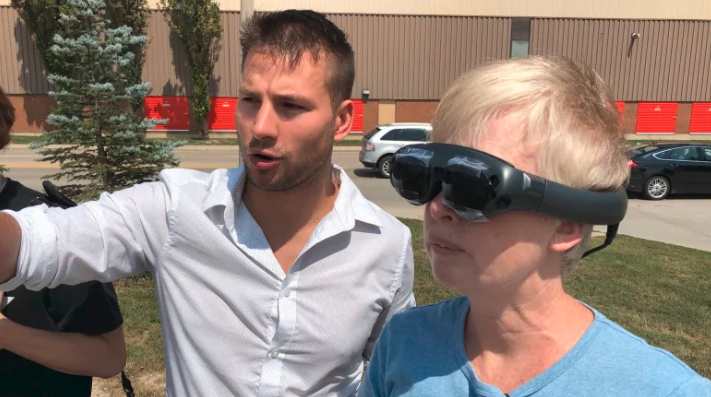
CBC News reports on Geopogo using Magic Leap to showcase how Augmented Reality will change how we plan cities!
Attend the VR/AR Global Summit Nov 1-2 in Vancouver to learn more about VR/AR solutions for AEC.
Geopogo software and Magic Leaps headsets was used to showcase to the public a where an inner city hospital could be located. This controversial site spurred much conversation and gave community leaders the opportunity to see what an inner city hospital would look like and the benefits it would have.
“AR technology will transform how we design and present cities to the public by showcasing potential futures.”
Read more here:
People with autism face special risks dealing with police. This virtual reality program could help
Attend the VR/AR Global Summit Nov 1-2 in Vancouver to learn more about VR/AR solutions for your use case!

Skylar Armstrong, a 17-year-old high schooler from North Philadelphia, has been fielding a lot of attention from police lately.
Officers on the beat have been peppering him with all sorts of questions: “What are you doing here?” “Can you tell me your street address?” “Can you show me your ID?”
But Skylar hasn’t been perturbed by any of this. Quite the contrary.
“It’s fun,” said the student at Jules E. Mastbaum Area Vocational/Technical School.
He is part of an ongoing, $1.7 million federally funded study that one day may affect how young people like him learn. It may also save lives.
Skylar, who is on the autism spectrum, is learning how to interact with police officers through the use of virtual reality. The Children’s Hospital of Philadelphia’s Center for Autism Research (CAR) and the creator of Floreo, an immersive viewing/education system, are examining whether virtual reality can be an effective tool to teach people with autism how to respond to law enforcement officers they may encounter in the real world.
A 2016 Florida case that almost ended in tragedy was the inspiration for the Floreo system. In an incident that drew national outrage, a North Miami police officer fired three times at an autistic man holding a silver toy truck, which the officer said he mistook for a weapon. The shots missed the autistic man, but struck and wounded his caretaker, who was on the ground with his hands raised, shouting at the officer not to shoot.
Many police officers receive training in dealing with emotionally disturbed people. However, far less common is instruction about autism, the fastest growing developmental disability in the United States. A person with autism may not make eye contact or even look away in an uncomfortable situation. To a police officer, that may seem to be evasive. The person with autism may not answer a question or even have the verbal capacity to answer the question. Or put hands in the pockets, possibly leading an officer to think they’re concealing something, or worse, going for a weapon. Or may simply walk away, even after being told not to. Any of that can end in disaster.
A really useful tool
Virtual reality training, researchers hope, can help people with autism learn to handle difficult encounters. A virtual encounter with an officer has the person with autism getting experience being questioned — What are you doing here? What is your name? — and give appropriate verbal responses. (Some programs go so far as to advise people with autism to come out and say it to an officer.)
“A virtual interaction is a really useful tool because people on the spectrum need more practice than other people, and police officers are not readily available to handle that,” said Joseph McCleery, a lead researcher with the study and executive director for academic programs in the Kinney Center for Autism Education and Support at St. Joseph’s University.
For people on the autism spectrum, technology can be an especially appealing way to learn.
“Ever since the first computers came out and people with autism were very drawn to them, people have been trying to figure out what it is about technology that’s so motivating for people with autism spectrum disorder,” said Julia Parish-Morris, another leader of the CAR study and a research assistant professor of psychology with Penn’s Perelman School of Medicine. “Maybe it’s that technology is more predictable. It’s a more controlled way to learn. Other people have said it’s about novelty — trying new stuff.”
Still others have suggested that technology, as a means of learning and communication, acts as a bridge for people on the autism spectrum — an engaging, comfortable link between the autistic brain and the neurotypical world.
Research has found that technology-based learning can be appealing to people with ASD for several reasons. It’s consistent. It can provide a specific focus of attention that reduces distractions from extraneous sensory stimuli, as well as freedom from social demands.
And as Skylar, a video game aficionado, found, virtual reality can be a lot of fun.
A virtual bridge to real communication
Manoj Ravindran thinks so, too. A few years ago, Manoj, then a 6-year-old with ASD from the Washington area, was so intrigued by Google Maps and navigation that his father, Vijay Ravindran, a software engineer and former Amazon engineering director, introduced him to virtual reality.
“He really enjoyed that, and he started engaging in pretend play, which was a big developmental milestone that is often delayed with kids with autism,” said Ravindran, a member of the board of managers of the Lenfest Institute for Journalism, which owns The Inquirer.
That led Ravindran and Manoj’s mother, Vibha Sazawal, a computer scientist, to develop Floreo. Manoj, now 9 and an enthusiastic partner in Floreo, helps introduce other children to VR at exhibitions. The Floreo system has been put to use as a learning tool in schools, autism programs, and homes.
Concern about the safety of her son and young people like him helped convince Skylar’s mother, Sheila Armstrong, to have her son take part in the study.
“I have an African American male teenager,” said Sheila Armstrong, a city probate clerk and education advocate. “It’s scary because my son is special needs, and I didn’t know if he knew how to react if he was stopped and frisked. If you look at my son, he looks like a million other African American boys.”
Armstrong said her hope is that the study can be a learning experience for people with autism as well as for police.
“I look at this as one of many tools that can be used to bridge communication and understanding for both groups,” she said.
Even though police training is not a goal of the study, Capt. Michael O’Donnell, commanding officer of Philadelphia’s 17th Police District, saw its potential for both police and people on the spectrum, and got his officers involved.
“It’s giving them good training and cues to look for when they’re dealing with people with autism,” O’Donnell said. “Instead of escalating a situation, they can recognize those cues and actually de-escalate a situation more quickly.”
In the study, participants on the spectrum are randomly assigned to one of two groups. The VR group gets three Philly-centric lessons with the Floreo device. The other group also gets three lessons, but with more conventional materials, such as a video, verbal instruction, and worksheets. Each then gets to practice what they’ve learned with a real police officer.
This summer, the study is being conducted at CHOP, but the plan is to expand it to such community settings as schools. The researchers are still looking for participants, age 12 to 60, and partner institutions for both legs of the study.
“Our hypothesis is not that VR will be better for everybody,” Parish-Morris said, “but that these different programs will help different people.”
If so, this study may be able to show that virtual reality can also be a promising tool for people on the spectrum to learn other skills.
Skylar, who is in his Kensington high school’s culinary program, said he’d like to try virtual reality cooking lessons.
His mother wonders whether virtual reality might be a safe way to start learning the basics of another skill Skylar is eager to acquire: driving a car.
For now, though, Skylar seems to have gotten a kick out of his law enforcement learning experience. Even before the study, he was a fan of such cop shows as Blue Bloods and Criminal Minds, and he has chatted with the officer at his high school.
“He knows a lot about police officers,” said Linda Nagle, one of the officers helping with the study. “I was impressed.”
And young people such as Skylar may have their own lessons to share.
“That’s why I told him, ‘Son, it’s important for you to do that study,’” Sheila Armstrong said. “'You see the world differently, and we need that.'”
Individuals and families interested in participating in the study can contact Lucero Cordero at CORDEROLE@email.chop.edu or 267-425-1152.
For more info see floreotech.com