

VividQ and Himax announce partnership for holographic display
VividQ, a UK-based software company, is partnering with Himax Technologies, Inc. (NASDAQ: HIMX), a Taiwanese fabless semiconductor solution provider, to create a complete solution for holographic display.
The new partnership will allow technology companies and Original Equipment Manufacturers to build Himax display technology powered by VividQ software suite straight into their products.
VividQ, a UK-based software company, is partnering with Himax Technologies, Inc. (NASDAQ: HIMX), a Taiwanese fabless semiconductor solution provider, to create a complete solution for holographic display. In the new partnership, announced today, Himax’s mass manufacturing capabilities for LCoS microdisplays and VividQ’s real-time 3D holographic software enable integration of truly holographic projections into everyday consumer devices.
Holographic display enables the projection of highly realistic 3D visuals across a range of applications from Augmented Reality smartglasses to in-car Head-Up Displays. The new partnership will allow technology companies and Original Equipment Manufacturers to build Himax display technology powered by VividQ software suite straight into their products. Himax provides the key hardware component of holographic display systems powered by VividQ’s technology – the first software framework for real time 3D holography.
“Himax plays a crucial role in VividQ’s mission to build an ecosystem of holographic technology providers and realise the future of immersive computing,” said Darran Milne, CEO, and co-founder of VividQ. “Alongside market-leaders in compute platforms, LCoS displays and optical design, we bring full-depth, high quality and scalable holographic solutions to the masses.”
Holography will change the way humans interact with virtual content through automotive Head-Up Displays (HUDs), AR/VR headsets, and consumer electronics, which currently have very limited 3D display capabilities. VividQ and Himax technology will make it possible to create compact holographic consumer devices that present the viewer with multiple planes of depth and offer superior brightness, vastly improving the quality and detail of the 3D display in AR consumer and automotive electronics. For example, traditional HUDs are bulky and cannot provide contextually relevant information at the correct distance, causing drivers to strain their eyes and become distracted.
“VividQ’s software platform for holographic display supports our plans to bring LCoS to a vast range of embedded projection systems, especially in the highly innovative south east Asian market,” said Po King Li, VP of Marketing & Sales of Himax Display. “Our partnership will soon bring high-quality, true-depth holographic display in front of consumers for the very first time.”
About VividQ
VividQ is a deep tech software company with world-leading expertise in 3D holography. The company was founded in 2017 by a team of expert engineers, mathematicians and computer scientists from the Universities of Cambridge, Oxford and St Andrews, who solved key technology barriers in the adoption of holographic display. VividQ’s software brings real- time Computer Generated Holography (CGH) to everyday applications. VividQ collaborates with leading technology companies to create the most realistic, immersive and sensational experiences.
Read more here

Oxford Medical Simulation is using Virtual Reality to transform training and education in healthcare
Come meet us at the VR/AR Global Summit Nov 1-2
It is worth noting that Oxford Medical Simulation work with healthcare institutions globally is to enable VR-based education experiences. Contact jessica@oxfordmedicalsimulation.com who would be happy to discuss case studies that include these institutions more specifically!
The optimal method of clinical training is simulation - where the learner is placed in an immersive and engaging environment in which to practice as if in real life. Simulation is effective and has proven benefits on clinical performance and subsequent patient care. However, physical simulation is expensive, time and space consuming. It is only available in larger centres and needs to be led by faculty, meaning it cannot be scaled to deliver flexible training when needed by clinicians.
Oxford Medical Simulation began exploring other methods of delivering the benefits of physical simulation in a scalable, accessible manner. The one technology that has the power to immerse participants in fully interactive, immersive environments that feels real, is virtual reality (VR).
That is what Oxford Medical Simulation does. Learners see patients in virtual reality and do what they would do in real life - history, examinations, investigations, interpretation of results, diagnosis and treatment, all the while interacting with their virtual team. The patient, vitals, labs and clinical team adapt depending on learner actions and - thanks to in-built artificial intelligence - respond as they would in real life.
As in physical simulation, once the scenario is completed, the learner receives a debrief - either guided by the system or by faculty - and feedback on what they have done during the simulation. This data is made available to both the learner and the institution through the in-built analytics system. Learners can use the data to track progress, link to learning portfolios and identify areas for further improvement. Institutions use it to help identify struggling students in order to offer further opportunities for learning and practice.
The entire system is customizable to allow institutions to build learning packages around the scenarios.
The team behind Oxford Medical Simulation - comprised of clinicians, medical educators and technology and game developers - has focused on creating experiences that feel completely real - from hospital environments to clinically accurate behaviours to the amount patients sweat as their temperature increases. This all-encompassing sensory experience creates a deep cognitive and emotional connection to a scenario which brings about true experiential learning.

VR/AR Association Orlando Chapter is pleased to announce the appointment of Dr. Irwin L. Hudson of the US Army to its Advisory Board

Dr. Hudson is currently the Human Performance Lead for Simulation and Training for the US Army Futures Command, Combat Capabilities Development Command (CCDC) Soldier Center located in Orlando. One of the missions of the CCDC is to identify how use of VR/AR technologies can be used to improve how to improve training and soldier effectives. Dr. Hudson specializes in Human Performance Training via Physiological Attributes such as heart rate, eye-tracking, and blood-flow.
According to Dr. Hudson "Immersive technologies are changing the way we work, learn and play and the US Army is at the forefront of pushing VR/AR technologies. We are looking to leverage the global ecosystem that the VRARA has created to identify various technologies and applications that can better help the warfighter perform his/her mission. It is my honor and a privilege to be part of this global organization and contributing to helping promote collaboration and networking through the VRARA." Having been a Government Civilian Engineer for over 25 years in Orlando and a Nationally recognized Basketball Coach/Trainer with over 25 years of experience, "DrCoach" Hudson has used both avenues to promote the AR/VR technologies via STEM and Athletics.
Central Florida is the recognized global epicenter for the modeling and simulation industry and the US Army, Navy, Air Force and Marines have various technology and procurement agencies co-located at the University of Central Florida Research Park and partner with UCF and the National Center for Simulation in a program called "Team Orlando". Over $6B per year of contracts in the area of simulation and training are awarded to commercial companies through Team Orlando.
For more information about how to get connected to the VRARA Central Florida Chapter and the member organizations please contact John Cunningham at orlando@thevrara.com


Varjo unveils 'Retina' resolution enterprise VR headset with SteamVR and Hand-Tracking to be showcased at the VR/AR Global Summit
Come see Varjo Exhibit and Demo at the VR/AR Global Summit Nov 1-2
Varjo Technologies announced two industrial-grade virtual reality/mixed reality headsets for enterprise VR applications such as designing cars. These two new products are part of Varjo’s “Resolution Revolution,” a product line committed to delivering human eye-resolution (over 60 PPD) and fidelity to the most demanding sectors of the professional market. With the introduction of the VR-2 and VR-2 Pro devices, Varjo said it is raising the bar on VR clarity and lowering the barrier for enterprise usability of VR.

Both the VR-2 and the higher-end VR-2 Pro include support for SteamVR content, as well as the OpenVR development platform from Valve, at ultra-high resolutions (up to 40 PPD/4K rendering per eye) so professional users can quickly and easily access a full range of applications for research, analytics, training and simulation, industrial design, and more.
These software tools are now available to the professional market, delivering better 3D models and simulations. The VR-2 Pro also comes with integrated Ultraleap hand-tracking technology, which enables more intuitive interactions with the highest-fidelity VR content. With Ultraleap, you can feel haptic feedback as you touch objects in virtual reality with your fingers. This is especially useful for simulation professionals who interact with physical controllers and switches as part of their VR training, Varjo said.
“We have seen first-hand what the power of human-eye resolution in VR can offer in terms of expanding the realm of applications for the enterprise,” said Urho Konttori, chief product officer of Varjo, in a statement. “Today we bring the Resolution Revolution overnight to nearly all industrial applications, unlocking the next level of professional VR. With VR-2 and VR-2 Pro, professionals can benefit from the industry’s highest visual fidelity and the most precise eye-tracking joining forces with the leading hand tracking technology.”
Building on Varjo’s advanced 20/20 Eye Tracker technology, the new products offer faster and more accurate calibration performance, giving professionals access to precise eye data for applications such as consumer research or safety-critical training. Additionally, the next-generation Bionic Display in both the VR-2 and the VR-2 Pro features better peripheral vision and color consistency than before. That helps in car design, architectural projects, advanced simulations, or research scenarios.
“One of the main goals of SteamVR is to support a diverse ecosystem of hardware and software. Varjo is taking a unique approach to building high-end industrial VR products, and we are excited that users of Varjo will be able to take advantage of the wide array of SteamVR content for professionals,” said Joe Ludwig, a programmer at Valve, in a statement.
Steve Cliffe, CEO of Ultraleap, said, in a statement, “Being able to see in high fidelity and interact without controllers revolutionizes professional VR. Varjo’s human-eye resolution visual fidelity is unprecedented. So is the accuracy and low latency of Ultraleap’s hand tracking. The Varjo VR-2 Pro is the best integration of the two technologies and sets a new standard for natural user experience in VR. We’re very excited about the value it will unlock for demanding use-cases such as training, simulation and industrial design.”
The VR-2 and the VR-2 Pro are available for sale starting today at $4,995 and $5,995 respectively, sold together with Varjo’s software and support services starting at another $795.
“The ultra-high resolution that Varjo brings to Gravity Sketch via SteamVR compatibility is something we are very excited about. We see strong use cases for our customers in the Automotive and Industrial Design industries in applications where absolute visual quality is needed,” said Oluwaseyi Sosanya, CEO of Gravity Sketch, in a statement.
European Simulation and Training (ETSA) and the VR/AR Association sign a partnership to drive the industry
Come meet us at the VR/AR Global Summit Nov 1-2!

The VR/AR Association (VRARA) and ETSA have signed an MOU to strengthen ties between the two organizations.
The agreement will foster the relationship between the two pertaining to VR/AR capabilities and associated technology within the modeling, simulation and training community. It will also enable a closer working arrangement in supporting and actively promoting each others events. For example, ETSA Members will participate in the VRARA Industry Committees.
ETSA will provide the European voice, while the VR/AR association boast a global team of experts and specialist forums.

Last Chance to Apply for the Lenovo ThinkReality Enterprise Workshop at the VR/AR Global Summit!


You’re invited to apply for Lenovo’s first Enterprise Workshop for ThinkReality, its newly announced brand for commercial AR and VR solutions.
The workshop will take place Nov 1 10am-3pm, during the VR/AR Global Summit, Nov 1-2, in Vancouver Canada at the new renowned venue, the PARQ Hotel and Casino. Deadline to apply for the workshop is October 15, 2019.
At the Workshop, Lenovo product managers and engineers will be on-site to provide information on the platform, the pipeline of features and benefits, and demonstrations including the Lenovo cloud portal that can be used for device, app and user management. The morning session from 10 am – noon will include a product and demo workshop, and the afternoon session from 1-3 pm will include a technical developer session where you can build your own application.
In the morning session, you’ll get exposed to early ThinkReality app development partners who will present three types of AR apps built on the ThinkReality A6, and will review how they built these applications, offer best practices, and be on site to answer questions.
In the afternoon session, Developers will be given the opportunity to develop a Proof-of-Concept (POC) application on the ThinkReality A6 during the workshop. This allows developers to build and deploy applications in a more open environment without the risk of sharing custom application solutions and IP with other attendees.
Lenovo is sponsoring approved workshop participants' VR/AR Global Summit ticket, providing lunch, and a private networking event Friday evening with heavy hors d'oeuvres and drinks, and car service from the airport to hotel and back for attendees arriving from the Vancouver airport.
Benefits:
· Private networking event Friday evening with heavy hors d'oeuvres and drinks
· Paid entrance, VR/AR Global Summit event ticket
· Free car service from the airport to hotel and back for attendees arriving from the Vancouver airport
· Lunch provided
· Exclusive access to Lenovo’s ThinkReality Developer Program
Are you an experienced AR Unity developer? Are you currently working at a large enterprise or systems integrator company? If yes, then apply now!
Limited space is available.
About the VR/AR Global Summit
This world-class conference and expo will welcome 1000+ Executives, 120+ Speakers and 70+ Exhibitors from leading companies like Lenovo, Microsoft, Niantic, Viacom, and so many more. With over 230 companies active in VR/AR, Vancouver is the 2nd largest immersive ecosystem in the world. This is the 4th time the show is happening in Vancouver and this year’s Global Summit will have a strong focus on enterprise and AR, as well as on immersive interaction design. Learn more at vrarglobalsummit.com
About VR/AR Association
The Summit is hosted by the VR/AR Association (VRARA), an international organization designed to facilitate collaboration between innovative companies and people in the VR and AR ecosystem that accelerates growth, fosters research and education, helps develop industry standards, connects member organizations and promotes the services of member companies. Over 4000 companies, brands, school and 27,000 professionals are registered with VRARA and 20 industry committees are working on best practices & guidelines for the industry. Learn more at thevrara.com

20 days to go! Here's the detailed schedule for our VR/AR Global Summit
See you in Vancouver Oct 31-Nov 2!
This is the 4th year the event is happening in Vancouver and this year's Key Sponsors include Lenovo, Microsoft, Niantic, Raytheon, Viacom and participation from brands like Boeing, Canadian Tire, Hasbro, Julabo, Lockheed Martin, Mastercard, Siemens, Telus, Walmart and companies like Apple, Amazon, HTC, HP, IBM, Intel, Magic Leap, Pico, Qualcomm, Varjo. Also, participating organizations include the US Navy, World Bank, Stanford Hospital, SSH, and media: Forbes, Fortune, Time Magazine, VR Scout.
Schedule Highlights:
Thursday Oct 31:
Registration desk opens
VIP Reception
Friday Nov 1
The Future of AR: From Games to Mainstream Adoption & Beyond (Niantic)
Bringing Spatial Computing to Enterprise (HTC & Magic Leap)
Solving for the Massive Skilled Workforce Shortage: How Scalable AR/VR Enterprise Solutions Will Impact Workforce Productivity (Lenovo)
AR Cloud (6d .ai)
Convergence: How the World Will Be Painted with Data (Charlie Fink)
VR/AR For Poverty Reduction Initiatives (World Bank)
VR: From Inception to Impact in Global Training and the Workplace (MasterCard)
EXPO
Developing AR & Automotive (MapBox)
Enabling AR at Scale for Enterprise Technology Support (IBM)
Engaging & Designing for Kids and Youth (Hasbro)
Clinical Applications of Immersive Technologies in Pediatric Healthcare (Stanford)
VR/AR and Festivals: How Viacom is Working in the Space (Viacom)
AR/VR Applications in Sports (Intel Sports)
5G and AI: Transforming the Next Generation of Enterprise VR/AR
Speed Dating
Sat Nov 2
VRARA Women
EXPO
Speed Dating
What is Coming in Healthcare VR/AR (Medical)
Building Large Scale VR Experiences for Theme Parks (LBE)
Using VR and AR in Training: How Enterprise is Changing (Enterprise)
Healthcare and VR and AR Panel (Medical)
Deploying at Scale: What can the Entertainment Sector Teach our Industry (Entertainment)
How VR and AR are Influencing Education (Education)
The New Role of VR and AR in Advertising (Marketing)
Amazon Sumerian Presentation (Enterprise)
Fitness/Sports (Sports)
Expert Storytelling in VR/AR (Storytelling)
Soft Skills in Virtual Reality: Creating an Inclusive Workplace (Training)
Social VR (Social)
Sound and Music in VR/AR: The New Revolution (Entertainment)
Art and Immersive Design (Art)
Using VR and AR for Inclusion in Education (Education)
Gaming and Design in VR (Gaming)
VR and AR in Architecture and Design (AEC)
Hospitality and Tourism: A New and Immersive Approach (Travel)
See full detailed schedule here


About the VR/AR Global Summit
Hosted by the VR/AR Association, this world-class conference and expo will welcome 1000+ Executives, 120+ Speakers and Exhibitors from leading companies like Lenovo, Microsoft, Niantic, Viacom, and so many more. With over 230 companies active in VR/AR, Vancouver is the 2nd largest immersive ecosystem in the world. Learn more at vrarglobalsummit.com
About VR/AR Association
The VR/AR Association (VRARA) is an international organization designed to facilitate collaboration between innovative companies and people in the VR and AR ecosystem that accelerates growth, fosters research and education, helps develop industry standards, connects member organizations and promotes the services of member companies. Over 4000 companies, brands, schools and 27,000 professionals are registered with VRARA and 20 industry committees are working on best practices & guidelines for the industry. Learn more at thevrara.com
Viacom will speak at VR/AR Global Summit. The team helped VR AR spring to life in Nickelodeon, MTV VMAs, and Comedy Central
Join us at the VR/AR Global Summit - North America, Nov 1-2 in Vancouver here vrarglobalsummit.com
The VR/AR Global Summit - North America is Nov 1-2 in Vancouver. With over 230 companies active in VR/AR, Vancouver is the 2nd largest immersive ecosystem in the world. This is the 4th time the show is happening in Vancouver and this year’s Summit is sponsored, in part, by Viacom’s Advanced Advertising group, among others. The Summit will have a strong focus on immersive interaction design.
Vancouver is also the #1 VFX & Animation cluster globally, the #3 largest Film & TV production centre, and a top 10 video game dev centre. Vancouver is proving how important it is to leverage the convergence of film, visual effects, animation, games, and VR AR technology.
Viacom's Advanced Advertising Innovation Products team matches and operates emerging tech in support of sales needs.
Augmented Reality effects clearly visible at 1min 15secs - amazing show!
The team helped VR/AR spring to life in Nickelodeon (KCS, KCA, Henry Danger, Loud House), MTV (VMA's Missy Elliot Vanguard), and most recently Comedy Central (Your Brain On Clusterfest).
Group lead, Diego J Medina, will be talking about the unique multiplicative quality VR/AR has of voicing IP and audiences through technology. PLUS, how VR and AR has a unique place in on the ground experiences for concerts and festival goers!
Join us at the VR/AR Global Summit - North America, Nov 1-2 in Vancouver here vrarglobalsummit.com
The VR/AR Association will celebrate VRARA Women at this year's VR/AR Global Summit
We will celebrate VRARA Women at this year VR/AR Global Summit vrarglobalsummit.com in Vancouver Nov 1-2!
Use promo code VRARAWomen30 for 30% discounts on tickets!
This year, the lineup is purposefully split almost equally between men and women. Undeterred by stats that state only 16% of women have tried VR as opposed to 30% of men, the VRARA is trying to keep this industry not only inclusive but a leader in celebrating and furthering the progress of women in tech. To mark this commitment, we will launch the VRARA Women’s Committee at this year's summit! See the Speakers and Program here vrarglobalsummit.com


The Future of Equipment Maintenance in Food Tech using Virtual Reality
Come meet us at the VR/AR Global Summit Nov 1-2
More and more industries are looking at technology solutions for long-standing problems. VRSim's President and CEO, Matthew Wallace, was interviewed in this article for his VR/AR insight and how this tech stands to help the industry.
Avoiding run to failure (RTF) on equipment requires a number of factors, including proactive maintenance and skilled workers who know what to look for on the components of a machine. But before that, it must begin with simplified equipment design, and that starts with communication.
Bakers must be in the right mindset … not so much as producers of baked goods but more as purchasers of equipment.
In that context, they’re better prepared to have real conversations with suppliers about building machines that will be simple to maintain with the minimum possible workforce.
“Bakers must be prepared to have interaction with the equipment manufacturers,” said Rowdy Brixey, president, BEST: Brixey Engineering Strategies & Training.
He offered similar advice to suppliers.
“Be prepared to have a conversation about how you can justify the engineering you put into your machine,” he said. “Suppliers need to touch on areas that, in some form or fashion, help with the labor shortage.”
In terms of everyday maintenance, the future is wide open for equipment manufacturers to develop data tracking and mix augmented reality with remote maintenance, according to Matthew Wallace, president, VRSim.
“There are a lot of things that can be done by remote maintenance, which requires the help of the OEM,” he said. “Augmented reality — using GoTo Meeting and putting a graphic overlay on top of the screen — will fundamentally change the industry. When you start mixing augmented reality with remote maintenance, that’s where the future will be.”
This article is an excerpt from the September 2019 issue of Baking & Snack. To read the entire feature on Run to Failure, click here.

Vancouver and Seattle announce landmark partnership. VR/AR Global Summit is in Vancouver Nov 1-2
The VR/AR Association (VRARA) is proud to present the VR/AR Global Summit to be held in Vancouver, Canada on Nov 1-2, 2019. With over 230 companies active in VR/AR, Vancouver is the 2nd largest immersive ecosystem in the world. This is the 4th time the show is happening in Vancouver and this year’s Summit will have a strong focus on enterprise and AR, as well as on immersive interaction design. More info www.vrarglobalsummit.com
The economic development agencies of Vancouver and Seattle announced a landmark cooperation agreement that promotes continued economic growth and linkages throughout the Cascadia Innovation Corridor.
Vancouver Economic Commission (VEC) and Great Seattle Partners (GSP) formalized the agreement — called the Cascadia Economic Development Agreement (CEDA) — in a signing ceremony.
Joint economic development is critical to Cascadia,” said VEC CEO Catherine Warren.
“By collaborating with Greater Seattle Partners on trade and investment, we strengthen a region known for innovation and progressive values while improving economic balance for companies, workers and residents. We believe in a ‘big tent’ and invite other economic leaders to join us in advancing prosperity for all.”
By collaborating throughout the super-region, the resulting synergies, allowed by the social, cultural, and economic commonalities within the corridor, will allow for the greatest mutually benefitting business prospects and partnerships.
“By formalizing our relationship with the Vancouver Economic Commission, we expand the opportunities to promote the greater Seattle region on the international stage,” said Brian McGowan, CEO of Greater Seattle Partners. “When leaders from both sides of the border work together we are better able to explore new strategies, maximize our selling points, and enhance our global reach.”
Key areas that the partnership will focus on include developing and growing workforce talent, fostering a sustainable economy, facilitating trade and access to capital, catalyzing stronger business ties between the cities, and encouraging partnerships in the target industries, such as smart cities, clean technologies, green buildings, artificial intelligence, augmented and virtual reality, and the creative and entertainment sectors.
There will also be joint research and marketing work, joint trade missions to raise the corridor’s profile, and work that engages local governments, businesses, and residents in understanding the value of this economic strategy.
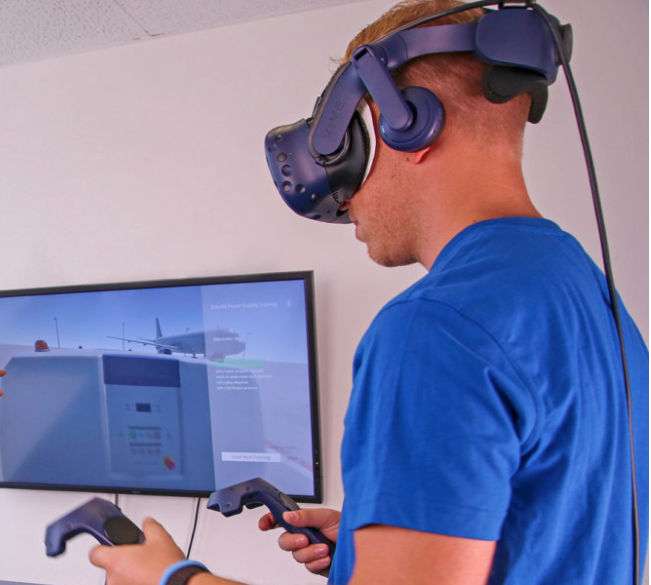
Innoactive Opens Aviation VR Training Hub at 2 largest airports in Europe
Come meet us at the VR/AR Global Summit Nov 1-2!
Innoactive have partnered with AeroGround Munich & Berlin and Fraport AG to offer the world's first open aviation VR training hub.
Airports from around the world can access best-practice processes and training modules to transform how they train their employees to reach the next level of training excellence and operational efficiency. As of now there are eight VR training applications available, with more still to come.
On-the-job training for ground handling presents many hurdles, such as security clearances, weather conditions and aircraft availability. Using VR to bring the usual personnel training from the airports’ “apron” directly into the classroom is an obvious preferred method, as it saves time and money while allowing trainers to prepare more potential staff in a highly engaging way.
Read more about how you can become part of the transformation.
Website URL: https://innoactive.de/aviation-vr-training-hub/
VR/AR Global Summit to Bring World-Leading Technology and Global Experts to Canada on Nov 1-2 (Press Release)
For more info and tickets see www.vrarglobalsummit.com
November’s event will feature speakers such as Heidi Buck of the US Navy and Sergio Paolantonio of Hasbro, and showcase over 100 Augmented and Virtual Reality demos
VANCOUVER, British Columbia, Oct. 08, 2019 (GLOBE NEWSWIRE) -- The VR/AR Association (VRARA) today announced its program of over 120 global speakers that will be featured at its flagship summit, hosted in Vancouver on November 1st and 2nd 2019. The lineup, which includes both panelists and keynote speakers, will deliver compelling insights on the current state and future of Virtual Reality and Augmented Reality and its impact on specific industries such as enterprise, education, defense, entertainment and healthcare.
“VR/AR may seem like just a game to some, but in reality, it is having an impact on almost every area of our lives, allowing us to engage with our environment on an entirely new level. This technology has now been used in everything from Viacom’s groundbreaking AR Show for Missy Elliott’s MTV Vanguard! Award to the US Military’s cultural sensitivity training for overseeing troops,” said Nathan Pettyjohn, Founder and President of the VR/AR Association. “The world-class group that will come together in Vancouver shows how diverse and boundary-pushing the industry is becoming - any company in VR or AR tech that has their sights set on growth should be at the event ready to collaborate and share their ideas.”
This year, the lineup is purposefully split almost equally between men and women. Undeterred by stats that state only 16% of women have tried VR as opposed to 30% of men, the VRARA is trying to keep this industry not only inclusive but a leader in celebrating and furthering the progress of women in tech. To mark this commitment, Co-Chairs, Anne-Marie Enns and Sophia Moshasha will launch the VRARA Women’s Committee at this year's summit.
With over 120 speakers, highlights include:
Heidi Buck, a member of the US Navy and the Founder and Director of the Battlespace Exploitation of Mixed Reality Lab at SPAWAR Systems Center, Pacific
Charlie Fink, VR/AR consultant, speaker and Forbes columnist
Ross Finman, Head of AR at Niantic
Cathy Hackl, the #4 Top Technology Voice on LinkedIn and a part of Enterprise Strategy at Magic Leap
Sergio Paolantonio, Director of Augmented Reality, Voice Experiences, Design and Development at Hasbro
The event, which will feature two days of workshops, panels, keynote presentations, demonstrations, exhibits and more, aims to not only educate attendees on the far-reaching practical applications of VR/AR but also explore the newest trends and creative expressions that are possible with these technologies. An example of this is a just-released augmented-reality experience, that allows attendees to harness unexpected powers right in the middle of the exhibition floor.
The 2019 Summit sponsors include companies at the forefront of this technology such as Microsoft, Lenovo, Niantic and Viacom among others.
To learn more about the 2019 speakers please visit https://www.vrarglobalsummit.com/speakers
To register for a ticket please visit https://www.vrarglobalsummit.com/tickets
About the VR/AR Global Summit
On Nov 1 & 2, 2019, in Vancouver, the VR/AR Global Summit will bring together industry frontrunners from around the world to discuss the present and future of immersive technologies. This world-class conference and expo will welcome 1000+ Executives, 120+ Speakers and 50+ Exhibitors from leading companies like Lenovo, Niantic, Microsoft, Viacom, and so many more. With over 230 companies active in VR/AR, Vancouver is the 2nd largest immersive ecosystem in the world. This is the 4th time the show is happening in Vancouver and this year’s Global Summit will have a strong focus on immersive interaction design.
About the VR/AR Association
The VR/AR Association (The VRARA) is an international organization designed to foster collaboration between innovative companies and people in the virtual reality and augmented reality ecosystem that accelerates growth, fosters research and education, helps develop industry standards, connects member organizations and promotes the services of member companies.
Media Contact
Sasha Yeomans
sasha@talkshopmedia.com
6046903509
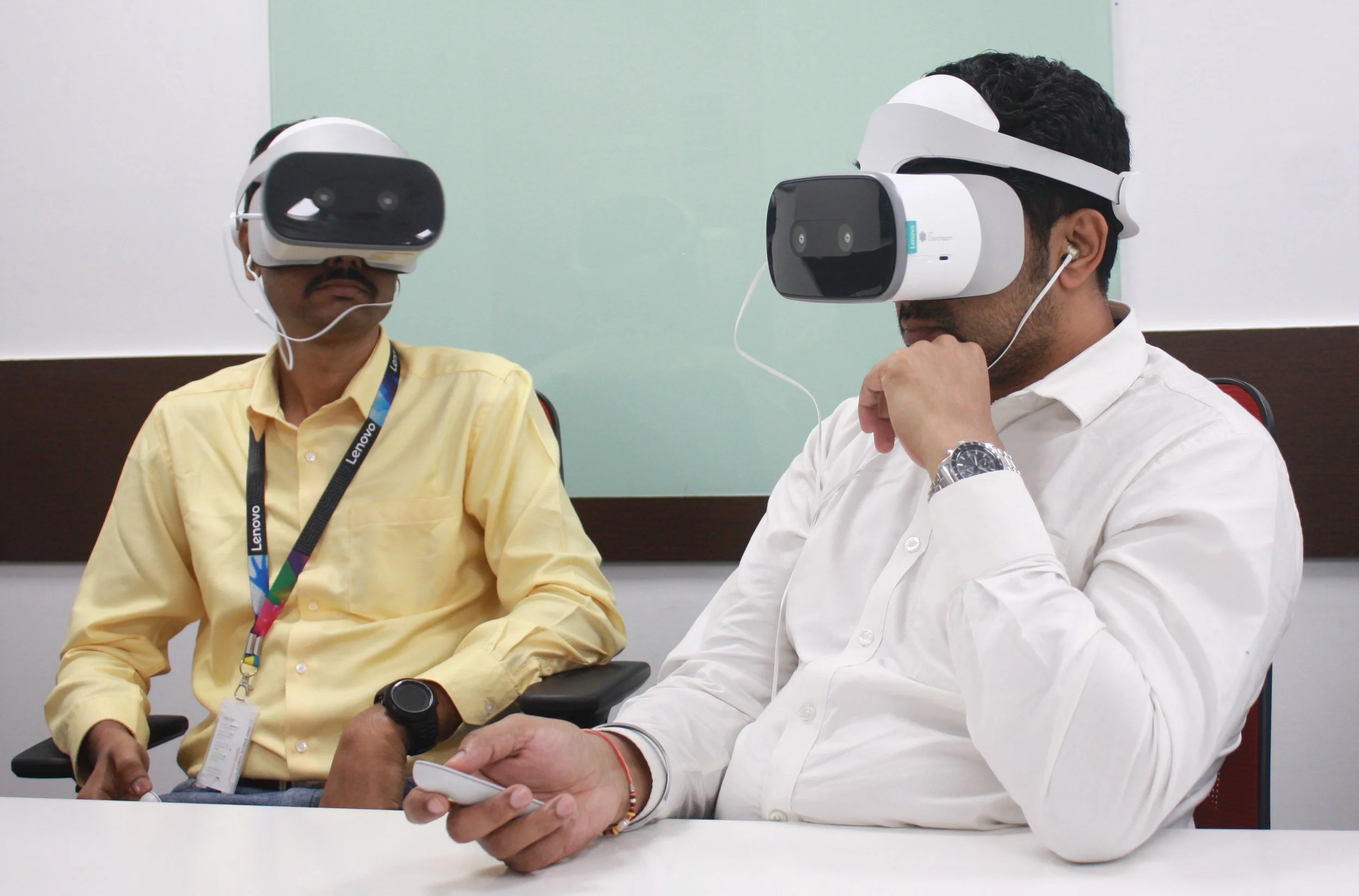
Transforming Employee Onboarding with Virtual Reality. New employees retain information 2x more using VR!
Come meet us at the VR/AR Global Summit Nov 1-2!
New employees retain information after a VR experience two times more than after viewing video or text-based learning materials.
An unforgettable onboarding experience for employees is the crucial first step to a successful and productive career. This is why Lenovo is digitizing and transforming employee orientation with its own virtual reality (VR) Mirage Solo headsets.
“Onboarding new employees is too often synonymous with long meetings and information overload. With VR, however, employees take control of the onboarding process, with a rich, immersive onboarding experience. At Lenovo, we want to bring the benefits of smarter technology to all, and there’s no better place to apply this vision than within our own company. Using VR for smart onboarding is how we walk the talk when it comes to the intelligent transformation of business,” said Subhankar Roy Chowdhury, Executive Director, Human Resources Asia Pacific, Lenovo. “Virtual reality opens up a world of possibilities for a new joiner to experience intelligent transformation from Day One.”
“Smarter” onboarding, introduced for the first time at Lenovo to employees in Asia Pacific this month, includes the full Lenovo Theater of company video training content, adapted for VR, as well as a 360-degree video that introduces new employees to Lenovo’s management team in living color. The goal of smarter onboarding is not to replace current orientation with a virtual reality solution, but to enhance the experience with VR. “We wanted to create a “wow” experience for employees,” said Sachin Kinagi, Learning Manager at Lenovo.
By adding VR into the onboarding mix with Lenovo’s Mirage Solo headsets, Lenovo has significantly enhanced the new employee onboarding experience, and improved the productivity of new joiners by helping them integrate faster into the organization and better retain what they have learned. Research shows that memory retention after a VR experience is two times higher than after viewing video or text-based learning materials.
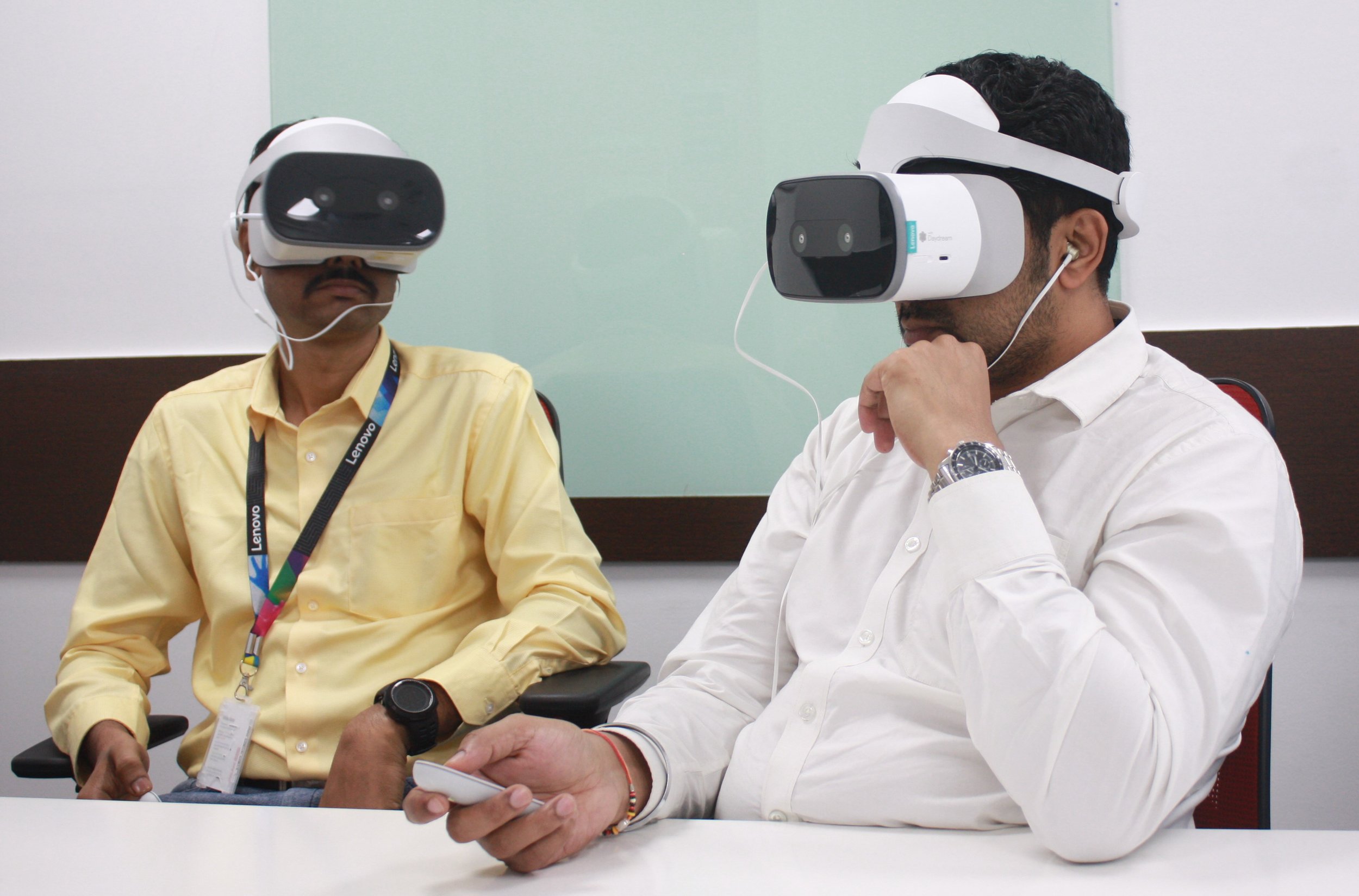
New employees in Asia Pacific learning about Lenovo and its culture with virtual reality Mirage Solo headsets.
“I felt completely immersed in the VR world, which made it easy to concentrate, pay attention and remember information,” said Shashank Charati, who recently joined Lenovo as an Account Manager and participated in the company’s first VR orientation session.
VR can also provide an alternative for new employees or management team members who are not personally able to attend the orientation. “Many times, when we have onboarding sessions, the market general manager or segment leader is not available for the session,” continued Kinagi. “VR is a great opportunity for us to fill that gap and ensure employees hear from our leaders even when they are not physically there.” Anytime, anywhere onboarding allows new joiners to proceed at their own pace, time and location – taking “on-demand learning” to the next level, “on-demand onboarding.”
When employees complete their VR-enhanced orientation, they feel more empowered, excited and motivated about the company. “After experiencing VR, I did feel even more excited about working at Lenovo and being a part of the journey toward ‘Smarter Technology for All,’” continued Charati.
At the same time, by using VR during orientation, new Lenovo employees are quickly able to accustom themselves to the company’s product and better understand company vision.
Following the success of its pilot program in India, Lenovo in Asia Pacific plans to roll out VR onboarding to its offices and sites in other markets. For example, in the virtual world a new employee joining in Vietnam will be able view Lenovo’s massive data centers around the globe, take a tour of the corporate headquarters in Beijing, or visit a factory in Shenzhen. Lenovo will also share its experience with corporate customers who are interested in using Mirage Solo VR for their own onboarding solutions.
Source:
Transforming Employee Onboarding with Virtual Reality | Lenovo StoryHub
https://news.lenovo.com/transforming-employee-onboarding-with-virtual-reality/

Three Advancements for a Seamless Future in VR. Plus, VIATechnik's collaboration with Virgin Hyperloop One
Come meet us at the VR/AR Global Summit Nov 1-2!
By Michael Fontana, Senior VDC Engineer, VIATechnik

Testing a virtual environment through VR. Photo: VIATechnik
Over the last few years, one of the biggest questions looming over the discussion of VR has been user adoption: "When will VR become a viable platform?" Development of VR hardware has advanced significantly, service platforms have been built around that hardware to deliver content to users, and yet it still seems that VR is a cumbersome (and expensive) endeavor.
This problem is especially acute for industries like AEC which rely heavily on visual content to deliver experiences and information. Professionals in these industries understand the symbiotic relationship between tools and design--that each has great potential to drive the development of the other--and so the problem for us is not just the experience of using the hardware, but the limitations that currently poses for our ability to design and communicate our ideas.

The Virgin Hyperloop One test site simulated in a gaming engine. Photo: VIATechnik
In tandem with this, the AEC industry continues to push towards ever higher levels of interaction and fidelity through visual mediums. VIATechnik has witnessed this drive first-hand through many of our projects. One in particular--our collaboration with Virgin Hyperloop One--incorporates scales of simulation beyond most traditional applications: anything from small bolts and wires to the entire surrounding topographic region. As these applications of 3D rendering become more dominant in the AEC industry, the scales of simulation will become more advanced and intricate as well, requiring greater degrees of computational power and sensory experience.
Beyond the “Trough of Disillusionment”
The emergence of Virtual Reality (VR) has been able to sustain this increase rendering demand to a point. It has crossed over from obscure niche technology to mainstream applications, and there is no longer a question of whether it will become viable; instead, we must ask what it will look like when it does. We can look to three particular developments in the near future which suggest that VR accessibility will become significantly more seamless, allowing the medium to meet these demands: First, networked VR environments will become much more commonplace, allowing users to collaborate remotely. Second, these environments will begin migrating to the cloud, reducing the need for powerful, on-site computation. And third, the deployment of 5G network technologies will increase data transfer and reduce latency, eliminating many of the noticeable limitations of streaming applications.
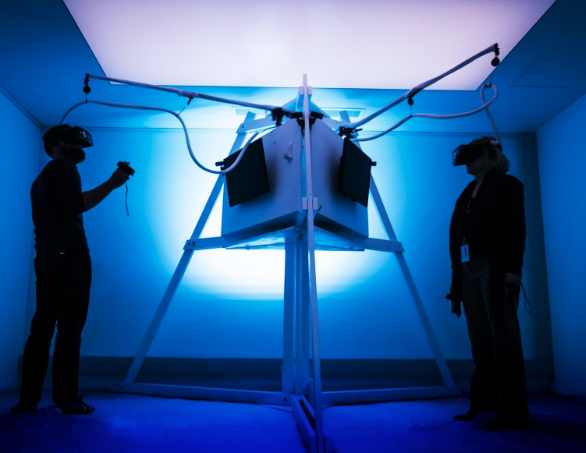
Many current VR applications are still restricted by hardware tethering. Photo: Stella Jacob
Environments Begin to Talk
Those users who have set up a high-end VR experience are familiar with some of the existing constraints: in addition to the cost of workstations powerful enough to run VR applications, most traditional VR setups require the use of a proprietary tethered headset. Further, much of the work done in the AEC industry requires high levels of visual fidelity, which in turn requires significant amounts of data storage and throughput, meaning that the headset cannot be easily untethered from this workstation.The obvious restriction here is mobility - a few feet of cable and a room-scale boundary does not permit much of a spatial experience, and removing this barrier requires the purchase of additional Wi-Fi adapter hardware. Moreover, only one user at a time can be “in” a VR space, limiting our ability to use a shared experience to communicate. Many products currently on the market have taken a first step to alleviating this problem by allowing the local environment to communicate over the internet with other users. Like a multiplayer video game, each player owns and runs a copy of the game on their system while certain information is coordinated across the internet to create a shared experience. This enables remote VR collaboration with one big caveat - each end user still needs the requisite costly hardware to run the VR application locally. In other words, the environment is more accessible but the interface with that environment is not.

Remote servers may replace the need for high-end graphics processing that many VR applications require. Photo: Torkild Retvedt.
The Data Center Is Your Platform
New advancements in the gaming industry mitigate this problem through cloud-based streaming. Under this model, VR environments--which would ordinarily be run locally on the user’s computer--are instead hosted on powerful cloud platforms. These platforms will offer both high-end graphics processing as well as the ability to scale with users. The end user merely needs a headset that can stream the images and audio from the server. Put another way, like visiting a website, the end user’s workstation only needs to connect to the virtual environment, not contain it. Stadia, Google’s new cloud-based gaming platform, proposes this exact model through a subscription service to subvert the traditional purchase of expensive gaming consoles and game titles. Nearly any modern workstation can participate in Stadia by streaming games from the cloud and players can connect from anywhere at a fraction of the cost of a traditional console and game library. It is not a stretch, then, to think that we will begin to see the same standard emerge in AEC applications.
5G: When Networks Become Invisible
For VR to reach peak adoption, it must be able to be accessed by and streamed to numerous mobile devices at high resolution with ease. The introduction of 5G connectivity across mobile broadband is expected to solve this by dramatically increasing bandwidth while shrinking latency. This is a crucial step in eliminating the framerate loss and input latency that can cause negative physiological reactions in users. Currently, some desktop and mobile applications can achieve this, and with the proliferation of connected devices coming with 5G technology, we are sure to see further strides in this area. From the user’s perspective, the typical visceral aberrations of networked applications--things like input lag, slow download speeds, and buffering glitches--will seem to disappear.
The maturity of a platform can be measured by how seamlessly it integrates into our daily lives. While several of these friction points still remain, doubts about VR’s potential have largely been answered: It is now clear that VR and other Mixed Reality interfaces will dominate as the next platform for visually-driven content. The question is no longer “will it be viable” but rather “what will viable look and feel like”. Looking to our existing devices and the advancements that have been made in connectivity, we can begin to understand that VR will become part of this family, offering users the ability to experience content and share information across multiple platforms. Content distribution and collaboration services will be built with seamlessness as a priority, driving greater numbers of users into their ecosystems which will in turn provide the demand for content and application marketplaces. For the AEC industry, then, what is left for us to consider is how we prepare for this future: What will we do with these new capabilities and what impact do we hope to have that was not possible before?
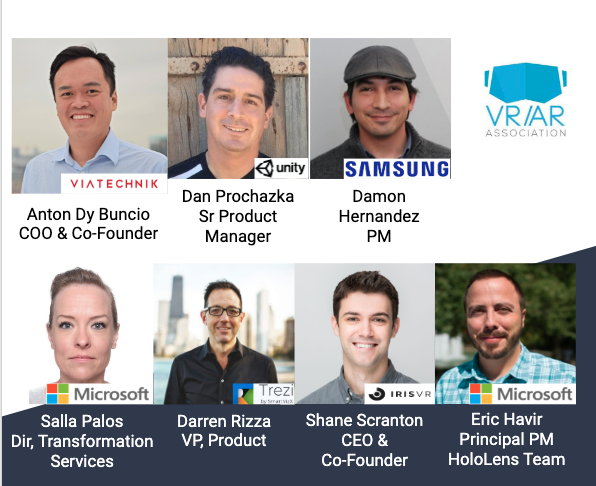
Join 200+ live Tuesday Oct 8th 12pm EST for our AEC Expert panel with Microsoft, Samsung, Unity, VIATechnik, others
Come meet us at the VR/AR Global Summit Nov 1-2!
The VR/AR Association's AEC industry Committee will present the latest case studies and innovations.

