

Question What’s Real™ Names Darshan Lama as its Chief Commercial Officer
Darshan Lama, who was previously working with Expedia, driving their XR initiatives, has been appointed as the Chief Commercial officer by Question What’s Real™, an immersive technology upstart. In his new role, Darshan will be overseeing the objectives and implementation of all commercial strategies, leading programs, partnerships & project management along with supporting integrated sales & marketing activities at QWR.
Mr Suraj Ravi, CEO & Founder, QWR, said, “The value that Darshan brings to our team, is that of what manure does when a plant is maturing to a tree. We need strong branches, roots & trunk. Thank you Darshan for entrusting us.”
“It’s the amalgamation of Suraj’s vision for QWR and the sheer energy, dedication and the vast knowhow of the XR industry that he possesses got me excited. The nimble and agile nature of the operations and a clear path ahead in terms of what they want to achieve and my role in it sealed the deal”, shared Darshan Lama, CCO, Question What’s Real™ (QWR). He further added, “I’m very optimistic about the potential and future success of XR in redefining how human computer interaction will evolve. Spatial computing is the way forward and we are at the cusp of that transition wherein we are already seeing some real traction. This would open new doorways for our youth, in terms of immersive learning, entertainment, content creation and distribution, generating more jobs and further boosting our economy. And while everyone soon will be engulfed in this new epoch, I want to be riding this new wave instead of watching it from the shores.”
Darshan brings over 15 years’ experience in technology, AR, VR, customer support, sales, with expertise in XR Development & it’s real world applications. He has worked with some of the most well-known fortune 500 companies including AOL, Dell, Yahoo, Microsoft, Nestle & Expedia. An avid gamer, an aspiring speed-cuber, Darshan is an emerging tech enthusiast who wants to make the best of technology accessible and affordable for the masses in India.
Contact:
Name: Sanan Goyal
Email Address: sanan@questionwhatsreal.com
Website URL: http://questionwhatsreal.com
Microsoft selects AVATAR Dimension for East Coast Mixed Reality Capture Studio Company
Will Feature Latest Technology to Serve Government and Business
Microsoft has selected Avatar Dimension, a partnership of three well-established technology companies, as the exclusive licensee for its volumetric capture technology in the Washington, D.C. area. After a rigorous testing process, Microsoft Mixed Reality Capture Studios certified the new studio which is now ready to enter into full operation.
Avatar Dimension builds on the strength of Avatar Studios of St. Louis, Dimension Studio of the UK and Sabey Data Centers of Seattle and will operate from a brand-new studio in Ashburn, VA located within Sabey’s Intergate Ashburn data center complex.
Utilizing Microsoft’s best-in-class software and the brand new “Volucam” cameras from IO Industries, the company will create holographic and volumetric content for government, business enterprises and immersive agencies, with a special emphasis on immersive and mixed reality training.
At the VR/AR Global Summit last week, Avatar Dimension hosted a panel including Microsoft and other experts entitled, “Moving Virtual Mountains: The Tipping Point that will Catapult Volumetric Capture to Mass Adoption.”
Volumetric capture turns humans and objects into holographic 3D images that look real from any 360-degree angle. There are rapidly growing commercial and enterprise needs to blend the physical world with digital to serve their customers, ranging from enterprise life-like training taught anywhere on the planet; health care for advanced learning; military; entertainment of all kinds; and more.
Avatar Dimension opens doors in the coming months in the Washington D.C. area to serve the east coast and other global needs. The choice of Washington D.C. puts the studio near enterprise, military centers, health care companies, and entertainment.
“Avatar Dimension is built on decades of experience for leading brands,” explains Dennis Bracy, CEO of Avatar Dimension. “Our studio results are realistic and engrossing. For enterprise operations looking for truly innovative ways to have a meaningful effect with their audiences, this is the future.”
“We're thrilled to be partnering with Avatar Studios and Sabey Data Center to launch an East Coast studio. Volumetric capture is essential for powerful new virtual experiences across all categories. From the Madonna holograms we created for the Billboard Music Awards to the Covid training created for the UK's National Health Service, volumetric and real-time technologies are raising the bar for user engagement, with new possibilities emerging every day,” said Simon Windsor, Co-Founder and Joint Managing Director of Dimension.
Avatar Dimension safely built the stage and met deadlines despite COVID-19, relying heavily on remote tools, including Microsoft’s Hololens2. Mixed reality capture may become even more essential given how the virus restricts large groups gathering for production. The studio practices safe shooting in adherence to local guidance, with protocols that include adherence to social distancing rules, strict use of PPE and regular temperature checks by a medic on set.
CONTACT:
Andrea Sausedo Piotraszewski
Andrea@zebrapartners.net
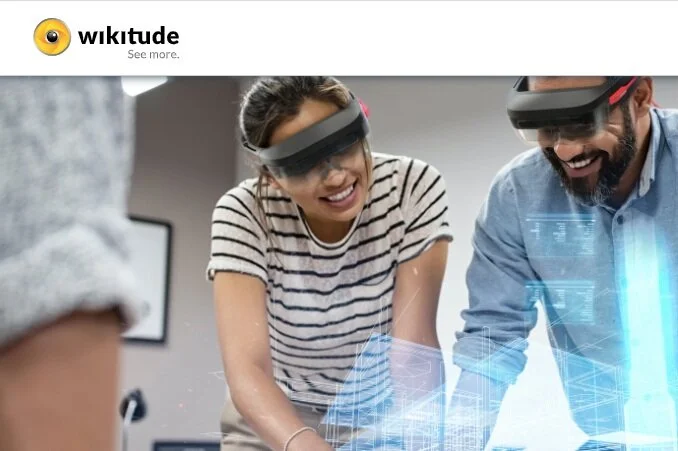
Shaping the future of enterprise XR solutions: Wikitude reaches a new milestone in collaboration with Lenovo
Austrian developed technology to power Lenovo’s ThinkReality A6 Augmented Reality head-mounted display
Wikitude announce achieving a milestone in providing joint integrated AR solutions for the enterprise space with Lenovo. Lenovo’s ThinkReality A6 Augmented Reality head-mounted display will now deploy Wikitude image and object recognition technology. This integration marks a full adoption of enterprise-grade AR solutions that will shape the future of work and training for industries worldwide.
ThinkReality is the Lenovo brand for commercial augmented and virtual reality solutions. It combines hardware and software solutions to help customers adopt, implement, and manage commercial AR and VR programs to accelerate the adoption of immersive computing in the enterprise. ThinkReality was created to support global industries such as manufacturing, AEC, and more to adjust to new challenges in closing the skilled workforce gap and optimizing enterprise workflows. The ThinkReality A6 AR headset includes inside-out 6DoF tracking to optimize AR experiences and enable industrial versatility. This mobile device is designed to help the workforce use AR applications to receive expert assistance, reduce repair times, decrease errors, streamline complex workflows, improve training quality, and save costs. For more information on this solution, visit Lenovo’s website.
“Lenovo focuses on intelligent transformation for the enterprise to create better experiences and opportunities for customers around the world,” says Nathan Pettyjohn, Commercial AR/VR Lead at Lenovo. “We are dedicated to making it easier than ever to build, deploy, and manage AR and VR solutions because they seamlessly enhance end-user collaboration and productivity.”
Austrian-based company Wikitude pioneered the augmented reality (AR) industry by launching the world’s first AR-powered mobile application in 2008. Today, Wikitude leads the computer vision and spatial computing sectors with its augmented reality technology optimized for smartphones, tablets, and smart glasses. Achieving a new milestone in integrating the company’s computer vision technology in Lenovo’s head-mounted displays marks another step in realizing Wikitude’s vision to provide enterprise-grade AR solutions for clients worldwide.
“We’re excited to achieve a new milestone in our collaboration with Lenovo. Wikitude’s pioneering solutions in image and object tracking reinforce Lenovo’s hardware, allowing the integrated solution to be an optimal choice for implementing AR in the enterprise”, says Martin Herdina, Wikitude CEO. “Accelerating the speed of AR solution adoption through this unique partnership is a significant step for the industry in optimizing distributed workforce and solving the productivity gaps enterprises are facing in times of a global pandemic.”
Augmented reality as a technology has seen a drastic change in perception within the last year, with COVID-19 catalyzing its shift from the emerging technology status quo to the go-to technology, quickly adopted by enterprises and industries. According to the Gartner Hype Cycle, AR has matured so rapidly that it can now be considered entering the mass adoption phase. IDC estimates the worldwide spending on AR/VR to reach $160 billion in 2023, with the five-year compound annual growth rate for AR/VR spending reaching 78.3%. Training and industrial maintenance are forecasted to receive the largest investments in 2023, with an estimated $8.5 billion investment and $4.3 billion accordingly.
About Wikitude:
Wikitude® is an augmented reality (AR) pioneer and leader in the Computer Vision and Spatial Computing industries with its AR technology optimized for smartphones, tablets, and smart glasses. Powering over 1 billion app installations, Wikitude is trusted by enterprises, agencies, and developers in more than 180 countries as the go-to AR technology partner for innovation and business solutions. For more information, visit www.wikitude.com or find Wikitude on Twitter, Facebook, or LinkedIn.
For further information, please contact:
Wikitude
Paula Perrichot, Head of Marketing
+43 676 8408 56333
paula.perrichot@wikitude.com
LENOVO and THINKREALITY are trademarks of Lenovo.

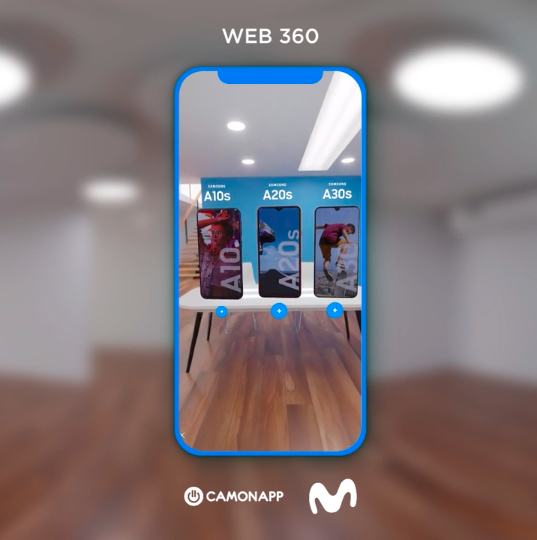
New realities for retail: virtual stores! See Telefónica Movistar as an example.
To present new mobile devices in an innovative way, immersive experiences were activated in Movistar customer experience centers, the major telecommunications brand owned by Telefónica.
Outside and inside the stores, graphics with QR codes invited customers to discover the new available mobile phones. Through a 360° web experience users can test different devices models, see their functionalities and obtain more details of their technical characteristics.
This project aims to improve a user’s shopping experience from the moment they enter into the stores looking for newly options. Augmented Reality is used to create virtual product testers in 3D of the mobile phone models that are offered. These initiatives represents a great opportunity to improve customer service while innovating advantages for sales teams.
Also, allows transforming advertising campaigns into interactive experiences, providing users extra content as they scan any graphic in offline media or enter trough links in social media or e-commerce platforms.
Another advantage is that as virtual product testers are implemented, stores spaces for inventory and storage are reduced. In addition, these experiences encourage users to try products in their homes or any place outside the store without incurring in logistics costs or wasting time returning them.
Contact:
Name: Florencia Moltini
Email Address: florencia@camonapp.com
Website URL: http://www.camonapp.com

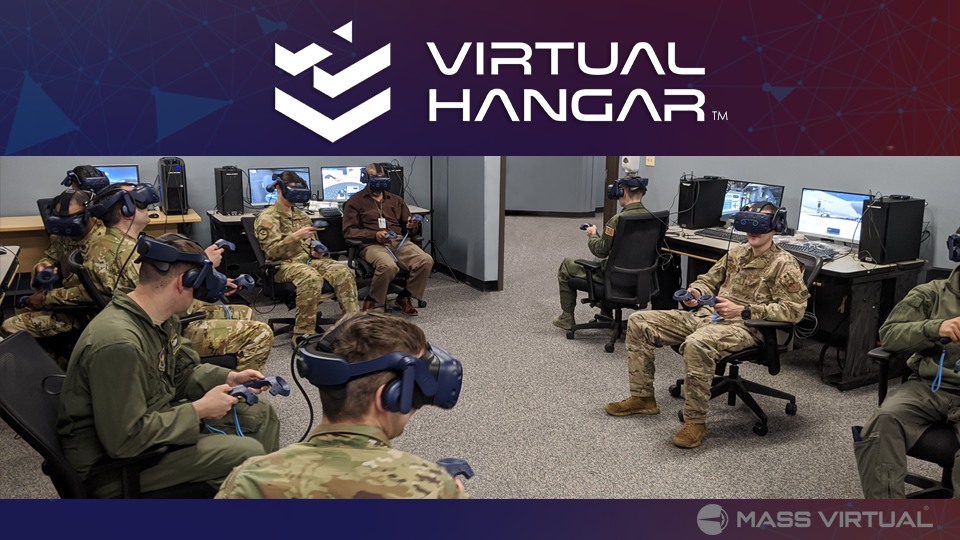
Mass Virtual Receives $59 Million, Five-Year USAF Contract
Mass Virtual has been awarded a five-year, $59 million firm-fixed-price requirements contract to provide virtual training in partnership with the USAF Integrated Technology Platform (ITP). The first orders in the amount of $8.1 million are scheduled to be completed by end of FY 2021.
The Mass Virtual team is thrilled to continue innovating and supporting the Air Force vision for virtual, augmented and mixed reality with its Virtual Hangar™ enterprise platform, delivering vital training on more than 20 aircraft platforms to our Nation’s warfighters stationed around the world.
Mass Virtual was awarded an Other Transaction Authority agreement for Prototype on September 20, 2020 as a result of a Pitch Day at the Advanced Technology and Training Center in Warner Robins, GA. This contract is the result of a sole source award to that OTA and will provide for virtual aircraft real-time task manual instruction, simulating real workspaces for occupational safety and health, educational and training purposes throughout the Air Force.
For information about Mass Virtual or to learn more about joining our team, please visit us at www.massvirtual.com.
Contact:
Name: John Brooks
Email Address: admin@massvirtual.com
Website URL: http://www.massvirtual.com
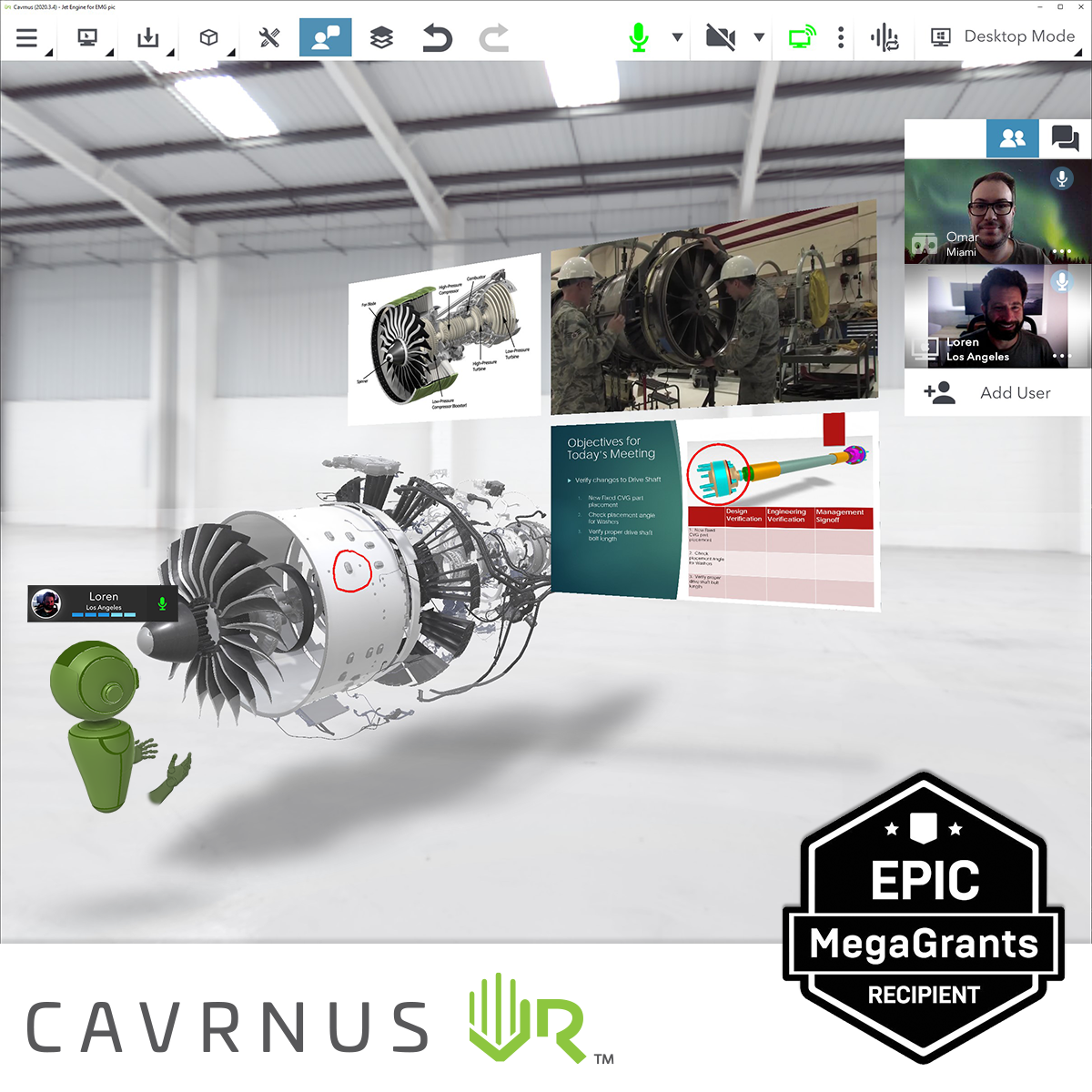
Cavrnus has received an Epic MegaGrant for their Spatial Collaboration Platform!

Cavrnus has received an Epic MegaGrant! The grant will support the development and extension of the Cavrnus platform into the Unreal Engine ecosystem. Cavrnus, combined with the power of Unreal Engine, will enable interactive experiences with subtle lighting effects including soft shadowing for area lights, true reflections and refraction, accurate self-shadowing, and interactive global illumination. This enables customers to make better decisions, more quickly, in a context approaching reality.
The Cavrnus™ Spaces spatial collaboration software platform is the industry’s most intuitive and comprehensive for enterprise XR immersion and collaboration for training, engineering, operations, planning, and selling across a wide variety of markets. Now with the incorporation of the Unreal Engine, Cavrnus RT will raise the bar significantly in terms of the amount of data in a scene, rendering quality, and delivering true representations at any scale.
For unconstrained rendering and visual quality, Unreal Engine offers a set of unique and differentiated features and capabilities such as extensible programmability as well as real-time ray tracing global illumination and ambient occlusion. The Cavrnus team, having built a world-class production visualization engine (Bunkspeed, now Solidworks Visualize), is in a unique position to maximize the capabilities of UE.
The VR/AR Association publishes an Education Report featuring over 70 companies and startups

Foreword by 3D ORGANON
In this ever-changing world, it is urgent that we respond to the growing demand for a wider range of technology-enhanced curriculum. Eager to respond to this demand, we create3D Organon with the promise to continue to cultivate the dynamics for new learning paradigms and advanced medical education.
Based on our experience as qualified medical professionals, we can help healthcare focused audiences land on the best solutions to craft their own use case scenario and make the most out of edge virtual reality (VR) technologies.
Available in VirtualReality (VR), MixedReality (MR),Augmented Reality (AR), desktop, tablet, and mobile devices, 3DOrganon turns into the most advanced Extended Reality (XR) anatomy platform. Given that the world is witnessing one of the most pivotal moments in the last few decades the unhindered delivery of education seems to be more than imperative. We are ready to address the arising challenges regarding the new reality created due toCovid-19. This is a momentous occasion to overcome limitations and benefit from the high value potential enabled by virtual reality technologies.We can guarantee continuous delivery of healthcare education in safe environments in real time that suit both on-campus and remote users.
We have focused on driving anatomy to new levels and allow a broad spectrum of health professionals, practitioners, educators and learners to access our meaningful learning content from their own devices regardless of their location. By supporting various forms of online learning modalities we facilitate profound understanding of the functions of the human body, through an extensive knowledge-base of anatomical definitions and a plethora of highly-detailed 3Dmodels offered. Our app covers more than 10,000anatomical structures organized in 15 body systems, and over 550 detailed animations of body actions of muscles and organs all of which add significant value to the medical and healthcare education.
Users are free to toggle between body systems, view, review, hide or fade structures, run interactive clinical anatomy quizzes, self directed study, and communicate queries with text and voice chat systems. Under the circumstances enabled by immersive technologies, sessions facilitate deeper immersion, stronger memory imprints and longer retention.
Hundreds of prestigious institutions, such as universities, hospitals, military units, associations, museums, libraries, and high schools have entrusted our app to drive leaps in learning. 3DOrganon aims to bring the world closer. For this reason, its extensive knowledge-base of anatomical definitions is available in 15 languages: English, traditional and simplified Chinese, German, Italian, Spanish, Georgian,Polish,Portuguese, Latin (terminology), Russian, Ukrainian, French, Greek, and Thai.DeepQ, the healthcare department of the tech giant HTC and a strategic partner of3D Organon, has the exclusive distribution of the platform in the Asia region to turn the dream into concrete reality.
Despite the restrictions imposed by the pandemic, we can offer the requisite building blocks for optimized learning and training possibilities with minimized costs. A virtual reality ecosystem seems to be the safest conduit to predict a brighter outlook for medical education.
We had better not miss out on the opportunity.
Virtually,
Dr. Athanasios Raikos
CEO, 3DOrganon
Dr. Panagiota Kordali
Director, 3DOrganon

Luxexcel prepares for next phase of growth in smart glasses market with individualized specifications such as prescription power
Pioneer in 3D printing of smart prescription lenses strengthens its leadership to support customers to make smart eyewear products that address vision correction.
Eindhoven – 23 September 2020 – Luxexcel introduced its volume manufacturing solution to 3D print smart prescription lenses to the smart eyewear market, and has subsequently strengthened its leadership team to support this move. The company is now geared to enable high-tech companies to make a better smart eyewear product while at the same time, addressing the vision correction needs of their customers.
Fabio Esposito, Chief Executive Officer at Luxexcel says, “Our mature volume manufacturing solution enables our customers to combine prescription with smart technology to create regular-looking lenses with advanced smart features, yet personalized to the user’s prescription requirements. The platform is scalable and offers the flexibility to create large volumes of products with individualized specifications, such as prescription power.”
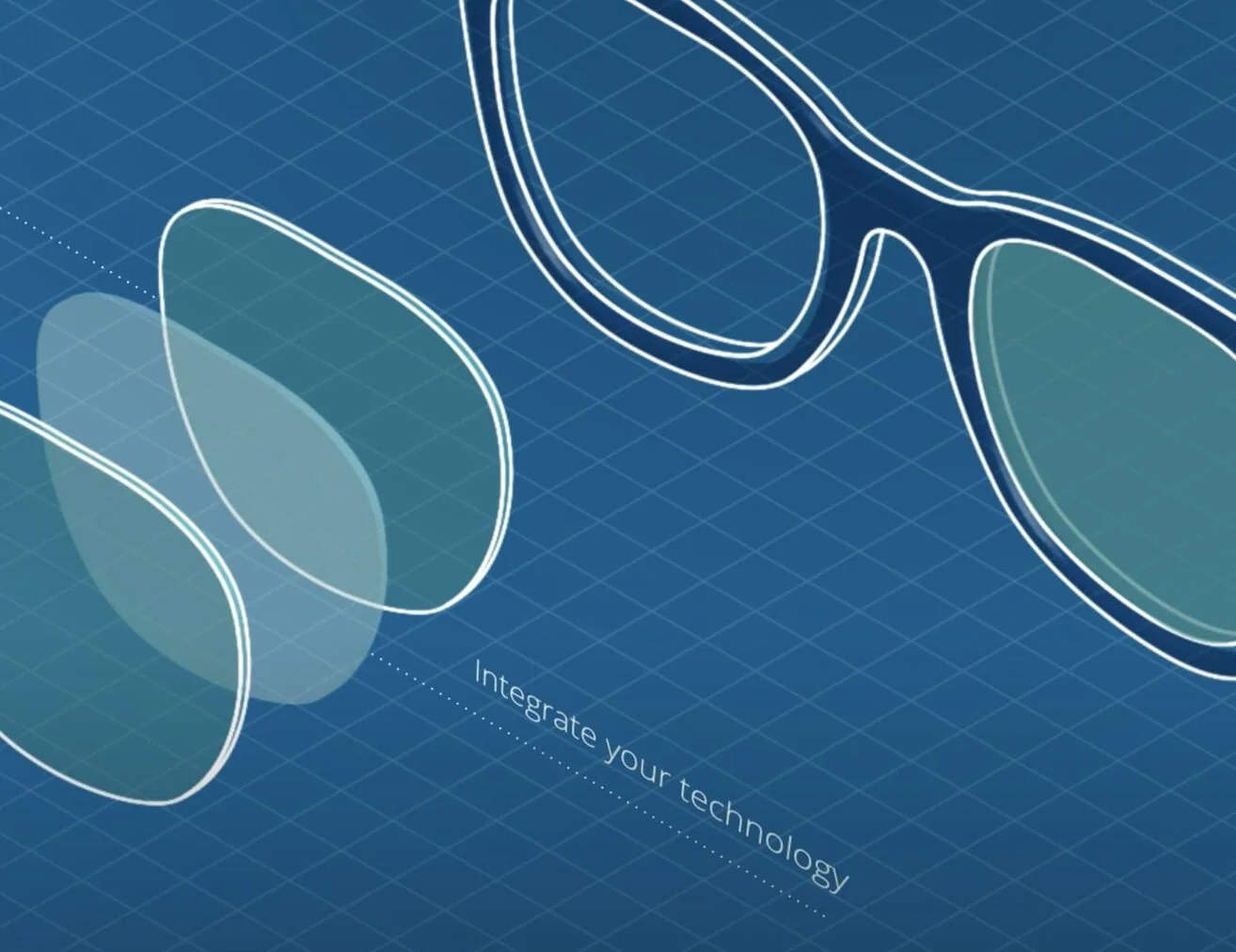
Luxexcel’s 3D printing solution encompasses proprietary hardware, material, and software. The 3D printing solution prints on different materials, including various plastic and glass types, and also fulfills customers’ airgap requirements. As a result, smart devices such as waveguides, holographic films, and LCD screens are embedded inside a lens and prescription power is printed on top or around it. The result is a lens with embedded devices presented as one seamlessly integrated element.
Luxexcel enables smart glasses manufacturers to make a unique device with the patient’s customized prescription resulting in a better visual experience for the user. “The benefit for end-users is that they no longer need to wear their prescription glasses underneath their smart eyewear goggles. They can now experience both corrective vision and augmented reality in one single product,” says Esposito.
Esposito continues that Luxexcel’s leadership team consists of all the skills required to help customers bring smart products to the eyewear market. The leadership team includes:
Fabio Esposito is the Chief Executive Officer and leads Luxexcel, as the first company globally to 3D print smart prescription lenses, to strategic, financial, and operational growth.
Guido Groet is the Chief Strategy Officer responsible for strategic relationships with high-tech companies and strategic investors aiming to customize Luxexcel’s unique 3D print technology.
Joost van Abeelen is the Chief Product Officer responsible for material, hardware and software development and 3D printing strategies, developing the world’s first commercial 3D printing platform for smart prescription lenses.
Alexander van der Touw is the Chief Financial Officer and uses his expertise in finance and investments to ensure continued market growth in the smartwear market.
Xander van Mechelen is the Chief Commercial Officer who supports partners to transition from traditional eyewear to the world of 3D printed lenses by creating new go-to-market offerings such as electrochromic prescription lenses.
About Luxexcel
Luxexcel is the only company globally that prints 3D prescription lenses. As a pioneer, we have a unique understanding of the prescription eyewear market. Our in-depth knowledge and expertise help lens designers and manufacturers to create smart eyewear. Our customers expand their offerings with eyewear which corrects vision as well as includes smart-tech features. We do this with our unique patented 3D printing technology that embeds electronics, sensors, and films inside the lens and print prescription power on or around it. The smart tech is fully encased in our unique lens material, as we print. Luxexcel lenses are durable and thin and fit into conventional eyewear. We offer a complete 3D printing volume manufacturing solution which includes post-processes such as printing of hard coating on lenses, and we also address required features such as airgaps on waveguides.
Press contact
Eva Flipse
Marketing Manager
eva.flipse[at]luxexcel.com

8th Wall Introduces Curved Image Targets for Augmented Reality Experiences - No App Required!
Come meet us at the VR/AR Global Summit ONLINE Sept 30-Oct 2
8th Wall Brings Augmented Reality to Bottles, Cans and Cups
First-of-its-Kind Curved Image Target Technology Powers New WebAR Experiences on Food and Beverage Packaging—No App Required

PALO ALTO, Calif.,-- September 22, 2020-- 8th Wall today announced the launch of Curved Image Targets, becoming the only development platform with tools to create web-based augmented reality (WebAR) experiences that are activated by and can interact with cylindrical- and conical-shaped objects. Siduri Wines becomes the first brand to showcase the commercialization of this technology, with its wine bottle-activated experience created by agency Rock Paper Reality.
Curved Image Targets expands upon 8th Wall’s existing image target functionality which was previously only designed for flat shapes. With this update to 8th Wall’s powerful AR engine, developers can now create interactive WebAR experiences using images wrapped around cylinder- and cone-shaped objects such as bottles, cans, cups and more. 8th Wall launched this new feature to meet the demand from consumer packaged goods brands looking to use augmented reality to engage their customers with their product packaging without the friction of downloading an app. Like all of 8th Wall’s AR capabilities, experiences created with Curved Image Targets require no app to download; users simply click a link or scan a QR code to immediately start the experience.
“8th Wall is on a mission to make augmented reality for everyone and to do that we need to be able to augment everything,” says Erik Murphy-Chutorian, CEO & Founder of 8th Wall. “The launch of Curved Image Targets builds upon 8th Wall’s existing WebAR technology which includes World Tracking, Flat Image Targets and Face Effects as we continue to prove that powerful augmented reality experiences can live on the web.”
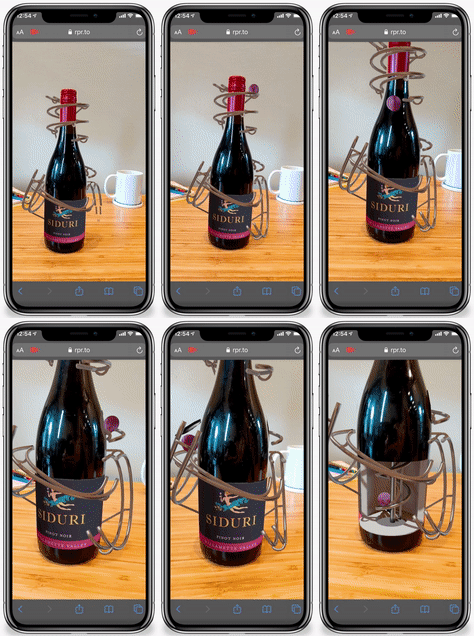
AR design firm, Rock Paper Reality, worked with Siduri Wines to use this new set of tools to create a WebAR experience that interacts with the wine bottle. After scanning the wine label with a smartphone, users watch as a track wraps around the bottle and a grape pops out of the lid and takes a ride before disappearing behind a trap door. Earlier this year, Siduri Wines launched a series of WebAR experiences that featured a volumetric capture of Siduri Founder Adam Lee which used a virtual bottle. This new project was developed to showcase the types of experiences Siduri plans to launch in 2021, which make the real product central to the experience.
8th Wall has made developing with cylindrical and conical image targets simple with a target creation flow that doesn’t require object measurements, tools to immediately test targets without the need to print labels and ready-to-go components that use video and 3D to bring curved image targets to life. Developers can configure multiple target regions on the same product and can choose to combine flat and curved image targets to track the sides and the flat top and bottom of a cylindrical or conical target. They can also integrate external libraries and APIs such as analytics, real-time data feeds and other machine learning libraries within their experiences to create complex and meaningful WebAR projects.
“8th Wall’s new Curved Image Target functionality allowed us to finally create a web-based, AR project that uses cylindrical image targets. 8th Wall’s new technology helped RPR develop a frictionless, augmented reality experience for Siduri Wines, which lets their customers engage with their wine bottles like never before,” says Patrick Johnson, CEO of Rock Paper Reality. “We are continually impressed with the quality and performance of 8th Wall’s AR engine, so much so we have made WebAR a core focus of our business. The addition of Curved Image Targets to 8th Wall’s platform opens up so many new use cases that we are excited to deliver to brands, particularly in the beverage industry.”
8th Wall’s Curved Image Targets are now available to customers at www.8thwall.com. New users can sign up for a 14-day free trial of the 8th Wall platform. Existing users can simply log in to get started using the Curved Image Target project template or cloning one of many sample projects from the 8th Wall Project Library.
About 8th Wall
8th Wall is an award-winning augmented reality platform that harnesses the full power and freedom of the web. Developers use 8th Wall to create rich, interactive WebAR content that works on all devices— no app needed. 8th Wall has powered AR activations for brands across industry verticals including retail, food and beverage, travel and tourism, automotive, fashion, sports and entertainment. Customers of the platform include Sony Pictures, Nike, General Mills, British Gas, Heineken, Swiss Airlines, Toyota, EVA Air, Red Bull, adidas, COACH and more. 8th Wall is headquartered in Palo Alto, Calif. For more information, please visit: www.8thwall.com. Follow 8th Wall on Twitter @the8thWall.
About Siduri
For over 25 years, Siduri has specialized in producing cool-climate Pinot Noir from six major AVAs along the West Coast, spanning from the Willamette Valley in Oregon, down to California’s Santa Barbara County. Their goal is to produce Pinot Noir that best captures the distinct flavor and character of a given vineyard site. To that end, they specialize in Pinot Noir and source only from vineyards that provide exceptional fruit. Siduri’s philosophy is that wine should be a pleasure to drink and that serious wine and serious fun aren’t mutually exclusive. To learn more about Siduri, please visit www.siduri.com and follow Siduri on Facebook, Instagram, and Twitter at @SiduriWines.
About Rock Paper Reality
Rock Paper Reality (RPR) is a veteran Augmented Reality agency that helps companies from startup to Fortune 500s develop best-in-class AR content and strategies proven to drive brand awareness, customer engagement, and revenue growth. RPR’s proprietary AR solutions drive value across the customer journey: from advertising to in-store engagements to post-sales loyalty. RPR’s leadership has worked in the AR trenches for over a decade, won some of AR’s most prestigious awards, and received over a dozen technology patents. Founded in 2017 and based in Silicon Valley and Copenhagen, RPR’s clients include Microsoft, Lenovo, NBC Universal, American Heart Association, Epic Games, and many more. For more information or a free demo of RPR’s proprietary AR solutions, email us today: hello@rockpaperreality.com OR visit us at: https://rockpaperreality.com/.
###
MEDIA CONTACTS:
Tom Emrich
415-990-2341
Jennifer DeFalco

Varjo and KIA Motors: Driving the Future with XR Collaboration in Car Design

Today Varjo and KIA Motors revealed an exciting new use case around the future of automotive design. Leveraging Autodesk VRED’s latest release that just added support for mixed reality through Varjo’s XR-1 device, KIA is among the first automakers to apply these innovative technologies in their design process. This has become particularly relevant in this new era of COVID where the ability to collaborate remotely and reliably with teams across the globe has never been more crucial.
Kia Motors has always been an industry leader when it comes to implementing new and innovative tech in their design process. Now, with Varjo XR-1 supported by Autodesk VRED, Kia’s visualization process can move to a totally immersive photorealistic environment. And that means global design reviews can go from days to an hour.
Photorealistic, real-scale and hands-on – Seeing is believing
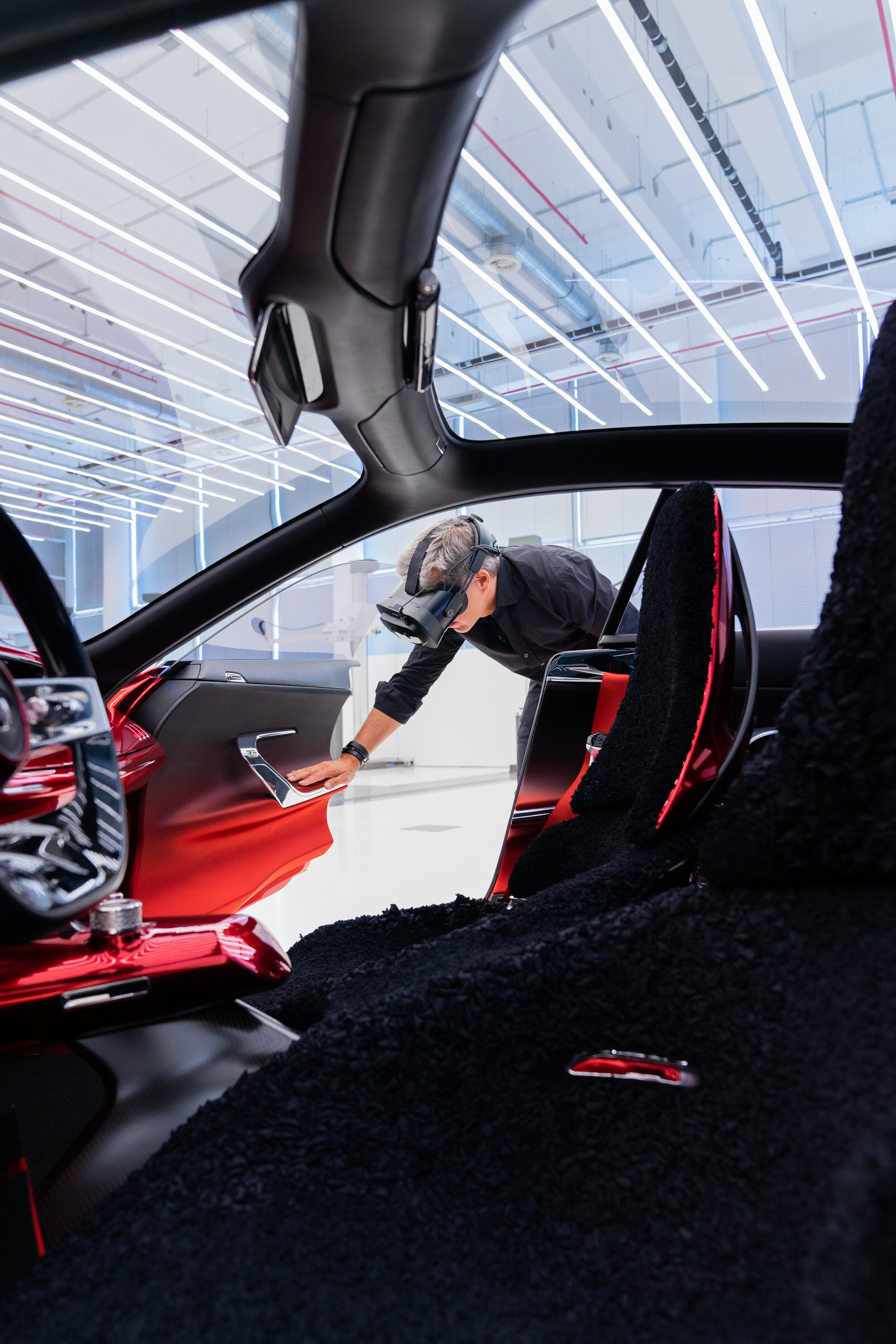
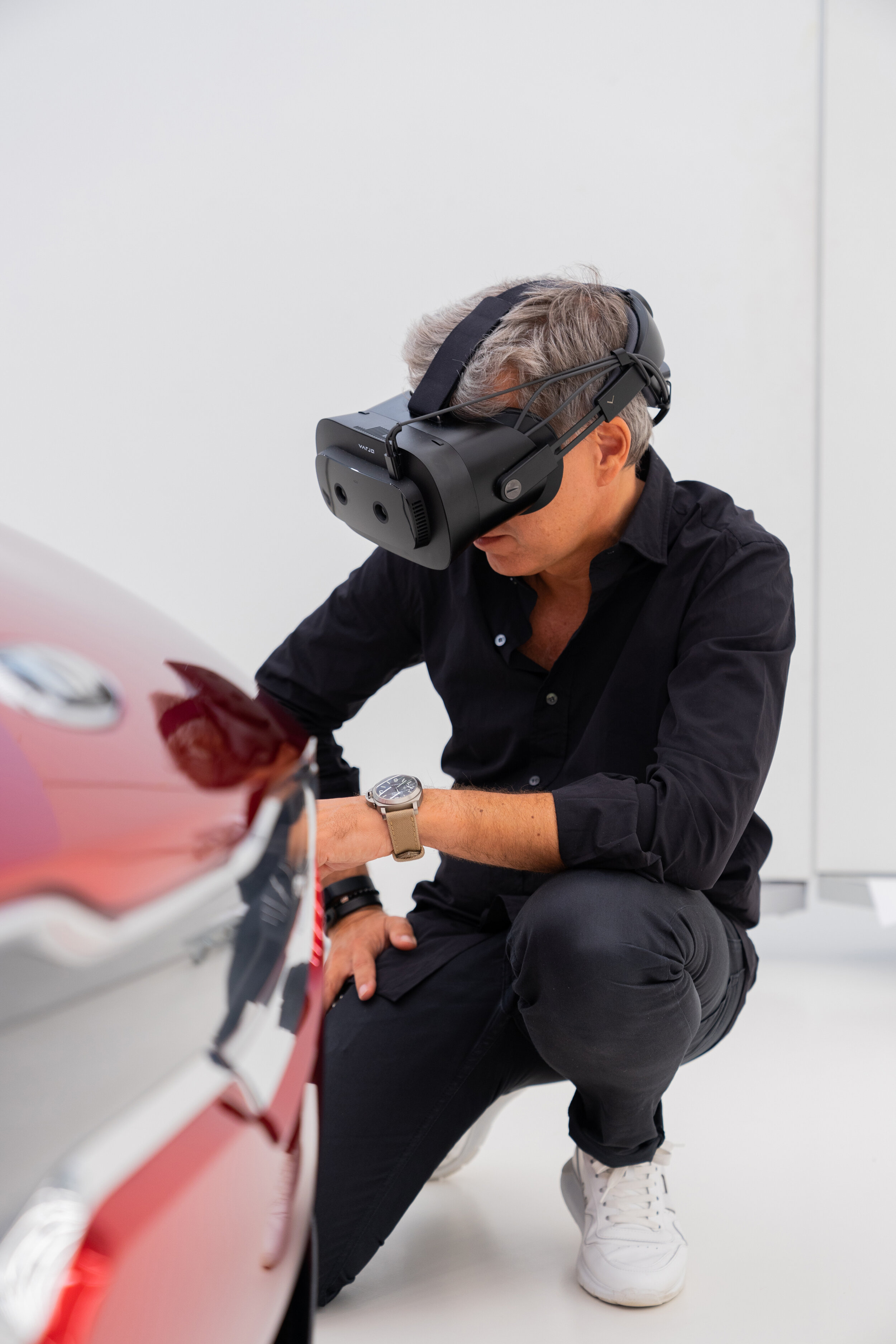
There’s magic happening in the Europe Design Center of Kia Motors – the South Korean automotive company. Thomas Unterluggauer is the center’s Creative Manager CGI. He’s wearing the Varjo XR-1 headset as he works on a Kia model in the studio; moving seamlessly between the real and virtual car in front of him, and making changes on the fly.
What he’s seeing and doing in the Kia studio hasn’t been possible until now. Welcome to the new reality.
Kia’s European design studio, led by Gregory Guillaume (in the picture), is a pioneer in integrating new technologies into their design workflow. With a digital 3D department, design teams and visualization experts, its goal is to always exceed expectations – both for Kia customers and the company’s leadership in South Korea.
When Kia’s European team tried out Varjo’s VR headset for the first time, they were blown away by the clarity and the resolution compared to all other headsets.
“For the first time, we could literally see the metallic flakes in the paint and perceive the depth and quality of the material shaders. We could see the beauty of the details more than ever before in the virtual world. Varjo is the only device capable of this level of clarity and sharpness,” Unterluggauer says.
Seeing more details in the car exterior was a breakthrough. But when Unterluggauer and the team got to explore the Varjo XR-1 mixed reality device, they realized they could also use it to take their design work to new heights.
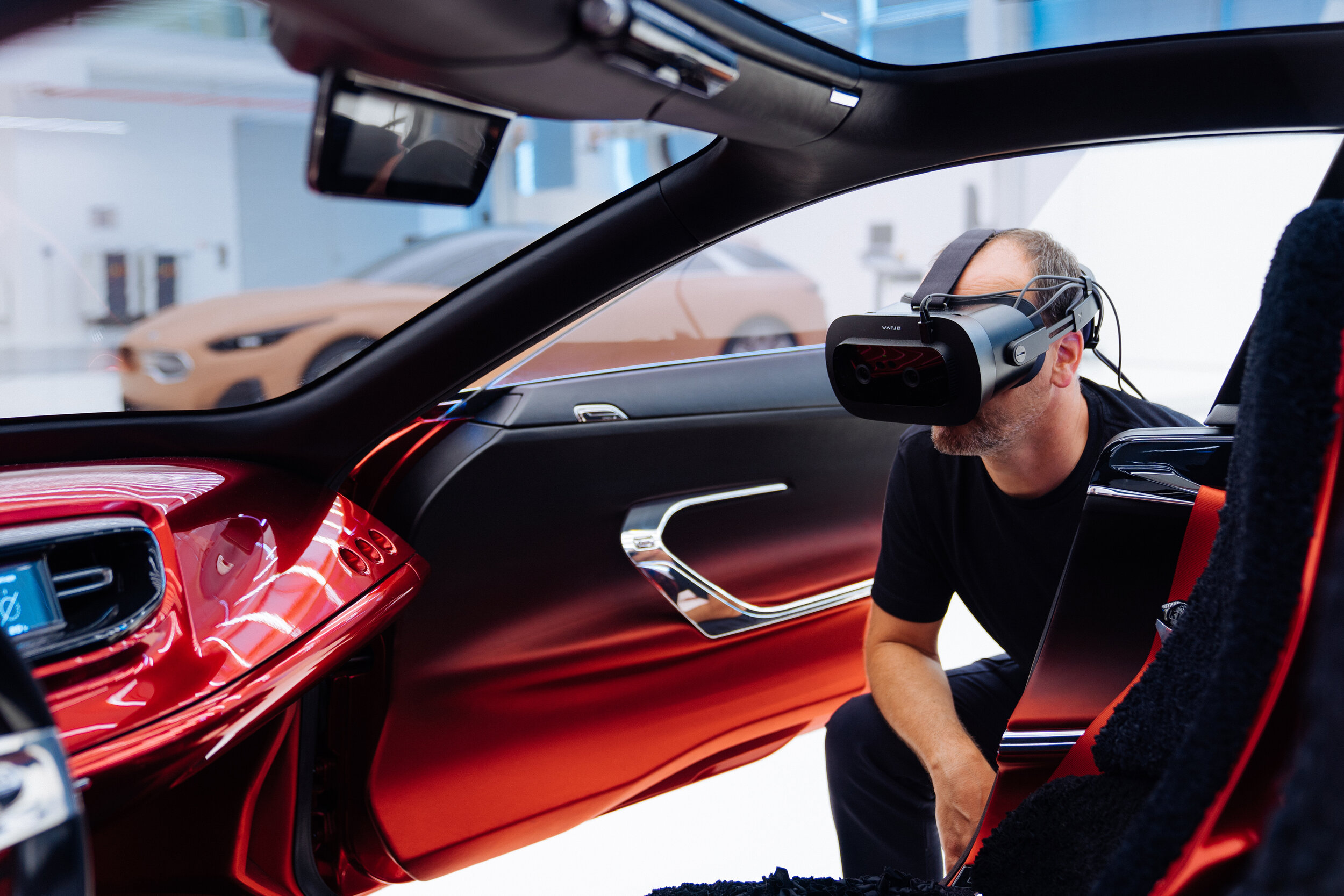
With Varjo XR-1, designers can work with their colleagues in the physical design space they’re used to and collaborate on photorealistic, real-scale virtual car models while seeing their hands and bodies. In an immersive mixed reality experience like this, they’re able to talk as they go, give immediate feedback, and run more engaging reviews.
“Immersive collaboration works way more naturally than we expected. This is something I’ve always wished for and with the Varjo device, it’s now a reality,” adds Gregory Guillaume, Vice President of Design at Kia Motors Europe.
At the end of a mixed reality session, Unterluggauer takes off the Varjo XR-1 headset and looks back into the room. “It’s fascinating how quickly you adapt to the mixed reality. You’re tricked into thinking for a moment that reality is wrong, that there is something missing. It’s completely different to any other experience I’ve ever had in VR,” he says. And there’s that magic again.
Kia’s workflow changes up a gear with VR/XR
Located in Frankfurt, Germany, Kia’s Europe Design Center is helping to change perceptions of the Kia brand across the continent as well as worldwide. Its dedicated team of designers create concept cars of the future as well as production models for both Europe and the global market.
The ability to design and collaborate with Varjo’s photorealistic VR/XR and Autodesk VRED is a total game-changer for Kia’s designers.
Until recently, the automotive design process relied a lot on 2D reviews on screens and powerwalls, followed by physical clay models and prototypes to further refine and develop the surfaces.
As manager of the studio’s digital department, Frank Hübbe knows all too well that a 2D model is always a projection that lacks volume. “Although you can use keyboard, mouse, and screen to work efficiently in 2D, you’ll never get a fully realistic impression of the car,” he says. Today, Kia Europe’s designers are complementing their entire workflow with virtual and mixed reality. The teams are using VR/XR technologies to make their visualization work more effective and showcase projects in new ways.
For example, designers are able to review a virtual model directly against a physical model in the same room, or even augment an existing clay model with virtual details.
“With VRED and the Varjo XR-1, you have the context of the real world and the flexibility of the virtual world,” Hübbe says.
Virtualware's VIROO Enables El Retoño University to create the biggest Education VR Center in the World
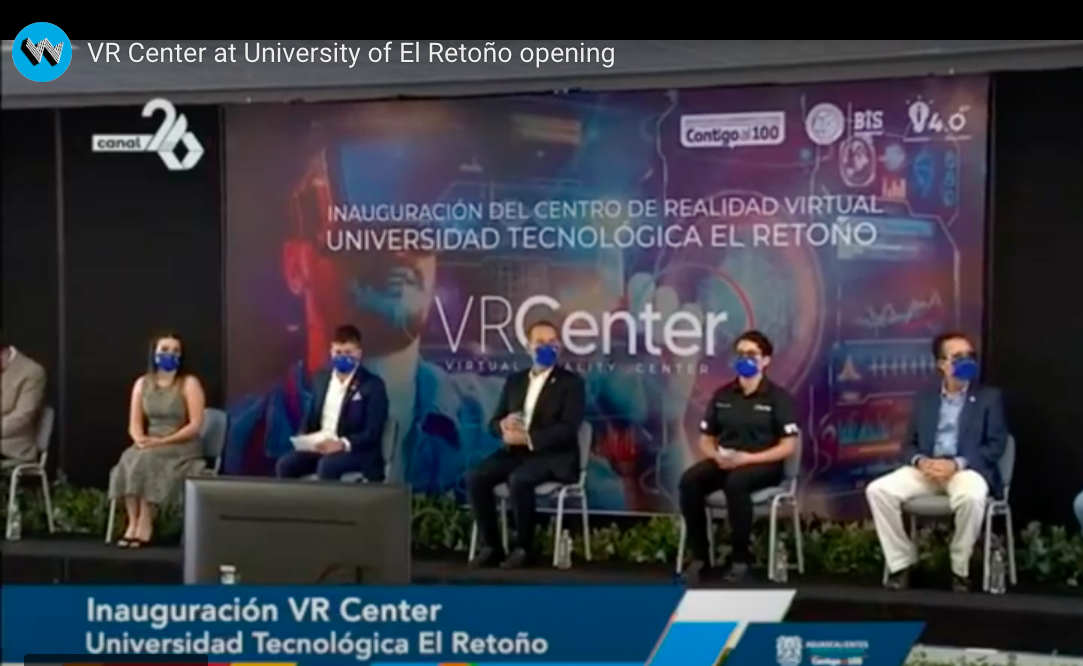
The Technological University El Retoño (UTR) celebrated the grand opening of its new VR Center located in Aguascalientes, Mexico. A new center that will help to create the future world’s best leaders.
The Governor of the State of Aguascalientes, Martin Orozco Sandoval, the Director of the Aguascalientes Institute of Education, Raúl Silva Perezchica, the Secretary of Economic Development, Manuel Alejandro González Martínez, Virtualware VP Sergio Ramirez and Emmanuel Carrillo UTR Vice-chancellor among others, attended the great inaugural.
Immersive technologies have the potential to revolutionise the way universities deliver course content, enabling learners to access spaces and engage with experiences that might otherwise be unavailable to them. Considering that the use of VR has become a reliable technological trend in education, UTR, a higher education leading university in Mexico, is committed to creating the future world’s best leaders by incorporating VR technology as a distinguishing element of its academic offer.
The new VR center a is a 500m²space, designed to create an engaging and personalized environment, that opens new opportunities for deeper learning. A new lab center where UTR fosters the exploration and learning by doing experiences.
This new Virtual Reality room is deployed in a technology patented by the company Virtualware called VIROO. It is a complete solution that enables companies and institutions to create workspaces where maximize the high potential of VR technology, making UTR capable to create the biggest VR Center of the world.
Composed of the most advanced virtual reality technology hardware and a powerful software platform, this innovative VR centre will allow UTR students and teacher to create, manage, control and deploy learning resources and activities in a simple way, adjusted to the different levels and subjects.
This new space is a new concept that allows teachers to train the professionals of the future.
“This VR Center is the materialization of the alliance between strategic sectors in the benefits of our students and the society in general”. Emmanuel Carrillo, UTR Vice-Chancellor
Contact:
Name: David Moreno
Email Address: dmoreno@virtualwareco.com
Website URL: https://www.virtualwareco.com/news/the-vr-center-university-retono-unveiled/
Veative Labs Enters into Global Partnership with Dev Clever
Dev Clever has signed a partnership agreement with Veative Labs to integrate a range of educational products and services, in and out of the classroom, on a global basis.
Veative is an online specialist in the global Education Sector (“EdTech”) and has developed “the world’s largest library” of interactive, curriculum-aligned VR and WebXR modules for education which is currently being used by schools in 27 countries around the world. Alongside Dev Clever, Veative has previously partnered with Lenovo Group Limited with its content library pre-installed as part of the Lenovo VR Classroom V2 solution.
The careers guidance group said the partnership will create a remote e-learning solution combining its own career guidance platform, VICTAR VR and launchyourcareer.com , with Veative’s educational modules to provide students with stand-out learning tools. The partnership will also offer users access to Veative’s India-based development team, enabling the acceleration of the conversion of Dev Clever’s platforms into local languages.
Shares in Dev Clever have rallied strongly over the last three months from lows of 3p at the beginning of April 2020 to open 5% higher at 7.15p following today’s partnership with Veative. The group highlighted that the products can be immediately marketed together to English-speaking geographies, where the platform has already been localized.
DEV’s initial focus will be to deploy its platforms across both India and China where Veative is already present, representing significant market opportunities for both companies.
Both parties are also exploring ways to develop the partnership into ‘a complete e-learning ecosystem’ for distance-based education, covering a range of aspects, from career exploration to employment onboarding, and into continuing professional development.

DEV said this would equip training providers, higher educators and employers with ‘a unified and unique methodology’ to address the growing global skills and attainment gap.
“It is estimated that more than 1.2 billion pupils in 186 countries are and have been affected by school closures as a result of COVID-19,” said Chris Jeffries, CEO Dev Clever. He highlighted, “It is clear that this has created a significant acceleration in the demand for a complete remote and eLearning solution within the global education sector.”
“We need to prepare the workforce of tomorrow, today,” said Ankur Aggarwal, CEO of Veative.
“Tools and methods used in schools will transform markets. With Dev Clever, we endeavour to make that a rewarding journey for all students,” he added.
DEV said this would equip training providers, higher educators and employers with ‘a unified and unique methodology’ to address the growing global skills and attainment gap.
“It is estimated that more than 1.2 billion pupils in 186 countries are and have been affected by school closures as a result of COVID-19,” said Chris Jeffries, CEO Dev Clever. He highlighted, “It is clear that this has created a significant acceleration in the demand for a complete remote and eLearning solution within the global education sector.”
“We need to prepare the workforce of tomorrow, today,” said Ankur Aggarwal, CEO of Veative.
“Tools and methods used in schools will transform markets. With Dev Clever, we endeavour to make that a rewarding journey for all students,” he added.
Contact
Name: Veative Labs
Email Address: info@veative.com
Website URL: http://www.veative.com
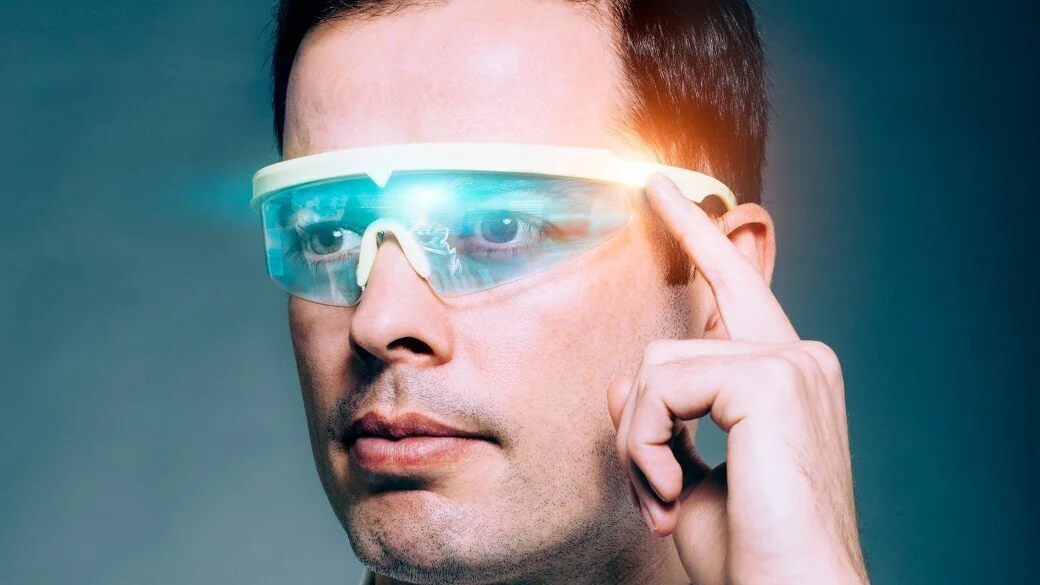
ARM partners with VividQ to bring holographic display to mobile devices!
VividQ has announced the collaboration with Arm today. Together, they enable the integration of holographic display into AR wearables!
Holographic display addresses one of the major limitations of AR: the need for realistic depth perception. The natural depth of field in AR can be achieved with Computer-Generated Holography (CGH) powered by VividQ software. VividQ’s partnership with Arm means that holographic display is now enabled on mobile devices thanks to VividQ software’s compatibility with Arm Mali GPUs.
Realising AR’s True Potential with Holographic Display

In the past, Arm has talked about the enormous potential of augmented reality (AR) and the “limitless possibilities” of this new technology. Back in February 2020, we published a blog setting out the numerous use cases and experiences that will be enabled by AR, from navigation and translation through to ‘superpowers’, such as visual and audio enhancements. While all these experiences are incredibly exciting, not just for consumers but the wider industry as well, we need the technology in place to make it a reality.
Many have pointed to numerous different reasons why consumer AR has not yet kicked on. These reasons include the lack of content, lack of style or comfort of today’s wearable devices, the poor battery life or even the lack of a major brand name device. These are all important factors; however, one major consideration that is often over-looked is the display. I believe that the true potential of AR will not be realized until we unlock many of the challenges for the display technology, especially the need for realistic depth perception. This can be enabled by holographic display, achieved with Computer-Generated Holography (CGH).
The challenge of realistic depth
Depth perception is crucial for the human vision system to interpret what we see in the world. There are around 18 depth cues that help you determine distances between objects and their relationship to you, and each other. Your brain makes sense of these depth cues in the real world to provide an understanding about your surroundings. Should the depth cues provide conflicting information, then it can lead to confusion or even nausea.
Most of the AR wearables available today, such as smartglasses or head-mounted displays (HMDs) display digital images at one or, at best, two depth planes. It means that AR projections can often be mismatched with the real, three-dimensional world. If you look at the following illustration, images on the left show what today’s experience of using an AR wearable might be like. The bowl of apples is supposed to be placed on the sofa in the background, but it appears sharp, even if the viewer (in this case the camera) is focused on the near field. Similarly, the green virtual apple remains sharp even when we focus on the back field. To render this virtual scene correctly, we need a display technology capable of projecting multiple depth planes. Just like in the images on the right where the virtual apple and the bowl appear correctly in or out of focus depending on where we look, adapting to what our visual system expects.


Holographic projections generated using VividQ software, simulating scenarios where all virtual images are generated on a) one depth-plane and b) multiple depth-planes to match the real environment.
Holographic Display and Computer Generated Holography
Holographic displays can help to solve this issue. In fact, Arm is working with British technology start-up VividQ to enable holographic displays for richer and more comfortable AR experiences through future AR wearables, such as smartglasses.
Holographic display is the process of engineering light to project three-dimensional, virtual scenes that possess a natural depth of field (as illustrated in the right previous image). This means highly realistic AR content that integrates seamlessly with the real world, while eliminating user discomfort. Holographic display is also brighter and more power efficient than other AR display solutions, making it a viable technology for not only the next generation AR wearables, but also automotive Head-Up Displays.
CGH is the method of creating holograms digitally from various 3D data sources, from game engines to depth-sensing camera output. Each hologram is encoded with all necessary information required to display a three-dimensional scene, with depth, to the viewer. The challenge for the adoption of CGH used to be the high compute requirement, which meant that holographic display was not a viable technology for consumer electronics. However, VividQ’s software for holographic display overcomes the computational challenges traditionally associated with CGH and allows for real-time generation of holograms for AR applications on commercially available GPUs.
Arm’s partnership with VividQ
Arm is collaborating with VividQ to enable holographic display on a mobile device by making VividQ’s software compatible with Arm Mali GPUs. The collaboration will enable the integration of holographic display into future AR wearables. According to a report by ABI Research, shipments of smartglasses are expected to reach 20 million units by 2024. Due to the ubiquity of Arm IP among mass market consumer electronics, from smartphones to DTVs, this is seen as a vital collaboration to ensure the accelerated adoption and scalability of holographic display. Therefore, this partnership could help to bring improved AR experiences to millions of consumers worldwide.
Tom Durrant, Co-Founder and Chief Development Officer of VividQ says:
“Technologies, such as navigation assistance, messaging and entertainment, are now irreplaceable and becoming increasingly integrated into our lives. The migration to AR wearables and next-generation consumer electronics makes these applications more natural to use, and calls for a correspondingly natural, immersive viewing experience. VividQ provides this with CGH. We are delighted to be working with Arm towards this ambitious goal of integrating CGH in mobile devices. By combining VividQ’s software expertise with Arm’s solutions in high-performance integrated compute, we aim to jump-start the mass consumer adoption of AR with holographic display.”
Arm in AR
Our IP technology is already powering today’s leading AR-based devices and experiences. Through valued partnerships with companies like VividQ, we can address current AR challenges, particularly around display, and help to enable the next generation of AR devices. The innovation of VividQ around holographic display and CGH is helping to enhance the AR experience and ultimately enable the widespread adoption and use of AR. With Arm’s IP and support, we want to move these AR technologies to everyday consumer use.
If you are interested to learn more about VividQ and its CGH technology, please visit its website here.
Industry-Leading VR/AR Innovator, Bohemia Interactive Simulations, joins the VR/AR Association (VRARA)
On the heels of a recent defense industry VR award and the release of VBS4, Bohemia Interactive Simulations’ (BISim) most important product release since the release of VBS3 in 2013, the Orlando-based company is pleased to announce it has joined the VR/AR Association (VRARA).
Pioneering VR/AR/MR for Military Simulation
BISim began exploring VR’s potential for defense training in 2013 and in 2015 the BISim booth was the only I/ITSEC booth to showcase the beta version of Oculus Rift, having optimized VBS IG frame rate experience sufficiently to pass Oculus’ high standard of FPS performance. Also in 2015, BISim started working directly with military customers on VR/AR projects, most significantly with the U.S. Navy on a VR-based pilot training system that included virtual hand gestures generated through the Leap Motion system. By 2016, BISim’s VBS3 offered out-of-the-box support for the Oculus Rift and HTC VIVE.
In 2018, drawing on its extensive experience with VR/AR headsets, BISim introduced VBS Blue IG, a high-performance, 3D whole-earth image generator optimized for VR/AR/MR applications. BISim’s work has expanded to evaluating and developing VR, AR and MR systems for other military organisations and commercial integrators. See how customers are using BISim products for VR/AR/MR applications on our Customer Showcase.
Outstanding VR/AR/MR Application
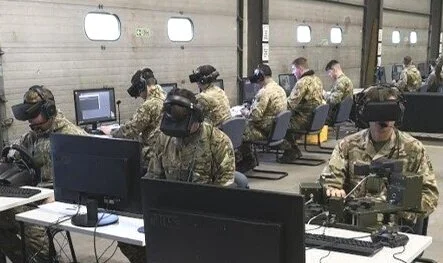
BISim was recently selected by Military Simulation and Training (MS&T) magazine as its 2020 winner in the category of Outstanding VR/AR/MR Application for work on the British Army’s Virtual Reality in Land Training (VRLT) pilot study. MS&T’s Outstanding VR/AR/MR Application Award recognizes the innovative use of VR/AR/MR technologies to develop effective and efficient training and performance support interventions. BISim delivered a series of training events to the British Army in 2019 demonstrating VR and MR capabilities using its products. These included a high-fidelity Warrior IFV 3D model for VR and the use of mixed reality to allow users to take notes and annotate maps during exercises without breaking immersion. Read more about VRLT.
VBS4 - Easier, Faster, Global
BISim recently released VBS4, an easy-to-use, whole-earth virtual and constructive simulation. VBS4 becomes BISim’s flagship product — a fully featured desktop training and simulator-ready replacement for all VBS3 capabilities, with its hundreds of use cases and integration possibilities.
VBS4, together with VBS Blue IG, delivers the highest performance and greatest possibilities for military VR/AR/MR when paired with the latest generation XR headsets. Unlike many other game engine-based simulations, the VBS4 engine (VBS Blue) is optimized to serve the military simulation and training domain, so it offers more military XR use cases out of the box. VBS Blue offers millimeter accuracy and global scale simultaneously, and with a flexible terrain ingestion pipeline capable of facilitating quick use of terrain data from any conceivable source, users are well equipped for developing innovative XR projects. Learn more at vbs4.com
About Bohemia Interactive Simulations
Founded in 2001, Bohemia Interactive Simulations (BISim) is a global software company at the forefront of simulation and training solutions for defense and civilian organizations. BISim utilizes the latest game-based technology and a 200-strong, in-house team of engineers to develop high-fidelity, cost-effective training and simulation software products and components for defense applications.
Globally, more than 500,000 military personnel are trained every year using VBS software products. More than 60 NATO and NATO-friendly countries and over 250 integrators/prime contractors use VBS technology, many making significant funding commitments to extend VBS product capabilities. Customers include the U.S. Army, U.S. Marine Corps, Australian Defence Force, Swedish Armed Forces, French MoD and UK MoD and most major integrators. VBS products have become, by far, the world’s most widely used COTS product range in the military-simulation sector, supporting hundreds of military use cases and vastly greater military exploitation than any comparable products.
Contact
David Dadurka
Marketing and Communications Manager
Bohemia Interactive Simulations
p: 407-890-5510
a: 3050 Technology Parkway, Suite 110 Orlando, Florida 32826
Veative Labs and Lenovo Collaborate on an Integrated Distance Learning and Virtual Reality Classroom Solution

Veative Labs, a leading provider of immersive learning solutions, is pleased to announce a global collaboration with Lenovo, the world’s largest supplier of educational technology. This collaboration will enable Lenovo customers to experience Veative’s entire collection of 550 interactive STEM modules on Lenovo computers through Lenovo’s new Distance Learning Solution or on Lenovo’s VR devices through the new VR Classroom 2.0 solution.
Veative’s robust interactive content library for Grades 4 through to higher education is standards-aligned and includes modules for science and math. This immersive education content promotes a deeper understanding of complex concepts while Veative’s one-of-a-kind data analytics reports allow teachers and school leaders to track student progress toward mastery. The easy-to-use Veative solution ensures that teachers can provide differentiated, unique learning opportunities for all students whether they are at school or at home.
As part of this collaboration, Veative has developed Veative Limited for Lenovo VR Classroom 2.0. This application features 40 virtual reality modules including science, mathematics and virtual tours. Veative Limited will come preloaded on all Lenovo VR Classroom 2.0 devices, with the option to upgrade to Veative’s full library. Both the Limited app and full library will be made available to existing Lenovo VR Classroom 1.0 customers as well. A new browser-based WebXR option will provide access to the same interactive content library while using a computer, without requiring a VR headset.
Veative CEO, Ankur Aggarwal, said “This collaboration shows our commitment to transforming the way education is delivered. The Veative solution combines powerful technology with research-based instructional practices, rigorous and aligned content, formative assessment data, and analytics. We focus on the needs of teachers and students by developing content that integrates seamlessly into existing curricula, while being easy to use, and attending to learning outcomes, regardless of hardware device or location.”
Aggarwal went on to note that “partnering with Lenovo gives Veative the ability to roll out our solution at a larger scale and expand our reach into the global education market. We are thrilled to have the opportunity to work with Lenovo, who shares our vision of transforming the way education is delivered to students.”
“Access to curriculum-based content is critical in today’s environment of remote learning. Additionally, Virtual Reality is a powerful way to impact student engagement, inspiring youth to develop curiosity and explore challenging topics”, said Richard Henderson, Director of Global Education Solutions at Lenovo. “With access to STEM content and a complete solution for teaching and learning, we are excited about the relationship with Veative which offers both web-based and VR content with formative assessment, helping Lenovo with our vision to offer smarter technology for all.”
About Veative Labs
Veative is a leading provider of immersive learning and training solutions. The Veative solution is being utilized in over 25 countries to engage learners with abstract concepts, bridging the gap between knowledge and understanding. Veative is transforming the way virtual reality is used in education by combining powerful VR technology with research-based instructional practices, paired with analytics to track student progress.
Not only has Veative developed the world’s largest library of interactive, curriculum-aligned K-12 VR modules, but also specializes in the development of immersive experiences for higher education and the enterprise sector. Whether it is advanced training simulations, or language learning with voice recognition, Veative creates superior immersive experiences to improve learning outcomes for learning in any sector.
For more information, please visit www.veative.com or follow Veative (@VeativeLabs) on social media platforms.
LENOVO is a trademark of Lenovo.
Contact
Name: Satendra Singh
Email Address: satendra@veative.com
Website URL: http://www.veative.com

Meet the UK Immersive Tech Delegation at the VR/AR Global Summit ONLINE and in Virtual B2B Meetings!

MEET 15 OF THE UK'S TOP IMMERSIVE TECH BUSINESSES IN THE INNOVATE UK BOOTH AT VR/AR GLOBAL ONLINE SUMMIT
Meet 15 of Britain’s top Immersive Tech businesses https://meet-best-of-british-creative.b2match.io/page-2571 in the Innovate UK booth booth at VR/AR Global ONLINE Summit. Offering tools and services across the immersive tech sector for enterprises, media & entertainment producers, platforms and OEMs, the delegation features award-winning companies seeking growth through investment, partnerships, IP licensing, sales and collaboration. The delegation will hold roundtables, present case studies and demos and have virtual b2b meetings in their virtual booth.
Cooperative Innovations www.coopinnovations.co.uk
Offering licensing for its proprietary tools for the efficient creation of high-quality immersive worlds and full body avatars, Cooperative Innovations also creates innovative content, with projects in the media, gaming, architectural, automotive and creative art sectors. Their game title, Spaceteam VR releases Spring 2020 for Playstation, PC and Quest. Seeks to license technology to US firms.
Digitalnauts www.digitalnauts.co.uk
Currently delivering exceptional VR training solutions to the maritime, oil/gas, pharmaceutical, construction and industrial sectors, Digitalnauts is developing HoloHub, an award-winning, highly efficient and scaleable VR content creation and delivery platform. Seeks Series A funding.
Focal Point VR focalpointvr.com
With a range of very high quality 360 and stereo camera rigs with live headset preview, complemented by its Ubiety live streaming technology, Focal Point VR can provide wet/dry equipment solutions as well as the development of custom applications for immersive AR/VR experiences delivered live or via broadcast. Offers products and services.
The Forever Project foreverproject.co.uk
The Forever Project creates voice interactive video encounters with people’s heroes, allowing global fans to connect with the people they love, 24/7, 365 days a year. Giving talent new ways to monetize their brand, these encounters can be voice-interactive mobile Q&As; life-size 3D or holographic encounters; or meetings in immersive VR. Our multi-platform approach, available in multiple languages, allows us to deliver conversational media to a global market. Current partners include Premier League Soccer clubs, major recording label and blue-chip cultural institutions. Seeks seed funding, IP owners, brands, high quality talent partners, distributors and publishers.
The world leader in the deployment of AR humans, over mobile, at speed and scale, HoloMe’s technology allows businesses to connect with their customers, and individuals to communicate with each other, with greater realism and personal impact. Seeks Series A funding.
i2 media research limited i2mediaresearch.com
A leading consumer insight, UX and R&D consultancy, i2media research now makes its expertise widely available through the launch of its simple, reliable, online Immersive Audience Impact Metric tool. With a better understanding of their content’s strengths and weaknesses in impact, engagement and emotional response as compared to other evaluated products, clients can make evidence-based pricing and product decisions. Offers products and consulting services.
A spatial audio start-up whose founders have created award-winning 3D film and location-based experiences for clients including LucasFilm, Google, Adidas and projects including The Philharmonia Orchestra at SXSW and Cosmos within Us, MagicBeans is leading the 18-month Volumetric Audio Synthesis for Augmented Reality (VASAR) project to improve next-gen audio experiences. MagicBeans, with partners Warner Music and Huddersfield University, aims to significantly improve the capture and reproduction of high-resolution volumetric audio for 6DOF experiences. Seeks technology partners/collaborators. Offers services.
With a platform that allows for a live holographic cast, audience interaction and impossible worlds, Megaverse’s theatrical VR platform delivers large scale immersive productions that bring actors in one location to audiences worldwide. Seeks technology partners and Series A investors.
Award-winning software developers building VR, AR and location-based experiences for clients worldwide, Reflex Arc has created immersive and collaborative experiences for education, health, city planning, data visualization and entertainment, including work on the Jurassic World VR Expedition. Offers services and seeks project/technology partners.
ScanLAB Projects scanlabprojects.co.uk
We believe in the stories we tell and are keen to help you tell yours. We digitize the world using 3D laser scanning -- turning spaces, events and objects into compelling digital experiences. We capture content at all scales, from microscopic seeds to vast landscapes, and use our own sophisticated point cloud render engine to render in real time and offline. We've told important stories, revealing the location of mass graves at former concentration camps and uncovering new Mayan Pyramids in the Guatemalan Jungle. We make discoveries that are impossible with a traditional camera. Clients include the BBC, National Geographic, The New York Times, Nike, XL Recordings and brands. We made Justin Timberlake’s latest tour visuals! Offering services and seeks collaborative partners.
Sugar Creative www.sugarcs.com
With a reputation for high quality creative across disciplines, Sugar is an award-winning market leader specializing in innovative emerging technology realizations, including AR, MR and VR. With partners ranging from Dr. Seuss, OSMO, Toyota, Allianz, BBC, AArdman (Wallace & Gromit) as well as pioneering entrepreneurs and artists, our team creates outcomes that redefine the interactive narrative experience. Seek to connect with brands, IP owners, agencies, publishers and creatives.
Titan Reality® Ltd www.indream.io
Titan Reality® develops 3D controllers with AI, Immersive and Spatial Computing applications.www.indream.io Titan Reality®'s immersive prop tech division Indream™ designs, builds and operates immersive technology environments for high-tech commercial properties. Seeks seed funding, distribution partners and offers services.
To Play For (Charisma.ai) charisma.ai
Powered by AI, Charisma is a new graphic novel app that puts audience inside the story, talking to characters, influencing the plot and changing the way stories are told. Already in use by the BBC, at SXWW, Charisma will unveil its interactive graphic novel platform and announce its first adapted titles and a new interactive drama produced for Sky. Get a sneak peek in SF! Seek writers, artists and IP owners who want to create fantastic new stories in this new story form as well as distribution partners and publishers.
Valkyrie Industries www.valkyrieindustries.co.uk
Valkyrie’s wearable suit unlocks new content creation tools for developers by allowing users to explore virtual space and enabling a new touch interaction engine combined with full body tracking to take immersive technology one step closer to ultimate immersion. With initial users in the hazardous heavy industries, including space, automotive and construction, Valkryrie’s patented technology allows everyone to create highly realistic immersive environments. Seeks Series A funding, technology partners and clients.
For additional assistance, contact:
The European-American Business Organization
caitlin@eabo.biz
1.212.972.3035
If you are a Delegation Member Company, you may also contact:
Enterprise Europe Network, Newable
een@Newable.co.uk

Preview of Edelweiss Act I, 99 Cent Opera to premier at the VR/AR Global Summit ONLINE Sept 30 - Oct 2
See Founder Maciej Wisniewski discuss Edelweiss Act I, 99 Cent Opera's new blockchain and music driven Virtual Reality game, at the VR/AR Global Summit ONLINE Sept 30-Oct 2.
Maciej Wisniewski, founder of 99 Cent Opera, will offer viewers a sneak peek of our original and unique new VR game, EDELWEISS, ACT I, and will discuss how music and blockchain drives the gameplay to create a challenging, entertaining, and rewarding experience for players. He will be speaking on a storytelling panel with other talented content creators and producers. The panel will be moderated by Chris Pfaff. Check Schedule.
Get tickets here


The makers of Microsoft Flight Simulator will Virtually Exhibit at our VR/AR Global Summit ONLINE Sept 30-Oct 2
Asobo Studio SARL is a French video game developer based in Bordeaux and founded in 2002. The studio has developed 17 video games, including video game adaptations of several Pixar movies, A Plague Tale: Innocence, and the 2020 version of Microsoft Flight Simulator!
