
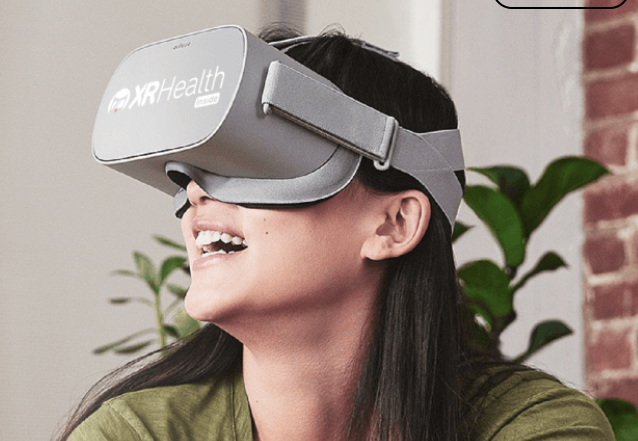
Virtual Reality Changing Rehab
Attend the VR/AR Global Summit Nov 1-2 in Vancouver to learn more about VR/AR in Healthcare!
By Eran Orr of XR Health
There is an old joke in the medical world about minor surgery—it is only minor if it’s being done on someone else. The same thought can also be applied to rehab.
It is generally positive to hear that someone is in physical rehab (which, of course, is short for rehabilitation). It conjures up the notion that they are on the mend and working towards a full recovery from whatever condition that ails him or her. But we sometimes forget the real drudgery that rehab entails. It can be tedious and painful to manage injury and promote recovery.
It can involve infrared radiation, laser therapy, massage, and manual resistance training. It can involve physicality; swimming, use of chairs, exercise balls and even stairs. And it can involve utilizing intricate equipment-- electrical devices, heat, ultrasound or even stimulating the patient’s body manually using body contact.
But now, it can also involve Virtual Reality (VR) technology which, at its most basic, provides the opportunity to incorporate encouragement and fun into the rehabilitation process. For example, with the use of a VR headset, a virtual environment is created to help patients suffering from pain and injury. Patients exercising their lower limbs on a treadmill can find themselves experiencing a walk in the park or countryside.
VR has been used successfully to treat stroke victims, walking disorders and back pain. A study conducted in 2015, featuring 15 trials with 341 participants, shows that VR actually helped patients regain mobility after experiencing a stroke. Some of the stroke victims underwent only traditional rehabilitation. Others underwent rehabilitation augmented with VR experiences, either shown videos through a VR headset or placed in “simulated settings” while performing a basic exercise like walking. Researchers concluded the data showed that VR created a statistically significant improvement in “walking speed, balance, and mobility,” the metrics used to determine whether a patient was recovering efficiently.
Alas, naturally, it follows that rehab “assignments” can be turned into a video game-like experience through the use of VR headsets. This is happening because we are learning that those folks aged 50 or over are becoming more accepting of video and computer gaming. Technology doesn’t freak seniors out perhaps like it once did. So it is becoming easier to sell them on the use of VR and its close relative, Augmented Reality (AR), for their rehab efforts.
Why is this important? As an example, for those with limited mobility, practicing walking skills can get boring pretty quickly. Adding the elements of “keeping score” and/or “competition” has proven to help patients engage in their exercises and treatments. The experience generally becomes more dynamic and enjoyable. VR has been shown to spike a user’s motivation. This motivation improves a patient’s motor learning and coordination skills when doing physical therapy. Patients are more likely to put in a greater effort. And, perhaps most importantly, VR allows physicians to stimulate a patient’s brain, as well as their body. Being able to see an “avatar” that depicts the movement of patients (while they are moving) helps stimulate the motor cortex in the brain that produces the movement. And this “observation loop” activates the brain regions damaged by a stroke.
Pain management/reduction is another area where VR therapy is changing attitudes and may even someday reduce the reliance on painkillers to help people get by. New evidence shows VR can be used to help people their brain from processing pain. Studies have discovered that the parts of the brain linked to pain are much less active when a patient is immersed in virtual reality. It becomes a coping mechanism for the patient with the pain and, eventually, helps overcome it. The end result of pain reduction is a faster recovery process, thus shortening the length of a patient’s stay in the hospital, which in turn lowers healthcare costs.
From a futuristic standpoint, the therapeutic and rehabilitative potential of VR will be demonstrated by what’s known as computer assisted rehabilitation environment or CAREN. Down under, in Australia, engineers are developing “virtual” environments such as city streets in order to help researchers calculate the motion of a person’s limbs while walking along the streets, mimicking a real situation thus creating an appropriate response to it. CAREN is has a particular application in the world of sports, with in-depth studies taking place in muscle and joint function in the human body and how diseases or injury affect motor performance. CAREN can accurately evaluate how people generate joint motion pre- and post-operatively. It is possible now to look at how a joint replacement is affecting a person’s ability to move a joint after surgery, or how a stroke patient’s balance and fall risk is affected by rehabilitation.
VR is a major part of all of these are all technological advances leading to concrete improvements in the medical treatment and management of diseases and conditions that were previously thought to be unmanageable. Physical therapy and rehab are very important health restorative procedures and there are many more discoveries to be made utilizing VR. Used either in isolation or in combination with other treatment procedures, VR will continue to help manage many of the injuries and conditions that befall human beings. Even better, as VR technology keeps advancing, physical therapy and rehab will become a more engaging, fun and thrilling experience.
For more info, see www.xr.health
Attend the VR/AR Global Summit Nov 1-2 in Vancouver to learn more about VR/AR in Healthcare!

VR/AR Global Summit update: sponsors & exhibitors include Microsoft, Lenovo, Niantic, Theorem Solution, LNG Studios, BCIT, VirtualWare among others
We are thrilled to confirm additional Sponsors and Exhibitors for our VR/AR Global Summit!
Get your ticket today for this world-class event taking place Nov 1-2 at the Parq Vancouver, bringing together the best knowledge and networking in VR & AR for enterprise, hardware, software and content providers from across the globe.

This VR use case has the potential to save retailers millions of dollars!
Attend the VR/AR Global Summit Nov 1-2 in Vancouver to learn more about VR/AR in Retail!
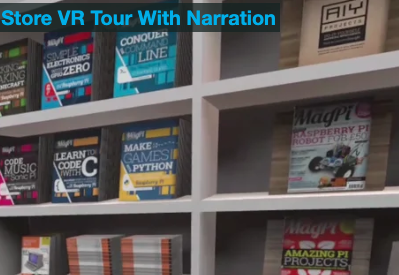
Pixel Framers specializes in photo-realistic mobile VR solutions for the AEC, retail, and entertainment industries. They produced this piece for free for the Raspberry Pi Foundation to both promote their new retail store as well as demonstrate Pixel Framers’ mobile VR capabilities. The entire demo was built from scratch for mobile VR (Oculus Go, Gear VR, Google Cardboard) using only photos available online.
Following completion of the demo Pixel Framers was able to visit the Cambridge, U.K. store in person and compare. Pixel Framers believes this type of use case has the potential to save retailers millions of dollars by optimizing the store design and layout processes as well as improving and streamlining staff training/on-boarding.
More info: http://www.raspberrypi.org/blog/take-a-virtual-reality-tour-of-the-raspberry-pi-store/
Contact: Rob Chinery rchinery@pixelframers.com
Checkout Imagination Park's AR Activations including AT&T and the 2019 American Association All Star Game. Now you can use their Self-Service AR Platform for your Events!
Attend the VR/AR Global Summit Nov 1-2 in Vancouver to learn more about AR for events!
Imagination Park is launching their Self-Service AR Platform - ImagineAR.com October 1st that allows any company or person to launch an AR mobile Activation in minutes without any technical background.
Any AR Content creator can use the platform to active their AR either by Visual marker or GPS Location.
Below are two recent examples Imagination Park deployed:
AT&T Scavenger Hunt:
2019 American Association All Star Game
If you’re interested in doing an AR activation, contact:
Alen Paul Silverrstieen
CEO & President
Imagination Park
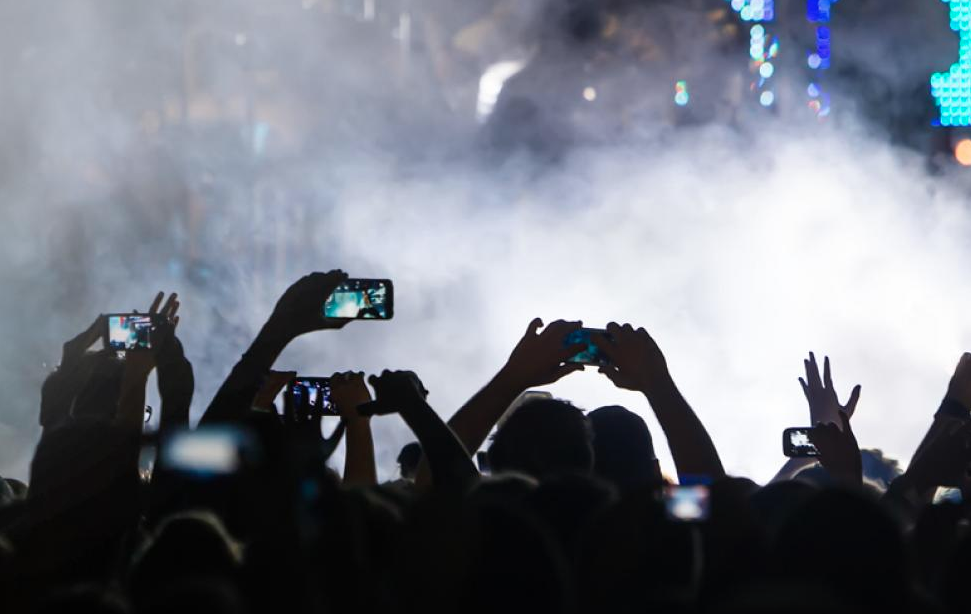
Verizon and VRARA Member meetingRoom Jonny Cosgrove explain why #5G is going to be a gamechanger for Virtual and Augmented Reality
Attend the VR/AR Global Summit Nov 1-2 in Vancouver to learn more about 5G and VR/AR!
At the beginning of U2’s Experience + Innocence show, the audience in the stadium saw a blue and white iceberg projected across an 80-foot wide screen. As Bono’s smooth baritone sang the opening words of the band’s set, the five-foot, six-inch Irish singer appeared at the center of the stage. But anyone holding up their phones to the screen witnessed an enormous, electric blue outline of Bono towering over the crowd.
Concerts featuring augmented reality (AR) and virtual reality (VR), like the ones U2 gave on the band’s recent tour, are still at an experimental phase, but many event experts expect the technology will become a regular part of live shows.
Eminem utilized AR at last year’s Coachella festival. After downloading an app on their phones, fans could view his set accompanied by silly and startling images like a plate of the rapper’s mom’s spaghetti overturning on top of them. This year, Coachella built an AR-equipped stage where festival-goers could peek through an app on their phone screens during performances to see spaceships fly through the sky.
“VR and AR are moving with a velocity now,” said Jonny Cosgrove, a former concert promoter who’s now CEO of the VR company meetingRoom. “What’s exciting now is that the end user gets to be the guinea pigs for all kinds of fantastic and immersive experiences.”
Bono said the stadium’s tall, augmented reality version of him was doing the same thing he did when he’d stage dive in the early days of U2: break the stage’s fourth wall to create a more personal connection with the audience. The technology doesn’t require a stadium-size stage to be effective. The New York City-based band Starset had an augmented reality spaceship fly around Hammerstein Ballroom and land onstage.
Not all immersive AR images are as flashy as spaceships, but they still have the power to heighten live entertainment experiences, said Sovanna Mam, the executive producer and founder of Greenfish Labs.
“The goal is not just to use technology for technology’s sake, but to make sure that people can use their phones to do something worthwhile that enhances their experience and makes it smoother,” he noted.
That could mean an AR-enabled app on each festival-goer’s phone that, when opened, points them to the nearest restroom or concession stand. The same tech could also potentially geo-locate friends.
Such experiences also help event sponsors drastically increase user engagement. Verizon previously teamed up with Maroon 5 to give fans the opportunity to do live karaoke at three of their shows. While the band played their first two songs of the show, aspiring singers could film themselves on Snapchat singing along.
Verizon had given away 100 Maroon 5 tickets at those shows. The singalong experience was a way to scale the giveaway’s impact and encourage winning fans to share the video and let everyone know that they had the best seats in the house.
The company views AR and VR as great platforms for connecting with non-traditional audiences. (Verizon has also teamed up with artist Pharrell Williams to open an Innovative Learning Lab in Virginia Beach, which will teach students about AR and VR, as well as other cutting edge tech.)
AR applications can also be used inside concerts like Coachella, where vendors and sponsors could offer coupons, tickets and other prizes for collecting their AR markers.
The implementation of speedier networks will make many of these applications more widely available, said Mam. “The 5G network is going to be a gamechanger,” he said. “We’re about to see an explosion of VR and AR activations because of 5G.”
Those advancements may seem like an intrusion into a live experience traditionally designed to connect people with music. But mobile screens aren’t going anywhere, emphasized Cosgrove. That’s why the best VR and AR innovators are aiming to create immersive experiences so personalized and realistic you forget they’re happening in a mobile app or wearable device.
“We’re giving people a new means to experience things,” he said. “We’re not trying to change an experience, but enhance it. We want to make sure everyone can have a personal experience, and a great time.”
For more information, see:
U2 discusses augmented reality
Eminem’s augmented reality app
Verizon partners with Maroon 5
For related media inquiries, please contact story.inquiry@one.verizon.com
Attend the VR/AR Global Summit Nov 1-2 in Vancouver to learn more about 5G and VR/AR!

VRARA Member Atheer Acquires Flype to Accelerate Augmented Reality’s Adoption in the Enterprise
Come see Atheer at the VR/AR Global Summit in Vancouver Nov 1-2
Acquisition of enterprise grade work platform - one that intelligently and securely connects users with the digital assets they need - will supercharge Atheer's award-winning AR Management Platform
Atheer Inc. announced the acquisition of San Francisco-based digital work platform pioneer Flype Inc.
This acquisition accelerates the development of Atheer’s award-winning Augmented Reality Management Platform by combining Atheer’s existing leading real-time collaboration capabilities with the intelligent digital work and integration capabilities of the Flype platform.
We are seeing an accelerating adoption of AR by enterprises across many industries and business processes. These organizations are demanding AR platforms that have enterprise-grade security and user permission management, robust digital asset management across all their content stores, intelligent and dynamic work instructions on all devices, broad integration capabilities to other enterprise systems, and robust reporting and analytics
Amar Dhaliwal, CEO Atheer
“With Flype, we have acquired an enterprise-grade digital work platform that significantly extends our capabilities in all these areas. The combination of Atheer and Flype redefines what enterprises can expect from an AR platform.”
Founded in San Francisco, California, Flype’s digital work platform intelligently and securely connects users with the digital assets, work instructions, and resources they need to do their best work.
About Atheer:
The Atheer Augmented Management (AR) Platform is an enterprise-grade AR productivity and collaboration solution designed for industrial enterprises. Atheer was recognized as the Best Enterprise AR Solution at the recent global Augmented World Exposition and Conference, 2019.
Founded in 2012, Atheer provides the only fully integrated enterprise grade solution for contextual work guidance and support which combines secure multi-point video collaboration, integrated step by step work instructions; broad device support (from smartphones and tablets to all major smart glasses); native support for multiple types of interaction (including gestures), detailed dashboards and reporting, multiple languages, and enterprise grade security and availability.
Atheer is being used today by leading industrial enterprises to transform the productivity, accuracy, quality and safety of their industrial workers - providing real and radical business impact. Customers include Porsche Cars North America, Julabo, Massimo, The Clorox Company, Volkswagen Group and the International Air Transport Association.
Porsche Cars North America, for example, publicly reported a 40% reduction in service resolution time in their dealerships using the Atheer Platform. Porsche was recently ranked highest in satisfaction with dealer service among luxury brands according to the J.D. Power 2019 Customer Service Index (CSI) Study.
Atheer is headquartered in Santa Clara, California.
Visit AtheerAiR.com or follow us on Twitter @atheerair.
Atheer Press Contact
Geof Wheelwright
Director of Marketing Communications, Atheer, Inc.

Scape Technologies launches Technology to Power the Next Generation of AR with Computer Vision
Hyper-accurate location, powered by computer vision.
Scape is harnessing AI to allow camera devices to recognize their surroundings, outdoors and at an infinite scale.
Computer vision startup Scape are developing the infrastructure that will allow computers to perceive and understand the environment around them, using a camera. Scape has recently launched technology that allows mobile phones to seamlessly mix the virtual and real worlds, by enabling camera devices to be located to centimetre-level accuracy from a single image. Soon we’ll be seeing games similar to Fortnite or Grand Theft Auto -- but played across the city rather than in online worlds. And London is the first city in the world to get the service.
The potential of this new infrastructure has already got some of the largest telecoms and handset manufacturers excited as they race to make the most of the potential of the new 5G mobile broadband services.
This is the first stage of Scape Technology’s mission to unify the real and virtual worlds, by enabling machines to understand their physical surroundings. Unlike satellite-based GPS, Scape’s technology allows any camera device to be located with centimetre-level accuracy across the city centre from a single image.
This technology has the potential to unleash a whole new industry of mixed reality applications, with London at its heart. Because the technology allows a device to understand it’s real world position to a greater degree of accuracy than existing methods, augmented content can be anchored to exact locations. This allows a user to experience persistent content, paving the way for never-before-possible use cases; be that the next Pokemon Go of AR gaming; allowing architects to visualise their designs standing tall in the skyline or enabling a new-age of interactive tourism experiences.
Scape’s SDK- ScapeKit is now openly available for use across central London. Developers can sign up for access at www.scape.io ...and it’s FREE
View video here https://vimeo.com/345434725

Kaon Interactive Announces Non-Immersive VR, Enterprise Marketing Platform to Bring Virtual Reality Experiences to Every Device. Wins Communicator Award for CenturyLink VR Application
Wins Communicator Award for CenturyLink VR Application
BOSTON – July 29, 2019 - Kaon Interactive, the leading provider of 3D marketing and sales applications for global B2B brands, today announced two key milestones: the launch of an industry innovation, “non- immersive” VR (virtual reality), and the receipt of a coveted industry award. A new technology evolution to Kaon’s High Velocity Marketing Platform®, non-immersive VR extends the value of the company’s existing virtual reality-based B2B marketing solution by delivering these experiences not just on VR headsets, but now on smartphones, tablets, desktop PCs, touch screens and the web. This significant enterprise VR advancement has led to the recognition of a distinguished Communicator Award for Kaon’s deployment of a virtual reality application which contains non-immersive VR functionality for CenturyLink.
3D Immersive Experiences, Beyond VR Headsets
B2B marketers are looking to extend the immersive qualities and emotional impact of virtual reality storytelling by having participants experience that same sense of immersion on their phones, tablets, desktop, touch screens and the web. Previously, virtual reality was only available via headsets. With Kaon’s most recent platform update, newly developed Kaon VRâ applications can now be experienced not only on ubiquitous VR headsets, but extended to any device. Users can navigate the immersive application with their mouse, finger or controller by selecting the immersive environments and message touchpoints along the way.
To elevate customer engagement within VR, Kaon has implemented a tracking technology that is typically used for augmented reality (AR). This now allows users to navigate a 3D VR environment or scene by moving a phone or tablet around like a window into a virtual world. “This takes cross-platform experiences to a whole new level,” said Kaon CTO and founder Joshua Smith. “This is the first technology platform that allows the same immersive application to run on the whole gamut of enterprise hardware: AR, VR, mobile, desktop, touch screens, and web browsers.”

In a recent case study, Becky Kelly, director of solutions marketing strategy at CenturyLink, stated,
“There is a huge cost and time efficiency in not having to recreate this interactive content from scratch for future sales and marketing programs and devices. We want to tell our story everywhere our buyers are, and Kaon's platform affords us the ability to do that. Not only did Kaon help us push the envelope, they gave us an innovative technology platform that allows us to break new ground and raise the bar.”
CenturyLink: Communicator Award of Distinction, Business Campaign
CenturyLink was selected from over 6,000 entries for the Communicator Awards, competing against submissions from companies and agencies of all sizes. The awards program is one of the largest international awards for big ideas in marketing and communications. Kaon earned a Distinction Award for its VR experience application, “Why Milliseconds Matter,” for global technology giant CenturyLink in the Business Campaign category. Developed by Kaon Interactive, the “Why Milliseconds Matter” VR experience was originally created for CenturyLink’s exhibit hall presence at AWS re:Invent in order to meet two goals. First, in lieu of approaching tradeshow attendees cold, CenturyLink wanted to ease the barriers for its booth staff to engage prospects. Second, the company wanted to have a better interaction with customers, once engaged, to help them understand why CenturyLink isn’t just another network service provider. Through a digitally simulated “connected city” with immersive animations and videos, customers were able to select interactive elements that communicated the value of CenturyLink’s robust global fiber network, allowing them to explore the world of autonomous vehicles, interactive signage, mobile communications, and cloud services. As a result of this innovation, the immersive VR experience drove four-and-a-half times the number of leads as the previous year’s AWS re:Invent.
Experience Kaon’s non-immersive VR experience for CenturyLink: http://m.kaon.com/c/cl
Learn more about CenturyLink: https://www.centurylink.com/business.html
“Customer engagement lies at the heart of our mission to bring greater marketing efficiency and sales effectiveness to B2B brands,” said Gavin Finn, CEO & President of Kaon Interactive. “The evolution of our platform to include non-immersive VR has taken individual, isolated VR experiences and made them accessible to customers everywhere, on commonly used devices. This extension of reach and scalability has given our enterprise customers a more engaging way to tell a value differentiation story everywhere their prospects are.”
Kaon Interactive's applications are created once and can be deployed everywhere. Currently available on devices running iOS, Android, MacOS, and Windows, Kaon Interactive's solutions are used by sales teams and marketers in nearly 40 countries.
# # #
About Kaon Interactive
Kaon Interactive is a B2B software company. Kaon’s interactive sales and marketing applications simplify complex product and solution stories in a visually engaging way anywhere, anytime, turning prospects into customers. The company’s interactive 3D sales and marketing applications transform product and solution marketing content into visual interactive storytelling experiences to deepen customer engagement, reduce marketing expenses and accelerate the sales cycle. More than 5,000 Kaon Interactive applications are being used worldwide at trade shows, remote sales demonstrations, product launches, executive briefing centers, and websites by leading global product manufacturing companies.
For more information about Kaon, visit www.kaon.com.
Media Contact for Kaon Interactive
Ryan McKenna
ryan@hollywoodagency.com
(781) 749-0077 x21
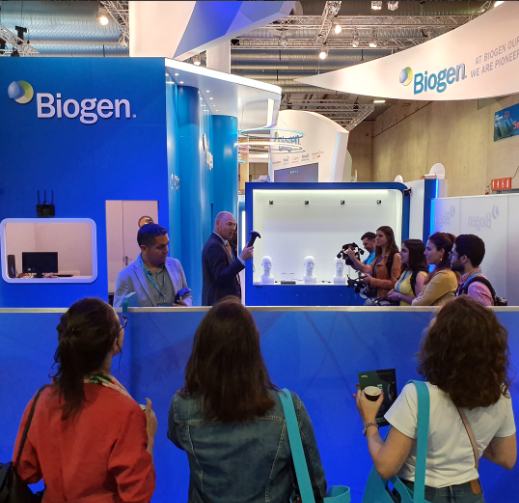
Virtualware and Biogen create a Virtual Reality multi-user experience in the pharmaceutical industry
Biogen is one of the world’s leading biotechnology companies, developing therapies for neurological, autoimmune and rare diseases, with a clear focus: have the greatest impact on patients of any biotechnology company in the history of the industry.
As one of the pioneers in biotechnology, Biogen is constantly seeking cutting-edge technologies and new ways to engage professionals in the industry congresses and meetings, where they showcase how they are solving some of the most challenging and complex diseases in neurology.
For the 5th congress of the European Academy of Neurology in Oslo (Norway), Virtualware created the first multi-user immersive experience in the pharmaceutical industry where professionals could get a deeper understanding of two complex diseases: Spinal Muscular Atrophy (SMA) and Multiple Sclerosis (MS).
A large-scale collaborative all-in-one solution (50m2 | x4 users) where visitors could learn about the two showcasing pathologies by playing engaging missions. Virtualware provided content development and equipment, deployed and managed by VIROO (Virtualware’s proprietary software platform), and full support during the congress.
Highlights:
1st Multi-user VR Experience
9.8 Overall rating
300K views on Youtube
More info here
New Immersive Environment: Station IX (VR without goggles)
In early 2018, Imagine 4D, a Montreal-based tech company, launched Station IX. They are excited about Station IX, an immersive 3D display environment, because it differs from other solutions on the market. Their display environment makes use of Reflected Reality ™, which allows users to see 3D content without VR goggles, or head-mounted displays (HMDs).
Reflected Reality ™ simultaneously uses seven curved mirrors, seven projectors, and a large curved screen to surround users in a 3D virtual world.
Without HMDs, users can collaborate freely and enjoy 3D content without the common limitations of virtual reality, such as VR sickness, eye fatigue, and loss of spatial awareness. Their team has taken every measure to create a space that is shared and comfortable.
Imagine 4D believes that VR/AR, and Station IX specifically, can change how businesses operate. Military professionals, for example, can train for high-risk scenarios in safe environments. Similarly, cabin crews can familiarize themselves with aircrafts and emergency procedures before takeoff. Architects and real estate developers can also design, visualize, and present their projects to clients in a collaborative space unrestricted by VR goggles. These are just a few industry use cases; Station IX can be used for a variety of applications in many fields. The possibilities are endless!
If you would like more information about their new immersive technology, please contact us at info@imagine-4d.com
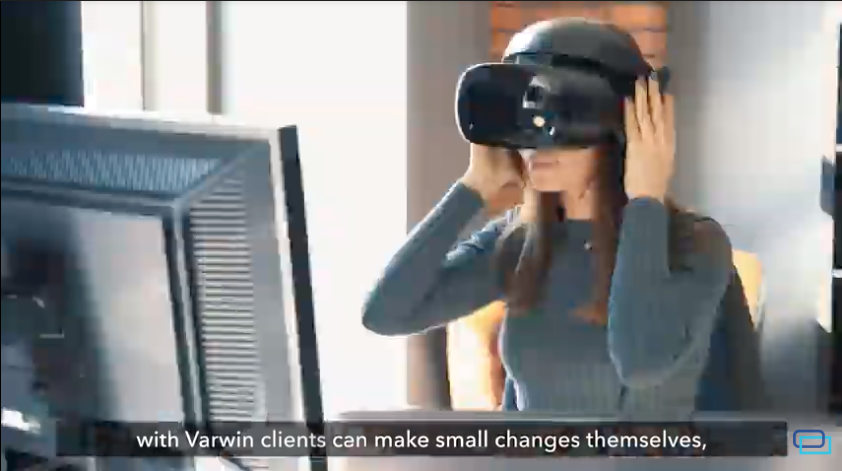
Varwin Begins Open Beta for VR Reality Management System aimed at streamlining the workflow between developers and clients
Varwin RMS (Reality Management System) has announced its VR creation and
management platform aimed at streamlining the workflow between developers and clients. This software allows developers to create high-quality VR projects that anyone can manage. Until now, that task was only accessible to highly-trained developers due to the complexity of VR technology.
Varwin makes it easy for clients to make small changes themselves. This is achieved thanks to the drag-and-drop logic interface based on Google’s Blockly visual language that presents coding concepts as interlocking blocks. The internal logic of objects is created by the community of developers in Unity and then transferred into Varwin for simple drag-and-drop management. Logic schemes, scenes and objects can be reused, so every creator contributes to the development of the platform and simplifies creation for other users.
For more info contact Anna Salova anna@varwin.com
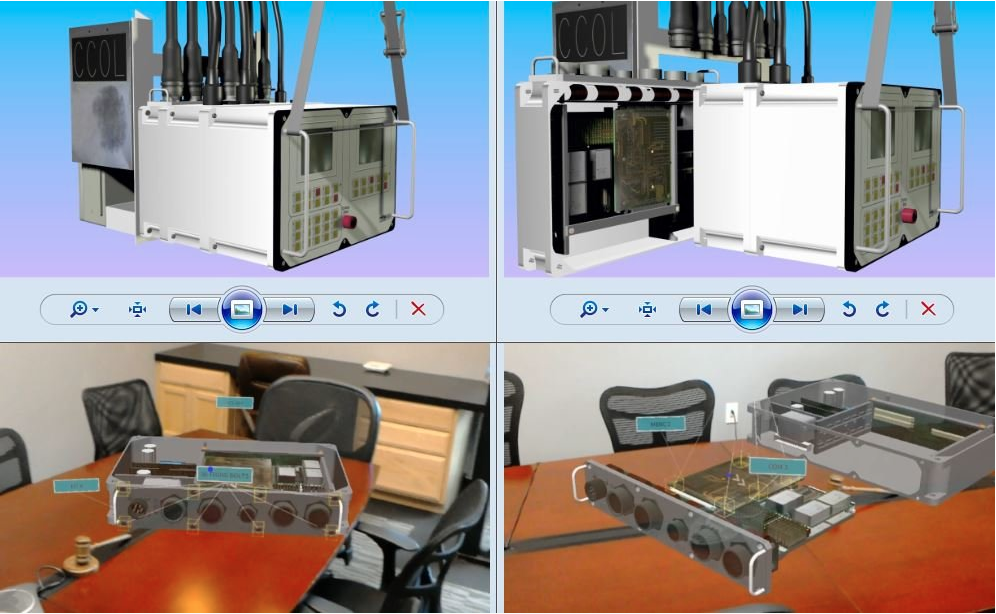
An Augmented Reality Engine Comes to Life with Avatar's SimplifyXR
True Story! Using SimplifyXR, the AVATAR Partners Team developed an Augmented Reality Engine Maintenance Application for a Patrol Boat in just a few hours.
Since we did not have the CAD drawing of the engine, we used our 3D Lidar Scanner (which took 3 minutes). From there, Dan Kelton (Multimedia Lead) generated a rendering of the Engine.
He then used SimplifyXR to build the Engine AR Experience that comes to life. The user can see the maintenance task, and validate the task accuracy, using a Microsoft Hololens, phone or tablet. The application overlays onto the Engine with an accuracy of 1/8th of an inch, while the user moves in, out and around the engine. If the engine is not readily available, his AR Application displays a high-fidelity virtualized engine, through which the user can use the experience.
Dan built the application at our AVATAR Partners US headquarters and Showcase Office in Huntington Beach, CA, just 3 miles from the ocean. If you're in the area, you must come see our Showcase Office and get a tour of the latest Augmented Reality applications and products.
Lear more at our website www.avatarpartners.com

Call for Sponsors: 3D Modeling Standards and Guidelines for Virtual and Augmented Reality
If interested in sponsoring, email info@thevrara.com
Over the past few months, the VR/AR Association’s 3D Working Group within the Retail Committee has been working on these 3D Modeling Standards and Guidelines for VR/AR/Web. We are now ready to publish and help the industry accelerate VR/AR adoption. We are seeking Sponsors to help us with this effort.
Background
Many retailers, especially those with a strong e-commerce presence, are now using 3D to help customers better visualize their products. Today, the majority of that 3D content is being used behind the scenes to create traditional imagery. As VR and AR become mainstream, brands and retailers are increasing looking to be able to repurpose their 3D assets for these experiences. There are some challenges in optimizing 3D models for AR/VR/Web and these guidelines aim to make it easier for everyone to create models that look consistent on any platform.
A note about openness vs trade secrets: Companies that were early to the 3D space rightfully would like to protect their investments and competitive advantage, but also understand that the best value for those assets comes when consumers expect them as part of their shopping experience. To strike a balance, these Modeling Standards and Guidelines only focus on real-time 3D assets and the contributors will keep their render-ready asset production processes as trade secrets.
Main Authors:
Mike Festa, 3XR
Sumit Goyal, Overstock
Thomas Huang, Target
Manil Bastola, Aisle411
Alban Denoyel, Sketchfab
Josh Belay, InContext Solutions
Jeff Hunt, Snap36
Saurabh Bhatia, Microsoft
Ross McKegney, Adobe
Kevin, Farnham, Mirra

CenturyLink Demonstrates Effectiveness (400% increase in engagement) of Virtual Reality Technology in B2B with Kaon Interactive using the Lenovo VR headset
Increasing Trade Show Booth Engagement 400% with Award-Winning Application
Kaon recently crafted a case study of how CenturyLink used virtual reality to completely upend their event/booth strategy, starting at AWS re:Invent last year, with great success (and a nod from the 2019 Communicator Awards as well). The Amazon Web Services show was the first enterprise deployment of the standalone, 6-DoF, Lenovo Mirage Solo headset, and it was also the first time Kaon Interactive created and deployed a VR storytelling experience on an untethered headset.
Through successful partnership with Kaon Interactive at recent tradeshows, CenturyLink was able to generate a 400% increase in event booth engagement versus the previous year – within a smaller, more cost-effective booth space.
Looking to elevate event technologies and techniques, Becky Kelly, director of solutions marketing strategy at CenturyLink, decided to turn to a more innovative and engaging solution in an effort to generate higher-qualified booth leads.
“We wanted to create a lasting experience for show attendees without spending exorbitant amounts of money. We wanted to achieve something meaningful that we could grow for reuse. I wanted to create a theme we could tie things around to effectively tell our story and then use those best practices for future ones,” Becky said.
After establishing its message of “Why Milliseconds Matter,” the Kaon Interactive and CenturyLink team began developing the award-winning, visually engaging, virtual reality experience that would effectively convey this critical message with two goals in mind. The first, to empower the CenturyLink booth staff to engage with tradeshow attendees faster. The second, to have more productive interactions with attendees so they understand that CenturyLink is more than just a phone company.
Using the Lenovo Mirage Solo® standalone VR headset with Google Daydream, booth attendees were able to immerse themselves in a familiar coffeeshop (and other relatable venues) and experience how CenturyLink touchpoints enable important data to travel, within milliseconds, to execute daily transactions and activities. Because it was developed on Kaon’s High Velocity Marketing Platform®, CenturyLink has the ability to add scenarios and solutions to the application, evolving it for future trade shows. The platform also enabled the deployment of the application on the web, smartphones, touch screens, laptops, and mobile tablets, in immersive VR, to be used by customers and the sales team alike.
“There is a huge cost and time efficiency in not having to recreate this interactive content from scratch for future sales and marketing programs and devices,” Becky stated. “We want to tell our story everywhere our buyers are, and Kaon's platform affords us the ability to do that. Not only did Kaon help us push the envelope, they gave us an innovative technology platform that allows us to break new ground and raise the bar.”
This CenturyLink application was recently selected from more than 6,000 entries, from companies and agencies of all sizes, to win a 2019 Communicator Award of Distinction in the Marketing Effectiveness B2B Campaign category. Read the full case study, or schedule a demo, to learn more.

Extality developed the CNN Experience app for Magic Leap showing us the potential of News using Immersive Media
Extality was the developer for the CNN Experience app for Magic Leap, and worked in collaboration with Magic Leap and CNN/Turner Broadcasting to bring it to life.
We are excited about this new way for people to experience news content in 3D all around them, and Extality’s first example is the story about the Thai soccer team being trapped in a cave, which shows the potential for future journalism in Mixed Reality!
Here are some articles about it with screenshots/videos:


Augmented & Virtual Reality: Navigating the Emerging Legal Terrain
With a continuously expanding market for Virtual Reality technology, from Google’s Daydream to Facebook’s Oculus Rift, the legal landscape is beginning to follow suit. According to market intelligence provider TrendForce, merchandisers sold 14 million virtual reality devices worldwide in 2016, and it projects that VR device sales and software will snowball into a $70 billion market by 2020. With such expansion, the recent $500 million verdict in the U.S Zenimax v Oculus case suggests that intellectual property disputes in virtual reality tech may become the next litigation “cash cow”, with billions riding on the outcome of each case.
Virtual Reality IP Ownership Disputes
As AR/VR technologies continue to evolve quickly, they have led to the development of considerable intellectual property and other assorted legal issues in the AR/VR space.
Copyright
Disputes over who holds the copyright to VR software will be an important source of liability in the future. One prime example is Zenimax v Oculus, where Oculus was found guilty of misappropriating copyrighted intellectual property from Zenimax in order to develop their Rift technology. The court ruled in Zenimax’s favour, requiring Oculus to pay $250 million for the copyright infringement. Copyrights protect original IP, including computer programs and dramatic works, both of which play a large role in the development of AR/VR technologies. Undoubtedly, frequent litigation will follow suit.
Trademarks
Trademarks may be a combination of words, sounds or designs used to distinguish the goods of one creator from those of another – and last fifteen years. However, and particularly notable in the relatively new VR industry, expensive legal battles can arise when a company must prove the authenticity of their non-registered trademark. Imagine this: your VR avatar stumbles upon a vending machine and buys a drink – a bottle in every way identical to a real-world Coca Cola can. If the consumer reasonably believes the untheorized patent holder was the source of the goods, or endorsed the goods, liability can arise. Would anyone think Coca Cola produced the game – likely not. Is it possible that some might think they endorsed it – definitely. A second layer of complexity arises if the avatar can interact with the product, by buying or drinking it rather than just having it appear on screen. Treading through this novel VR terrain could bring with it many trademark claims.
Patent Disputes
Through a patent, the Canadian government grants inventors the right to stop others from making, using or selling their invention for up to twenty years. What does that mean for companies involved with or entering the AR/VR space? A significant recent increase in patent applications in respect of AR/VR technologies reveals companies’ desires to maintain a competitive advantage and protect their inventions. As the field grows more crowded, it will become necessary for companies to protect their IP through patents.
Personality Rights
Like trademark claims, the idea of personality rights will inevitably arise in the virtual world. In Krouse v Chrysler Canada Ltd, the court decided that regardless of the degree of public notoriety, an individual has the same rights as celebrities. In other words, if an individual can prove that their name, voice, or likeness was used in VR content without their consent, they may have a potential claim. This expands the net of liability, especially in the realm of gaming and advertisement. Misappropriation of personality goes so far as to include “look-alikes”; if you create a Morgan Freeman inspired avatar, hire a Morgan Freeman look-alike, or record voice imitation, there is potential for liability.
VR companies can encounter another liability issue; users importing unauthorized “personas” to a metaverse. While the law in this area is still developing, companies may be subject to such claims, and should take precautions to avoid them. Overseeing the use of VR technology and removing any evident personas – including celebrities – is a crucial step.
Product Liability Claims
In part due to the nature of VR products, there will inevitably be claims made by users against VR companies. Since most VR technologies require the use of a headset and other equipment, the potential for personal injury is great. Without being able to see the environment one is in, falls, trips, hits and other injuries are likely – especially if the VR technology requires physical movement. Nausea and motion sickness are also likely, mostly when a user’s body movement does not align with the visual stimulus because of subtle delays in screen responsiveness. Finally, privacy issues may arise where users are asked for personal information, or data storing.
Long term physical and psychological effects can also result in liability against VR technology manufacturers. Some scholars suggest that because of the lure of VR, users may become more detached from reality, leading to psychoses. In certain instances, copycat violence, insurance claims, negligence, nuisance, and product liability suits will follow. Therefore, companies and manufacturers are wise to require terms of use, including disclaimers waiving liability to minimize the chance of litigation against the company.
Virtual environments raise complex and novel legal issues for both VR content creators and rights holders alike. While it is easy to allow yourself to be lost by the technical advances of the virtual world, without proper legal support, a return to reality may bring with it a host of legal liabilities.
By: Marius Adomnica, Associate and Natasha Vlajnic, Law Student
For more information, or to connect with one of our lawyers, please contact us at: inquiries@segev.ca or 604-629-5400
This article is for informational purposes only, does not constitute legal advice, and should not be relied upon as legal advice.
Join us at our VR/AR Global Summit Vancouver Nov 1&2 to learn more about the legal aspects of VR/AR
Early Bird tickets now available for our VR/AR Global Summit happening in Vancouver Nov 1-2
VR/AR Global Summits are world-class events bringing together the best knowledge and networking in VR and AR for enterprise, hardware, software and content providers from across the globe.
Join us Nov 1 & 2 at the Parq Vancouver, a new international entertainment and conference destination, located in downtown Vancouver.

Luxsonic is awarded a contract by the Canadian Space Agency to help define the future of Medical Training during Deep Space Missions using Virtual Reality
As humanity reaches out to explore the solar system, it will be critical to maintain the health and wellness of astronauts. During deep space missions, communication with Earth could be difficult, so medical assistance from Earth may not be available. Medical evacuation, in times of emergency, will be impossible.
The Crew Medical Officer and other crew members will need to maintain and test their basic clinical skills. They will also need to learn new skills during the voyage and have instant access to medical information, like crew health data or diagnostic images. All of these needs will have to be addressed with the limited resources that can be taken on board the space craft. Luxsonic plans to use virtual reality technology to meet these requirements.
The CaregiVR Medical Support System is a technology concept being developed by Luxsonic for the CSA. CaregiVR could provide the crew of long-duration space missions with an advanced tool for medical education, training, and skills assessment. It could also be an integral part of overall ship medical systems, giving astronauts the support they need to stay healthy as they venture out into the solar system. Luxsonic is excited to develop the CaregiVR Medical Support System technology concept, which may one day contribute to the health and well-being of astronauts on deep-space missions.
See the Announcement from the CSA here
About Luxsonic:
Luxsonic develops virtual reality applications that are used by some of the most innovative Canadian healthcare institutions. Our VR software products improve medical education, training, and healthcare delivery while reducing operational costs for our clients. SieVRt, Canada’s first virtual reality medical imaging system allows physicians to view and interact with complex medical imaging data in an intuitive, user friendly, and distraction free virtual environment. It is currently available for sale in North America through our Clinical Innovator Program. Luxsonic is headquartered in Saskatoon, Saskatchewan and has a satellite office in Toronto, Ontario.
Contact Details:
Email: info@luxsonic.ca